Founded by Max Farndale 1947 - 2018
2017’s already been identified by Vodafone as the year of data explosion, with Kiwis using more and more of it to stay up to date.
But it’s not just being chewed up by the binge-watching habits that online-only series like Netflix’s Stranger Things brings about.
Kiwis are still just as interested in what’s happening around them, and the video and stories giving insight into their changing world.
In fact, hyper levels of mobility in how we consume news - and how often we expect updates - appears to have increased the appetites of everyday readers.
That’s all part of why Vodafone New Zealand is launching its own news website, offering a behind the scenes look into the work the company’s involved in, its people, and the latest trends in technology, industry and community developments.
Chief Executive Russell Stanners said, "Ever increasing levels of connectivity create an expectation that we need to share what’s going on, and we want to get the latest stories, in many instances, direct from those at the centre of what’s happening.
"At the same time this truly is the age of the customer - they’re digitally savvy, empowered by the technology - and they want to understand who they’re dealing with, at a deeper level," he added.
Vodafone News will feature behind the scenes video of important developments, offer advice and readable features across a range of topics for consumers as well as insights from leaders in a range of diverse fields.
Russell Stanners said, "At Vodafone we’re at the forefront of innovation, and Kiwis want to know what we think about topics that are important to them.
"We want to get our story out, we’re proud of what our people are achieving, and so much is set to change in technology trends this year, we want to make sure people can make sense of it all," he added.
People are consuming news and information constantly these days through a range of mediums, and the days of only reading news from just one or two websites has rapidly declined.
Instead, as the recent U.S election illustrated, consumers will browse a wide range of sources - whether that’s hard copy, online or through social media, to read more about what they’re interested in.
Andrea Brady, Vodafone’s Head of External Communications, believes this shift in media consumption habits, opens the door for customers to experience major projects from the inside.
"There are times when Vodafone is hard at work in areas that you might not expect. A good example is our Instant Network team. They’re our first response team who go into emergencies, when everyone else is fleeing them," she said.
The team deployed a year ago when Fiji declared a state of natural disaster in the wake of Tropical Cyclone Winston, with a series of suitcases and a mobile generator to successfully establish a local communications network.
"They were the first emergency relief to reach Vanua Balavu that had been devastated by the cyclone. Communications were quickly established enabling the village to reach out for medical evacuation for those in need, and so that people could let relieved family members know they were still alive," Andrea said.
Behind the scenes video on Vodafone News paints the picture of how the Instant Network team works, and the powerful impact it can have on communities’ desperately in need.
"There are countless examples of innovation taking place every day in communities and businesses around the country. We’re keen to make sure those get the attention they deserve," Andrea added.
For more information head to https://news.vodafone.co.nz/
| A Vodafone release | March 15, 2017 ||
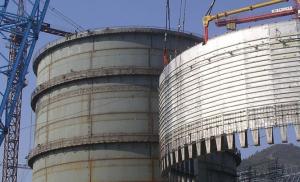
Executives at Toshiba are now actively considering selling Westinghouse, among other options to deal with the troubled nuclear developer.
The company has expanded a probe into Westinghouse and missed an earnings report deadline for a second time, Reuters reported.
Officials at Toshiba believe it could find buyers for a majority stake in Westinghouse even though it recently lost $6.3 billion. Industry executives believe South Korea’s KEPCO could be a potential buyer. KEPCO indicated it would consider an offer.
However, CEO Satoshi Tsunakawa dodged questions about a potential bankruptcy filing for Westinghouse, indicating only that there are multiple options. Company sources say Toshiba has hired bankruptcy lawyers as an exploratory step.
Even with the extraordinary losses, tied to nuclear project delays, dwindling demand for nuclear and the overvaluation of the purchase of CB&I Stone & Webster, Tsunakawa indicated nuclear construction is only a small part of Westinghouse’s operations.
"Around 80 percent of Westinghouse's revenues come from stable businesses in services and fuel-related businesses so I think that will be taken into consideration too," he said during a news conference.
Toshiba’s goal is to have Westinghouse off its consolidated accounts by the end of the next fiscal year in March 2018.
| A Power Engineering release | March 14, 2017 ||

Will purchase appease shareholders and their class action?
The acquisition by Toronto’s Resolver Inc of assets of Wynyard Group points up the need for an international partner by New Zealand technology companies.
Resolver has taken over a slew of products from the Wynyard Group which went into liquidation. In doing so the Canadian company also acquires a user base, notably in the public sector.
Resolver’s activities in the crime-fighting, counter insurgency, and security IT application sector mirrored those of Wynyard.
The failure of Wynyard much earlier to acquire a big league international collaboration is all the more strange bearing in mind that Wynyard sprang out of Jade which achieved its global market share through an initial tie up with Unisys, and then with the UK’s Skipton Building Society.
Even so, collaboration poses a special threat for risk systems producers.
The less people in on the codes, the better. The less diluted their allegiance, the less the risk of leaks.
These systems require input from law enforcement authorities. Tolkien buff and New Zealand resident Peter Thiel’s Palantir is an example.
It is not known if the acquisition by Resolver of the Wynyard Group product line is sufficient to appease the formerly NZX main board company’s shareholders with their class action.
Meanwhile, the transaction reinforces a long tradition of Canadian IT involvement in this country which started with the introduction of the first PC portable, as they were then known, the Hyperion, then the Commodore, and much more recently the BlackBerry, long the Parliamentary standard.
Canadian manufacturers that played a big part in the telecommunications ramp-up included Mitel, Norpak, and Brian Tolley’s Bell Block cable extrusion process factory Canzac.
| From the This email address is being protected from spambots. You need JavaScript enabled to view it. | Wednesday 15 March 2017 ||
The amount of water exported in bottles is so small that it is irrelevant to the important discussion on better managing New Zealand’s freshwater resources, Environment Minister Dr Nick Smith says.
“We use a million times more water for irrigation, town water supply and industry than that for bottled export. Bottled water exports are such a small fraction that it is a distraction to the important debate about how New Zealand better manages its freshwater resources.”
New Zealand’s annual freshwater resource is 500 trillion litres of which 2 per cent, or 10 trillion litres, is extracted. Statistics New Zealand reports that last year 8.7 million litres of bottled water was exported, down from 9.8 million litres in 2015. This means bottled export is 0.000002 per cent of the total water resource or 0.0001 per cent of the total water extracted.
“There is a real fairness problem with charging bottled water for export and not other water users. It would be odd from a health perspective to be charging a company bottling water, but not charging for the company that makes fizzy drink or beer. Nor would it make economic sense to charge the company bottling water for export, but not the company using the water to produce wine or milk. There may be a better return for New Zealand with less environmental problems in exporting the water rather than spraying it on land, adding fertiliser and producing milk noting that each litre of milk takes an average 400 litres of water to produce. The argument that the water bottling company may be foreign does not hold water when many larger water users in other industries like dairying and wine also have overseas investment.
“Freshwater management in New Zealand does need to improve. We have introduced a requirement for Councils to set minimum flow requirements in our waterways and compulsory metering. This has resulted in a significant number of red zones where further water extraction is prohibited.
“A technical advisory group is working on how New Zealand can better allocate freshwater and will be reporting back to Government by year’s end. The key to reform will be ensuring it is based on sound science and good data.”
| A Beehive release | March 14, 2017 ||
Entries open today for the 2017 Prime Minister’s Business Scholarships, which offer New Zealand’s managers and executives the opportunity to improve their skills at the world’s best business schools.
Economic Development Minister Simon Bridges says the scholarships are designed for managers and executives of companies involved in exporting, who are looking to expand their expertise through international study.
“We want New Zealand’s business leaders to have an opportunity to learn from some of the best overseas business schools and institutions,” Mr Bridges says.
“The aim of the scholarships is to make it easier to access these institutions, in turn increasing business leaders’ knowledge and improving the international competitiveness of New Zealand businesses.
“The scholarships also support New Zealand business people to develop networks and teach them to overcome the challenges our distance from overseas markets can pose.”
The Prime Minister’s Business Scholarships cover up to half of the course-related costs of attending an international learning institution.
“Previous recipients have enrolled at prestigious international institutions such as Harvard, Wharton and Columbia Business Schools, Stanford University, and the London School of Economics,” Mr Bridges says.
“This is a great opportunity for business leaders and senior managers involved in exporting to study overseas, improve their knowledge and then bring those valuable skills back to New Zealand.”
Applications for the scholarships close at noon on 28 April 2017.
More information can be found at www.mbie.govt.nz/about/our-work/scholarships/prime-ministers-business-scholarships
| A Beehive release | March 14, 2017 ||

Vector today announced another step in its strategy to deliver efficient, sustainable energy solutions to consumers, with the acquisition of two companies, E-Co Products Group and PowerSmart.
E-Co Products, better known as HRV, is a total home solutions business that has built a deep and strong connection with New Zealanders, helping to create healthier homes.
PowerSmart is a leading provider of innovative large scale sustainable power solutions in New Zealand and the South Pacific.
Vector Chief Executive, Simon Mackenzie, says the businesses will continue to operate independently and provide Vector with complementary channels to deliver innovative technological energy solutions directly to consumers.
“As new and disruptive energy solutions become available, the way energy is produced, consumed, and monitored is changing. We are focused on leading energy innovation and empowering customers by offering them choice and control.
“The acquisition of both E-Co Products Group and PowerSmart will boost our ability to deliver these new solutions, at both a household and commercial scale. These companies share our vision of a new energy future and we believe it’s an excellent fit for all parties,” Mr Mackenzie said.
E-Co Products Group Chief Executive, Bruce Gordon says E-Co Products is very excited to be joining the Vector group.
“As New Zealand’s leading energy solutions provider, Vector can provide key expertise and innovation in areas that will benefit our business and take it into a new era,” he said.
PowerSmart Chief Executive, Mike Bassett-Smith, says Vector’s scale and network expertise will assist with the company’s growth plans.
“As the economics of solar and batteries continue to improve, we can leverage Vector’s knowledge and experience to undertake ever larger, more complex projects,” he said.
Both acquisitions are subject to customary conditions and settlement is expected to occur on or around 31 March. The acquisitions will be funded from Vector’s existing facilities and are expected to be earnings accretive in FY2018.
| A Vector release | March 15, 2017 ||

Kids in river4Local Government New Zealand has launched a new piece of work to create a comprehensive framework that brings freshwater issues and water infrastructure into a coherent policy.
Local government is at the heart of water issues in New Zealand, from the provision of drinking water and storm and waste water services to implementing standards for freshwater quality.
LGNZ President Lawrence Yule says “Water 2050” will develop a framework for water that coherently integrates freshwater quality and quantity, standards, rights and allocation, land use, three waters infrastructure, cost and affordability, and funding while recognising that the allocation of iwi rights and interests in freshwater is a live issue for the Crown.
“From the perspective of local government there has been little connected discussion of how quality standards like those announced by the Government recently connect to infrastructure investment and, perhaps most importantly for communities, affordability,” Mr Yule says.
“Water infrastructure is owned by communities and is fiendishly expensive to construct or upgrade – the cost of upgrading New Zealand’s current water infrastructure will be in the billions. The quality of this infrastructure has a direct impact on the quality of our streams, lakes and rivers.
“So we need to ensure that when we set goals for how clean we want our freshwater resources to be, that we are also talking about the cost to our communities of doing this, the economic trade-offs that might need to be made, and how we pay for it. This is something that has been missing from the discussion so far.
“To achieve affordable and sustainable results we need to think about water in a holistic way and this will be the aim of Water 2050,” Mr Yule says.
The first major step in Water 2050 will be a Freshwater Symposium to be held in Wellington at the end of May.
The two day symposium will look at the strategic issues for freshwater management in New Zealand with a particular focus on water quality, quantity and funding and how we get the right outcomes for communities.
The symposium will include a key note speech from Austin-based David Maidment, a specialist in environment and water resources engineering from the Center for Research in Water Resources, at the University of Texas.
“This symposium will seek to address many of the major issues around freshwater for New Zealand, local government and its communities,” Mr Yule says.
“We need to start having a better quality conversation about water and we hope this event will lead to a broader dialogue about what we want for our water and how we get there.”
| ALGNZ release | March 14, 2017 ||

All too often, engineers and architects assume customers and prospects can read technical drawings. The reality is that technical drawings are a foreign language to many and they often cause prospective clients to become disengaged with the design process. Many alternatives have been found, like computer generated renderings, but nothing compares with the totally immersive experience of virtual reality.
Peter is the Autodesk Senior Manufacturing Technical Specialist & South Island Area Manager for CADPRO Systems. At the CoLab Conferencehe will be explaining how to use VR to engage prospective clients on a whole new level.
After learning AutoCAD 2.6 whilst studying Manufacturing Systems at Coventry University in the UK, Peter realised that digital design and manufacturing was the future. Having gained over ten years industry experience in the UK, he moved to New Zealand in 2003 to work for CADPRO Systems. In 2005 he became involved in a design project which later broke the World Land Speed record for a motorbike and sidecar. In 2012, the SAHMRI project (façade design for Adelaide hospital) consumed 18 months during which he and a team of others designed a factory-built panelised steel & glass cladding system for one of the most complex and beautiful facades in Australasia.
See the full programme and book at the PrefabNZ CoLab event page.


Palace of the Alhambra, Spain
By: Charles Nathaniel Worsley (1862-1923)
From the collection of Sir Heaton Rhodes
Oil on canvas - 118cm x 162cm
Valued $12,000 - $18,000
Offers invited over $9,000
Contact: Henry Newrick – (+64 ) 27 471 2242
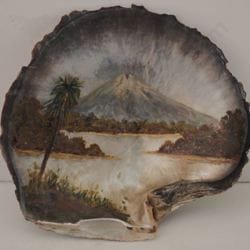
Mount Egmont with Lake
By: John Philemon Backhouse (1845-1908)
Oil on Sea Shell - 13cm x 14cm
Valued $2,000-$3,000
Offers invited over $1,500
Contact: Henry Newrick – (+64 ) 27 471 2242

|
|