
Founded by Max Farndale 1947 - 2018
I’ve been investigating the potential impact of technological change on building and construction in New Zealand over the next 15 years. It’s made me think, in particular, about how technology in buildings can help us reach our lower carbon targets – just what my colleague Nick Collins was talking about in February’s blog.
Technology is at the forefront of improving building performance, particularly in leveraging the potential of increasingly ‘smart’ or ‘intelligent’ sensors, systems and analysis to provide data which can improve building operation.
This often refers to commercial buildings with building managers, but technology has the capacity to help us meet carbon reduction commitments through energy efficiency in our homes.
Smart meters, for example, help consumers to manage and adjust their energy/water usage at the house level and enable smart grid infrastructure at the city level. Smart meters generate usage data which can, with the appropriate security and privacy measures in place, interact with city-wide systems to manage demand, identify households in fuel poverty and interact with micro-generation of renewable energy.
In New Zealand the rollout of smart meters was left to the market, rather than regulated (compare this to the UK government which wants smart meters in all UK homes by 2020). According to the Parliamentary Commissioner for the Environment, the meters rolled out are not particularly ‘smart’ – “They could have included a low cost component that would link the meter to a home area network – a network that connects the devices in the home that use electricity. This would have made it easy for householders to access real-time information on their electricity use using conveniently located displays, and enabled the introduction of smart appliances.”
Not only would smart meters benefit homeowners, they would enable smart grid implementation in New Zealand. Smart grids use modern digital communication technology to link with end user area networks (through really smart meters), establish better interconnection between distributed energy sources such as photovoltaic cells, and (ultimately) enable the integration of electric vehicles into the system. Distributed and autonomous power generation and usage is critical, with microgrids relying on typically renewable energy sources such as hydro, bio-mass, solar, wind, and geothermal.
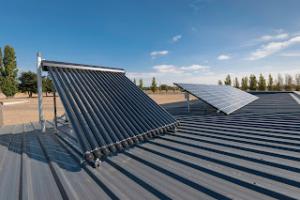
Meanwhile, rapid developments in solar, storage, sensor and ‘smart’ technologies are allowing energy consumers to gain direct control over energy resources - self generation, self storage and self energy management. Solar PV panels have been improving exponentially - as solar capacity doubles, the cost of solar goes down by 22% every two years since 1970. Developments in energy storage and improvements in battery technology (for example, Tesla’s Powerwall) are fundamentally transforming the energy sector by integrating renewable energy into electricity grids and turning intermittent renewable power into a direct competitor to base-load power. Solar storage costs are going down at the rate of 16% pa. The spread of these technologies is being helped by innovative concept business models involving zero money down and third party finance (for example, SolarCity which treats its product as a service) and the growth of smart appliances that help consumers maximise energy efficiency.
How efficiently our homes operate needs to be recognised as a key element in lowering our carbon emissions. Technology can help us get there!
| A BeaconPathway release || March 13, 2017 ||

Story So Far---Newspaper Managers Ironical and Touching Failure to Cooperate
The extra month of unexpected additional breathing space allowed before the promulgating of the final verdict of the Commerce Commission in the matter of the proposed merger of the two newspaper chains, NZME and Fairfax, will allow all interested parties more time to study the implications of the word deceive.
Deceive features in the Commerce Commission’s own glossary of words, the ones that fall into heavy use in its own jurisdictional bailiwick.
Indeed, as a helpful compendium this technique might well be used by other such official authorities.
The Commerce Commission defines it thus:-Deceive:-
To cause to believe what is false, to mislead as to a matter of fact, to lead into error; to delude, take in:
We may use this crisp definition to parse it in the case of the two supplicant chains requiring the approval of the Commerce Commission to bring about their desired amalgamation.
Therefore does the desired merger cause New Zealanders:-
To believe what is false? Not at face value – the chains are overwhelmingly in the print business which is shrinking rapidly. A diminishing marketplace requires diminished fixed costs which requires economy of scale such as might be achieved by merging.
To mislead as a matter of fact? The chains have been candid. They want to merge. They are not, for example, seeking to establish a cartel, fix prices. Both of which are difficult anyway in a severely over-supplied market and one with no bar to entry.
To lead into error? The Commerce Commission in its earlier draft verdict seemed to indicate that it had in fact defined an error. Namely that the erring is in the elimination of editorial diversity represented by having one proprietorship instead of two, leading to a contraction in the diversity of opinion.
To delude? Here we must answer this one with another question. Would the “reasonable” person, so beloved of, for example, by libel lawyers, be “deluded” more or less by one single amalgamated chain, instead of two? The increasingly widespread distrust of journalists, not to say, contempt, might indicate that the reasonable person today already sceptically applies two pinches of salt, instead of just the one.
To take in? See “To delude.” See also bundling (below)
We may now refer in this context to the Commission’s own underpinning objective also clearly and prominently displayed on its web site. The Commission’s purpose, it proclaims is:-
Achieving the best possible outcomes in competitive and regulated markets for the long-term benefit of New Zealanders.
It is the three words “long term benefit,” that carry the freight in the merger context.
Without the merger, can the two chains sustain their score or so of subscription daily newspapers?
A curious element of the journalistic makeup, and one which cross-infects their management is an inability to explain their own case whatever it is with any degree of concision at all.
Another and a trait which has been notably on display in this matter is an inability to see something from the point of view of the other person.
Therefore one cannot take for granted that the two chains have explained to the Commission that should they have to close their provincial dailies then they will also have to close scores of rural free sheets that distribute agribusiness information gleaned by their subscription stable mates
Now to the matter of bundling.
This is an information technology term which refers to a provider rolling out a product which can only be connected with and used with parts and other add-ons from that same supplier which are said to be “bundled” with the original product.
The Commission’s veto of the Vodafone – Sky marriage turned on the notion that Vodafone’s subscriptions would become part of a bundled subscription package that contained Sky also.
For Sky, think sports broadcast rights.
If anyone is still in doubt about the significance of sport in relation to what the Commerce Commission might postulate as being “for the long-term benefit of New Zealanders” then they might contemplate its priority treatment by, for example, the free-to-air television broadcasters.
Any moral backsliding by anyone with any profile at all in a moving ball sport moves into the narrow early bulletin time band still allowed for authentic news, as opposed to the pre-orchestrated, or contrived version of which leisure/sport is the mainstay.
Any such similar behaviour by a member of a once revered calling, let us say by a lawyer or a cleric, is interpreted as being of little surprise value and is thus shunted, if it appears at all, into the tail end of the news hour.
The Commission in its veto of the Vodafone – Sky marriage took this singular benefit into account, the one of access to real time sporting rites of passage, and decided that it should not be bundled into mobile telecommunication subscriptions.
Bundling, customer capture, is another word for leverage. Is there any leverage bundled seen or unseen into the NZME- Fairfax nuptials?
One area of such coercion could be levering Fairfax subscribers into NZMEs radio stations.
But the NZME stations are free to listen to anyway.
In the heyday of the Newspaper Proprietors Association, the 42 daily newspapers of that era happily worked together shuffling news and advertising back and forth to mutual advantage.
This happy state of affairs reached its zenith when Reuters, in which the newspaper proprietors held 12 percent of the global value went public and generated a windfall which saw the retirement of the last of the benign old newspaper families.
Since this triumphal hour the ensuing professional managers displayed a touchingly innocent absence of cooperation.
This culminated in their failure to join forces in the purchase of TradeMe and thus allowing it to be sold at an international value instead of a local one.
If there are two less conniving, two less cunning mercantile institutions in Oceania, then they should be revealed. Ideally, prior to the Commerce Commission’s final verdict on the NZME-Fairfax merger.
| From the This email address is being protected from spambots. You need JavaScript enabled to view it. | Monday 13 March 2017 ||
Trade Minister Todd McClay travels from London to Chile today for the first combined meeting of Trans-Pacific Partnership (TPP) countries following the United States’ withdrawal from the agreement.
“I welcome the opportunity to sit down with other TPP ministers, to take stock of current developments and to look at how we might move this important agreement forward together,” Mr McClay says.
Mr McClay says he believed the TPP Agreement continued to offer value as a common set of rules across the Asia-Pacific region.
"I have recently visited Australia, Japan, Singapore and Mexico, met with ministers from Brunei and Malaysia and talked directly with trade ministers from all other TPP countries. It is clear our partners remain committed to the benefits high quality trade agreements provide," Mr McClay says.
The meeting comes following strong public encouragement from New Zealand’s largest exporters for the Government to pursue a deal with the other 10 countries.
While in Viña del Mar at the High Level Dialogue on Integration Initiatives for the Asia-Pacific, Mr McClay will also meet with members of the Pacific Alliance and a number of other Asia-Pacific countries discuss regional trade issues.
“High quality regional trade deals are key drivers of economic development and job growth. The Government will continue to fight for a fairer deal for kiwi exporters and to push for better access for our goods and services around the world,” Mr McClay says.
| A Beehive release | March 12, 2017 ||
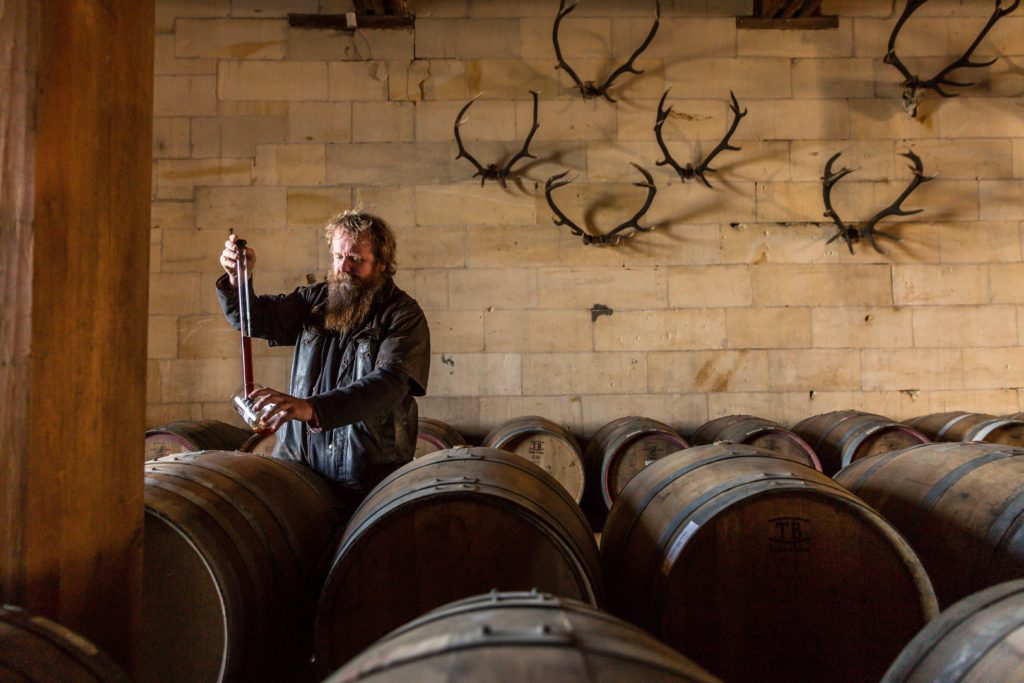
Ξ Whisky distillery decision due in April
Satellite start-up promises ultra-fast internet to remote Asia-Pacific, NZ locations
Software start-up CataLex helps firms keep their books above board
US border tax plan would hit NZ exporters
World Week Ahead: Fed rate hike pace
Trade Minister travels to Chile From London for TPP meeting

2017’s already been identified by Vodafone as the year of data explosion, with Kiwis using more and more of it to stay up to date.
But it’s not just being chewed up by the binge-watching habits that online-only series like Netflix’s Stranger Things brings about.
Kiwis are still just as interested in what’s happening around them, and the video and stories giving insight into their changing world.
In fact, hyper levels of mobility in how we consume news - and how often we expect updates, appears to have increased the appetites of everyday readers
That’s all part of why Vodafone New Zealand is launching its own news website, offering a behind the scenes look into the work the company’s involved in, its people, and the latest trends in technology, industry and community developments.
Chief Executive Russell Stanners said, “Ever increasing levels of connectivity create an expectation that we need to share what’s going on, and we want to get the latest stories, in many instances, direct from those at the centre of what’s happening”.
“At the same time this truly is the age of the customer – they’re digitally savvy, empowered by the technology – and they want to understand who they’re dealing with, at a deeper level,” he added.
Vodafone News will feature behind the scenes video of important developments, offer advice and readable features across a range of topics for consumers as well as insights from leaders in a range of diverse fields.
Russell Stanners said, “At Vodafone we’re at the forefront of innovation, and Kiwis want to know what we think about topics that are important to them.
“We want to get our story out, we’re proud of what our people are achieving, and so much is set to change in technology trends this year, we want to make sure people can make sense of it all,” he added.
People are consuming news and information constantly these days through a range of mediums, and the days of only reading news from just one or two websites has rapidly declined.
Instead, as the recent U.S election illustrated, consumers will browse a wide range of sources – whether that’s hard copy, online or through social media, to read more about what they’re interested in.
Andrea Brady, Vodafone’s Head of External Communications, believes this shift in media consumption habits, opens the door for customers to experience major projects from the inside.
“There are times when Vodafone is hard at work in areas that you might not expect. A good example is our Instant Network team. They’re our first response team who go into emergencies, when everyone else is fleeing them,” she said.
The team deployed a year ago this month when Fiji declared a state of natural disaster in the wake of Tropical Cyclone Winston, with a series of suitcases and a mobile generator to successfully establish a local communications network.
“They were the first emergency relief to reach Vanua Balavu that had been devastated by the cyclone. Communications were quickly established enabling the village to reach out for medical evacuation for those in need, and so that people could let relieved family members know they were still alive,” Andrea said.
Behind the scenes video on Vodafone News paints the picture of how the Instant Network team works, and the powerful impact it can have on communities’ desperately in need.
“There are countless examples of innovation taking place every day in communities and businesses around the country. We’re keen to make sure those get the attention they deserve,” Andrea added.The advent of new news – a conversation with customers
| A Vodafone release | March 13, 2017 ||
Prev Article
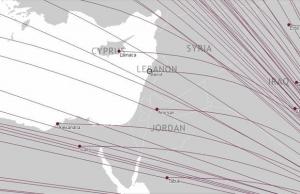
ave you ever drifted off on a plane, woken up a little later, and found yourself wondering where exactly you are – only to check your seatback television screen and decide that you are none the wiser?
Airline route maps – particularly the electronic ones which are part of passengers’ in-flight entertainment systems – can often appear to show a world of their own creation. They pick out cities you have never heard of, towns where aircraft rarely land and destinations which you would not seek out – even if you were travelling on the ground.
But a bigger question might be – what do these maps fail to show? And why are certain places omitted?
Sometimes, destinations drop out of focus for simple reasons of logistics. Back in 2009, there was a brief and polite furore in New Zealand after three cities – Hamilton on the North Island; Dunedin and Queenstown on the South Island – were left off Air New Zealand’s route maps, even though the airline flew to all three.
A spokesman quickly blamed “space restriction”, and pointed out that two Australian cities – Cairns and Coolangatta – were also missing for the same reason.
But what of omissions with more thorny causes?
> > > Continue to the full and original article on The Telegraph Travel News | March 9, 2017 ||

The government’s Resource Legislation Amendment Bill (RLA) threatens changes to environmental legislation. The manipulations by Nick Smith pave the way for destruction of New Zealand’s economic advantage and further loss of valuable habitat.
The RLA Bill’s aims are ambiguous but fundamentally change the ground rules to leave councils subject to Ministerial interference. The democratic process of consultation and civil society engagement will become vulnerable to the whim of the Minister. There was no cross party support for the Bill. Recently the Maori Party changed its position, but is now reconsidering it's backing.
The threat to New Zealand's environmental legislation is a two-pronged attack. The proposed National Environment Standards for Plantation Forestry (NES-PF) is in its final stages [4], if adopted will also remove the right of councils to apply land use precautions on GE trees. Environmental harm caused by release of Genetically Engineered Organisms and costs associated with economic loss will also be forced onto regions, despite the communities wanting to preserve GM-free production.
"New Zealand businesses that are successfully exporting to the world are at risk from powers that will allow the Minister of the day to remove precautions around GMOs," said Jon Carapiet, national spokesman for GE-Free NZ.
"Moves to override regional controls on GMOs in agricultural production would be tantamount to self-sabotage of the national brand and destroy any hope of reaching the government's stated economic goal of doubling exports."
The proposed RLA legislation, section 43A(3)(b), signals a power grab by the Minister as the government would not need to demonstrate that the permitted activity has a significant adverse effect on the environment, undermining the very purpose of the Resource Management Act as well as the Hazardous substances and New Organisms Act. The purpose and principles of the Acts, which require scientific research, community consultation, and a precautionary approach on land use activities, would be immediately nullified.
“It is absurd for central government to be absolving itself of its duty of care to demonstrate the safety of GMO’s, yet simultaneously forbidding regional government to apply policies and measures that protect communities and regional economic development for the long term," said Claire Bleakley, president of GE-Free NZ.
"Nick Smith is effectively setting up a system that will enable destruction of the environment and sabotage the interests of people and communities.”
| A GE-Free NZ release | March 9, 2017 ||

Ξ Joint Press Statement by Trade Minister Todd McClay and International Trade Secretary Liam Fox
My outstanding case for why your financial woes aren't my fault - a boomer reflects
Key expected to announce date of departure next week
'Sexy sector' seeking staff with tech skills
Rakon names three new directors in boardroom refresh
NZME, Fairfax NZ get another month to convince regulator on merger
Minister's Plan Threatens Economic Sabotage
While you were sleeping: Oil sinks, euro rises
New Centres of Asia-Pacific Excellence
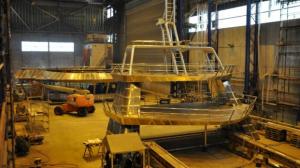
Construction is underway on Sealord's new $70 million factory vessel, which is being built in Norway with additional steel work carried out in Poland.
Sealord is now a year out from taking delivery of its state of the art new factory vessel.
Work began on the $70 million project in January and, according to Sealord fleet harvest manager Scott Gillanders, is already running ahead of schedule.
The ship's hull was being built in eight blocks, with seven of these constructed in Poland before being barged to the Simek shipbuilders yard in Flekkefjord, Norway.A concept drawing of Sealord's new $70 million trawler.
The first four blocks will arrive in July, with the remaining four blocks expected in September before being fitted to the ship's superstructure.
Testing will start on engine and factory components in February 2018.
Two project managers – based in New Zealand and Europe respectively – would observe the build in the months ahead.
A Sealord contingent will be in Norway for sea trials in March to determine whether the company was ready to take delivery on March 23.
> > > Continue to full article | March 10, 2017 ||

A major investment is taking shape to improve facilities at a North Shields factory and safeguard hundreds of jobs.
Fletcher Building is planning to invest tens of millions of pounds over the next three years in Formica Group’s North Shields factory and office.
Formica Group, which employs more than 300 people, produces thousands of different laminate sheets for doors in businesses, schools and hospitals around Europe.
Mark Adamson, CEO of Fletcher Building, was at the factory in Norham Road to see the progress on work bringing all staff back under one roof at the site.
Office space is currently being refurbished to bring sales staff and management from nearby Cobalt Park back onto the North Shields plant.
Speaking to the News Guardian, Mark said: “The investment will be spent in new technology and upgrading facilities.
“The problem with North Shields is that while people were spending money in North America and Asia, this business didn’t get its fair share of capital.
> > > Continue to read full article | March 9, 2017 ||

Palace of the Alhambra, Spain
By: Charles Nathaniel Worsley (1862-1923)
From the collection of Sir Heaton Rhodes
Oil on canvas - 118cm x 162cm
Valued $12,000 - $18,000
Offers invited over $9,000
Contact: Henry Newrick – (+64 ) 27 471 2242
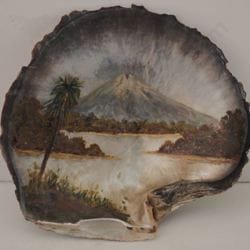
Mount Egmont with Lake
By: John Philemon Backhouse (1845-1908)
Oil on Sea Shell - 13cm x 14cm
Valued $2,000-$3,000
Offers invited over $1,500
Contact: Henry Newrick – (+64 ) 27 471 2242

|
|