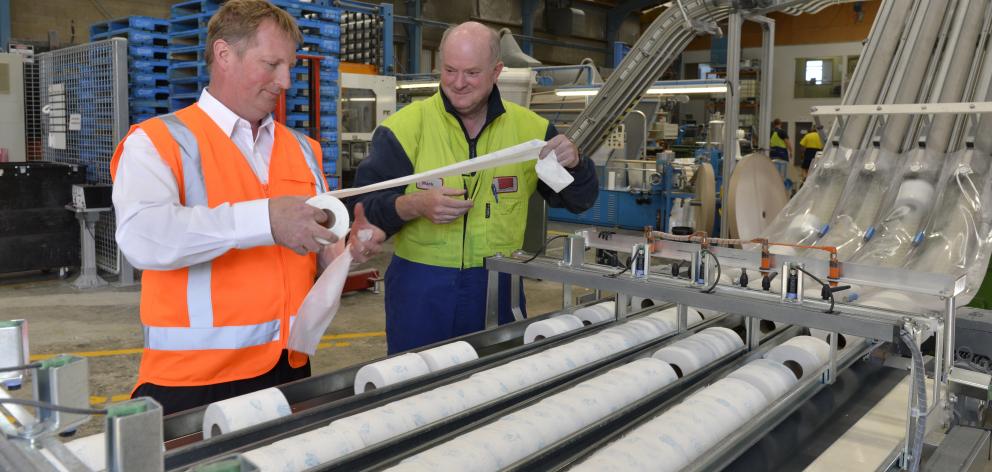
Founded by Max Farndale 1947 - 2018
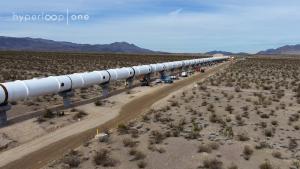
With a few different players now in the game, the race is on to win over governments and get the once seemingly far-fetched Hyperloop up and running. For LA-based startup Hyperloop One, that means rolling into Dubai with photos of its full-scale test track and a few renderings of what the first Middle Eastern Hyperloop terminals might look like.
Hyperloop One has been busy planting its fingers in different continental pies, with a view to one day using its ultra-fast transport system to move passengers all around the world. This has included agreements with governments in Russia, Finland and Dubai to explore the technology's potential on various scales, with the latter possibly growing to embody a new, blazing fast transport network across the Gulf region.
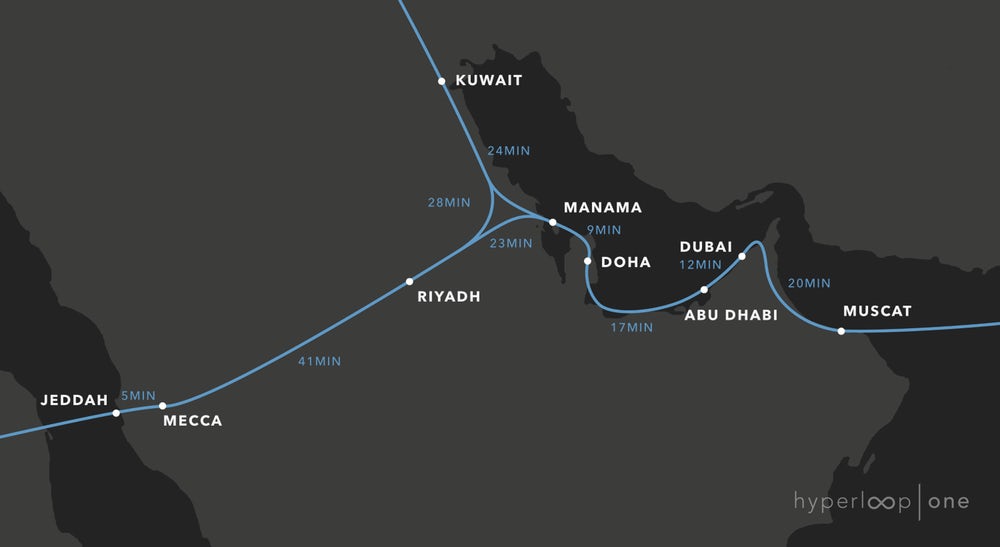
Hyperloop One harbors ambitions of connecting cities across the Middle East
To begin with, Hyperloop One has signed a deal with port operator DP World to conduct a feasibility study exploring the potential of the system to ferry cargo from container ships to a depot further inland.
But it is hoped that this is just the first step, with Hyperloop One harboring ambitions of connecting cities across the Middle East. This would include a 12-minute journey between Abu Dhabi and Dubai, a 139 km (86 mi) trip that currently takes around an hour and a half by road. But that's with little traffic. Hyperloop One reckons that 4,000 vehicles travel this route everyday, with the congestion costing the economy US$800 million in lost working hours.
The Hyperloop One test-track is 500 meters in length
To show how serious it is, Hyperloop One CEO Rob Lloyd accompanied his keynote address at the Middle East Rail conference in Dubai today with images of a full-scale test track in the Nevada desert, along with a few renderings of Hyperloop terminals. Dubbed the DevLoop, the 500-meter long (1,600 ft) test track has a 3.3-meter (11 ft) diameter and sits 30 minutes outside Las Vegas.
Last year Hyperloop One held a public demonstration using a smaller, open air test track, where it showed off the propulsion system that will one day be used to shuttle passenger capsules through vacuum-sealed tubes at close to the speed of sound. It plans on conducting the first public trials using its new sealed test-track in the first half of 2017.
| Source: Hyperloop One | March 09, 2017 ||
The Kuwait Ministry of Defence has appointed the Australian College of Kuwait and its partners Airways International Ltd (NZ) and 3SDL (UK) as its training providers. The Australian College of Kuwait (ACK) will be responsible for overall training management along with Engineering and Flight Training programmes while Airways will be responsible for Air Traffic Control training and 3SDL Fighter Controller training.
The Aviation Department of ACK has established itself a premiere supplier of EASA-based B1/B2 engineering training in the Middle East. The Aviation Department has a long and well established means of compliance with all the regional aviation authorities, including the DGCA, GCAA and ICAO. “Our agreement with Airways and 3SDL for ATC training is a significant step for the Aviation Department into international markets”, says Aviation Director Mr Abdulhameed Al Refai.
“The agreement will see Airways delivering ab-initio ATC training at ACK’s Kuwait Training campus”, says Airways General Manager, Training Sharon Cooke.
“We have similar training partnerships in place in Australia, United Arab Emirates, Puerto Rico and Vietnam and it’s pleasing to be adding Kuwait to that portfolio. Our track record in providing highly effective ATC training, combined with ACK’s wider educational portfolio, means this partnership is well placed for success”, Ms Cooke says.
Airways is able to offer a truly unique program for the Kuwait Air Force, blending the very latest in competency-based training and e-learning technologies. Airways will install Total Control radar and aerodrome simulators which provide students with highly realistic tower and surveillance experiences via three-dimensional high definition graphics. Airways technology solutions Airbooks, Aviation English and Aviation Knowledge On-line (AKO) will also be implemented as part of the total training solution.
“These technologies have been designed to engage and motivate learners; as a result learners unconsciously put more effort into their study as they interact and connect with the knowledge content in a unique way”, says Ms Cooke.
Fighter Controller (FC) training will be provided by 3SDL, as part of a coordinated and complementary programme. A number of candidates will be selected to undertake a short aptitude assessment course, the best of whom will advance to the basic FC training module. Initial training will be conducted using the Airways Simulator, with future modules hosted on upgraded systems.
“Fighter Controllers require most of the radar-based skills of their ATC counterparts, combined with a capacity to support tactical fighter aircraft conducting military tasks. This complementary training method is highly efficient and very low risk; we are delighted to be a part of it”, says Andrew McAleer of 3SDL Ltd.
It is expected that the centre’s first intake of students will commence Air Traffic Control training in mid 2017.
| A AirwaysNZ release | March 08, 2017 ||
Airways New Zealand has today launched a new aeronautical services company called Aeropath.
Aeropath provides aeronautical services with a focus on assisting aviation organisations to make their way along the International Civil Aviation Organization (ICAO) aeronautical information management (AIM) roadmap and performance-based navigation (PBN) implementation programmes. Aeropath is also the New Zealand state provider for aeronautical information services.
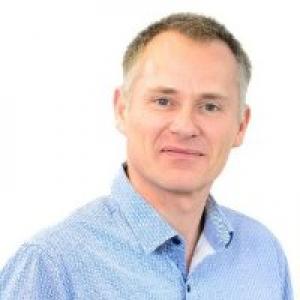
Aeropath CEO Wayne Smith (pictured) says the industry is facing a pivotal time in air navigation as changes to international regulations gain pace.
“Many countries are embarking on their PBN and area navigation (RNAV) programmes, and discovering their increased reliance on quality-assured procedures and data.
“Now, more than ever, with ICAO mandated deadlines approaching, aviation organisations need to progress their PBN implementation activities and to transition from aeronautical information services (AIS) to AIM, enabling key Aviation System Block Upgrade (ASBU) deliverables to be met.
“These programmes are essential towards establishing an effective System Wide Information Management (SWIM) environment for the future,” says Mr Smith.
The new company offers PBN procedure design training with world class designers, instructors, training material, and software.
It holds certifications from multiple jurisdictions and is a contributing member to ICAO’s Instrument Flight Procedures Panel (IFPP). Aeropath has received ICAO recognition for PBN and conventional procedures and its practices are aligned with the latest ICAO standards and recommended practices (SARPs).
Aeropath provides AIM services to 12 Pacific states, and has provided procedure design, training, and consultancy services to over 20 countries. The team has designed and now maintains over 2300 instrument flight procedures worldwide.
The company has more than 30 staff headquartered in Wellington, New Zealand and also has staff based in Asia and the Middle East to directly service customers in these regions.
Airways New Zealand formerly partnered with GroupEAD Europe to offer aeronautical services in Asia Pacific. The joint venture ended in December 2016.
| An Airways New Zealand release | March 08,2017 ||
The volume of meat and dairy product manufacturing fell in the December 2016 quarter, although sales values rose due to higher prices, Statistics New Zealand said today.
After adjusting for seasonal effects and removing price changes, meat and dairy product manufacturing volumes fell 5.7 percent.
"The fall in meat and dairy sales volumes followed rises in the previous two quarters," business indicators senior manager Neil Kelly said. "In contrast, sales values were up more than $350 million, mainly reflecting a sharp rise in dairy product prices."
Business Price Indexes reported a 14 percent rise in dairy product manufacturing output prices in the December 2016 quarter.
The volume of total manufacturing sales fell 1.8 percent in the December 2016 quarter, following a 1.5 percent rise in the September 2016 quarter.
Excluding meat and dairy, the manufacturing sales volume fell 0.6 percent – the first fall in this series in over two years.
The trend for the total manufacturing sales volume, which gives a longer-term picture of movements, has been mainly rising since mid-2013 but now appears to be easing.
The actual volume of total manufacturing sales was up 0.9 percent on the December 2015 quarter. When price changes are included, the value of manufacturing sales was $26.9 billion in the December 2016 quarter, up $512 million (1.9 percent) from the December 2015 quarter.
Economic Survey of Manufacturing: December 2016 quarter – for more data and analysis
| A StatisticsNZ release | March 08, 2017 ||
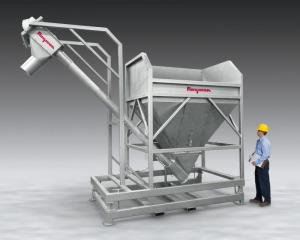
A new extreme-duty Flexicon® flexible screw conveyor with purpose-built hopper transfers bulk material received from front end loaders.
The conveyor consists of a heavy-gauge stainless steel screw that rotates within an 8 in. dia. (200 mm) stainless steel tube. Since the conveyor is driven at its top end by a 20 hp (15 kW) variable speed electric motor and gear reducer, material exits the discharge housing prior to contacting any seals or bearings. The tube interior and removable screw are smooth and crevice-free, allowing rapid, thorough cleaning.
Rugged enough to withstand incidental contact with front-end loaders, the heavy-gauge stainless steel hopper holds up to 8 tons (7 tonnes), or 200 cu ft (5.7 m3), providing an ample supply of material for the high capacity conveyor to run continually as a front end loader replenishes the material.
Self-contained on an all-stainless skid equipped with forklifting tubes, the system can be deployed in multiple indoor or outdoor locations with a single power connection, conveying a broad range of free-flowing and non-free-flowing materials from fine powders to largeaggregates including abrasives, corrosives and materials with bulk densities up to 150 lb/cu ft (2400 kg/m3).
Material is conveyed at a 40 degree incline before discharging into downstream processing equipment or storage vessels.
The simple design is said to deliver efficient performance and high reliability while reducing maintenance and cost.
The system is also available constructed of carbon steel with durable industrial coatings.
| A Flexicon release | March 07, 2017 ||
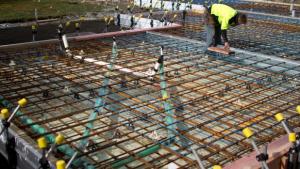
Seismic grade steel reinforcing bar that is not as strong as it should be has been sold in the New Zealand market according to a RadioNZ report aired earlier today.
The report voiced the concerns of a Wellington builder who grew suspicious about the quality of the bar he was using when he found it to easy to bend.
Imported by Euro Corp and distributed by Bunnings the product, according to this report, originates from Amsteel in Maylaysia.
You can read the full report here
Trade Minister Todd McClay and European Union Trade Commissioner Cecelia Malmström have agreed the completion of joint scoping discussions towards an EU-NZ Free Trade Agreement (FTA) following a meeting in Brussels today.
After almost 2 years of discussion, reaching this significant milestone means the FTA process now enters a new phase, where the Commission and New Zealand will seek respective mandates to commence negotiations.
"Today’s meeting was an important demonstration of our commitment to launch negotiations as soon as possible in 2017," Mr McClay says.
“New Zealand and the EU both recognise there are substantial benefits to be gained from free trade, and we are now one step closer to a high-quality, comprehensive FTA that can deliver great outcomes for our citizens.”
Mr McClay and Commissioner Malmström also agreed that officials should look at ways to engage the public on trade issues. Mr McClay said the EU undertakes a number of trade events during negotiations which might suit New Zealand.
"With this in mind, I have invited Commissioner Malmström to visit New Zealand later this year. The Commissioner has accepted this invitation," Mr McClay says.
| A Beehive release | March 08, 2017 ||
The Government’s books are better than expected, with a $1.1 billion OBEGAL surplus for the seven months to January, Finance Minister Steven Joyce says.
“Stronger tax revenues as a result of a healthier economy are flowing through to the Government’s financial performance,” Mr Joyce says.
Tax revenues year-to-date are 3.8 per cent more than they were predicted to be in Budget 2016.
“Company tax in particular is higher than expected, and that reflects the good performance of New Zealand companies in what is still an uncertain world,” Mr Joyce says.
The $1.1 billion OBEGAL surplus compares to Treasury’s forecast of a $517 million surplus at the start of the fiscal year.
Core Crown expenses for the seven months to January were $234 million lower than the Budget forecast, reflecting the Government’s ongoing commitment to prudent spending.
Mr Joyce says that a number of variables made the final out-turn for the full financial year hard to predict.
“The biggest variable at this stage is the cost of the Kaikoura earthquake and how those are allocated between this year and next year,” Mr Joyce says.
“The good news is that this Government’s strong economic management means we can afford to step in to help these communities and support them when they are most in need.
| A Beehive release | March 07, 2017 ||
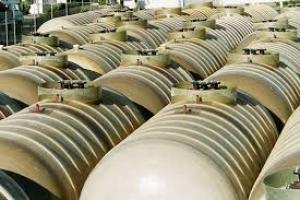
Auckland based fiberglass engineering company, Maskell have introduced underground storage product Envirotank to the New Zealand Market.
Envirotank eliminates the risk of corrosion both inside and outside of the storage tank, an issue which in the past has led to harmful, toxic chemicals leaching into the surrounding soil.
Intended for a range of applications, the Envirotank can safely store sewage, storm water and petroleum. Envirotanks can also be equipped with Oil/Water separators, which are designed to prevent any spilled petrol, diesel or detergents from contaminating the storm water drainage system.
“Pollution prevention is critical to keeping our waterways clean. Our dedicated oil separators and storage solutions go above and beyond industry regulatory standards to ensure no silts or hydrocarbons (diesel, petrol or engine oil) can enter your storm water system”.
Envirotanks are constructed from corrosion resistant fiberglass and Maskell offer varying product types, depending on what substance is being stored.
In the past, water storage has been dedicated to steel or concrete tanks, which required a high level of maintenance and were at high risk of corrosion and leakage.
For harsher chemicals like petroleum, Maskell offer an even more durable underground storage tank solution in their double walled fiberglass product.
“Envirotank’s double-wall option for petroleum tanks offers customers proven protection from environmental contamination. After more than 250,000 installations in the U.S. as well as tens of thousands worldwide, Envirotank Double-Wall tanks have seen zero leaks from internal or external corrosion.”
Envirotanks, available in New Zealand through Maskell’s website come with a consultation service to ensure customers receive the ideal product for their underground storage needs.
| A Maskell release | March 07, 2017 ||

Palace of the Alhambra, Spain
By: Charles Nathaniel Worsley (1862-1923)
From the collection of Sir Heaton Rhodes
Oil on canvas - 118cm x 162cm
Valued $12,000 - $18,000
Offers invited over $9,000
Contact: Henry Newrick – (+64 ) 27 471 2242
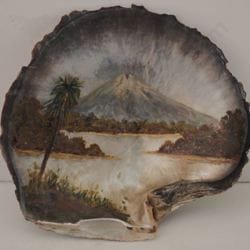
Mount Egmont with Lake
By: John Philemon Backhouse (1845-1908)
Oil on Sea Shell - 13cm x 14cm
Valued $2,000-$3,000
Offers invited over $1,500
Contact: Henry Newrick – (+64 ) 27 471 2242

|
|