
Founded by Max Farndale 1947 - 2018
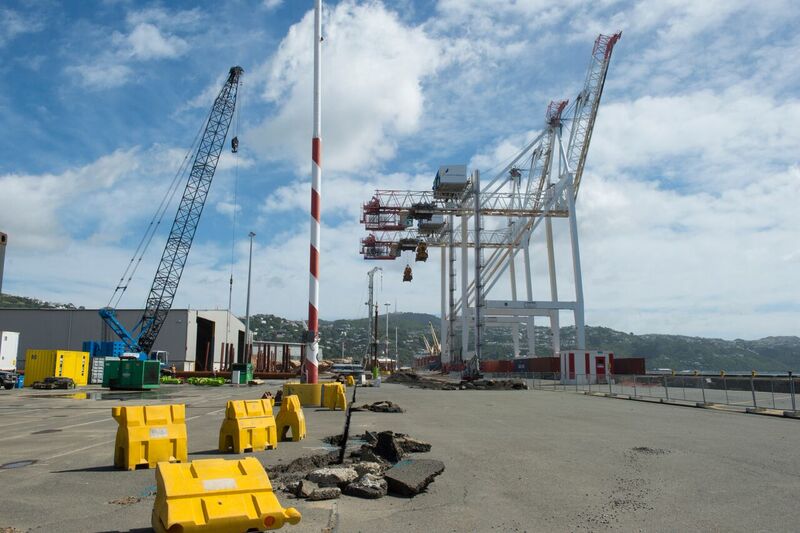
Regular container shipping is returning to Wellington, with weekly visits by a geared ship linking central region businesses with international markets.
From Sunday 12th February an ANL ship will visit the Port weekly to drop off and pick up containers with its own cranes.
Chief Executive Derek Nind said the port’s gantry cranes were made inoperable by the Kaikoura earthquake on 14 November last year. Work is underway to resume modified crane operations within four to six months.
“CentrePort understands that customers have faced significant challenges as a result of the disruption caused by the earthquake. That’s why we’ve worked closely with ANL on this initiative, which will make it easier for central region businesses to connect with international markets.”
Noel Coom, General Manager of ANL New Zealand, said he expected the service to be well-utilised by central New Zealand shippers.
“We’re excited to be working with CentrePort on this initiative. By adapting our operations we are bringing regular container shipping in Wellington. We’ve already visited the Port since the earthquake, and this scheduled service will further meet the needs of central region businesses.”
The service will connect Wellington shippers directly with Australia, and will provide an opportunity for them to connect with services between North America, North Asia, South East Asia and globally.
CentrePort’s key trades of ferries, fuel, logs, cars, and cruise ships continue to operate.
| A Centreport release | January 30, 2017 ||
New Zealand’s top two export commodities, meat and dairy, both fell by value in 2016, Statistics New Zealand said today.
The total value of all export goods was $48.4 billion for the year ended December 2016, down $544 million from the previous year. This is the second annual fall in a row for exports. The latest annual total is $1.6 billion less than the high of the 2014 year.
The biggest fall by value was for meat and edible offal, our second largest export group, with sales down $909 million to $5.9 billion. The fall in meat was driven by beef (down $481 million) and lamb (down $415 million). The United States accounted for three-quarters of the fall in beef, while the European Union (EU) accounted for nearly half of the fall in lamb. The amount of meat fell 7.4 percent from 2015, with beef falling 14 percent and lamb falling 4.6 percent.
“The large fall in meat exports for 2016 reflects a decline from the record meat season in 2015 for both value and quantity,” international statistics senior manager Nicola Growden said. “The 2016 year’s meat exports have returned to levels similar to those seen in 2014.”
The quantity of milk powder, butter, and cheese exported rose to a new high of 3.0 million tonnes, despite a near 3 percent fall in the value of dairy exports to $11.2 billion.
The quantity of milk powder, butter, and cheese has been rising since 2013 and is now 14 percent higher than it was then. The quantity exported to China was 25 percent of the total in 2016, slightly up from 23 percent in 2015.
The value of imported goods was $51.6 billion in 2016, down $883 million (1.7 percent) from the high of the December 2015 year. The fall was led by cheaper oil and petrol, and partly offset by a rise in cars, trucks, and parts.
Oil and petrol fell $840 million in 2016, mainly due to crude oil (down $666 million). The value of crude oil has been falling for the past four years, and is now 55 percent lower than the 2012 value ($5.7 billion). The amount of crude oil imported rose 2.3 percent in 2016, and has been increasing for the past two years.
In 2016 there was an annual trade deficit of $3.2 billion (6.6 percent of exports). This is smaller than the deficit of $3.5 billion for the December 2015 year. The trade shortfall in 2015 was the largest December year deficit since 2008.
Overseas Merchandise Trade: December 2016 – for more data and analysis
Fonterra’s Research and Development Centre has developed a new white butter product to meet growing demand from manufacturers in the Middle East market.
The New Zealand dairy co-op developed the product alongside its global ingredients business NZMP.
Fonterra’s butter is renowned amongst Middle East consumers for its golden appearance thanks to milk from grass fed cows.
However, a niche segment of manufacturers prefer white butter as a processing ingredient for their food products.
These Middle Eastern food manufacturers have traditionally sourced butter from grain fed cows which produce dairy products with a pale colour, according to Fonterra.
The co-op seized an opportunity to respond to customer needs by developing a high quality white butter ingredient, Fonterra’s Dairy Foods Category Director of NZMP, Casey Thomas said.
Produced through an innovative manufacturing process, Fonterra is now able to reduce the golden appearance of the butter without impacting its quality.
“While our yellow butter already sees great success in this market, we saw an opportunity to tap into this new area for customers to use in a variety of applications such as spreadable jar cheese, recombined cream cheese, and could soon be used in ice cream,” he said.
This innovative approach is already seeing strong results, NZMP General Manager of Middle East and Africa, Santiago Aon said.
Our customers have had positive feedback about the white butter, it is performing to our expectations as a high quality ingredient for food businesses across the Middle East region.
The Fonterra Research and Development Centre and NZMP team both have a long history of partnering with customers to not only provide them with steady supplies of ingredients, but creating business solutions with them.
The product is now available in Saudi Arabia, Iran, Bahrain, Turkey and Pakistan.
Meanwhile, the Kiwi co-op plans to the launch the product in Egypt, Algeria, Morocco and even South America in the future.
| First published on Agriland | January 29, 2017 ||

Isolation imposed time lag continues as New Zealand characteristic
The delivery of the earthquake struck coastal township of Kaikoura with the second syllable pronounced as in “cow” has become the signal shibboleth or password designed to reveal the utterer, and the organisation that employs them, as being politically correct.
Kai- COW – ra has now replaced as the dominant pc call sign the previous place-name pronunciation which was KIDDY –KIDDY for the far northern township of Kerikeri.
Both these hallmark pronunciations had their genesis in New Zealand’s government broadcasting operation.
This was in spite of the state broadcasting corporation’s late doyen of the Maori language Bill Kerikeri always pronouncing his own name with the two rs firmly sounded.
The continuing trend for New Zealand official commentators – broadcasters to dolly up the delivery of longstanding Maori names continues to demonstrate the way in which the fashionable delivery of targeted place names especially remains such an encoded hallmark of modish conformity.
Other Maori-derivation place names continue to be pronounced with the kou syllable pronounced in the traditional way as coo.
Some officials continue to go counter-stream meanwhile. For example the ubiquitous cabinet member Steven Joyce MP continues to use the koo rendition of Kaikoura.
The flourishing of the state-broadcasting engendered movement to put a smooth modernist emollient spin on strong Maori word pronunciation is another indicator that New Zealand remains in its customary time-lag in regard to international societal trends.
This in turn continues to support the belief that communications globalisation is no substitute for geographical isolation, the tyranny of distance.
Another indicator of this was the broadcasting use of the term happy festivity as a substitute for happy christmas thus sidestepping the invocation of any christianity.
Meanwhile in order of frequency of usage these were the other modish substitutes that have become standardised in the government broadcasting system.
Conversation DiscussionBirthing Maternity...(nothing to do with ships)Choices Decisions/options/ alternativesEarly childhood KindergartenFamily now refers to staff/employees/ previously “team”Interventions Social welfare involvementIssues ProblemsParenting this gerund replaces the old “bringing up” of children (“raising” in the US)Procedure Surgical operationResilient SustainableSecurity Supply of something, as in food “security.”Wellness HealthFishers FishermenMedical event Usuallly refers to coronary or stroke
| From the This email address is being protected from spambots. You need JavaScript enabled to view it. | Monday 30 January, 2017 ||
Ξ CentrePort Resumes Regular Container Service
Ξ White butter is taking off in the Middle East
Ξ Trump seeks Aust, NZ trade deals: adviser
Ξ Labour and Greens fire united opening salvo at 'tired govt'
Ξ US tariffs on Mexico could hurt Fisher & Paykel
Ξ Andrew Little's Speech at State of the Nation 2017
The Ministry of Business, Innovation and Employment (MBIE) has appointed University of Auckland’s Deputy Dean of Engineering, Margaret Hyland as its new Chief Scientist.
"We are delighted to announce Margaret’s appointment as Chief Scientist. This crucial leadership role will be important as we implement the National Statement of Science Investment, and will contribute to the deepening relationships between the Ministry and the science community," says Paul Stocks, Deputy Chief Executive Labour, Science and Enterprise.
Margaret, who is Professor of Chemical and Materials Engineering at the University of Auckland, holds a PhD from the University of Western Ontario in Canada and has spent her career specialising in aluminium technology, and the chemistry and engineering of material surfaces. She is a Fellow of the Institute of Chemical Engineering and, in addition to her numerous teaching awards, she was the first woman to be awarded the prestigious Pickering Medal for excellence in technology by the Royal Society of New Zealand in 2015. Margaret was previously the Director of the Science for Technological Innovation National Science Challenge.
"As Chief Scientist, Margaret will provide science leadership, and work with teams providing advice on science systems, policy and investment. She will be tasked with building on the existing strategic direction of the science system, with a particular eye on the capability of the sector and opportunities going forward. She will also play a crucial role in ensuring that the sector’s expertise and intelligence are captured and communicated during the development of policy and investment plans," Paul says.
Margaret will be seconded to MBIE for 80% of her time for the next two years from February 1 2017.
| A Beehive release | January 27, 2017 ||
An investment of over $270,000 in the technology mentoring programme Shadow Tech Days will help it inspire more young women into technology related careers, Youth Minister Nikki Kaye announced today.
“This programme, run by NZ Tech, connects participants with women working in the tech sector, as well as women studying technology at a tertiary level,” says Ms Kaye.
“By spending a day in the workforce, participants get to experience first-hand what it’s like to work in a technology role.
“Ongoing mentoring and advice is also provided through contact with a tertiary student, to help participants progress their studies towards a tech career.
“The investment announced today is being made under the Partnership Fund which sees the Government co-invest with business, philanthropic, iwi and other partners to grow youth development opportunities.
“The Government will invest $75,000 in Shadow Tech Days, complemented by around $25,000 from NZ Tech towards programme management, and over $170,000 of staff time from participating technology firms.”
To date, Shadow Tech Days has been run in Auckland, Wellington and Christchurch. The Partnership Fund investment will enable it to reach more young women in these areas, and also expand its reach to Hamilton, Tauranga, Palmerston North and Dunedin.
“Time spent with a mentor and seeing how things operate in the actual workforce can be hugely beneficial to inspiring young people’s potential career path,” says Ms Kaye.
“The experiences this programme delivers are about building the confidence of young women, and equipping them with the knowledge and support to make positive decisions about their future.”
Shadow Tech Days is scheduled to take place during Techweek (6-14 May 2017).
| A Beehive release | January 27, 2017 ||
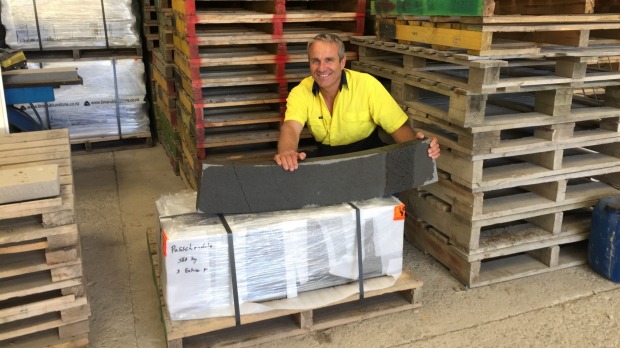 IMAGE CREDIT: KOREN ALLPRESS
Ξ Timaru stone to form part of commemorative garden in Belgium
Ξ Strike action still looming at Lyttelton Port, talks to continue Friday
Ξ 5000 NZ dairy cows heading to China on Saudi businessman's ship
Ξ While you were sleeping: Wall St mixed
Ξ Tony Alexander's Weekly BNZ Overview
Ξ Government accounts ahead of forecast
Ξ Underpinning Mr Thiel’s right to New Zealand citizenship is his passion for Tolkien.
Ξ Phitek sold to NYSE-listed Amphenol in $60M deal
Ξ Callaghan appoints panel to help firms leverage their IP
Ξ NZ budget deficit smaller than forecast in first 5 months as GST, corporate tax beat estimates
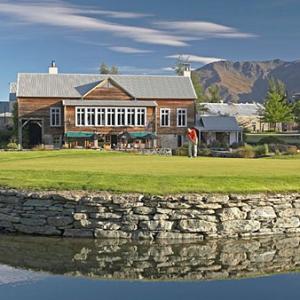
Organisers believe a reconfigured Millbrook Resort will provide an exciting finish to the upcoming ISPS Handa New Zealand Open in Queenstown.
Millbrook Resort, which comprises three nine-hole configurations, is the tournament co-host for the 93rd ISPS Handa New Zealand Open on 9-12 March.
Two signature holes from the Coronet Nine and the Arrow Nine have been combined as the finishing holes, to maximise the atmosphere created by the amphitheatre surrounding the Millhouse Restaurant.
“The new layout will create a superb finish and ensure a spectacular spectator experience,” said Millbrook Resort’s Brian Spicer.
The tournament organisers have turned the current final hole of the Coronet Nine to the 17th hole, to be followed by the finishing 18th hole which is the current 9th hole on the Arrow Course.
“We will finish with a reachable par-5 over water as the 17th and a par-3 which is virtually surrounded by water as the 18th, which should add drama to the conclusion,” said Mr Spicer.
“The 18th hole is a relatively straight-forward par-3 but in a tournament like this, you never can tell. It all came down to the last few holes at The Hills last year, proving anything can happen at the close of a tournament.
“It has the potential to be an eagle-3 and birdie-2 finish or dependant on conditions and the situation, it can just as easily be a bogey-6 and double bogey-5. The nerves could tell.”
The first two days of the tournament will be played on both Millbrook Resort and The Hills, with the final two rounds at Millbrook Resort.
Tournament Director Michael Glading is delighted with the course layout plans for the 93rd ISPS Handa New Zealand Open.
“We’re incredibly fortunate to have two great courses to showcase our National Open, and look forward to an exciting event,” he said.
“The configuration of the final two holes at Millbrook Resort will bring new drama to the event.
“The 18th hole at The Hills has been pivotal to the final showdown in previous years, and we’re confident that by creating two climatic holes we’ll add a real sense of theatre this year.”
Two New Zealand Open champions, who won the Brodie Breeze Trophy six times between them, were master-minds of Millbrook Resort’s layout. The original 18-hole course was designed in 1993 by golfing legend Sir Bob Charles, a four-time New Zealand Open winner.
Local Queenstown former professional Greg Turner, the 1989 and 1997 Open champion, designed the Coronet Nine in 2009 and remodelled the existing 18-hole course.
| An ISPS Handa New Zealand Open release | January 26, 2017 ||
The Farming Robots Market Projected to Reach $5.7 Billion by 2024 Brandon Marshall has a look at this market on machinery.com. He writes, Transparency Market Research (TMR), has released a report, “Agriculture Robots Market - Global Industry Analysis, Size, Share, Growth, Trends and Forecast 2016 – 2024,” predicting a sizeable increase in demand for agriculture robots within the decade.
The report estimates that the agricultural robotics industry has generated USD $1.01 billion in revenue globally as of 2016. Going forward, TMR suggest that revenue for this industry will rise to approximately $5.7 billion by the end of 2024. This estimate is based upon a projected compound annual growth rate (CAGR) of 24.1 percent over the forecast period.
What's Driving Demand for Farming Robots?
According to one TMR analyst, the migration of populations away from traditionally rural areas toward densely populated cities and suburbs has increased the demand for food in these regions. In addition, the population drain from farming communities–combined with the repurposing of former farmland for industry and residences–is driving the need for precision farming. That’s where robots come in.
Opportunities for Innovation in Agriculture
Beginning with the debut of the Rotolactor (a large, rotating, milking machine) at the 1939 World’s Fair and continuing today, the majority of agriculture robots have been designed to perform one specific task. TMR’s research report categorizes robotic farming systems accordingly:
The installation and operational costs of these non-integrated, task-specific systems has, unfortunately, slowed the adoption of automated processes on many farms. Additionally, legal and regulatory concerns continue to pose a challenge for agriculture innovators.
According to TMR analyst, innovations in agriculture technology are likely to take place in the area of wireless telemetry; including sensors used to monitor crop health or the status of machines operating out of view.
Industry Leaders in Farming Robots
The research report found North America currently leading the industry in terms of market share, though strong growth within Asia is likely to continue. Some prominent players within North America include: PrecisionHawk, Inc., Clearpath Robotics, and Harvest Automations, Inc.
SenseFly SA and Naio Technologies dominate in Europe, while Shibuya Seiki is a leading player within the Asia-Pacific region.
TMR has also suggested that competition in the farming robots market will increase around the globe as start-ups continue to push innovation.
The full report is available from Transparency Market Research.
| Originally published on Machinery.com | January 20, 2017 ||
Ed's Note:No mention of technology out of New Zealand. Updates in this arera welcomed.
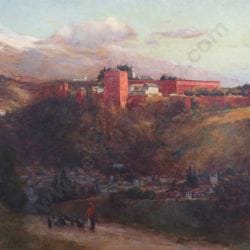
Palace of the Alhambra, Spain
By: Charles Nathaniel Worsley (1862-1923)
From the collection of Sir Heaton Rhodes
Oil on canvas - 118cm x 162cm
Valued $12,000 - $18,000
Offers invited over $9,000
Contact: Henry Newrick – (+64 ) 27 471 2242
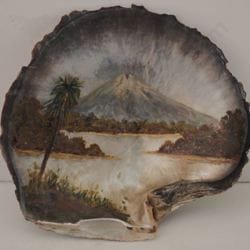
Mount Egmont with Lake
By: John Philemon Backhouse (1845-1908)
Oil on Sea Shell - 13cm x 14cm
Valued $2,000-$3,000
Offers invited over $1,500
Contact: Henry Newrick – (+64 ) 27 471 2242

|
|