
Founded by Max Farndale 1947 - 2018

Theresa May yesterday gave the clearest indication of Britain’s future direction of travel. Her mantra is “Global Britain” – a phrase we will hear endlessly over coming years. The referendum was a vote “to become even more global and internationalist in action and in spirit”, she said.
Certainly, it was good to hear May speak passionately about the power of free trade, not least as the lethally protectionist Donald Trump becomes president of the United States.
But this flies in face of quitting the single market – collectively the world’s biggest economy and destination for almost half of Britain’s exports. Indeed, there was deep irony that May’s speech was in the same venue, Lancaster House, where Margaret Thatcher once extolled this noble concept of unfettered access.
The truth is that for all May’s fine words, there are significant problems with her vision of “Global Britain”.
The first is in the timescale. No one should doubt that sorting out extraction from the European Union and creating scores of new trading arrangements is a mind-bogglingly complex, delicate process with massive consequences
Yet as the clock ticks on Britain’s departure from the European Union, there will be fierce pressure on the Prime Minister to prove her country can stand alone. Already she has been attacked, often unfairly, for obfuscation.
The danger in trying to rush through the kind of deals that will be needed – both with the EU 27 and others – was put to me by a senior cabinet minister recently.
He gave the example of the bilateral trade deal between China and Switzerland. Concluded just under three years ago, it was hailed as the first between the planet’s emerging superpower and a leading Western economy, the culmination of nine rounds of negotiations, starting in 2010.
But while the deal gave 99.7 per cent of Chinese goods tariff-free access to Swiss markets, it was significantly less generous for trade heading in the opposite direction.
Shortly before conclusion of the talks, the chief Swiss negotiator pleaded for a special dispensation for watchmakers selling to their third biggest market, pointing out that China did not produce luxury timepieces.
His Chinese counterpart smiled. “You may have the watches,” he replied. “But we have time on our side.”
Despite Mrs May’s brave talk of dispensing with a deal if it is on the wrong terms, she is the leader needing to find solutions far more than those she faces over the negotiating table. This means she is more likely to grant the greater concessions.
Similarly, Mrs May talked yesterday of ensuring Britain is a world centre for science and innovation, pledging to continue collaboration with Europe. Quite right, too. Yet already such partnerships are fraying following last year’s vote.
Europe may also have other ideas, focusing on internal collaboration rather than aiding a turncoat. Note how a Swiss threat to end single market participation led to the instant severing of academic ties three years ago.
Yet there is a far more fundamental problem with the prime minister’s plan – which is that its vision of a Global Britain appears to be blurred, to put it kindly.
One of the main factors forcing Britain from the single market, and probably the customs union, is not a desire to embrace free trade. It is Mrs May’s antipathy to immigration, fostered in the Home Office and fuelled by last year’s referendum.
To her credit, she has at least made it clear that controlling immigration comes first. This follows her constriction of border controls at the Home Office and her refusal to exclude students from the Government’s immigration cap, to the detriment of both Britain’s businesses and its world-beating universities.
So it is clear, despite promises of some campaigners, that Brexit will not lead to a significantly more liberal stance for migrants from outside Europe.
Mrs May talked also in grand terms about creating a more global Britain “not for ourselves, but for those who follow. For the country’s children and grandchildren”.
Already we hear much talk of the Anglosphere, as traditionalists promote the cause of deeper alliances with the likes of Australia, Canada and New Zealand.
British and New Zealand leaders have talked of a “high quality” deal, with international trade secretary Liam Fox being despatched to Wellington in coming months. Meanwhile, a few glib words from a slippery president-elect led to huge excitement among Brexiteers.
But if the nation is really focusing on long-term prizes – a sensible idea, given the short-term disruption to business that will follow even a benign Brexit – where is the effort to woo the powerhouses of the future in the developing world?
Not just China and India, important as they are, but the rapidly-growing nations of Africa and Latin America?
Australia, Canada and New Zealand are today worth about $3 trillion, and growing at the same unexciting speed as other mature nations – perhaps 2 per cent over coming decades. New Zealand is smaller economically than Romania, let alone the likes of Argentina, Iran or Nigeria.
As the economist Charles Robertson explained in his book The Fastest Billion, Nigeria alone will be worth $6 trillion by 2050. The entire African continent – its population due to double to two billion by that date – will be worth almost $30 trillion.
To put this figure in perspective, it is bigger than the combined economies of the United States and Eurozone.Elsewhere on CapX
Yet Britain, obsessed with aid not trade, is seeing its share of that growth slip while others from China to India, Brazil and Turkey move in on fast-expanding consumer societies.
This is highly damaging, not least given Britain’s historic links to these areas – the shared language in many parts, the immense soft power of our culture, and even our Premier League football.
Nigerians, for example, are among biggest per capita spenders in our shops – and like several other African nations including Ghana and Kenya, are keen consumers of British education.
Yet from businesspeople to tourists, many Africans have found the costs of obtaining British visas soaring, the hurdles of hostile officialdom rising ever higher, and the consequent attraction of dealing with other nations increasing.
Having been involved in bringing musicians from all over Africa into Britain, I am well aware of visa horrors endured even by some of the continent’s most famous names. And I have heard frequently from middle-class Africans about their disgust at being treated with such disdain by our suspicious system.
So where is the effort to push deals with African countries, despite several being among the world’s fastest-growing economies in recent years? Or a Latin American giant such as Brazil?
Where, in other words, is the focus on the countries and emerging economies that will dominate the future – not just those places that have been our old friends in the past? Where is the recognition that these countries will need access to Britain not just for their goods but for their students and businesspeople, their thinkers and tourists?
If I really thought Brexit would lead to a genuinely global shift in British attitudes, then I would feel far more optimistic about these tumultuous events – and about some of the sentiments in May’s landmark speech.
But at the moment, the self-defeating focus on immigration limits any sense of a genuine global stance.
If Britain really wants to make the most of Brexit, to truly fulfil the Prime Minister’s promise “to become even more global and internationalist in action and in spirit”, it needs to shed the hostility to foreigners that drove so much of the Brexit debate – and genuinely open up to all corners of a fast-changing world.
| A CAPX release by Ian Birrell | January 18, 2017 |

In Southeast Asia, Australia and New Zealand, developers of industrial automation and machine-to-machine systems are increasingly working together as the industry starts to grow, a new report from Frost & Sullivan has found.
The analysts says that this collaboration will be crucial to the manufacturing value chain as the Industial Internet of Things (IIoT) inches towards efficient adoption.
Currently Singapore and Australia lead IIoT adoption, while other countries are only starting to deploy machine-to-machine (M2M) technologies.
Research from the analyst firm shows that the automotive vertical has the highest M2M software and services market revenues, coming in at 35%.
Direct sales will soon give way to distributors and value-added resellers as they ensure end-to-end service delivery. They will also contribute to a compound annual growth rate of 17.2% between 2015 and 2020.
"The spate of mergers and acquisitions over the past four to five years will continue in the manufacturing software and hardware sectors," says industrial automation and process control industry analyst Krishnan Ramanathan.
"The IIoT environment has many complexities as it involves connecting and securing millions of devices, and analysing the explosive amounts of data generated. Strategic acquisitions could simplify these challenges,” Ramanathan continues.
Frost & Sullivan states that there are growth opportunities in the IoT sphere, as automation and electronic systems suppliers start to realise the potential for independence this technology can bring, particularly in the automotive industry and emergency services.
The analyst firm says that benefits will appear in areas such as savings, resource optimisation and better transparency and control will boost IIoT adoption and facilitate universal standards. Interest is also expected from connectivity service providers.
"Data analytics, which is integral to M2M, will be a game changer in the industry to generate high stakeholder value through improved inventory management and asset monitoring,” Ramanathan concludes.
| A ChannellLife release | January 18, 2017 |

Engineers take home an average of nearly $100,000 a year and their salaries are growing strongly, according to the annual IPENZ Remuneration Survey.
Engineers’ median base salary grew by 6.3 per cent in the year to October 2016. According to Statistics New Zealand, average wage inflation in the year to June 2016 was 1.5 per cent.
Engineers’ median base salary is $92,500, with another $5500 on top of that in bonus or other payments.
The survey reveals that in the very first year of their career, engineers earn an average of $55,000 plus another $2000 in cash benefits.
Institution of Professional Engineers New Zealand Chief Executive Susan Freeman-Greene says engineers’ strong salary growth reflects demand for all types of engineers in every part of New Zealand.
“New Zealand desperately needs more engineers. With huge growth and expanding range of opportunities, it’s an exciting time to be an engineer.
“Engineering affects all New Zealanders. As well as being financially rewarding, an engineering career means you can make a positive, tangible difference to our society.
“Engineers are driven by the desire to make the world better. Engineering is at the heart of every major technological and societal breakthrough – from smart phones to greener transport to robotic surgery. Engineering is all about making our lives better, easier and healthier.
“We’re also seeing enormous growth at the intersection of engineering with big data. The ‘internet of things’ connects objects and devices and will radically change how we work and live.”
More than 3200 IPENZ members completed the IPENZ 2016 Remuneration Survey, which was sponsored by RobLawMax Recruitment.
Just over 65 per cent of engineers surveyed also received non-cash benefits. The most common benefit was health insurance (32 per cent), followed by a car park (19 per cent ) and a car (18 per cent).
According to the survey, more engineers live in Auckland than anywhere else, with 38 per cent based there. Canterbury is the next biggest engineering centre, with nearly twice as many engineers as Wellington.
| A releasefrom IPENZ | January 18, 2017 |
New Zealand Oil & Gas has secured a 50.01 per cent holding in its subsidiary, ASX-listed Cue Energy Resources.
“Our controlling interest in Cue provides diversified exposure to Cue's production and exploration interests in Australia, New Zealand and Indonesia,” New Zealand Oil & Gas Chief Executive Andrew Jefferies said.
Cue has production from its interest in the Maari oil field off Taranaki, and from the Sampang PSC in East Java, Indonesia.
It has a portfolio of exploration including the substantial Ironbark prospect in the Carnarvon basin off West Australia, and in Indonesia. “Cue has cut costs significantly, and refined its strategy. All of its shareholders benefit from these changes, which provide a positive reason to increase our holding to over 50 per cent,” Andrew Jefferies said.
New Zealand Oil & Gas acquired 13,514,462 Cue shares in the current financial year at an average cost of 8.32 cents, increasing its interest from 48.11 to 50.01 per cent. The total cost was AU$1,124,338.44.
| An NZOG release | January 17, 2017 |

Vacuum and electronics giant Dyson is expanding its pool of software engineers, with the "majority" of its recruits set to work in the UK.
The company is on the hunt for 110 new staff as part of plans to hire an additional 3,000 engineers globally by 2021.
A Dyson spokesman confirmed the "majority" of the 110 positions will be based in Britain at its Malmesbury campus in Wiltshire and the Dyson software hub in Bristol.
Others will be recruited to Dyson's operations in Singapore, the spokesman said.
To help in its hiring spree, the company is launching a "pop-up" in London where participants will have to solve "cryptic software-based challenges" in teams to help test applicants' problem-solving skills.
The top challengers will then be offered job interviews with Dyson.
It follows an announcement from billionaire inventor Sir James Dyson last November when he outlined plans to launch a new university to help bridge Britain's chronic skills gap.
Sir James is expected to pour £15 million into the Dyson Institute of Technology - which will be based at Dyson's campus in Wiltshire - as he looks to double his engineering workforce to 6,000 over the next five years.
It will take its first 25 students in September 2017.
He told the Press Association in November that the private sector had a duty to help plug the engineering skills gap because the UK needed 10 times as many engineers as it did 10 years ago.
Sir James said that the idea of launching the university came after he visited the Government to "moan about the lack of engineers". He was advised to take matters into his own hands.
}}} Continue to read full article here . . .
The Government is proposing to ban personal care products containing plastic microbeads, Environment Minister Dr Nick Smith announced today.
“We are proposing a ban on the sale and manufacture of personal care products in New Zealand containing microbeads because of the long-term risk they pose to our aquatic and marine environments,” Dr Smith said.
“The problem with plastic microbeads is that they are too small to retrieve or recycle, they do not biodegrade, and that they are mistaken by marine life as food causing long-term damage to aquatic animals like fish and mussels. The use of plastic microbeads in personal care products like facial cleansers and toothpaste makes no sense when there are biodegradable alternatives like apricot kernels and ground nuts products that achieve the same results.”
There are about 100 varieties of personal care products in New Zealand containing plastic microbeads with the vast bulk imported. These include products such as deodorant, shampoo, hair conditioner, shower gel, lipstick, hair colouring, shaving cream, sunscreen, insect repellent, anti-wrinkle cream, moisturisers, hair spray, facial masks, baby care products, eyeshadow and mascara. Globally it is estimated that there is over 10,000 tonnes a year of plastic microbeads used. Some manufacturers have already agreed to phase out plastic microbead ingredients because of environmental concerns.
“This initiative is part of a global push to reduce the amount of plastic culminating in the oceans, with estimates indicating there will be more plastic in the ocean than fish by 2050. The issue was discussed and agreed to as a priority at the OECD in September and the Trans-Tasman Environment Ministers meeting in November last year. The proposed New Zealand ban parallels similar initiatives being taken in the United States, United Kingdom, Canada, the European Union and Australia to ban or phase out the use of plastic microbeads in personal care products.
“New Zealand is a small consumer of plastic microbead products by international comparison but this initiative is important for maintaining New Zealand’s good name in marine stewardship. We have responsibility for one of the largest areas of ocean, we have one of the best fishery management systems, we are leading with conservation measures like the Ross Sea Marine Protected Area and this initiative on microbeads will enhance our clean, green reputation.”
The consultation document, Managing microbeads in personal care products, is open for consultation from today until the 28 February 2017. The proposed ban under the Waste Minimisation Act is to take effect on 1 July 2018.

∩ Ban on plastic microbeads proposed
∩ Netherlands company Jacobs Douwe Egberts(JDE) purchase BrewGroup- includes Bell Tea
∩ Angela Merkel gives support for EU trade deal with New Zealand
∩ Dyson launches worldwidesearch for 110 new software engineers
∩ While you were sleeping: Brexit weighs on pound
∩ Christchurch Airport ushers in the driverless era
∩ ASB economists: 'The end of the world as we know it
∩ Trade deals will be fast-tracked but immigration restrictions unlikely to change
∩ Data sharing boosts NZ-China trade advantage
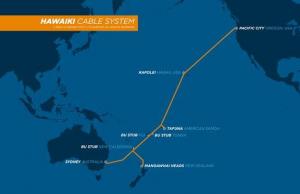
The route survey for the long-awaited Hawaiki cable has now been completed, and details have been revealed about how far production has progressed.
The 14,000 km cable, scheduled for completion in 2018, will link New Zealand and Australia to the United States, Hawaii and American Samoa, as well as other South Pacific islands.
The route survey included details about the kinds of small boat and shallow water work for all landings.
“The information garnered from the recently completed deep water route survey will be instrumental in ensuring the long-term viability of the cable system and we are thrilled with the progress on the cable and repeater manufacturing efforts. Installation will begin later in 2017 and a fully lit system that should positively impact the entire region is soon to follow,” says Hawaiki CEO Remi Galasso.
| }}} Continue to read full article . . .

White House-to-White House Pretenders replace Log Cabin -to- White House
With the inauguration of President Donald Trump three still active United States presidential dynasties make their transition into exile.
Temporary exile, as these Pretenders see it.
In Napoleonic terms the monarchical familial trio are by-passing a remote St Helena and heading to a more lightly guarded in-shore Elba from which they can make their escape when the call comes, as they ardently believe it will.
First among these is the Bush dynasty which has already supplied two republican monarchs, George 1 and then George 11. But which failed to install Jeb 1
Second is the Clinton one which bestowed upon the United States a co-monarchy similar to that of the reign in Britain of William and Mary.
But which so agonisingly failed last year to re-install itself with Hillary now in prime regal Pretender position.
Third, and the most promising of the dynasties-in-waiting is the newest one, the Obama line.
The intervention in the final stages of the anti -Trump campaign by Michelle Obama, and the First Lady’s subsequent mainstream participation in the sorrowful aftermath leaves few in doubt that the Obamas are in dynastic mode as far as the presidency is concerned.
These dynasties do not intend to sit out the next four years which they regard anyway as an interregnum or at best, a regency.
They know that if you intend to end up in the White House, it make sense to start at the White House.
Gathering a war chest will not be a problem.
All those court jesters, fire-eaters, tumblers, strolling player, song-and dance contributors (see illustration) at the Obama White House final curtain call party by their mere appearance pledged their allegiance for another round of fund raising.
The log cabin to White House journey has in applied terms now been replaced by one from The White House back to the White House.
The Clintons have devoted their adult lives to campaigning and they have no intention of stopping now.
The kingmakers of the Democratic Party will look though with much greater favour on a Michelle candidacy in 2020 than on a Hillary one.
This will be an action-replay of the way in which they looked so much more favourably on the original candidacy of Barack Obama than they did on Hillary’s in the primaries of all those years ago.
All this is curious enough. But not as mystifying as the American refusal to comprehend the way in which their republic is so demonstrably changing its course back to the era of feudal family inheritance.
For the Tudors, Plantagenets, and Stuarts read now Bushes, Clintons, and Obamas.
Now though post inauguration these feudal families disperse to their separate fiefdoms to rally their forces for the next round.
The Bushes to the South.
The Obamas back to the crucible of Democratic politics Chicago, but keeping visible a shop window residence in Washington.
The Clintons the Liege Lords of New York back to the Big Apple there to polish the fervour of their vassals and villeins.
From these strong holds they will collect their tithes raise their private armies for the next battle, the one to evict the usurper Trump.
For these Pretenders in place of halberdiers, pike men and archers will be the new model armies.
Swearing oaths of fealty as did the yeomen of yore these will be tweeting technicians, trackers, pollsters, fixers......
| From the MSCNewsWire reporters desk | Monday 16 January 2017 |

Palace of the Alhambra, Spain
By: Charles Nathaniel Worsley (1862-1923)
From the collection of Sir Heaton Rhodes
Oil on canvas - 118cm x 162cm
Valued $12,000 - $18,000
Offers invited over $9,000
Contact: Henry Newrick – (+64 ) 27 471 2242

Mount Egmont with Lake
By: John Philemon Backhouse (1845-1908)
Oil on Sea Shell - 13cm x 14cm
Valued $2,000-$3,000
Offers invited over $1,500
Contact: Henry Newrick – (+64 ) 27 471 2242

|
|