
Founded by Max Farndale 1947 - 2018
The Minister for Foreign Affairs and Trade, Charlie Flanagan TD, met with New Zealand Foreign Minister, the Honourable Murray McCully at Iveagh House for talks today.
At the meeting the Ministers discussed the opportunities and challenges that have arisen as a result of the UK’s decision to leave the European Union.
The Ministers also spoke about Ireland’s bid to host the Rugby World Cup in 2023 and exchanged national rugby jerseys.
“The Irish bid team regularly refer to New Zealand’s hosting of the World Cup in 2011 as the inspiration for the Irish bid. That tournament was a remarkable success and demonstrated that a country similar in size to Ireland could successfully host this event.”
As Ireland prepares to campaign for a place on the UN Security Council 2020, the Ministers held a useful exchange on New Zealand’s experience as a non-permanent member of the UN Security Council in 2015 and 2016. Minister Flanagan commented:
“Learning from the experiences of a small like-minded state such as New Zealand is very useful to us and is an example of our close cooperation on international issues. I would like to congratulate Minister McCully on New Zealand’s consistent and principled approach as a Security Council member and the significant progress New Zealand made on issues such as tackling the root causes of conflict.”
Minister Flanagan also spoke about the Irish and New Zealand diaspora, noting the key role played by diaspora from both countries.
“There are over 600,000 New Zealanders who can trace their heritage back to Ireland out of a total population of 4.7 million, while nearly 30,000 Irish citizens have spent time working in New Zealand in the last decade alone, including significant numbers of Irish construction workers who contributed to the reconstruction effort since the 2011 Christchurch earthquake.
Developments on the proposed EU – New Zealand Free Trade Agreement were discussed as well as bilateral trade opportunities, where there is much potential to be realised. The Ministers also exchanged views on the situation in the Middle East, the ongoing migration crisis and developments in the Asia Pacific region.
| A MerrionStreet release | January 11, 2017 |
NDO/VNA – President Tran Dai Quang on January 11 received the ambassadors of New Zealand, Timor Leste, Cote d’Ivoire, Rwanda and Slovenia, who presented their credentials.
At a reception for New Zealand Ambassador Wendy Irene Matthews, President Quang expressed his delight at the growing Vietnam-New Zealand ties since the two countries set up their comprehensive partnership in 2009 and issued a joint statement on comprehensive partnership towards strategic partnership in 2015.
He proposed that the two sides should define contents and roadmaps for their strategic partnership, while coordinating in the building of the Vietnam-New Zealand action programme for the new period and organise the sixth session of the Joint Committee for Economic and Trade soon.
He said he hopes the ambassador will contribute to the strengthening of cooperation between ministries, sectors, localities and businesses of both sides to raise two-way trade to US$1.7 billion in 2020.
The State leader also suggested that the New Zealand will support Vietnamese firms in increasing export products to the country, especially farm produce and apparel, while continue assisting Vietnam in sustainable development, climate change response and natural disaster risk management.
Vietnam, as the chair of the APEC Year 2017, hopes for continued cooperation from New Zealand to the success of the event, he said. The President took the occasion to invite New Zealand Prime Minister to visit Vietnam to attend the APEC Summit Week 2017.
On her part, Ambassador Matthews highlighted the high potential for Vietnam and New Zealand to lift up their ties to strategic partnership as they share firm foundation of sound cooperation in politics, economics and defence.
She affirmed that New Zealand hopes to foster collaboration with Vietnam in multilateral frameworks such as the RCEP and TPP.
 ∩ Auckland-based manufacturer automates processes
∩ Donald Trump's incoming Secretary of State does not oppose TPP
∩ While you were sleeping: Trump hits pharma stocks
∩ Ireland and New Zealand's Foreign Affairs Ministers discuss trade
∩ Traceability key for China trade
∩ Cranes will be defunct for months at Wellington's CentrePort
∩ Ingram Micro’s new owners, HNA Group also snapped up UDC Finance
∩ Rocket Lab’s launch hopes rest on upcoming legislation
The New Zealand Bankers’ Association announced today that the Industrial and Commercial Bank of China (New Zealand) Ltd has joined the association, bringing the total number of member banks to 16.
New Zealand Bankers’ Association chief executive Karen Scott-Howman says: “We are delighted to welcome ICBC to the Bankers’ Association. China is one of New Zealand’s top trading partners. Having Chinese banks here helps take that important relationship to another level.
“ICBC’s participation in the New Zealand banking industry further enhances competition and diversity in the sector”, adds Scott-Howman.
Industrial and Commercial Bank of China (New Zealand) chief executive Qian Hou says: “ICBC’s aim is to strengthen trade opportunities between China and New Zealand, and also to contribute to the New Zealand economy by investing in infrastructure projects.”
ICBC was the first Chinese bank to gain a licence to operate in New Zealand. The bank offers its clients comprehensive corporate and retail services with a focus on boosting the bilateral economic and trade relationship between New Zealand and China.
| A bankers Association release | January 11, 2017 |
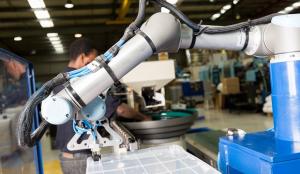
The significant labour costs and geographic isolation of the New Zealand manufacturing industry has meant that in order to compete with international players, local manufacturers must look to innovate with new technologies and automate their production processes.To compete with global manufacturing hubs, leading Auckland-based injection moulding company, TCI New Zealand (TCI) were looking for an automated solution that would offer a more cost-effective means of producing its customers’ products. TCI found the solution in Universal Robots (UR) - a global developer and manufacturer of six-axis industrial robots. TCI has now deployed two of Universal’s industrial robotic arms: the UR3 and UR5, to perform labelling and assembly tasks for the company’s EasiYo Yoghurt Maker line, as well as its storage bins.
With a UR robot assisting, several key processes in the manufacture of these products have been automated, relieving employees of repetitive assembly processes and ensuring smooth production flow. The UR3 was the first machine implemented by TCI, with the costs of the robot recouped six months after it was first purchased. Satisfied with this return on investment, TCI then decided to purchase the UR5, with the payback period expected to be under 12 months.
Finding a solutionTCI is one of the largest privately-owned plastic injection moulding companies in New Zealand, based in Avondale, Auckland. For more than 20 years, TCI has manufactured a vast array of products, including building products, components used in instrumentation, navigation, rescue and communications, as well as a range of retail products including homewares, garden products and outdoor furniture for companies across New Zealand and the rest of the world.
“Previously we were paying two employees to work in 12 hour shifts to ensure around-the-clock production of our EasiYo Yoghurt Maker,” said Quintin Fowler, Manager Director at TCI. “If one employee didn’t turn up for work it meant the entire production line would be halted. This wasn’t really financially sustainable for us so we were looking for an automated solution that would guarantee quality assurance and help us to reduce costs.”
During its search for an automation solution, TCI came across UR’s technology at a trade show and made contact via Design Energy, its New Zealand distributor.
“We developed the layout for the production cell and designed and built an appropriate gripper unit for each of the applications,” said Mike Shatford, Managing Director at Design Energy. “TCI then manufactured the machine frames and mounted the various operating units in the relativities we had laid out. Once the machines were completed our technician spent time at TCI writing the robot programs and getting each cell operating to the customers’ requirements.”
“Design Energy were fantastic,” said Fowler. “We were initially considering an off-the-shelf robot from overseas, but I’m glad we were able to find a customisable solution.”
Robots in actionThe UR3 is a compact table-top robot that weighs just 11kg and is capable of handling payloads up to 3kg. The robot has a reach radius of up to 500mm and features 360-degree rotation on all wrist joints and infinite rotation on the end joint. It is ideal for manufacturers such as TCI that have limited factory floor space and a number of intricate processes.
TCI uses the UR3 to help label and place rubber feet on its EasiYo Yoghurt Makers. After a product is moulded, the UR3 aligns and passes the product though a label printer, then it adheres the label to the base of the product. The UR3 then inverts and places the product onto a mandrel, then picks up rubber feet from a bowl feeder and places them on the base of the product.
A pneumatic press is then activated, which presses the feet firmly on the product. The UR3 picks up the finished assembly and places it on a conveyer belt for delivery to the next process. The UR3’s controller provides control for all ancillary equipment including the label printer, bowl feeder, pneumatic press and conveyor.
The success of UR3 gave TCI the confidence to implement a UR5 robot to help assemble several different sizes of storage bins, from 40L up to 112L. The UR5 helps manufacturers automate repetitive and dangerous tasks with payloads up to 5kg and a reach radius of up to 850mm. The UR5 is suitable for collaborative processes such as picking, placing and testing.
“We use the UR5 to put wheels on storage bins and we programmed the robots to be able to place wheels on multiple sized storage bins,” said Fowler. “The robots are so easy-to-program that we can quickly change from one size to the next by pressing just a few buttons.”
Flexible, easy to program and safe to use“Both the UR3 and UR5 went beyond our expectations in what we were looking for in a robot,” Fowler noted. “These robots have the ability to perform the tasks that we need without being overly expensive or difficult to program. They also offered a quick return on our investment.
“UR’s robots can easily move around and fold over on themselves in very tight spaces. The robot can also operate safely alongside our staff without the need for guarding.”
All UR robots can be completely reprogrammed and deployed for other tasks in a matter of minutes. A graphical user interface with a teach function enables an operator to simply grab the robot arm and show it how a movement should be performed. The user-friendly interface then allows staff to drag and drop the routines to do their programming.
“The UR3 and UR5 are very flexible robots. They are very easy to reprogram, which is why we use the UR5 to help assemble all of our storage bins. The robot can be reset to perform different jobs depending on the size of the bin,” said Fowler.
In contrast to traditional industrial robots in the market, UR’s small and lightweight robotic arms are able to work safely alongside staff (subject to prior risk assessment). The robots’ state-of-the-art force limit safety feature automatically stops the robot from operating when its movement is obstructed. The robot will not exert a force greater than the limit specified in the adjustable safety settings.
“One thing I loved about UR was that we didn’t have to worry about guarding,” said Fowler. “Whereas a lot of the other robots in the market guarding was an issue because you’d have to use safety barriers for all the machines which just complicates the situation.”
The pay-offAccording to TCI, the company has been able to significantly reduce expenditure by using robots at a time when labour costs can be 10 to 20 times higher that of other overseas markets.
“We paid off the UR3 within six months, which means we can reinvest in further product development and innovation,” said Fowler. “We also saved around 75% on yearly product assembly labour costs for the UR3 and UR5.”
When asked what appealed to him the most about the UR3 and UR5 robots, Fowler pointed to their simple programming and consistency.
“The robots are easy to set up and reprogramming can take just a few minutes. However one of the biggest selling points for us is having that guarantee that the robots aren’t going to call in sick – production can go on 24/7 without us worrying about human related factors that might stop production.”
| An AMTIL release | January 11,2017 |

New Zealand make-at-home yogurt business EasiYo Products is looking to grow its business in Europe through a tie-up with Ireland-based dairy group Ornua.
An agreement between the two companies will see EasiYo's yogurt mixes made outside New Zealand for the first time.
Ornua will blend and pack its Irish dairy powders into EasiYo's mixes at its site in Leek in central England.
Brian Dewar, EasiYo's CEO, said: "The UK and EU markets represent a multi-million pound opportunity for us to capitalise on this growing consumer trend of people who love to make fresh wholesome food at home. Moving manufacture and supply closer to our key accounts means we can respond to our customers' needs much faster as well significantly improving our environmental footprint."
EasiYo sells its products through UK retailers including Holland & Barrett and Lakeland. Much of its distribution in Europe is through TV shopping channel QVC, although the brand does have listings in stores in Belgium. The company would not comment on whether it was targeting multiple retailers but does want to significantly increase its distribution. Its customers in New Zealand and Australia include major grocery chains Countdown, Woolworths and Coles.
Alastair Jackson, the managing director of Ornua Nutrition Ingredients, said the Irish company's manufacturing would "provide a strong platform for the production of EasiYo as it expands its presence in the UK and European marketplace".
| A just-food release | January 11, 2017 |
HNA Group bought Ingram Micro last year in a US$6 billion deal which closed in December and which makes Ingram Micro a subsidiary of HNA’s Tianjin Tianhai logistics, supply chain and financial services company.
HNA, which has a financial arm which operates a diverse set of businesses in equipment leasing, insurance and credit services, will pay $660 million for UDC Finance with the deal expected to close in the second half of 2017, subject to approvals.
UDC provides specialist asset-based finance to Kiwi businesses for plant, vehicles and equipment.
Adam Tan, HNA Group vice chairman and chief executive, says UDC’s highly diversified portfolio offers significant growth opportunities in Australasia and supports the company’s strategy of expanding its core tourism, logistics and financial services businesses.
David Hisco, ANZ New Zealand chief executive, says the sale followed a strategic review and was in line with ANZ’s strategy to simplify its business and focus on its core banking activities.
“UDC Finance is a great business which is performing well,” Hisco says.
“We’re extremely proud of what our teams have achieved over the years providing specialist asset-based finance to New Zealand businesses for plant, vehicles and equipment.
He says the purchase is a ‘significant’ vote of confidence in the New Zealand economy.
“HNA is well placed to invest in specialist asset finance products and systems which will help UDC expand further in the future.”
HNA will maintain UDC’s operations, with all existing staff retained and existing customer lending maintained.
HNA Group has been ramping up its presence in Australia and New Zealand in recent months. As well as the purchase of the Ingram Micro global business, it invested in Virgin Australia - to the tune of AU$159 million - in June.
| A ChannelLife release | January 11, 2017 |

Porous, 3-D forms of graphene developed at MIT (Massachusetts Institute of Technology) can be 10 times as strong as steel but much lighter.
A team of researchers at MIT has designed one of the strongest lightweight materials known, by compressing and fusing flakes of graphene, a two-dimensional form of carbon. The new material, a sponge-like configuration with a density of just 5 percent, can have a strength 10 times that of steel.
In its two-dimensional form, graphene is thought to be the strongest of all known materials. But researchers until now have had a hard time translating that two-dimensional strength into useful three-dimensional materials.
The new findings show that the crucial aspect of the new 3-D forms has more to do with their unusual geometrical configuration than with the material itself, which suggests that similar strong, lightweight materials could be made from a variety of materials by creating similar geometric features.
The findings are being reported today in the journal Science Advances, in a paper by Markus Buehler, the head of MIT’s Department of Civil and Environmental Engineering (CEE) and the McAfee Professor of Engineering; Zhao Qin, a CEE research scientist; Gang Seob Jung, a graduate student; and Min Jeong Kang MEng ’16, a recent graduate.
A team of MIT engineers has successfully designed a new 3-D material with five percent the density of steel and ten times the strength, making it one of the strongest lightweight materials known.
Other groups had suggested the possibility of such lightweight structures, but lab experiments so far had failed to match predictions, with some results exhibiting several orders of magnitude less strength than expected. The MIT team decided to solve the mystery by analyzing the material’s behavior down to the level of individual atoms within the structure. They were able to produce a mathematical framework that very closely matches experimental observations.
Two-dimensional materials — basically flat sheets that are just one atom in thickness but can be indefinitely large in the other dimensions — have exceptional strength as well as unique electrical properties. But because of their extraordinary thinness, “they are not very useful for making 3-D materials that could be used in vehicles, buildings, or devices,” Buehler says. “What we’ve done is to realize the wish of translating these 2-D materials into three-dimensional structures.”
The team was able to compress small flakes of graphene using a combination of heat and pressure. This process produced a strong, stable structure whose form resembles that of some corals and microscopic creatures called diatoms. These shapes, which have an enormous surface area in proportion to their volume, proved to be remarkably strong. “Once we created these 3-D structures, we wanted to see what’s the limit — what’s the strongest possible material we can produce,” says Qin. To do that, they created a variety of 3-D models and then subjected them to various tests. In computational simulations, which mimic the loading conditions in the tensile and compression tests performed in a tensile loading machine, “one of our samples has 5 percent the density of steel, but 10 times the strength,” Qin says.
Buehler says that what happens to their 3-D graphene material, which is composed of curved surfaces under deformation, resembles what would happen with sheets of paper. Paper has little strength along its length and width, and can be easily crumpled up. But when made into certain shapes, for example rolled into a tube, suddenly the strength along the length of the tube is much greater and can support substantial weight. Similarly, the geometric arrangement of the graphene flakes after treatment naturally forms a very strong configuration.
The new configurations have been made in the lab using a high-resolution, multimaterial 3-D printer. They were mechanically tested for their tensile and compressive properties, and their mechanical response under loading was simulated using the team’s theoretical models. The results from the experiments and simulations matched accurately.
The new, more accurate results, based on atomistic computational modeling by the MIT team, ruled out a possibility proposed previously by other teams: that it might be possible to make 3-D graphene structures so lightweight that they would actually be lighter than air, and could be used as a durable replacement for helium in balloons. The current work shows, however, that at such low densities, the material would not have sufficient strength and would collapse from the surrounding air pressure.
But many other possible applications of the material could eventually be feasible, the researchers say, for uses that require a combination of extreme strength and light weight. “You could either use the real graphene material or use the geometry we discovered with other materials, like polymers or metals,” Buehler says, to gain similar advantages of strength combined with advantages in cost, processing methods, or other material properties (such as transparency or electrical conductivity).
“You can replace the material itself with anything,” Buehler says. “The geometry is the dominant factor. It’s something that has the potential to transfer to many things.”
The unusual geometric shapes that graphene naturally forms under heat and pressure look something like a Nerf ball — round, but full of holes. These shapes, known as gyroids, are so complex that “actually making them using conventional manufacturing methods is probably impossible,” Buehler says. The team used 3-D-printed models of the structure, enlarged to thousands of times their natural size, for testing purposes.
For actual synthesis, the researchers say, one possibility is to use the polymer or metal particles as templates, coat them with graphene by chemical vapor deposit before heat and pressure treatments, and then chemically or physically remove the polymer or metal phases to leave 3-D graphene in the gyroid form. For this, the computational model given in the current study provides a guideline to evaluate the mechanical quality of the synthesis output.
The same geometry could even be applied to large-scale structural materials, they suggest. For example, concrete for a structure such a bridge might be made with this porous geometry, providing comparable strength with a fraction of the weight. This approach would have the additional benefit of providing good insulation because of the large amount of enclosed airspace within it.
Because the shape is riddled with very tiny pore spaces, the material might also find application in some filtration systems, for either water or chemical processing. The mathematical descriptions derived by this group could facilitate the development of a variety of applications, the researchers say.
“This is an inspiring study on the mechanics of 3-D graphene assembly,” says Huajian Gao, a professor of engineering at Brown University, who was not involved in this work. “The combination of computational modeling with 3-D-printing-based experiments used in this paper is a powerful new approach in engineering research. It is impressive to see the scaling laws initially derived from nanoscale simulations resurface in macroscale experiments under the help of 3-D printing,” he says.
This work, Gao says, “shows a promising direction of bringing the strength of 2-D materials and the power of material architecture design together.”
The research was supported by the Office of Naval Research, the Department of Defense Multidisciplinary University Research Initiative, and BASF-North American Center for Research on Advanced Materials.
| A MITNews release | January 10, 2017 |

Architects certified in either the USA, Australia or New Zealand are now able to gain reciprocal licenses in all of the three countries thanks to a new agreement.
The Mutual Recognition Arrangement between the trio of architectural licensing authorities came into effect at the beginning of 2017.
Spearheaded by the USA's National Council of Architectural Registration Boards (NCARB), the arrangement was signed by the Architects Accreditation Council of Australia (AACA) and the New Zealand Registered Architects Board (NZRAB).
"The arrangement is an exciting opportunity for architects seeking to expand their careers internationally," said NCARB president Kristine Harding.
"NCARB Certificate holders have been able to pursue licensure in Canada and Mexico for some time, and this arrangement represents a significant step in providing additional benefits to these architects."
So far 29 of the 54 licensing boards in the US have accepted the arrangement, including those in California, Texas, Washington and Wisconsin.
To be able to take advantage of the opportunity, architects must hold a current NCARB Certificate and meet a list of requirements.
They need to hold citizenship or lawful permanent residence in the home country, a license to practice architecture from a US jurisdiction that has signed the arrangement, and 6,000 hours (approximately three years) of post-licensure experience in the home country.
The arrangement is similar to the USA's current agreement with Canada and Mexico, and came about after research showed that the paths to licensing in Australia and New Zealand parallel US requirements.
On the other side of the world, the Brexit vote has thrown into question the current reciprocal licensing arrangement between the UK and other EU member states.
The UK's licensing body, the Architects Registration Board (ARB), has told Dezeen that the future situation is unclear.
"At the present time and in relation to ARB's remit we know little about what the UK's future relationship with the EU might be and understand that it might indeed take some time to resolve," the organisation said.
"We are continuing to deliver our statutory obligations on a 'business as usual' basis and is this is likely to remain the position until we are advised to the contrary or there are changes in legislation."
| A deZeen story | January 10, 2017 |
European Union leaders have talked up the prospects of a free trade agreement, saying it would send a strong political signal as protectionism takes hold elsewhere. They have even suggested it could be completed within three years.
Bill English arrived in Brussels today on his first official overseas trip as Prime Minister.
After meeting English, European Council President Donald Tusk and European Commission President Jean-Claude Juncker said they expected formal negotiations for the long-awaited free trade agreement between the EU and New Zealand to begin soon.
Tusk said it would further strengthen relations and made an apparent reference to the election of US President Donald Trump, the Brexit vote in the UK and the rise of Marine Le Pen's Front National party in the looming presidential elections in France.
"Such an agreement would not only boost sustainable economic growth, investment and job creation on both sides, it would also send a strong political signal of economic openness and trade at a time of protectionist pressures are on the rise not only on our own continent but also round the world."
Juncker also said he was "very eager" to conclude a trade agreement, but pointed to "difficulties" within the EU and globally.
"At least we are hopeful we will be able to make the progress we need. There are remaining difficulties, but we will solve these problems, like others, because New Zealand is a very strong ally of the European Union and we want to continue in that vein.
Despite that, Juncker was optimistic a New Zealand-EU deal could be finalised in three years - half the time it usually took and less than a third of the 10 years it took for Canada. He said it usually took between 5-10 years.
"But I do think two or three years would be enough because we have very similar situations. We are friends, we are allies. We know each other and I think this could be done in a shorter period of time than it is usually done."
English said there was agreement to start negotiations as soon as possible. He noted New Zealand and the EU had signed a agreement as a precursor to a trade deal last year. It takes effect tomorrow.
"I thank the President [Juncker] for his leadership and for the Commission's clear willingness to remain open for business on trade agreements despite some of the political challenges that go with it."
He said the EU was the second largest economic entity and New Zealand's third largest trading partner, so it was important to a small country that relied on trade.
"It is my expectation we should be able to promptly conclude a trading agreement that opens up opportunities for our businesses, small and large, and underscores our shared values."
New Zealand is one of only six World Trade Organisation countries that does not yet have a trade agreement with the 28 member states of the EU, but recent agreements have been bogged down.
It took Canada 10 years of talks and was nearly derailed after a member state objected. The European Court of Justice is also soon to rule on whether member states' Parliaments need to ratify the Singapore agreement - a process that would delay and possibily derail some agreements.
Brexit
English made it clear New Zealand would not take sides as Britain prepared to leave the EU, saying both were important to New Zealand.
"I strongly reaffirmed New Zealand's commitment to continue working constructively with the EU and the UK throughout this process. I noted the importance that both sides closely engage with third parties, like New Zealand, as the process evolved to minimise uncertainty."
When English was asked whether he thought New Zealand would get a better deal with the UK if it split completely from the single market of the EU, Juncker replied promptly with a "no" - drawing laughter.
English said New Zealand had a longstanding relationship with the UK and was ready to negotiate with them when the time came.
Refugees
However, Tusk also signalled New Zealand should do more to help with the refugee crisis, saying it was a "global responsibility".
"The EU will continue to work together with its partners, including New Zealand, in... } } }Continue to full article

Palace of the Alhambra, Spain
By: Charles Nathaniel Worsley (1862-1923)
From the collection of Sir Heaton Rhodes
Oil on canvas - 118cm x 162cm
Valued $12,000 - $18,000
Offers invited over $9,000
Contact: Henry Newrick – (+64 ) 27 471 2242
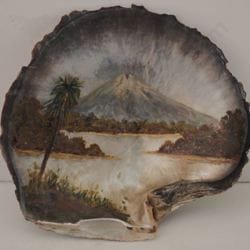
Mount Egmont with Lake
By: John Philemon Backhouse (1845-1908)
Oil on Sea Shell - 13cm x 14cm
Valued $2,000-$3,000
Offers invited over $1,500
Contact: Henry Newrick – (+64 ) 27 471 2242

|
|