
Founded by Max Farndale 1947 - 2018
The New Zealand economy continued to grow solidly in the September quarter, posting a higher than expected 1.1 per cent growth rate for the quarter and 3.5 per cent over the last year, Finance Minister Steven Joyce says.
“New Zealand’s focus on developing a strong and open economy is delivering good results for Kiwi families, especially relative to most of the rest of the developed world,” Mr Joyce says.
New Zealand’s economic growth in the year to September was the fifth strongest in the OECD ahead of Australia (1.8 per cent), the USA (1.6 per cent), Canada (1.3 per cent) and the Euro Area (1.7 per cent).
“We are starting to see the benefits of a clear and stable focus on economic fundamentals coupled with a determination to build a competitive environment from which Kiwi companies can succeed on the world stage.”
Growth in the quarter was strong across 13 of 16 industries, including:
“It’s hard to overstate the importance of key service sector exports like tourism and education in New Zealand’s economic success in recent years. They have taken up a lot of the shortfall as the dairy sector went through its downturn. Other food sectors and hi-tech exports have also contributed significantly,” Mr Joyce says.
The Current Account deficit was unchanged at 2.9 per cent for the year, well below the long-run average. New Zealand’s external debt was 58 per cent of GDP, compared with 83.8 per cent of GDP back before the GFC in 2008.
Treasury’s half-yearly Fiscal Update predicts growth to average 3 per cent per year out to 2021, with a further 150,000 jobs expected to be added to the New Zealand economy over the same period.
“The future is looking positive for New Zealand, but these are of course just forecasts. The world remains an uncertain place and it is important that the Government, businesses and households collectively keep our feet on the ground and not go crazy with the credit card. If we work hard, maintain our economic programme and increase our competitiveness we can continue to improve the outcomes for Kiwi families,” Mr Joyce says.
YANGON - Myanmar's economy is slowly emerging from the crippling effects of decades of military rule, where a poorly-managed resources industry dominated much of the country's trade. The Aung San Suu Kyi-led government is encouraging foreign and local investment in job-creating export industries, with a strong focus on manufacturing. Boosted by U.S. President Barack Obama's recent removal of executive sanctions on Myanmar, the country's garment industry is on the rise, and aims to be the nation's largest employer.
The NLD-led government hopes new factories can provide employment for hundreds of thousands, whose education and work opportunities were stunted under 50 years of military rule.
Exports have almost doubled in the last five years, to $1.1 billion for the 2015 financial year when, according to the United Nations' International Labor Organization (ILO), the sector employed 380,000 people, mostly women.
The government recently passed an investment law that allows tax breaks for investment in the industry, while the U.S. dropped longstanding sanctions in September that will give international firms greater confidence in dealing with Myanmar.
The Myanmar Garment Manufacturing Association estimates the industry will employ up to 1.5 million workers by 2024.
"So with all these interests, the will of the government side, and the lifting of the sanctions, and the private sector also, the garment sector also the will grow," said Khine Khine New, secretary general of the association.
However, many problems persist.
An inexperienced government has been slow on detailing policies that give businesses the predictability they need, said factory owner Sai Maung.
While his company has benefited from foreign help to meet international labor and production standards, many factories are still coming to grips with Myanmar's transition.
"Before we are closed, but now we are moving to a democratic country and the people have no experience at all, I mean with how to deal with the issues," said Maung.
Industrial relations are struggling to keep up with pace of growth, according to ILO deputy liaison officer Piyamai Pichaiwongse.
"Myanmar was never a country that was operated by the rule of law. So therefore, the law does not have supremacy in anything that they do. There is not the reference for things that they do in the past," she said.
The ILO is working with the government to rewrite labor laws.
In the meantime, strikes have increased since a minimum wage of just $2.75 a day was introduced last year. Unions complain of increased persecution of their members, workers have little understanding of their rights and employers are struggling with compliance.
With an industry on the rise, these relations hold the key to improving the living standards of hundreds of thousands of workers and their families.
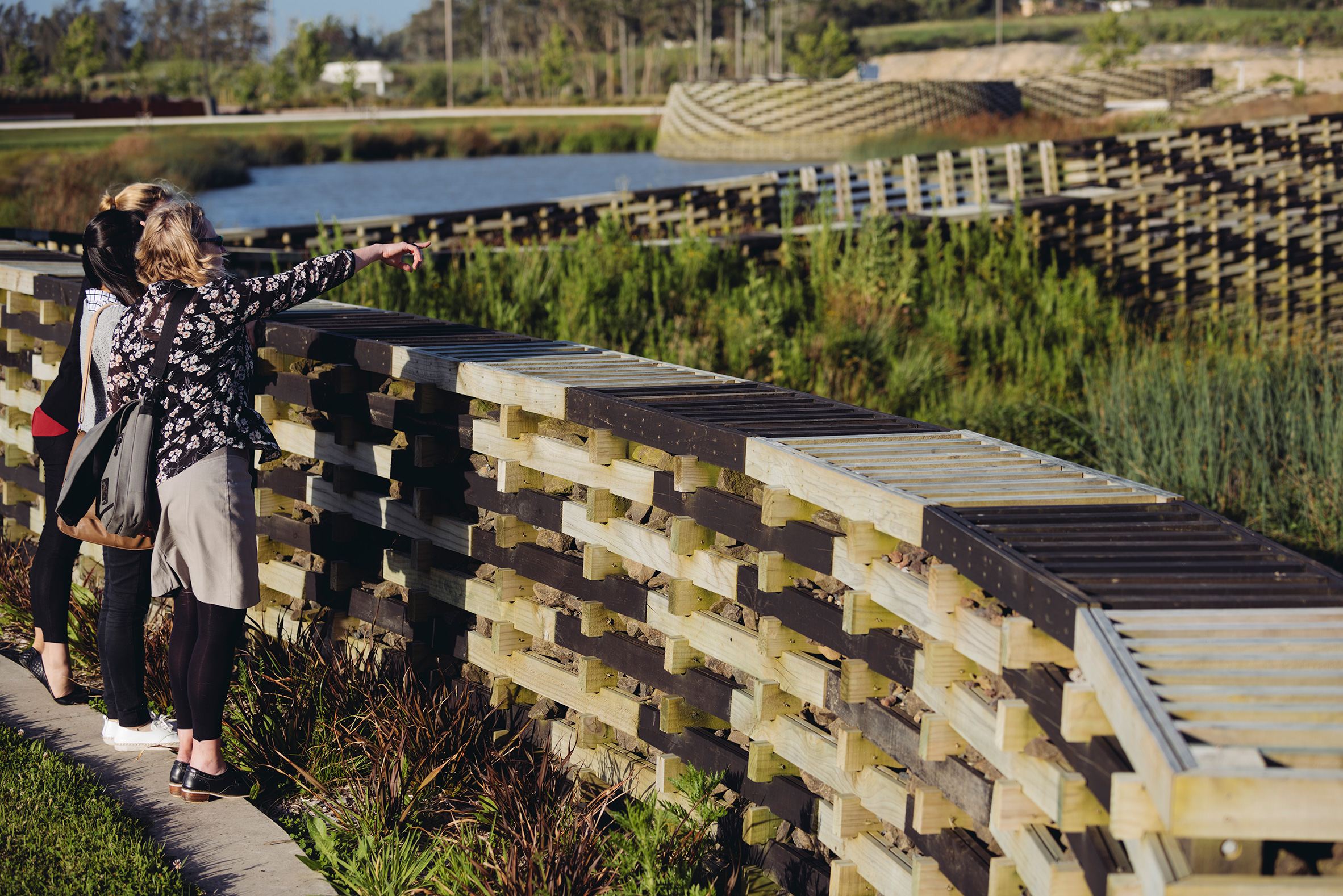 ISTHMUS won world landscape of the year for 2016
Bapcor gets OIO approval to buy Hellaby, says it's confident of topping 50% acceptances
While you were sleeping: Stocks ease from records
New contract wine bottling company The Bottling Company opens in Marlborough
Diesel engines will help environment, KiwiRail says
Kiwi kitchen renovator pushes into US market
Alliance established to rebuild Kaikoura coastal route
KiwiRail cans electric trains on partially electrified North Island trunkline, goes with diesel
Sealegs wins injunction against rival system
NZ dollar briefly drops below 69 US cents as weaker dairy auction results posted
Faultlines: Calls for greater transparency around seismic engineering
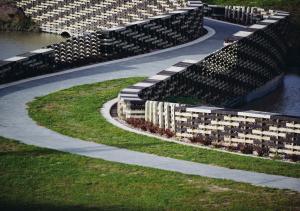
Kopupaka Reserve in Auckland, New Zealand designed by Isthmus has been named World Landscape of the Year 2016 at the World Architecture Festival this year. The project is a hybrid park, where a storm water reserve has been combined with an urban park, playground and skate park, all made possible by dovetailing the masterplanning of the streets with the green infrastructure of the 22-hectare reserve.
Judges praised the project as ”a successful translation of Maori traditions that succeeded in being both poetic and imaginative in its creation of a landscape that captures the soul and nature of the area.”
”Inspired by woven baskets for catching eel, Isthmus has developed an innovative river-wall system of interlocking timbers. Simple yet sophisticated engineering allows the baskets to retain silt and create habitats which will shift and change over time,” jury said.
David Irwin, Founding Directore, Landscape Architect, and Grant Bailey, Director, Landscape Architect, attended to present the scheme to the WAF’s international jury. The finalists were selected from 58 countries.
| Continue to full article here | Nov 21, 2016 |
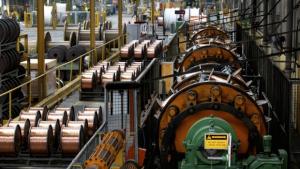
Nexans NZ is warning about non-compliant imported cables as its main competitor prepares to quit manufacturing early next year.
The New Plymouth-based company will be the largest manufacturer of electrical cable following General Cable's decision to close its Auckland sales centre and Christchurch factory with the loss of 170 jobs.
The closure was disappointing because local manufacturing provided certainty about standards, Nexans general manager Michael Pienaar said.
| Continue to full article | Dec 21, 2016 |
Tertiary Education, Skills and Employment Minister Paul Goldsmith has today announced the latest round of successful recipients of the Prime Minister’s Scholarship for Asia (PMSA).
A total of 156 New Zealand students have been selected to study, carry out internships or conduct research at top institutions throughout Asia as part of the first 2016/17 scholarship round. Successful applications came from universities, institutes of technology and polytechnics, and private training establishments.
“The PMSA is designed to encourage New Zealand students to study in Asian countries and experience the benefits of international education for themselves.
“Since the establishment of the PMSA programme in 2013, 907 New Zealand students have been awarded a scholarship to study in a variety of Asian countries,” says Mr Goldsmith.
Students will study in 11 countries, with China, India and Japan the top three destinations this round.
Of the successful recipients, 69 students will take part in a variety of programmes ranging from a Long Term Chinese Language Programme at Beijing Language and Culture University, a one-year exchange to Kwansei Gakuin University in Japan, and an Internship at the United Nations Assistance to the Khmer Rouge Trials in Cambodia.
A further 87 students were awarded a scholarship as part of seven group applications.
Funding for the PMSA of $9 million over five years was initially provided in Budget 2013 as part of the Government's Internationally Focused Growth Package. Additional funding was granted in Budget 2016 of $1m for each of 2016/17 and 2017/18, and $1.5 million per year from 2018/19. The total awarded this round was $1,401,657.
Applications for round two of the 2017 PSMA opened mid-December 2016, and close 30 March 2017.
Further information, including the names of the scholarship recipients, is available here: Education New Zealand website.
Tertiary Education, Skills and Employment Minister Paul Goldsmith has today named the first students to receive a Prime Minister’s Scholarship for Latin America (PMSLA).
Thirty seven top students from across New Zealand have been chosen for the first round of 2016/17 scholarships, with a total value of $250,000.
“The new scholarships aim to introduce more young New Zealanders to Latin American countries and cultures, as well as build connections that will benefit New Zealand into the future.
“Latin America is becoming increasingly important to our nation from a trade and enterprise perspective. International education experiences help young Kiwis develop cultural awareness, understanding and skills that enhance our country’s ability to work in this part of the world,” says Mr Goldsmith.
The twelve individual scholarships go to students undertaking a range of programmes, including an exchange to Universidad EAFIT in Medellín, Colombia, and a study-abroad semester at the Universidad Austral de Chile in Chile.
Two groups have also been awarded scholarships. Twelve students from Massey University will to travel to Colombia for a month-long programme, Latino Aotearoa: Spreading the Word Across the Pacific. Thirteen students from the University of Auckland will travel to Brazil to carry out a month-long Brazilian Visual Cultures - LATINAM202 programme.
The PMSLA programme is modelled on the Prime Minister’s Scholarship for Asia, which has supported 907 New Zealand students with study, research or internships in Asian countries since its introduction in 2013.
The programme is funded as part of the $761.4 million ‘Innovative New Zealand’ 2016 Budget package.
Applications for round two of PMSLA opened mid-December 2016 and close 30 April 2017. Another $250,000 will be allocated to students in this second round.
Further information, including the names of the scholarship recipients, is available on the Education New Zealand website.
Transport Minister Simon Bridges has announced the establishment of a new alliance to repair State Highway 1 and the rail line north and south of Kaikoura.
The alliance, known as the North Canterbury Transport Infrastructure Recovery (NCTIR), is being led by Duncan Gibb, formerly of the Stronger Christchurch Infrastructure Rebuild Team (SCIRT).
The alliance is made up of the NZ Transport Agency, KiwiRail, Fulton Hogan, Downer, Higgins and HEB Construction.
“The alliance will be the lead delivery agency to repair the transport infrastructure damaged during the earthquake. These organisations have been heavily involved in the emergency response to date and will be able to keep momentum to help Kaikoura and North Canterbury to recover as quickly as possible,” Mr Bridges says.
The work of the NCTIR alliance will mainly consist of rail and road network reinstatement between Oaro and the Clarence River, and the management and operation of the State Highway Corridor between Picton and Christchurch via Murchison and Lewis Pass.
“With access restored to the alternate route and on State Highway 1 to the south already we’re making great progress, however other parts of the network have been significantly damaged and there’s a massive repair job ahead,” Mr Bridges says.
“An alliance is a proven way to deliver high quality results for major infrastructure projects, especially where there is a high level of complexity. We have seen this demonstrated with SCIRT which has done an outstanding job on the Christchurch rebuild.”
Last week the Government announced it would fund the complex repairs to the transport system, estimated to be up to $2 billion.
New Zealand’s unadjusted annual net gain (more arrivals than departures) of migrants was 70,400 in the November 2016 year, Statistics New Zealand said today. This slightly surpasses the previous annual record of 70,300 set in the October 2016 year.
“The annual net gain in migration came from an increase in migrant arrivals combined with a decrease in departures,” population statistics manager Jo-Anne Skinner said. “People arriving on work visas made up a third of all arrivals.”
Migrant arrivals numbered 126,700 in the November 2016 year, a new annual record. Visa types contributing the most were:
Migrant departures were 56,300 in the November 2016 year.Visitor arrivals set new record
Visitor arrivals numbered 333,600 in November 2016, setting a new November record. The latest month’s figure was up 11 percent from November 2015.
In the November 2016 year visitor arrivals hit a record 3.45 million, up 12 percent from November 2015.New Zealanders depart on highest-ever number of overseas trips
New Zealand residents set a new annual record of 2.58 million overseas trips in the November 2016 year, up 8 percent from the November 2015 year.
In November 2016, New Zealand residents made a record 208,400 trips overseas, up 14 percent from November 2015.
Beef and lamb exports fell in November, as the amount of meat sold dropped heavily compared with last year’s record season, Statistics New Zealand said today.
Meat and edible offal exports fell $158 million (31 percent) from November 2015, contributing to a $219 million (5.4 percent) fall in overall exports.
Beef exports fell 41 percent in value and 31 percent in quantity, and lamb exports fell 27 percent in value and 23 percent in quantity.
“Beef exports to the United States, our top beef export destination, fell by around half when compared to November last year” senior manager Jason Attewell said. “When compared to the same month of the previous year, the value of beef exports to the US have fallen in nearly every month since October 2015, only rising once in April 2016.”
Lamb exports to the European Union (our top lamb export destination) fell in November 2016, with the United Kingdom seeing significant falls in value and quantity.
After removing seasonal effects and irregular movements, meat exports have fallen 31 percent from their peak in September 2015. The fall was mainly due to lower quantities, but lower prices also contributed.
Total exports in November 2016 were $3.9 billion, while imports were worth $4.6 billion.
Seasonally adjusted exports in November fell almost 12 percent from October 2016, more than reversing a 9.3 percent gain in the previous month. Seasonally adjusted imports fell 9.0 percent in November after a slight rise in October.
The monthly trade balance was a deficit of $705 million (18 percent of exports). For the year ended November 2016, the annual trade deficit was $3.2 billion.
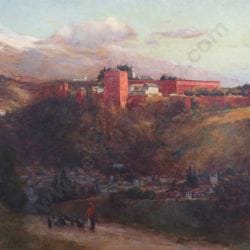
Palace of the Alhambra, Spain
By: Charles Nathaniel Worsley (1862-1923)
From the collection of Sir Heaton Rhodes
Oil on canvas - 118cm x 162cm
Valued $12,000 - $18,000
Offers invited over $9,000
Contact: Henry Newrick – (+64 ) 27 471 2242
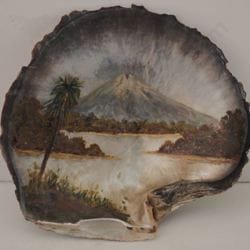
Mount Egmont with Lake
By: John Philemon Backhouse (1845-1908)
Oil on Sea Shell - 13cm x 14cm
Valued $2,000-$3,000
Offers invited over $1,500
Contact: Henry Newrick – (+64 ) 27 471 2242

|
|