
Founded by Max Farndale 1947 - 2018
Managing director Andrew Darling discusses the decision to rollout Darling Group – the new overarching brand connecting Global Fresh New Zealand and Australia, Just Avocados and JH Leavy & CoFamily. Fresh. Fun. It’s the tagline of newly formed brand Darling Group, which incorporates long-established businesses Global Fresh New Zealand, Global Fresh Australia, Just Avocados and, most recently, JH Leavy & Co.
Since acquiring the Brisbane-based wholesaler JH Leavy & Co in July 2016, the group of companies decided it needed an overarching brand for its horticultural operations, which range from growing and packing to exporting, sales and marketing, as well as distribution and logistics.
“We engaged a brand specialist in New Zealand, where we went through a process of looking at our core values, what we represent, and what we’re trying to achieve,” explained managing director Andrew Darling. “And through that process we came out with our brand – Darling Group.”
The tagline ‘Family. Fresh. Fun – Australasia’s favourite fresh produce family’ reflects the group’s family involvement in the business, not only with Andrew Darling, his sons Jacob, Nathan and Andrew’s brother Michael, but also in its familial approach to business, including its relationships with staff and customers.
Some of the brands under Darling Group include Mr Avocado, Mr Kiwi and a soon-to-be-released blueberry brand, reflecting some of the fun side of the family-owned vertically integrated business.
As a significant grower of kiwifruit and avocados in its own right, Darling said the group understands the needs of growers, and the requirements from packing to exporting, importing to wholesaling, bringing efficiencies throughout the value chain.
“Because we’re integrated through the value chain, we can operate efficiently while having total transparency of cost, and we control the sale – this is our point of difference and we’re striving for outstanding grower outcomes through our use of high performing, experienced people,” Darling explained.
With state-of-the-art ripening facilities and 4,500m2 of warehousing space, the acquisition of JH Leavy & Co has significantly upped Darling Group’s scale and capability.
“One of the challenges of operating out of New Zealand is that we are constrained not only by the range of commodities that we have available but also the volume of these commodities that we can produce in respect to international marketing opportunities,” Darling said. “So these were some of the real drivers to set up in Australia, and here we now have a broad base of commodities with a real Australian platform and presence.”
The next step for the group will be consolidating until it fully understands the breadth of its new business arm, maximising its wholesale, warehousing, distribution and service provision, including ripening, with a look to start taking the business to retailers in the coming 12 to 24 months.
“The way of the future is with direct supply to retailers, so that’s an obvious place that we’ll begin to seek business with our raft of commodities,” Darling said.
The breadth of commodities that Darling Group now has access to, as well as the scale, not only creates opportunities for the business in Australia, but also in Asia.
“There are opportunities to take healthy, safe and high quality food from Australia to Asia; as the middle class grows in India and China, and people are becoming more connected with internet and mobiles, and increasingly seeking healthy safe food, we’re well positioned in Australia and New Zealand to cater to that demand for high quality fruit.
“I see providing high quality produce to affluent, top end retailers and the middle class as a massive opportunity,” Darling continued. “It’s exciting – produce, generally, is an exciting industry to be in and it’s full of passionate, hard working people, which makes it fun and a great place to be.”
The full interview with Andrew Darling appears in the summer edition of Produce Plus, and the December/January edition of Asiafruit.
| A presss releas from Asia Fruit | Dec 21, 2016 |
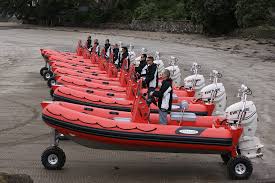
Sealegs signals global expansion plans with new name
Alliance established to rebuild Kaikoura coastal route
KiwiRail cans electric trains on partially electrified North Island trunkline, goes with diesel
Sealegs wins injunction against rival system
NZ dollar briefly drops below 69 US cents as weaker dairy auction results posted
Faultlines: Calls for greater transparency around seismic engineering
Charges filed over ‘made in New Zealand’ claims about NatureBee supplement
Rakon shares soar on buy-in announcement
While you were sleeping: Record rally continues
Southlander oversees trampoline manufacturing in China
Taranaki company breaks into the defence industry with new surf-mapping technology
Sealegs get High Court injunction to protect technology ahead of lawsuit

Northland looks set to be the launching pad for a new global food product.
Cocavo, made from a combination of organic coconut and avocado oils, has just had a "soft launch" in Whangarei and is positioned to fulfil the expectations of its investors who predict it to be this decade's hottest new food item.
The product is a world first, says Cocavo Ltd co-founder and general manager Neville Montefiore.
It was designed to be the ultimate cooking oil giving an extra 5 per cent of flavour and "pizazz" in every dish, he says.
Apart from being lower in saturated fat than regular coconut oil, it has the health benefits of avocado oil, plus all the high heat cooking qualities of both oils.
"The taste is very appealing and lends itself to a wide variety of cooking styles," Mr Montefiore said.
Cocavo, which is set to reach full production by next month, has attracted interest from celebrity chef Simon Gault who earlier this month, through his The Five Percent company, bought a minority holding in the business.
| Continue to full article | Dec 21, 2016 |
Air New Zealand will split its Tokyo services between Haneda and Narita Airports from July next year, offering customers two points of entry into Japan’s capital city.
Air New Zealand currently operates daily flights to Narita International Airport increasing to 10 times a week over the peak months. From July 2017 the three additional peak services will operate to Haneda Airport, with daily services continuing to Narita.
The Haneda services will depart Auckland on Wednesdays, Fridays and Sundays utilising the airline’s state of the art Boeing 787-9 Dreamliner aircraft. Air New Zealand also operates a seasonal service between Auckland and the Japanese city of Osaka.
Air New Zealand Chief Revenue Officer Cam Wallace says the direct Auckland-Haneda Tokyo route will offer more choice for customers travelling to and from Japan.
“The new service will be convenient for Kiwis wanting to get to downtown Tokyo and for Japanese tourists looking to visit New Zealand. The mid-afternoon departure from Auckland will enable good connections from regional New Zealand and a similar mid-afternoon arrival time for the inbound flight means tourists will be able to make seamless domestic connections to the rest of New Zealand.
“We look forward to building on our existing services to Japan as tourism continues to grow in both directions, particularly in the coming years with events such as the 2019 Rugby World Cup and the 2020 Summer Olympics.”
Japan is New Zealand’s fifth largest tourism market with visitor numbers to New Zealand from Japan up 13.8 percent to 97,312 for the year ending October 2016. The number of New Zealanders travelling to Japan also grew in that period – up 15 percent to 32,920 for the year to the end of October.
Tickets are on sale today through travel agents and will also be available for online booking from the end of January 2017.
| A Air New Zealand press release | Dec 21, 2016 |
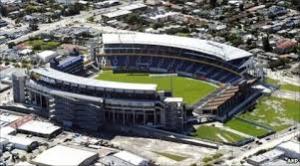
To rebuild or repair? How to fix earthquake affected structures earmarked for demolition
Many buildings currently slated for removal or rebuild in Christchurch and other earthquake affected geographies could be remediated with the help of proven ground engineering methods developed and tested by Mainmark. AMI Stadium at Lancaster Park is one such example.
| Continue to read the letter here | Dec 14, 2016 |

Santa Urges the World to Forgive
Hi everyone!
Santa’s workshop is running full tilt at this hour but production estimates are behind where they hoped to be by this time.
Elf Bernard said that while the Merry Prankster did no lasting harm to the workshop he did set them behind a bit with his constant pranks over the past month. But elves are so happy that he has been caught it appears they are making up for lost time in fine fashion.
We still have a few days before Santa launches but I’m hearing rumors already that Santa’s workshop will be extending their production beyond launch time. That’s not unusual but it isn’t ideal.
— Elf Ernest
| An update from the North Pole | Dec 20, 2016 |
One of the striking things about New Zealand in recent times has been the deepening disconnect between our traditional security partners, and the trading partners that increasingly underpin our prosperity.
50 years ago security and trade went hand in hand. Then things started to change with the UK joining the EU. NZ had to seek new partners, new arrangements, and new friends.
Things have greatly improved over the last 30 years
Partly thanks to some welcome – though very slow – agricultutal policy reform in the EU and US.
But also due to the opening of massive new markets on our doorstep in Asia which really want, and are prepared to pay good money for, our products.
China’s entry to the WTO was arguably the biggest event in trade policy in last half century – and even overshadows the importance of the NZ/China FTA
The reality of the last 20 years has been the contrast between the closed and protectionist economies of Europe, North America and Japan, and our new trading partners in the east
China and most of Asia (with the exception of India), as well as much of the developing world, are more open to what we want to sell than our traditional friends.
At least in the primary products that still make up for more than half of our exports
Less than 3% of our dairy trade goes to the EU today
And now, to cap it all, our traditional friends, who built the post-war trading system, seem to be losing their appetite for globalisation.
Trump, Brexit, TPP.
So NZ finds itself in a very challenging place. Axis of tension indeed.
The fact of the matter is – we are an increasingly lone voice in advocating trade liberalisation.
We are a ‘shag on the rock’ in the global trading environment.
Even with all the negotiating success NZ has enjoyed, we now have FTAs with markets that cover 52% only of our current exports.
In the dairy world I know best, only 13% of global dairy demand is open to trade in the sense of tariff rates of 10% or less.
So what’s next?
In an uncertain, dynamic and even alarming world, rather than picking friends from one side or the other, NZ will instinctively revert to our traditional and deep-seated preference for multilateral – ideally global – solutions and institutions.
We still love the WTO, despite all the competition from competing regional and international bodies.
We would love to see the WTO make a comeback, ideally with NZ helping that to happen.
I am personally confident that our future will very largely evolve in the context of some sort of open, rules-based multilateral trading frameworks.
But what is not clear is whether these new arrangements will continue to hew quite so strongly to the Bretton Woods institutions and approaches that have provided the foundation of international trade since the second world war – the GATT, the WTO, FTAs themselves.
Or whether we will collectively develop something different. Something perhaps much more Asian in style, and approach. Perhaps something Chinese.
That would be interesting.
This post is an abridged version of a speech delivered to the NZIIA Global Future Conference. Read the whole speech here.
| A TradeWorks Guest Opinion piece from Philip Turner, Director of Global Stakeholder Affairs, Fonterra | Dec 14,2016 |

New Zealand travellers will be able to fly all the way by A380 from Auckland and Christchurch to Morocco from late March next year when Emirates upgrades capacity on the service.
Emirates, voted the World’s Best Airline in the 2016 Skytrax World Airline Awards, announced today that it will operate the first ever commercial Airbus A380 flight to Morocco and North Africa, when it takes the iconic double decker aircraft to Casablanca daily from 26 March 2017.
The airline’s flagship aircraft, which continues to excite travellers and aviation enthusiasts alike, will replace the daily Boeing 777-300ER aircraft currently used on the Dubai-Casablanca route, offering increased seat capacity across all three cabin classes and an enhanced premium product experience.
All five daily Emirates A380 services from New Zealand will provide a direct connection at Dubai with the Casablanca flight.
The switch to the A380 offers a total of 1834 additional seats per week, meeting a growing demand from travellers.
Casablanca has become one Emirates’ most popular destinations, and has seen steady growth since the service launched in March 2002. Passengers travelling on the three-class, 491-seat aircraft, will enjoy spacious cabins and experience a peaceful journey in the world’s quietest long-range jet. They can use the onboard Wi-Fi; indulge in food prepared by international chefs, and be entertained by Emirates’ award-winning ice system which offers over 2,500 channels of inflight entertainment across all cabins.
Emirates is the largest operator of the Airbus A380, and has carried over 65 million passengers on its flagship aircraft since 2008.
So far, Emirates has introduced A380 services to over 45 destinations across its network. Its current fleet of 88 A380s has visited over 64 airports, flew nearly 986 million kilometres, and made 74,263 return flights to date.
| An Emirates release | Dec 21, 2016 |
Foreign Minister Murray McCully today announced the appointment of Sue Mackwell as High Commissioner in Papua New Guinea.
“New Zealand and Papua New Guinea enjoy a strong relationship, and we work closely together in the areas of sustainable economic development, agriculture, and renewable energy,” Mr McCully says.
“Papua New Guinea is New Zealand’s second-largest trading partner in the Pacific. It has an abundance of natural resources, and we share an interest in helping make sure these assets deliver broad-based benefits to the people of Papua New Guinea. As a close partner of Papua New Guinea, and an APEC member, New Zealand has also offered its support to Papua New Guinea as it prepares to host APEC in 2018.
“As High Commissioner, Ms Mackwell will be responsible for overseeing our aid and development effort in Papua New Guinea, which is New Zealand’s largest development assistance programme.”
Ms Mackwell is currently National Children’s Director of the Children’s Action Plan, following a term as Deputy Chief Executive, Social Service Policy and Social Sector Strategy at the Ministry of Social Development.
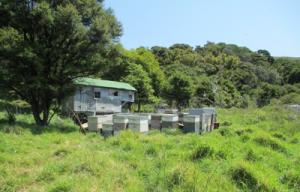
Therapeutic value restores hill country
Cultivation of the manuka tree has become a priority on hillsides from Nelson to Waikato.
The manuka tree, a member of the myrtle family, is the basis for the sharply growing industry in the production of therapeutic manuka honey.
The health benefits of the manuka tree (pictured) were introduced to the rest of the world by Captain Cook who dubbed it the tea tree.
The demand for manuka honey has created another cooperative opportunity in the form of share production between farmers and apiarists.
In return for allocating blocks of land for the location of hives, the farmer receives a cut from the revenue derived from the honey produced.
International demand for manuka honey more than matches supply which means that apiarists are in the most coveted position of New Zealand primary exporters in that they are able to set their own premium price.
This is as opposed to accepting the international commodity price.
Because the manuka tree flowers out of synch with other nectar-producing flora, the manuka content of the honey can be defined.
StatisticallyNew Zealand is the world's third-largest exporter of honey by value, behind China and Argentina.
Manuka honey accounts for most of this.
Even so these figures account only for the foodstuffs value of the honey. They do not take into account the branded manuka honey dedicated to medical applications.
The activity around the hives is conferring meanwhile a healthy transfusion to regional joinery firms and transport operators among others.
The joiners who once made trusses, doors and window frames are rapidly converting to making hives while truck operators are busy transferring the hives between locations.
Similarly regional construction firms are building honey pack houses.
Farmers are finding their marginal lands, especially the areas on which sheep cannot be enticed to graze, have become a new source of shared profit..
What could go wrong?
In a word, Australia.
The manuka tree also grows in Australia. It is claimed too that it originated in Australia and found its way to New Zealand as an element of the southerly migration of flora and fauna.
Australia offers economies of cultivation scale and viewed as even more significant is its terrain allowing for the rapid shuttling of hives between flowering districts and pack houses.
Some have seen a comparison between the New Zealand kiwifruit boom and the resulting competition from countries such as Chile.
But such quibbling aside, it is hard not to see a new and diversified frontier opening up for hill country farmers.
There is no investment in things like heavy duty fencing (deer and goat farming.)
Even where manuka plantations need to be established, farmers are able run sheep in the plantation once the trees became established after 3-4 years.
In addition there is now good shelter for the stock.
|From the MscNewsWire reporters' desk | Tuesday 20 December, 2016 |

Palace of the Alhambra, Spain
By: Charles Nathaniel Worsley (1862-1923)
From the collection of Sir Heaton Rhodes
Oil on canvas - 118cm x 162cm
Valued $12,000 - $18,000
Offers invited over $9,000
Contact: Henry Newrick – (+64 ) 27 471 2242
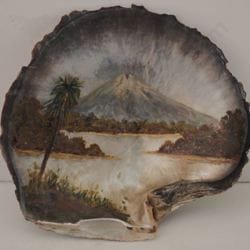
Mount Egmont with Lake
By: John Philemon Backhouse (1845-1908)
Oil on Sea Shell - 13cm x 14cm
Valued $2,000-$3,000
Offers invited over $1,500
Contact: Henry Newrick – (+64 ) 27 471 2242

|
|