
Founded by Max Farndale 1947 - 2018

Furniture group Steinhoff is set to acquire Africa’s largest retailer, Shoprite. What the story behind the firm that wants to be Africa’s next IKEA? Here’s a brief history of Steinhoff:
Investment and analytics firm Vestact predicted that Retail Africa will have annual revenues of 200 billion rand (over 14 billion dollars).
| African BusinessReview | Dec 19, 2016 |
New Zealand has released a new apple variety which has been launched today by Fruitcraft, after being licensed for the worldwide rights by Prevar.
The apple variety PremA129, which will be marketed and known as Dazzle, is expected to be one of the biggest apple variety launches since Royal Gala decades ago. All New Zealand apple growers will be able to grow Dazzle, and all fruit exporters will be able to sell it.
Dazzle is a large, red, sweet apple which has taken 20 years to develop by Plant & Food Research (PFR) at their research station in Havelock North.
Fruitcraft manager Steve Potbury says this is an exciting opportunity for New Zealand apple growers and others around the world.
“Dazzle is targeted towards the growing Asian markets. It has all the qualities which appeal to Asian consumers. It is a big, highly coloured and very sweet apple.
“We want to work with all growers to ensure they can grow and market it through their preferred exporter. This is a collaborative approach, which gives growers the chance to be involved from the orchards to the markets,” says Mr Potbury.
Over 100,000 trees are already being grown by growers in New Zealand including Mr Apple, Bostock New Zealand and Freshmax, and nurseries are busy preparing rootstocks to meet grower demand for orders in the New Year.
Fruitcraft is forecasting 1 million cartons of the Dazzle apple will be exported from New Zealand by 2028, if it reaches those numbers it would become one of the country’s most popular apple varieties. Further production around the world is planned, and Fruitcraft will be looking to license growers and marketers in the main apple growing countries in the next year or two.
Plant & Food Research scientist Richard Volz, says Dazzle has been bred conventionally, through cross breeding between “Sweetie” and “Scired” by plant breeders at Havelock North in 1997.
“The parents and grandparents of the PremA129 variety all come from New Zealand. This has taken decades of work and investment by scientists at Plant and Food Research and the New Zealand pipfruit industry to develop a truly New Zealand apple with strong kiwi heritage,” said Mr Volz.
Pipfruit New Zealand Chief Executive Alan Pollard says this is another reflection of the sophistication and strength of an industry where growers, exporters and breeders are all working together to deliver high quality products to customers both in New Zealand and around the world.
| A Fruitcraft release | Dec 19, 2016 |
Engineers say some Wellington buildings need targeted checks in the interests of public safety.
New Zealand Society for Earthquake Engineering (NZSEE) President Peter Smith says that after completing hundreds of rapid assessments, engineers have developed a profile of Wellington buildings that suffered the most damage in the Kaikoura earthquake or are susceptible to a similar future event.
“The Council is being proactive in requiring all buildings fitting this profile to have targeted evaluations. We fully support the measures that the Council is taking.”
“The buildings that need targeted evaluation share key characteristics. These include being medium height and having concrete frames with precast floors. Other characteristics include being sited on soft soils or ridgelines, having significant damage to non-structural elements, demonstrating signs of stretch in carpet tiles or ceilings, or damage to façades.
“This quake has generated severe shaking in buildings with these characteristics. Some of these buildings have been tested beyond their design loadings.”
Structural Engineering Society (SESOC) President Paul Campbell says engineers now understand that damage from the Kaikoura earthquake in Wellington was highly selective.
“As well as carrying out hundreds of assessments, engineers have been working hard to analyse emerging patterns of damage across Wellington buildings.”
Mr Campbell says the targeted damage evaluations mandated by the Council will involve reviewing structural drawings and are likely to be invasive. This means potentially taking up some floor coverings, stripping off selected wall linings and inspecting ceiling spaces to look for specific patterns of damage.
“How long it takes depends on the size of the building and availability of drawings but you would normally expect the inspection component to be completed in a day.”
Institution of Professional Engineers New Zealand Chief Executive Susan Freeman-Greene says engineers remain concerned about public safety in and around buildings categorised as earthquake prone, given the current heightened risk of aftershocks.
“The energy of the Kaikoura earthquake wasn’t focused on shorter, stiffer buildings, some of which are categorised as earthquake prone.
“It’s important to realise that earthquake-prone buildings are likely to perform poorly in an earthquake centred closer to Wellington.”
Ms Freeman-Greene says structural engineers are being brought in from outside Wellington to help meet current demand.
“IPENZ appreciates the close collaboration between the Council and the engineering profession.”
| An IPENZ release | Dec 20, 2016 |

Suez Canal traffic data showed that 213 ships transited the canal, with a total load of 12m tonnes, from 11 to 15 December. An average of 42.6 ships transited the canal per day during that period, with an average load of 2.4m tonnes per day. The average load per ship was about 56,340 tonnes during that period.
Compared to July 2015, before the inauguration of the New Suez Canal, the average daily number of transiting vessels totaled 47 vessels, with an average load of 2.758m tonnes per day.
Three major container ships—the Danish vessels Mayview Maersk, Malta’s Tihalma, and the Marshal Islands Gener8 Chiotis—transited the canal carrying 200,000 tonnes each.
The number of vessels that passed coming from the west through the northern entrance was 113 vessels, with a daily average of 22.6 vessels, and a total load of 0.8m tonnes, recording a daily average of 1.36m tonnes.
Meanwhile, 100 ships transited the new channel coming from the south, with a daily average of 20 vessels, and a total load of 5.2m tonnes, recording a daily average of 1.04m tonnes.
The Central Bank of Egypt (CBE) announced last week a decline in the canal’s revenues over the fiscal year (FY) of 2015/2016 to $5.1bn—a drop of 4.5% from FY 2014/2015, in which revenues amounted to $5.4bn.
The cargo load is the main measure for shipping traffic in the Suez Canal and the calculated transit fees.
| Port News | Dec 19, 2016 |
New Zealand is into its fifth straight year of strong growth in construction, with more than 30,000 homes consented in the year to October and record levels of commercial and infrastructure investment, Building and Housing Minister Dr Nick Smith says.
“Residential construction activity has reached $12.5 billion, an all-time high, and the number of homes consented has topped 30,000. This is the longest and strongest residential construction boom in New Zealand history, with five straight years of growth averaging over 20 per cent per annum. This is as fast as you can practically grow a sector as large and as complex as construction without compromising quality,” Dr Smith says.
“The 30,000 homes per year now being built is the fastest rate ever, with the exception of 2004 and the mid 1970s. The 2004 boom was focussed on thousands of small apartments in Auckland that are no longer allowed, and the 1974 boom rapidly crashed due to the unsustainable mix of high inflation and low interest government loans. The current boom is much more sustainable, better balanced nationwide and also involves record levels of investment in commercial and infrastructure construction.
“This ongoing strong growth shows the Government’s programme to increase housing supply is working. We have aggressively increased land supply with Special Housing Areas in the short-term, changes to Auckland’s planning in the medium term, and the National Policy Statement on Urban Development Capacity and Resource Management Act reforms in the long term.
“We have complemented this with the Crown Land Programme and a record level of direct Government projects to build homes, such as Hobsonville. We’ve also provided record levels of assistance for first-home buyers with the KiwiSaver HomeStart scheme, which has helped more than 20,000 people into their first home with about $500 million in KiwiSaver withdrawals for a deposit.
“Further reforms are in the pipeline to further grow the supply of housing. This Government is step by step, development by development, getting on and addressing New Zealand’s housing challenges.”

MF's Christine Lagarde convicted in negligence case; won't face jail term
Taranaki company breaks into the defence industry with new surf-mapping technology
Sealegs get High Court injunction to protect technology ahead of lawsuit
While you were sleeping: Treasuries, gold gain
Nuffield scholar says collaboration key to NZ's sustainable future
Exporters should take control of revenues'
National Fieldays elects new president
National award for engineering student
Strong economic growth predicted
PM announces new Cabinet line-up
The Southern Region Dairy Expo has had a name change.

The Mandaue Chamber of Commerce and Industry (MCCI) has a lot on its plate as it gears up for at least four trade missions across Asia and the Pacific in 2017.
Glenn Soco, MCCI president, said they plan to send delegates to explore business and investment opportunities in Laos in Cambodia, Australia and New Zealand, Ayabe in Japan, as well as Thailand next year.
“Laos is a new frontier as their country is opening up to foreign investors. They are keen on building stronger trade with the Philippines also,” he said in a text message to Cebu Daily News.
In the same manner, Soco said they are also exploring opportunities with Australia and New Zealand as well as learning from their best practices.
The chamber leader said this was discussed when the Australian-New Zealand Chamber of Commerce of the Philippines (ANZCHAM) joined an investment forum in Mandaue City last August.
He cited governance and ease of doing business, particularly securing business permits, as among the things practiced in Australia and New Zealand that the Philippines can emulate.
Soco said it takes an average of one day to process business permits there while it takes an average of three years in the Philippines.
“If (the trade mission) really happens, we’d like to bring with us local government officials also,” he said.
New Zealand - Australia
Soco said the chamber is also interested in New Zealand and Australia’s “incubator” for micro, small, and medium-scale enterprises (MSME) since the empowerment of these businesses is among MCCI’s advocacies.
In 2017, he said the MCCI will strengthen this advocacy by pursuing initial discussions with the Cebu provincial government on crafting programs for MSME development.
Soco added that the Mandaue City government is also going to sign a sisterhood agreement with Ayabe in Japan.
“We also want to see trade and investment opportunities there. Likewise, we support the local government unit on this development,” said Soco.
He said that Ayabe government officials, during their visit to Mandaue earlier this year, mentioned that they needed skilled workers for their different industries.
There was also an invitation to MCCI from Thailand’s Trade and Investments Bureau, Soco added.
He said they have been asked to mount a trade exhibit there, although details have not been finalized yet.
Soco said the chamber is planning to launch these trade missions beginning in the first or second quarter next year.
Among the industries in Mandaue City expected to benefit from these trade missions are the food manufacturing segment, motor parts, and furniture, he added.
“I think Mandaue is positioning itself as a high-value manufacturing city. Manufacturing, being the biggest industry here, we are looking for buyers, trade with other countries, sourcing of raw materials, and exchange of information,” said Soco.
The business leader also said that the chamber will revisit its ties with Vladimir and St. Petersburg since President Rodrigo Duterte is moving toward stronger relations with Russia.
Since MCCI has participated in several trade missions in China, it will also review past agreements and initiatives to see where the group can capitalize or how it can align with the administration’s present thrust.
“It is important to prepare for the good things yet to come,” said Soco.
| CBUDailyNews | Dec 19, 2016 |
Statistics New Zealand data shows that building consent are at a 10 year high, even when there is still a shortage of housing. The construction sector is struggling to produce the skills needed to meet demand.
Building consents are at their highest in more than 10 years, but with the industry coming off such a low base, capacity is still a key issue.
Building consent data released today by Statistics New Zealand shows that to the end of October 24,789 new homes gained building consents this calendar year and 30,158 over the past 12 months. This is the highest number since 2004, but is still well below the high of 1973 when just fewer than 40,000 new homes were consented.
Building and Construction Industry Training Organisation (BCITO) Chief Executive Warwick Quinn predicts the 2016 year to end around 30,000 consents up on 2015. He says Canterbury and Auckland make up 53% of all consents issued which is slightly down on previous years. Auckland is expected to consent around 10,000 new homes up about 8% on 2015.
Quinn says 30,000 consents is 6.33 builds per 1,000 people and is approaching New Zealand’s long run historical rate of 6.58 builds per 1,000 people. This is double the rate of 3.12 builds per 1,000 people in 2011 when construction was at its lowest level of activity since records began.
While the turnaround is welcomed Quinn says 30,000 consents per annum needs to be the new norm and coming off such a low base the construction sector is struggling to produce the skills needed to meet demand. Quinn says the BCITO has a record number of apprentices in training and recently passed the 10,000 number for the first time, but more are needed.
“While 10,000 apprentices is a new milestone for us it is also our new normal and must be increased if we are to successfully fill the skills gap in construction” Quinn says.
“Most of our growth comes from those firms that traditionally have apprentices so we want to increase the number of employers who train. In order to do that we need to have training programmes that align more closely with their business needs and how the industry in general is structured,” he says.
BCITO has been working closely with the Tertiary Education Commission and the New Zealand Qualifications Authority to explore how this might be done and a pilot will be launched in the New Year to test demand and options. Quinn says the competition to attract people into the trades is high so broadening the opportunities and being flexible in our approach to producing the skills the market needs will hopefully entice more into the industry. Quinn says there has never been a better time to get into construction with a strong forward work projection and great job security.
India plans to take a longer period to eliminate tariff with China to give the domestic industry enough time to adjust to a trade deal with China.
New Delhi:India plans to offer tariff elimination on more than 70% traded goods with China over an extended period of time under the ongoing negotiations for a Regional Comprehensive Economic Partnership (RCEP) agreement.
“One cannot go beyond 6% offer on either side of common concession. For example, if common concession is decided at 80% for all countries, then we cannot offer China tariff elimination of less than 74%,” a government official said, requesting anonymity.
The common concession of tariff lines is the minimum tariff elimination that a country has to offer under RCEP, which is yet to be finalized. India plans to take a longer period to eliminate tariff with China, say up to 30 years, to give the worried domestic industry enough time to adjust to a trade deal with China.
Steel industry is particularly worried as China has been dumping iron and steel products in India at a much lower price than the domestic industry can supply at. India has often resorted to anti-dumping measures to protect domestic industry from the onslaught of cheap imports from China.
“Other countries want a shorter phasing out period of tariffs; we want a longer phasing out period. Others say what you give to one country, you have to give to everybody, which we don’t agree to,” the official said, pointing at the current level of discussions at RCEP among member countries.
| Continue to orginal article | Dec 19, 2016 |
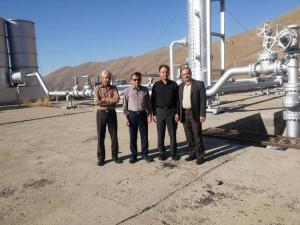
New Zealand’s geothermal sector joins various other countries looking at the opportunity to get involved in geothermal development in Iran.
Geothermal New Zealand Inc., a collaboration by New Zealand’s geothermal industry, has recently been to Iran to meet Iranian partners and explore venues for cooperation on geothermal power generation projects.
As part of the delegation, Geothermal New Zealand Executive Director Mike Allen has been part of a trade mission from the country to learn about geothermal opportunities and new energy in general. “New Zealand was involved in the early project developments of Sabalan geothermal area in Iran some 15 years ago,” Mike Allen noted. “Now we are looking into what more is available.”
During the summer of 1998, a survey of the Mt Sabalan geothermal area, in northwest Iran, was undertaken for SUNA (Renewable Energy Organization of the Ministry of Energy, Islamic Republic of Iran). The primary objective of this survey was to carry out geothermal exploration of the Sabalan area to delineate any resistivity anomalies that may be associated with high temperature geothermal resources.
The subsurface resistivity structure was modelled to assess the size of the geothermal resources, to facilitate the choice of initial exploration well sites, and to prepare conceptual models for the hydrology of the geothermal fluid reservoirs.
“Iran has good geothermal potential. The government is encouraging the private sector for activity. We are interested in the technical, rather than investment part of the activities,” Allen said.
Exploration for geothermal resources in the Sabalan mountains of northern Iran, undertaken in the summer of 1998, identified several low resistivity anomalies around the flanks of the volcanic complex that are worth investigating by deep drill-holes.

Palace of the Alhambra, Spain
By: Charles Nathaniel Worsley (1862-1923)
From the collection of Sir Heaton Rhodes
Oil on canvas - 118cm x 162cm
Valued $12,000 - $18,000
Offers invited over $9,000
Contact: Henry Newrick – (+64 ) 27 471 2242

Mount Egmont with Lake
By: John Philemon Backhouse (1845-1908)
Oil on Sea Shell - 13cm x 14cm
Valued $2,000-$3,000
Offers invited over $1,500
Contact: Henry Newrick – (+64 ) 27 471 2242

|
|