
Founded by Max Farndale 1947 - 2018
Microsoft wrapped up its New York Windows 10 event a few hours ago and the two-hour keynote packed a lot of announcements about upcoming Windows 10 features, new Surface hardware and more. As usual, these kind of fast-paced events are a bit hard to digest and if you’re looking for a good summary of everything Microsoft unveiled today, the company just helped us by highlighting its top announcements from the conference.
Following the release of the Windows 10 Anniversary Update last summer, the next major Windows 10 release will be called the Creators Update and will be available as a free update in early 2017. While Windows Insiders already had a chance to test some new features and improvements in recent preview builds (codenamed “Redstone 2“), this upcoming Creators Update, as it names suggests, will turn the lights on designers, makers, and content creators. Expect to read a lot about 3D design, game streaming, and more in the coming days and weeks.
Corrs Chambers Westgarth and Canadian technology start-up, Beagle, have today announced the launch of Beagle Asia Pacific Pty Ltd, a new entity established to provide practical and accessible artificial intelligence technology.
The 50:50 joint venture is set to revolutionise the way Australian and New Zealand companies are using AI technology, with Beagle’s TANR™ (Technology Assisted Narrative Review technology) and productivity tools, which can be used for automatic contract analysis, offering companies a scalable and affordable product unlike anything currently available on the market.
“This is an AI-based narrative review which gives clients the benefits of AI without having to commit to the expensive and lengthy process which is the current norm,” said Corrs Chambers Westgarth Partner James Whittaker.
“Up until this point, many companies have had to rule out using AI for contract analysis because they haven’t had the scale or the budget. Beagle’s software addresses this market gap and, rather than being confined to use within legal departments, it can create benefits right across the enterprise structure, from legal, to procurement, contract administration and management, risk, insurance, IT and IP,” added Whittaker.
Beagle’s TANR™ digests and identifies important elements within text at about one page per second, and then learns the culture-specific way that an entity manages those elements. The platform augments a user’s ability to make appropriate decisions and does so in a way that increases the uniformity of these decisions in accordance with the organisation’s policies and procedures.
“Instead of adopting the common reactive approach of other software platforms in the market which look at what a company has agreed to previously, this platform is focused on quickly learning what is needed by a company based on its own policies and culture, and then helping decision-makers stay within those boundaries,” said Beagle Founder and Top Dog, Cian O’Sullivan.
“This approach drastically improves corporate compliance and provides exceptional transparency, in fractions of the time currently invested,” concluded O’Sullivan.
The product is being introduced to the market as a pilot program for a select number of Corrs’ clients, though the platform will ultimately be available to all of Corrs clients and non-clients throughout Australia and New Zealand.
The Beagle JV is both Beagle and Corrs’ first joint venture and reflects Corrs’ strategy to embrace technology and pioneer new ways of adding value.
“At Corrs, we recognise the continued and increasing importance that technology is playing throughout the business landscape – both in legal departments and more broadly. Our aim is to be at the forefront of these changes, to catalyse them. The key to ensuring we thrive in the shifting delivery of legal services is to ensure our innovations deliver value to the market. At times, this extends beyond our immediate client base, and our joint venture with Beagle is a great example of this,” said Corrs Partner and CEO John W.H. Denton.
Founded in Canada in 2014, Beagle is already gaining significant traction, with German automaker Volkswagen (VW AG) deploying Beagle’s technology to assist in all car part procurement decisions for its entire family of companies and brands.
Beagle was one of 14 recipients of Microsoft Ventures’ 2015 Seattle-based Accelerator Program, a graduate of the prestigious Rotman School of Management (University of Toronto) Creative Destruction Lab, and one of the recipients of the Canadian Innovation Exchange top 20 most innovative companies of 2015 (CIX Top 20 2015). Beagle’s founder, Cian O’Sullivan, is a fellow of CodeX, the Stanford Center for Legal Informatics.
BISON, the specialist developer of portable container weighing solutions, today announced the launch of a world first system for weighing containers on trailer chassis.
The new container weigh system is a timely innovation, with recent amendments to the SOLAS convention forcing shippers around the world to verify the weight of every export container with certified weighing equipment or processes. The SOLAS rule change has added cost and complexity to container shipping operations, with many shippers having to adopt inefficient or poorly timed weighing processes, such as hauling containers extra distances to offsite weighbridges or weighing every single cargo item before it is loaded into the container.
"BISON C-Legs solve this problem," says BISON CTO, Dr Mark Fahey. "They equip shippers to accurately weigh containers on chassis in any location, without reliance on capital-intensive weighbridges, cranes and container handlers, which are not always available at the right time or in the right place."
BISON C-Legs are self-contained scales that attach to and lift a container just clear of the chassis, then transmit the gross container weight via Bluetooth to a feature rich smart phone App. The App confirms the container’s weight distribution, captures photos and shipment details and sends weight certificates and related data via email.
Targeted at exporters and logistics companies needing to weigh containers outside of ports and other high volume container hubs, BISON C-Legs provide a flexible solution for SOLAS VGM compliance and allow shippers to optimize cargo loads, manage container weight limits and weigh containerized cargo for trading purposes.
C-Legs are compatible with shipping containers of all types and sizes up to 35,000kg and work with both air and spring suspension chassis. Full OIML certification and type approvals in Europe, Australia, South Africa, New Zealand and other countries will be completed by the end of 2016.
BISON C-Legs build on the success of BISON’s pioneering C-Jacks, the portable system for weighing grounded shipping containers. BISON CEO, Mr Greg Fahey remarks:
"Our ground based container scales have sold well this year and are now being used in over 20 countries to produce SOLAS VGM certificates. However we’ve had strong pull for a similar solution to weigh containers on chassis, especially from Europe and North America where chassis based loading is mainstream. C-Legs really are a market led innovation."
BISON will mark the C-Leg launch, plus the opening of a new sales office in Europe, by showcasing its weighing hardware and data management systems at the Intermodal Europe exhibition in Rotterdam in mid-November. The BISON team will be based at stand 74. BISON CTO, Dr Mark Fahey, will give a presentation at the conference, talking about the benefits of verifying container weights before they enter the logistics chain.
Product innovation is critically important for business because it’s one of the keys to unlocking growth, says Mondelez International’s New Zealand Country Head James Kane.
Speaking in a NZ Food and Grocery Council Leaders Series video interview, he says innovation was critical to staying ahead of the competition.
“We know as a business we have the ingredients in people and brands and broad portfolio to be successful, but innovation really gives us another platform to genuinely grow the category.
“The approach we take is to try and leverage the growth of our global network for innovation but also to take the best of local where we can as well.”
He says the best recent example of local product innovation was the Jaffa block, which Cadbury developed last year after asking Kiwis via a social media campaign what they were looking for. The block “struck a chord” with consumers and sold more units than any other block.
Another example of innovation was taking a global product and developing it for New Zealand tastes. Consumers told them they wanted higher cocoa content so they developed Cadbury Cocoa, which “was a great example of taking a global product but localising it by bringing it to the New Zealand marketplace”.He says innovation is going to continue to be a massive focus for Mondelez.
FGC Chief Executive Katherine Rich says innovation is one of the main ingredients that keeps business growing, be it domestically or in export markets.
“The old saying ‘innovate or die’ has never been more accurate than in today’s ultra-competitive marketplace.”

A London reader revisits the genesis of middle class fashionable discontent
I have followed the MoW revisited discussion from afar and with great curiosity. I would like to add now my recollections. In my view the original reason for what can only be described as the diabolical aura that attached itself to the old Ministry of Works was the Wellington urban motorway (pictured) which necessarily tore a swath through the capital’s main student flatting area in Thorndon. This precipitated Wellington’s accommodation shortage which exists to this day.
The resentment that this detonated was not immediately evident and the Ministry of Works was allowed to work its way without let or hindrance up the Waitaki with its series of hydro-electric generation dams which remain masterpieces by any standard..
Utah Williamson Burnett was allowed also at this time to peacefully proceed with the Manapouri hydro electric project, another masterpiece if ever there was one.
It was now though that in the early 1970s the dam of public anger broke and its ostensible cause was the raising of Lake Manapouri in order to derive the greatest value from the immense investment in the project by the now also extinct New Zealand Electricity Department.
This middle class revolt was centred in Wellington and encased in its wrath were perpetrators of any large scale civil engineering project of any description.
The righteous fury of the Manapouri protest fed on itself in a compounding manner. Only Prime Minister Robert Muldoon’s determination and political boondoggling ensured that the Cromwell project went through. This ensured that New Zealand’s proportion of renewable, yes “renewable” energy was in place to act as shock absorber for the various power crises experienced by the rest of the world.
In Wellington recently I noticed with appreciation the engraved plaque from IPENZ on the Thorndon stretch commemorating the Ministry of Works construction of the urban motorway.
But I fear that it was this stretch of the motorway that sowed the whirlwind of active discontent that still plagues, and often freezes, the nation’s large scale/large benefit civil engineering construction projects.
SincerelyCharles LautenbachLondon
TOKYO -- "The wound is the place where the light enters you." These words of the 13th century Persian poet Rumi sang in my head as I examined a simple, ceramic bowl in a tiny cafe in a western suburb of Tokyo. The bowl had been elevated to a luminous, compelling objet d'art, by the gold-filled cobweb of cracks snaking across it.
Light had indeed entered this bowl along the lines where it had once shattered, thanks to the particular Japanese art of repairing ceramics called kintsugi. The technique uses the sap of the urushi tree, a powerful natural adhesive, mixed with powdered gold.
Unlike other methods of repair like welding or gluing, kintsugi's power lies in its refusal to disguise the brokenness of an object. It does not aim to make what is broken as good as new, but to use the cracks to transform the object into something different, and arguably even more valuable.
Kunio Nakamura demonstrates the kintsugi technique. (Photo by Pallavi Aiyar)Kintsugi (kin means gold and tsugi means to join) is not just a practical craft, although it undoubtedly prolongs the utility of things. It is also a philosophy that speaks to the human condition. As with much of Japanese aesthetics it is steeped in philosophical concepts rooted in Zen Buddhism.
One of these is wabi-sabi, an aesthetic ideal that emerged in the 15th century as a reaction to the contemporary preference for ornate designs and rich materials.
Foreign Minister Murray McCully today announced the appointment of diplomat Michael Burrell as High Commissioner to South Africa.
"New Zealand is placing increasing priority on our relations with Africa," Mr McCully says.
"Our relationship with South Africa is based on our shared Commonwealth history, respect for democracy, strong links between our people, and close sporting ties.
“We are also continuing to grow our trade and investment links, and a significant aspect of the High Commissioner’s role is to support New Zealand business develop export markets in South Africa.”
Mr Burrell is currently the Director Sustainable Economic Development at the Ministry of Foreign Affairs and Trade and before that was CEO of Aquaculture New Zealand.
Mr Burrell will also be accredited to Namibia, Botswana, Mozambique, Zimbabwe, Swaziland, Lesotho, Angola, Malawi, Zambia and Tanzania.
Deputy Prime Minister Bill English will lead New Zealand's Ministerial delegation to the annual Australia New Zealand Leadership Forum (ANZLF) in Sydney tomorrow.
Mr English will be accompanied by Economic Development Minister Steven Joyce, Primary Industries Minister Nathan Guy, Trade Minister Todd McClay, Customs Minister Nicky Wagner, and Commerce Minister Paul Goldsmith.
“The Forum brings together over 200 chief executives from the largest trans-Tasman companies to engage with both Governments on initiatives to strengthen our $24 billion trade and economic relationship,” Mr English says.
“Seventy five per cent of New Zealand exporters generate income in Australia, so it is vital that we keep the trans-Tasman economy energised.”
Separate to the ANZLF, Mr English will hold talks with Australian Treasurer, Scott Morrison, while Ministers from both sides of the Tasman will meet to discuss new initiatives to reinvigorate the Single Economic Market agenda.
“We are continuing to build a seamless trans-Tasman market so that it is as easy for New Zealand businesses to operate in Sydney as it is in Auckland,” Mr English says.
During the Forum Mr English and Mr Morrison will launch the Australia New Zealand Infrastructure Pipeline (ANZIP), which is designed to provide greater transparency to our construction sector, as well as global investors, to better identify infrastructure opportunities on both sides of the Tasman.
Foreign Minister Murray McCully has appointed diplomat Lyndal Walker as New Zealand’s new Ambassador to the Netherlands, to be based in The Hague.
“The Netherlands is an important partner for New Zealand in Europe and The Hague is the seat of multilateral institutions like the International Court of Justice,” Mr McCully says.
“The Netherlands is our fifth largest trading partner in the European Union, and is a strong source of foreign investment into New Zealand.
“In addition to these economic ties, more than 25,000 Dutch tourists visit New Zealand annually and over 150,000 people of Dutch descent now live in New Zealand,” Mr McCully says.
Ms Walker is currently the head of the Ministry of Foreign Affairs and Trade’s Consular Division and has served as Counsellor and Consul General in Washington DC. Ms Walker will also be accredited to Denmark, Finland, and Norway, and manage New Zealand’s relationship with the International Court of Justice and the Organisation for the Prohibition of Chemical Weapons
Science and Innovation Minister Steven Joyce has today announced that the New Zealand Research Institute of Viticulture and Oenology (NZRIVO) has been selected to become the first new Regional Research Institute.
“The NZRIVO, which will be based in Marlborough, will undertake new research activity and collaborate with other domestic and international research institutions to support the growth and continuing success of New Zealand’s wine and viticulture industry,” says Mr Joyce.
The Government will provide funding of $12.5 million over four years for the new institute with additional funding from industry, and it will operate as a private, independently governed organisation.
“In its proposal to establish the NZRIVO as a Regional Research Institute, New Zealand Winegrowers and its partners made a strong business case demonstrating ongoing financial sustainability beyond initial government support,” says Mr Joyce.
“The new wine research institute will support innovation in Marlborough and bring jobs to the region, will work to grow industry R&D intensity across the country, and assist related organisations to make the most of their unique business, technology, and economic growth opportunities.
“I look forward to seeing the results from this new institute benefit the Marlborough region and local and national players in the grape growing and wine making industries.”
Regional Research Institutes were announced in Budget 2015. In Budget 2016, the Government set aside $40 million of additional funds to support this initiative, bringing the total funding available to $65 million. The institutes are designed to encourage industry research and development and innovation in regional New Zealand.
In addition to the NZRIVO institute, there are currently two shortlisted proposals in final stages of business case development:
Applications for the second funding round for Regional Research Institutes will open in early November.
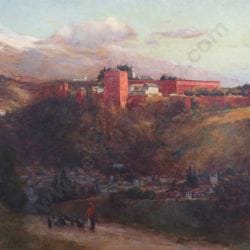
Palace of the Alhambra, Spain
By: Charles Nathaniel Worsley (1862-1923)
From the collection of Sir Heaton Rhodes
Oil on canvas - 118cm x 162cm
Valued $12,000 - $18,000
Offers invited over $9,000
Contact: Henry Newrick – (+64 ) 27 471 2242
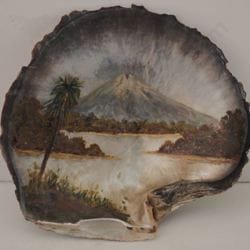
Mount Egmont with Lake
By: John Philemon Backhouse (1845-1908)
Oil on Sea Shell - 13cm x 14cm
Valued $2,000-$3,000
Offers invited over $1,500
Contact: Henry Newrick – (+64 ) 27 471 2242

|
|