
Founded by Max Farndale 1947 - 2018
Go Bus Transport, New Zealand’s largest and most diverse bus operator, is to acquire the business and brand of Johnston’s Coachlines. The deal is conditional at this stage but is expected to be completed before 1 September
Go Bus currently operates a range of bus and coach services across New Zealand, including metropolitan urban passenger services and school buses. Johnston’s is a dedicated premium coach line which has operated for 80 years, with depots in Auckland, Christchurch and Queenstown.
Go Bus Managing Director Calum Haslop says the acquisition of Johnston’s, essentially a family operation, is a great fit for Go Bus, and will strengthen its charter and tour business immensely.
Go Bus Transport, New Zealand’s largest and most diverse bus operator, is to acquire the business and brand of Johnston’s Coachlines. The deal is conditional at this stage but is expected to be completed before 1 September
Go Bus currently operates a range of bus and coach services across New Zealand, including metropolitan urban passenger services and school buses. Johnston’s is a dedicated premium coach line which has operated for 80 years, with depots in Auckland, Christchurch and Queenstown.
Go Bus Managing Director Calum Haslop says the acquisition of Johnston’s, essentially a family operation, is a great fit for Go Bus, and will strengthen its charter and tour business immensely.
“Johnston’s has a fleet of 40 coaches, including premium five-star luxury coaches, and offers tours, charter and air crew transfer services. This acquisition will round off our business operations significantly, giving us the ability to offer a complete range of bus and coach services.
“We will keep the Johnston’s brand, and it will operate as a separate division within the Go Bus Group, to ensure the retention of the brand, contracts and experience offered by this specialist coach operation.
“Our expectation is that both businesses can learn from each other to create an overall stronger transport operation, improving the quality of passenger and client services and experience.”
The GM of Johnston’s Steve Champion says he is excited to join the Go Bus Group.
“There are definitely parallels between the two companies in terms of shared values and being employers of choice. We have been impressed with the family ethos of Go Bus, even though it is New Zealand’s largest bus operator."
“It will be business as usual for us with the same dedicated team managing the Johnston's operation and looking after our valued customers. In the longer term we can see the significant opportunities that Go Bus will have to grow the business and brand, and we are really looking forward to joining the Go Bus family.
The acquisition, for an undisclosed amount, does not include the Gray Line operations, a worldwide brand, which Johnston’s previously operated in New Zealand.
If you supply engineering or any other services you should be aware of what is on the horizon.
CONTRACTOR PREQUALIFICATIONIf you are thinking this is just another management buzz word that has a number of compliance fish hooks, you are 75% right but on the other side of the ledger, it can have a number of advantages.
What is prequalification?In the yester years of ISO 9001 this was called supplier appraisal, in this new age of the 2015 health and safety legislation, it’s called pre-qualification. This is a relatively new term to the NZ health and safety vocabulary. If you are a contractor suppling or intending to supply your services to central or local government, government departments, port companies, Electrical suppliers and other large industry players, I suggest you take note.
Why, if you are not on board with it, this well be a something that could prevent your business from trading with these organisations and other businesses in the very near future.
Why is it happening?Continue to the full article

If you supply engineering or any other services you should be aware of what is on the horizon.
CONTRACTOR PREQUALIFICATIONIf you are thinking this is just another management buzz word that has a number of compliance fish hooks, you are 75% right but on the other side of the ledger, it can have a number of advantages.
What is prequalification?In the yester years of ISO 9001 this was called supplier appraisal, in this new age of the 2015 health and safety legislation, it’s called pre-qualification. This is a relatively new term to the NZ health and safety vocabulary. If you are a contractor suppling or intending to supply your services to central or local government, government departments, port companies, Electrical suppliers and other large industry players, I suggest you take note.
Why, if you are not on board with it, this well be a something that could prevent your business from trading with these organisations and other businesses in the very near future.
Why is it happening?As we all should now know, if you are the owner of a business owner or executive or director you are the PCBU, if you have a senior role in the business and the ability to influence change you are defined as an officer of the business and in many cases also the PCBU.
As part of your PCBU responsibilities you now have the responsibility to manage “Workers” in your business, this now includes contractors, subcontractors their employees and others.
In the past, the methods to do this and to ensure that contractors have all the H&S requirements in place was to either - 1. Do anything and take the risk. 2. ask them if they had H&S systems in place and to take their word for it, 3. to send them a letter setting out your H&S requirements, 4. to meet with them and to eye ball the and to view what they have, 5. to have them assessed by a third party
What’s is now emerging is that those days will shortly be over as the chain of responsibility is now starting to unravel.
So how does it work?Over the past twelve months a number of larger H&S providers had recognised that contractor management was an area that was not being well managed. Supplier assessment is a process that happens in the UK and Australia and has fast become a prerequisite to do business. With the now prescriptive PCBU responsibility for the effective management of contractors, this has now brought contractor management to the fore.
The assessment providers have established a number of different approaches whereby they are contracted to the larger companies to assess and to review the clients recognised contractors H&S systems against a given criteria.
The criteria will work on, 1. the size of the business or 2. The number of employees in the business.
From the presentations I have seen to date, the assessments will be based on the contractor registering and then providing paper based evidence for review against a given criteria.
From this the results will be posted on a software portal for the contractor and PCBUs to view and then. Where a contractor scores in a certain range will depend on what help they need to bring their H&S systems into an acceptable range of compliance.
The outcome will then provide the PCBU with an independent assessment to make an informed decision of what contractors they will employ in the future.
For many smaller contractors this may sound over the top but I suggest that if you have not addressed your H&S responsibilities then think again. Remember, Denial is not just a river in Africa. For many contracting businesses and others suppling services to industry, this will become a prerequisite to do business in the future and in the long term, can be beneficial for your business.
The ACC WSMP Workplace Safety Management Practices ProgramWhere will this assessment (Audit) process fit with this recognised accreditation process?
An interesting question. From what I am hearing the businesses promoting the assessment process, they don’t appear to be placing too much credibility of the WSMP audit outcome.
This may be just a marketing ploy but having worked with the WSMP auditing process as an auditor and a HSE advisor for the past 24 years I really think this is an entropic view by the promotors of the assessment process.
WSMP has been proven to work as it has been around for 16 years and is proven to work with $$$ benefits for a business. It may not be perfect but what system ever is?
Having managed the H&S compliance with and for twenty businesses over the past fourteen years, all have achieved a tertiary level pass, will this assessment become just another cost to their businesses and for thousands of other NZ businesses?
There has been a lot of speculation about the future of WSMP and my sources tell me but no decision has been made about this even though one of the providers have stated it may be scrapped?If is scrapped as suggested, then I can imagine many businesses will be up in arms about this. I personally can’t see this happening as unlike the proposed assessment process, the WSMP and WSD programs are government approved assessment (Audited) systems that are offered as a financial incentive to improve their H&S processes.
The real interesting point is that from what I have heard is the proposed assessment tool is similar to the lower level ACC WSD program, sent in the paper work and we will check it against a given criteria and give you a mark that will also be made known to the primary business.
The assessment will also a number of other questions like, insurance coverage and information of who the business uses for external H&S assistance and the providers qualifications and more.
It’s my opinion that prequalification is overdue, but I believe that the WSMP achievements of businesses must be taken into account in the assessment process and in the final decision by the contracted assessors.
Interesting times ahead, what this space if you are and accredited WSMP Company.
An article prepared by health & safety expert Gordon Anderson owner of Hasmate Ltd
The chief executive of New Zealand's leading export supply chain firm Kotahi, David Ross, is urging exporters to work together to create the most efficient supply chain. If New Zealand firms collaborate when it comes to shipping cargo offshore, they can create a stronger supply chain and future proof the country's exports.
"I think there's a lot of great brand ideas out there that don't achieve their full potential because they don't have great supply chain and operations processes," said Ross.
Kotahi has over 40 customers from a diverse range of sectors and manages the cargo pooling and export of around one third of New Zealand's containerised goods.
In today's Otago Daily Times Allison Beckham reports that several workers have lost their jobs after the recycling plant at the Tiwai Point aluminium smelter closed suddenly on Tuesday.
The multimillion-dollar plant, which opened in 2011, was owned and operated by Bahrain company Taha Asia Pacific, which was put into liquidation at 8.55am on Tuesday.
Liquidator Rhys Cain, of Ernst and Young, said yesterday the liquidation meant all employment contracts were terminated. He declined to say how many people were affected.
"Staff have been notified, and we are working hard to ensure they get their entitlements.''
Foreign Minister Murray McCully has named diplomat Stephen Payton as New Zealand’s next ambassador to Japan.
“New Zealand has long-standing and strong ties with Japan, underpinned by a close network of personal and business relationships,” Mr McCully says.
“A major focus for the Ambassador will be on helping to promote New Zealand interests in the areas of food and agriculture, security, and energy.
“Japan will host the Rugby World Cup in 2019 and the Olympics in 2020. Both these events will provide an opportunity to strengthen links between our two counties at all levels,” Mr McCully says”
Mr Payton has served as Director of the New Zealand Commerce and Industry Office in Taipei. He speaks Japanese and was previously New Zealand’s Consul General in Osaka.
Despite the closure of Gameloft writes Andrew Todd for Gameplanet
New Zealand's video game industry saw growth of 13% in the year ending March 31st, 2016, according to an independent survey of New Zealand Game Developers Association studios.
The industry earned NZ$88.9 million over that twelve-month period, 92% of which came from software and service exports.
"The successful New Zealand studios have consistently grown their audiences and attracted fans around the world," said NZGDA chair Stephen Knightly.
"They’ve become sustainable independent publishers and proven that they are not one-hit wonders but are smart digital exporters."
60 new jobs were created in the video game sector, nearly offsetting the decrease of 93 fulltime jobs caused by the closure of Gameloft New Zealand in January.
Most New Zealand studios - 68% - are independent self-publishers, with the majority of studios also locally-owned.
The survey, conducted by Tim Thorpe Consulting, identified funding issues, skills shortages, difficulties finding partners and developing business relationships, and hiring diverse employees as key challenges facing New Zealand studios.
New Zealand Features Honey Bee on World’s First Silver Hexagonal Coin with Resin Inclusion

The Reserve Bank of New Zealand has unveiled (August 1) a new coin paying homage to the humble honey bee, or Apis mellifera. The honey bee is an integral part of our lives, providing honey while pollinating flowers and plants that provide the human race with needed sustenance. The life and hierarchy of the honey bee is complicated, with an organized society of three adult castes comprising of the queen, workers, and drones, each with a specific purpose and function.
Figures released today by Statistics New Zealand show the number of filled jobs has grown strongly.
The Quarterly Employment Survey (QES) shows an increase of 3.1 per cent in the year to June.
“It’s great to see more people moving to areas where skills are required. There were an additional 10,000 construction jobs which was up 6.8 per cent. Construction is now at an all-time high and that trend is set to continue,” Mr Joyce says.
Other areas that experienced increases were accommodation and food services which had an additional 14,000 jobs (11 per cent), health care and social assistance workers which had 9,100 jobs added (4.1 per cent) and professional, scientific, technical, administrative and support services up 9,100 jobs (3.6 per cent).
Wage growth is also increasing at a healthy margin over inflation. Average weekly wage growth in the year to June is 2.0 per cent, against a CPI for the year of 0.4 per cent. That makes for a real wage increase of 1.6 per cent for the year and continues a trend of moderate real wage growth.
“The growth in jobs underlines our commitment to creating an environment where businesses have the confidence to invest and where people are able to gain the skills to work in areas of growth. These are key priorities in the Government’s Business Growth Agenda.”
The Household Labour Force Survey, which records the unemployment rate will be released by Statistics New Zealand on August 17th.

Palace of the Alhambra, Spain
By: Charles Nathaniel Worsley (1862-1923)
From the collection of Sir Heaton Rhodes
Oil on canvas - 118cm x 162cm
Valued $12,000 - $18,000
Offers invited over $9,000
Contact: Henry Newrick – (+64 ) 27 471 2242
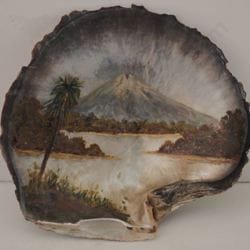
Mount Egmont with Lake
By: John Philemon Backhouse (1845-1908)
Oil on Sea Shell - 13cm x 14cm
Valued $2,000-$3,000
Offers invited over $1,500
Contact: Henry Newrick – (+64 ) 27 471 2242

|
|