
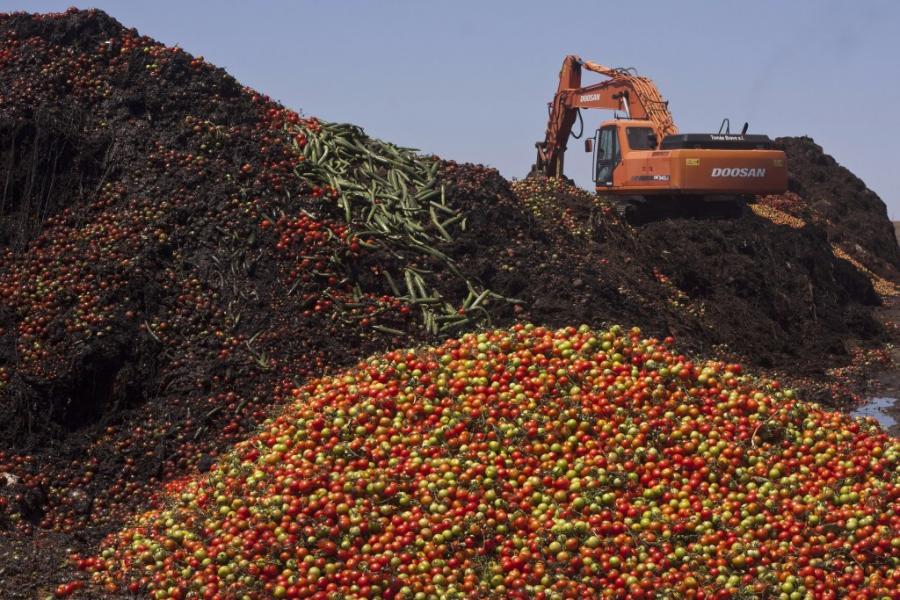
11 May 2016 - As the world grapples with a seemingly insurmountable food wastage crisis, one company believes it has developed a new technology to help deal with the problem before it starts.
It is estimated that about one-third of all food produced worldwide goes to waste each year, worth around US$1 trillion.
While much effort goes in to dealing with food waste at the consumer end, most of the problem occurs somewhere between the producer and the retailer. In the Asia Pacific region, 15% to 50% of fruit is estimated to be lost between the grower and the market.
This is where New Zealand startup RipeTime, which is talking to potential investors in Taiwan, believes it has the answer. The company’s technology detects extremely low levels of gas in the atmosphere, which is used to track fruit quality as it is moved through the supply chain.
“We can smell, and essentially taste fruit, months before it is currently possible to do,” founder Jon Lowy told The News Lens in an interview in Taipei.
The company believes there are many markets its product can be used in – including testing for the presence of drugs. It is currently focused on fruit and vegetables, which have the highest wastage rates of any food, and flowers. The UN puts global food losses and waste at 40% to 50% for root crops, fruits and vegetables, compared to 20% for meat and dairy and 35% for fish.
Major costs and lost revenue
The RipeTime device collects atmospheric data from within fruit packaging immediately after it has been harvested. In the case of apples, the data it collects can tell producers whether a particular box has apples with problems such as early stage rot. In one brand the company has tested its product on, 1% of the apples have this problem.
“The brand that owns this apple, 1% of their customers bite into them and taste dirt. It ruins their market image and people don’t buy [the apples] again,” Lowy says.
RipeTime director Michael Vukcevic says if the problem can be identified immediately after harvest, the apples can still be eaten within 25 days – that compares to the one-year life expectancy normal apples have in cold storage.
“They know, when they see that signal, they have to get it to a market, sold and consumed within 25 days,” he says. “What it is not for, is to be put on a boat to be sent to China, Japan and the US.”
The value of food losses and waste amount to roughly US$680 billion in industrialized countries and US$310 billion in developing countries. As well as the costs of produce that goes off and the potential brand damage, there is also the lost revenue companies face.
Lowy and Vukcevic give the example of New Zealand kiwifruit exporter Zespri, which is a well-known brand in Taiwan. It sells more than 20 million trays of kiwifruit to China and around 10 million to Taiwan annually. In Zespri’s best year for what is known as cost of quality – the total cost of sorting, losing and disposing of fruit – the company still took a NZ$150 million hit.
“It costs them NZ$150 million, by not being able to determine and predict the condition of fruit accurately,” Vukcevic says. That doesn’t include the revenue lost from not selling fruit at a time when there is nothing else in the market but demand is high.
Lowy says just last year Zespri scrapped millions of trays of fruit late in the season – a time when a single kiwifruit could fetch CNY$30 in China.
Taiwanese eye investment
RipeTime was in Taiwan last week and has been talking to potential investors and customers around the world. The company has already raised cash and run a rights issue with shareholders – a small group of early stage investors including the New Zealand government's Venture Investment Fund. It is now looking for more capital while concurrently negotiating its first commercial deals. The cash the company raises will go toward the commercialization process and continuing research and development.
Vukcevic says the company could spend US$5 million to US$20 million over the next few years depending on the investment it secures.
“The amount of money equals the speed at which we would travel,” Vukcevic says. “We are very much of the view that we have de-risked the technology, we know that it works. The market validation we have had to-date has been very strong. We are now in that execution and roll-out stage, which for us is very exciting.”
In terms of competition, Lowy says that most other players in the market are focused on developing the electronic sensor technology, which is used after the RipeTime product is used.
“Amazingly, nobody does this,” Lowy says of the competitive space RipeTime is in – he says most testing at the early stage is still done manually.
While the company is currently focused on securing the capital it needs to grow – it is very upbeat about the venture capital and investment scene in Taiwan – the potential impact of the solution has not been lost.
The UN notes that if a quarter of the 1.3 billion tonnes currently lost or wasted globally each year was saved, “it would be enough to feed 870 million people.”
Vukcevic says if food wastage in Chile alone could be reduced by 10%, “we can pretty feed everyone in Africa.”
“Those sorts of changes have a significant impact," he says.