
Founded by Max Farndale 1947 - 2018

Japanese IT equipment and services company, Fujitsu, has announced the launch of an IoT solution, FUJITSU Manufacturing Industry Solution VisuaLine, that visualizes the operational status of the manufacturing process based on log data of operating results collected from a factory’s equipment.
This solution collects log data from the manufacturing equipment, and visualizes the operational status for each individual product in a variety of formats, such as graphs. The users can see the portions of the process that are taking more time than usual by comparing these graphs on a daily basis, and enable them to quickly discover anomalies. This helps users in discerning the problems based on the log data, such as allowing the failing equipment to discover new places and improve the manufacturing facilities or to establish policies.
Features of VisuaLine

These are difficult times in Saudi Arabia.
The long slump in the price of oil is eviscerating the economy. Neighboring countries are plagued by violence and extremism. Saudi Arabia’s air force has been raining death and destruction on Yemen for 19 months, with no end in sight. The kingdom’s regional struggle with Iran shapes every decision in international affairs. Inside the country, the Islamic State has been recruiting so intently that the police have established a direct emergency phone number, 990, for families to call when they think one of their sons is about to go to Syria to join up. Social media outlets are alive with complaints, mostly anonymous, about the way the ruling family is managing the country.
This is not to say that Saudi Arabia is politically unstable or faces any immediate crisis. Saudis are generally patient people, and they abhor disorder. But in the aggregate, the government is facing stern tests of its ability to manage the country as power passes from one generation of the Al-Saud family to the next. The economic slump is the most pressing issue.
Signs of Distress
To a visitor, the signs of economic hard times are visible all across Saudi Arabia’s sprawling capital—empty buildings, deserted construction sites, idle equipment, shuttered shops. The sharp decline in oil prices and the contraction in government spending that followed have sucked the vibrancy out of the Saudi economy. Billions of dollars in purchasing power have dried up.
In the past, a drop in the price of oil was eventually followed by a turnaround, enabling the government to wait out the slump, insulate the population from hardship, and maintain the undisciplined spending that has been a fixture of Saudi life since the 1940s. This time, the government said it would be different: economic policy would not be driven by the price of oil. The people would do more to support themselves and the state would do less. The government has cut salaries and bonuses of the public-sector employees who dominate the work force, cancelled billions of dollars worth of construction and service contracts, and announced plans to levy a value-added tax next year on a population long accustomed to life without taxes. But Saudi Arabia’s decision at the recent meeting of the Organization of Petroleum Exporting Countries to drive up the price of oil by cutting production sent a strong signal that the cash crunch may force some revision of this new policy.
The kingdom has simultaneously embarked on an ambitious plan to restructure its economy from top to bottom, building a new foundation on private enterprise, foreign investment, capital accumulation, and greatly increased productivity in its labor force, including women. In theory, at least, the sinecure government job is out as the primary engine of employment; private enterprise, hard work and competence are in.
Vision 2030
The program, known as Vision 2030, may be politically risky because it would change the fundamental relationship between the rulers and ruled. The people of Saudi Arabia have long accepted the national bargain imposed by the founding king, Abdul Aziz al-Saud, in which they are disenfranchised but acquiesce in political powerlessness because the state provides them with security and a comfortable life. Now they are being asked to do more for themselves while the government does less, regardless of the price of oil. In effect, Vision 2030 proclaims that Saudi Arabia will cease to be a classic “rentier state,” living off the wealth that comes out of the ground.
Vision 2030 was introduced in April by Deputy Crown Prince Muhammad bin Salman, the 31-year-old son of King Salman who has quickly become the most powerful man in Saudi Arabia other than his father. He is minister of defense, but more importantly he chairs an interagency committee that controls all economic planning and decision-making. If Vision 2030 fails, it will be his failure.
Interviews with a broad spectrum of business executives, academics, journalists, and government officials indicate that Vision 2030 was received with considerable public enthusiasm when first announced, but that enthusiasm has waned as reality set in. At best, the jury is still out on both Vision 2030 and on Prince Muhammad, its sponsor and chief implementer.
Vision 2030 “is an ambitious but achievable blueprint, which expresses our long-term goals and expectations and reflects our country’s strengths and capabilities,” the prince said when he presented it to the public. “The future of the Kingdom, my dear brothers and sisters, is one of huge promise and great potential, God willing. Our precious country deserves the best.”
In that future, the prince proclaimed, Saudi Aramco, the giant state-owned company, will be transformed
from an oil producing company into a global industrial conglomerate. We will transform the Public Investment Fund into the world’s largest sovereign wealth fund. We will encourage our major corporations to expand across borders and take their rightful place in global markets. As we continue to give our army the best possible machinery and equipment, we plan to manufacture half of our military needs within the Kingdom to create more job opportunities for citizens and keep more resources in our country.
Together we will continue building a better country, fulfilling our dream of prosperity and unlocking the talent, potential, and dedication of our young men and women. We will not allow our country ever to be at the mercy of commodity price volatility or external markets. We have all the means to achieve our dreams and ambitions. There are no excuses for us to stand still or move backwards.
Implementing the Vision
Outside the kingdom, those lofty aims inspired some cynicism among analysts of Saudi affairs, who have heard previous versions of such plans for decades. Inside the country, however, Prince Muhammad’s program was initially welcomed as necessary and long overdue, analysts in Riyadh said. Seven months later, they added, many people question what is actually being accomplished besides trimming the purchasing power of much of the population.
The principal tool for achieving Prince Muhammad’s “vision” is a 112-page “National Transformation Program.” Among its ambitious objectives are: generating 450,000 jobs in non-government sectors; reducing the wage bill of government workers from 45 to 40 percent of the state budget; increasing the state’s non-oil revenue from 163.5 billion Saudi riyals annually to 530 billion (at 3.75 riyals per dollar); boosting public assets from three trillion to five trillion riyals, a 67 percent rise; maintaining oil production capacity at 12.5 million barrels per day, while raising natural gas production from 11 billion cubic feet to 17.8 billion cubic feet daily; building an international complex for marine industries that will provide 80,000 jobs and cut imports by $12 billion a year; cutting more subsidies for goods and services, saving 200 billion riyals; raising the value of non-oil exports from 185 billion riyals annually to 330 billion; cutting the unemployment rate for Saudi men from 11.6 percent to nine percent; raising the proportion of women in the job market from 23 percent to 28 percent; and increasing foreign investment in the economy from 30 billion riyals to 70 billion.
The plan sets specific performance goals and timetables for each cabinet department and government agency. By all accounts Prince Muhammad has full authority from his father to enforce these benchmarks, dismissing senior officials if necessary.
“Before we did not live realistically,” said Ziad Aazam, an official of the Ministry of Planning. “Now there’s a new generation and new thinking.”
“It would have been better to do this when we had plenty of money,” said Fahad Alturki, chief economist of the Jadwa Investment Group. “Now there’s no choice.”
Assessing the Vision
In September, Alturki’s widely respected research department issued a comprehensive and generally optimistic assessment of the economic plans. “We believe that several fundamental factors will drive this new economic model, including human capital development, regulatory reform, and entrepreneurship,” the report said.
These reforms will contribute to a competitive and highly productive private sector, particularly Small and Medium Enterprises (SMEs), which will help attract foreign capital and contribute to further knowledge exchange, investment, and employment. This dynamic should result in higher disposable income, robust credit growth, and liquidity. The increasingly competitive tradable private sector would potentially export new goods and services, boosting both economic growth and net external wealth. Eventually, this would improve investor confidence toward the Kingdom, thereby creating a positive loop, as more capital inflows improve the non-reserve financial account and reduce the pressure off official foreign reserves.
The JADWA analysis said that “significant structural reform should boost investment in non-oil industries over the same period. Vision 2030 aims to make the Kingdom a logistical trading hub, catalyzing exports and re-exports of non-oil goods, and supporting national companies in the fields of banking, telecom, food, healthcare, and retail by promoting their products abroad.” It praised the government’s plan to create a $4 billion venture capital fund as a potential boost for small business and for entrepreurial ventures.
Less-enthusiastic analysts were understandably reluctant to be quoted by name in their criticism and doubt. In the aggregate, they raised multiple issues about the viability and implementation of the restructuring project:
Promoting the Vision
Prince Muhammad is also widely seen as having worked harder and done better at promoting Vision 2030 outside the country than inside it. He has given extensive interviews to business-oriented foreign publications such as The Economist and visited several foreign capitals, including Washington, to talk up his plan. What he has not done is travel around Saudi Arabia to promote the plan among ordinary people or explain to them why they are already paying the price for it, through salary cuts and reduced subsidies, while not yet reaping any benefit.
One attempt to reach the public backfired. Senior officials appeared on Saudi television to talk about Vision 2030 and succeeded mostly in angering viewers with comments that did not go down well. Civil Service Minister Khalid Al-Araj said that state workers were productive for no more than an hour a day but see their jobs as a right. Mohammad Al Tuwaijri, the deputy economy minister, said that without the austerity measures, the kingdom would have “gone bankrupt in three to four years.”
In reality, there is no prospect of “bankruptcy,” because even after the recent sale of $17.5 billion in bonds on the international market Saudi Arabia has very little debt. According to John Sfakianakis, who has lived in the kingdom and analyzed its economy for many years, Saudi Arabia’s ratio of debt to GDP “is among the lowest in the world at 12 per cent. In contrast, Italy and Portugal have surpassed 125 per cent and Greece is at 177 per cent.”
No one who was interviewed predicted that Vision 2030 or the National Transformation Program will be fully implemented. The uncertainty concerns how much will actually be done, whether that will be enough, and what the public response will be over the next few years.
“The ‘glass half full people’ and the ‘glass half empty people’ are both right,” one prominent businessman said.
Written by Thomas W Lippman in LobeLog - Dec 5 2016

Shanghai Maling completes purchase of controlling stake in Silver Fern Farms
John Key Fades Away-– a Market Trader Quits his Position at The Top
BNZ Confidence Survey - 6 December 2016
Martin van Beynen: John Key inspired confidence
New tool to help girls & women embrace STEM
While you were sleeping: Dow hits record high
Bapcor Ltd (ASX:BAP) Ups The Bid For Hellaby, Will It Be Enough To Close The Deal?
Prime Minister John Key resigns
Toll New Zealand Tracks Process Delivery with Promapp
Commission completes steel mesh investigations into five companies

Pilz Australia launched its new website which incorporates a new E-Shop for its customers in Australasia.
E-Shop will allow customers to not only browse the company’s vast portfolio of products, it enables them to access the latest technical information, view product images, and download the most up-to- date technical data sheets.
The new E-Shop covers the full portfolio of products that is Pilz, with all the technologies and application areas along with a quick and easy way to view associated accessories or add on features for its products.
Organic producers and exporters in New Zealand and China are set to benefit under a new bilateral agreement.
The Mutual Recognition Arrangement for Certified Organic Products was signed by the two countries in China late last month.
New Zealand exports of organic produce to China are currently valued at NZ$27m per annum, with this figure tipped to rise thanks to a reduction in compliance costs under the agreement.
“Our organic sectors should experience growth, not only with increased export and import opportunities but also a wider range of organic ingredients available for processed foods that would be available for sale domestically and for export," said Peter Thomson, director of plants food and environment at New Zealand’s Ministry for Primary Industries (MPI).
Thomson said the arrangement would also provide greater assurance for consumers in New Zealand.
"New Zealand consumers can have increased confidence in organic food imported from China because MPI has assessed the Chinese system and found it to be robust,” Thomson explained.
"This new arrangement and the assessment required to conclude it, provides MPI with knowledge and confidence in the supply of organic produce from China.”
Toll New Zealand, one of New Zealand’s largest domestic freight forwarders offering end-to-end transport services and logistics solutions, has announced that it will deploy Promapp’s cloud-based business process management software as part of the company’s ongoing continuous improvement program.
Promapp will replace the company’s range of processes created and stored in Visio, Word and on their intranet which, although documented, were difficult to update and manage for the diverse business groups throughout the Toll business.
“We wanted a common language for process throughout the business and sought to deploy an industry best practice solution. At the same time, we aspired to deploy a platform where processes could be documented and then evolve to where these processes could actually provide a platform for continuous process improvement,” explains Anthony Barrett, General Manager, IT, Toll New Zealand.
The decision to deploy Promapp followed a review of market solutions available. Promapp was selected based on its ease of use, attractive user interface and its overall return on investment based on the experience of other companies.
Promapp will be rolled out to all of Toll New Zealand’s business units and departments. They will use the software to support continuous improvement.
“We believe that people perform best when they are empowered, accountable and recognised. How we go about achieving success is as important as success itself. Promapp will enable us to drive this strategy,” said Barrett.
At the same time, the company has also started to deploy Promapp’s risk module which will support the company’s overall compliance initiatives.
“Our compliance policy aims to achieve the ongoing involvement and total commitment of all management, employees, contractors and suppliers to seek and achieve continuous improvement in everything we do,” says Barrett. “Promapp will support this program in the coming years.”
Promapp’s recently launched Process Variant Management Module will also provide Toll New Zealand with the ability to recognise standard processes and manage or eliminate process variations.
“We need Process Variant Management functionality as we have customer and region specific variations and must capture and manage these effectively in order to boost business operational performance. Previously, we didn’t know how different a process was from one customer, region or department to another so we were unable to attach a value to it. Now, we will be able to see each variant and more importantly, identify the cost and impact of each process variation. We will achieve better management of process variations so will be able to better manage risk,” says Barrett.
Being cloud-based, Promapp enables teams to suggest improvements and update processes in real-time. This means all staff will always see the latest information.
As New Zealand's most successful multi-modal supply chain operator, Toll New Zealand provides its customers with high quality freight forwarding and logistics solutions from Kaitaia to Invercargill. In addition to its transport and relocation capabilities, the organisation is also expert in providing fully integrated logistics solutions and is able to manage a customer’s supply chain warehouse and support with third party logistics (3PL) services.
“Our company mission is to harness our significant resources, know-how and passion to deliver the optimal logistics solutions for our customers. By using Promapp, we will have a process management solution that is accessible throughout the organisation. The feedback loop will also enable people to engage with processes and suggest improvements, ultimately supporting our strategy of being recognised as the Asia Pacific region’s most successful provider of logistics,” said Barrett.
The Commission has now completed its seismic steel mesh investigations into five of the companies under investigation. Three companies, who cannot be named at this time, have been advised that the Commission intends to issue criminal proceedings under the Fair Trading Act. Two other companies have been issued with lower-level investigation outcomes. Fletcher Steel Limited (Fletchers) has been issued with a warning and United Steel Limited (United Steel) has been issued with compliance advice. Investigations are continuing into several other companies.
The Commission began investigating seismic steel mesh in August 2015 after a complaint was laid that some steel mesh products did not comply with the Australia/New Zealand standard (AS/NZ 4671:2001) (the Standard). The Standard mandates various physical characteristics required of steel mesh, and the testing methods that must be applied during their production. The complaint related to grade 500E steel mesh, which is ductile steel mesh often used in concrete slabs like house foundation slabs and driveways.
Early mesh testing results gave the Commission concern that some steel mesh being sold in New Zealand did not meet the requirements of the Standard as to ductility (elongation). As the investigation developed, and more companies were investigated, the Commission also developed concerns about compliance with testing procedures.
The three companies who are to be prosecuted cannot be named at this time, to provide them an opportunity to seek name suppression. The Commission will be alleging that the companies misrepresented that their mesh was “500E” and complied with the Standard, when it was not and did not. The Commission will also allege that the companies made unsubstantiated representations that the mesh complied with the Standard, when it did not.
Commission Chairman Dr Mark Berry, said “Our focus has been on the claims that these companies made about the steel mesh they were selling. The Ministry of Business, Innovation and Employment (MBIE) is the building regulator, and sets and enforces the Standards and Building Code. While the Commission is not responsible for the Standard or the Code we can take legal action where we see misleading or deceptive claims about compliance.”
The Commission is aiming to the file these criminal charges in early 2017.
The Commission has warned Fletchers for engaging in conduct that was likely to breach the Fair Trading Act in relation to 19 specific batches of Fletchers 500E product. The Commission was concerned that these 19 batches did not comply with the requirements of the Standard because:
However, the Commission was satisfied that the mesh had the strength and ductility required by the Standard, and was therefore comfortable in restricting its response to a warning letter.
United Steel has been sent compliance advice by the Commission for similar retesting deficiencies. In its case, United retested two batches in a way that did not comply with the Standard. However, United Steel was not required to retest that mesh as it already complied with the Standard. The Commission’s advice says that where a company chooses to retest mesh, it must adopt a retesting method that complied with the Standard, to ensure that accurate results are recorded on test certificates and in its database. The Commission was satisfied that the United Steel mesh had the strength and ductility required by the Standard.
“Our investigations concerned batches of 500E seismic steel mesh sold before April 2016. The Commission has had court enforceable undertakings in place with several steel mesh providers since April to ensure more stringent testing. In addition MBIE has recently issued a clarified Standard and made changes to the testing requirements. This should give New Zealanders greater confidence that the steel mesh currently being sold in New Zealand meets the Standard,“ Dr Berry said.
As this investigation is ongoing and prosecutions will be brought against three companies, the Commission will not be commenting further at this time.
Background
Steel mesh
Ductile steel reinforcing mesh (sometimes referred to as welded wire fabric) is typically used as reinforcement in concrete floor slabs and driveways. It strengthens concrete slabs and is generally used to reduce concrete cracks and limit crack width.
The Standard
The Australia/New Zealand standard (AS/NZ 4671:2001) (the Standard) specifies both the performance characteristics of the mesh and the procedures (ie, sampling and testing) that must be followed to comply including:
To be sold in New Zealand as 500E grade steel mesh, the mesh must be produced in accordance with the requirements of the Standard. If mesh is produced in any other way, it cannot be described as 500E mesh.
Our investigation
On 5 August 2015 the Commission received a complaint raising concerns with regard to the validity of claims being made by three companies selling steel mesh in New Zealand. This complaint related to problems with a particular size of 500E mesh. The first six months of our investigation focussed on the conduct of these three companies. During that time we asked each of the companies to substantiate the claims they made about compliance with the Standard.
On 4 March 2016 we announced we had asked two companies to stop selling steel mesh until our concerns were resolved. As a result of the information received during our initial investigation, in March and April 2016 we extended the investigation to other mesh suppliers. In April and May the Commission entered into enforceable undertakings with three companies that ensure 500E grade steel mesh can only be sold once it passes specific stringent testing. These undertakings are still in place.
In November 2016, the Government made changes to testing requirements, increasing the number of samples which need to be tested, clarifying how that testing is done and requiring testing be done by internationally accredited testing laboratories. The changes will be implemented by 30 May 2017.
Previous media releases
- March 4th – Commerce Commission investigating whether steel mesh complies with standard- April 6th – Update on steel mesh investigation- April 22nd – Commission lifts ‘stop’ on Euro Corporation’s steel mesh- April 29th – Update on Commerce Commission steel mesh investigation- June 1st – Commission lifts ‘stop’ on Brilliance Steel’s steel mesh
Enforcement Response Guidelines
When deciding the appropriate enforcement response for individual companies, the Commission considers a number of factors including how serious the potential breach is and the potential harm caused to consumers. The Commission’s Enforcement Response Guidelines outline the enforcement responses available and what factors are taken into account when deciding which response to use.
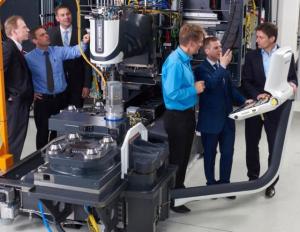
Schaeffler and DMG MORI are continuing their successful cooperation, expanding it to include the development of additive manufacturing processes for rolling bearing components. Both companies signed a cooperation agreement at the JIMTOF in Japan. In addition, the marketing partnership that began in 2016 has been extended. Schaeffler thus remains DMG MORI’s marketing partner worldwide for rolling bearings and linear technology.
DMG MORI, the world’s leading manufacturer of machine tools, and Schaeffler Technologies AG & Co. KG, system supplier for rolling bearings, linear guides and drive technology, have signed a cooperation agreement at the JIMTOF in Japan that has the objective of jointly pursuing development work in the field of additive manufacturing of rolling bearings. Additive manufacturing is a strategic focus in Schaeffler’s development roadmap.
“Both partners complement each other perfectly to drive the future of machine tools as well as the continuing development of rolling bearing technology. Our joint “Machine Tool 4.0” development project has already demonstrated this with great success. Our cooperation in additive manufacturing means another very important strategic area for the future,” said Dr. Stefan Spindler, CEO Industrial of Schaeffler AG.
Laser deposition welding for the manufacture of rolling bearing componentsThe basis for the joint development work will be a Lasertec 65 3D made by DMG MORI, a five-axis machining center including a laser metal deposition welding unit, that will be used at Schaeffler. The goal is to develop the additive manufacturing technology of what is called laser metal deposition welding so that it can be used for the flexible manufacture of rolling bearing components for prototypes and for small batch sizes. The focus here is on process issues as well as on the materials used and their suitability for the process. In laser metal deposition welding, a material is simultaneously melted and applied to a surface. In this case, the material is metal powder. The heat source is a high-performance laser. This additive manufacturing process is combined with conventional five-axis machining in the hybrid facilities developed by DMG MORI so that the resulting components can be finished immediately afterwards.
Continuing premium partnership in marketingBoth companies also extended their marketing partnership, which began this year, to 2017 at the JIMTOF. As part of this cooperation, Schaeffler is DMG MORI’s marketing partner worldwide for bearings and linear guides. As early as 2016, Schaeffler participated successfully in in-house exhibitions, technology symposia and training courses held by DMG MORI. This cooperation is expected to increase even more next year. The operators of machine tools in particular will benefit from the cooperation in two ways. Firstly, it will help to demonstrate bearings, linear technology and direct drive technology as well as new ideas in sensor systems and linking components. Secondly, it will help to show how these can be used for predictive maintenance, increasing efficiency and process optimization.
Added value through digitalization: “Machine Tool 4.0” innovation projectAt the JIMTOF in Tokyo, Schaeffler and DMG MORI presented the “Machine Tool 4.0” innovation project jointly with other partners. The project links existing technology with new digitalized components from sensors to the cloud. Two prototypes were set up based on the fourth-generation DMC 80 FD duoBLOCK® universal milling and turning machining center. Additional sensors for measuring vibrations, forces, temperatures and pressure have been integrated in nearly all bearing positions relevant for the machining process in the prototypes of the innovation project in order to obtain optimum information about the machine condition.

In 1966, construction of the ŠKODA TREKKA lightweight off-road vehicle began in New Zealand› The chassis, based on the ŠKODA OCTAVIA, came from Mladá Boleslav along with the rigid central tubular frame and independent suspension.› Many bodywork variants, good off-road capability, low running costs
Mladá Boleslav, 2 December 2016 – The ancestor of the ŠKODA SUV models is celebrating a major birthday: exactly 50 years ago, on 2 December 1966, production of the TREKKA model began in the town of Otahuhu, New Zealand. By 1972, almost three thousand of the lightweight off-road cars had been manufactured.
“ŠKODA has always striven for solutions that are tailored for individual markets,” said Andrea Frydlová, Manager of the ŠKODA Museum in Mladá Boleslav. “The all-terrain TREKKA, which was produced in collaboration with the New Zealand importer and local businesses, is a prime example of this philosophy.”
The vehicle manufacturer from Mladá Boleslav had developed the New Zealand market early on: over 100 years ago, Laurin & Klement cars were already being exported to New Zealand.
The ŠKODA cars delivered from Czechoslovakia in a disassembled state (CKD – completely knocked down) for customs and tax reasons were imported by the company Motor Industries International based in Otahuhu since 1956. The ŠKODA TREKKA was developed in a collaboration between several dozen local businesses and representatives of the plant in Mladá Boleslav to be a robust, compact, everyday car for the local farmers, tradespeople and merchants.
In 1965 and 1966, several designs and prototypes were created, which bore the hallmarks of Josef Velebný, ŠKODA’s former Head of Bodywork Development, and New Zealand designer George Taylor. The chassis, which was based on the ŠKODA OCTAVIA, came from Mladá Boleslav along with the rigid central tubular frame and independent suspension. Its special features were the wheelbase, which was shortened from 2,389 mm to 2,165 mm, and the axle ratio, which was changed from 4.78 to 5.25. Tyres with dimensions of 5.90 x 15” contributed to the 190-mm ground clearance; there was also an optional differential lock that improved the off-road capability of the rear-wheel-drive TREKKA.
The front, longitudinally mounted OHV four-cylinder engine with a cylinder capacity of 1,221 cm3 achieved 34 kW (47 PS) at 4,500 rpm and its torque reached 87 Nm at 3,000 rpm. With its synchronised four-speed gearbox, the ŠKODA TREKKA had a top speed of 105 to 110 km/h. Its consumption of approximately 11 l per 100 km formed the basis of its relatively low running cost.
Customers could choose from several variants: a three-door pickup with between two and eight seats, a canvas soft-top, a fixed plastic hardtop, an estate model (STW) and a beach variant. The TREKKA was 3,590 mm long, 1,600 mm wide and between 1,785 and 2,040 mm high. It weighed between 920 and 980 kg, and could carry loads of up to 450-500 kg.
From 1966 to 1972, nearly 3,000 TREKKAs were made, probably the first car designed and built in New Zealand. Export markets included Australia, Fiji, Samoa and Vietnam. ŠKODA also applied a similar concept in Pakistan, where production of the SKOPAK (ŠKODA Pakistan) lightweight off-road car commenced in May 1970. The Czech car manufacturer still successfully sells its models in New Zealand today, just as in Australia and over 100 other international markets.
Tehran, Dec 4, IRNA – New Zealand Trade Minister Todd McClay said on Sunday that Wellington government is willing to draw up a roadmap for economic cooperation with Iran and set up a joint committee to promote trade ties.He made the proposal in a meeting with Iran's Minister of Industry, Mines and Trade Mohammad Reza Nematzadeh in Tehran.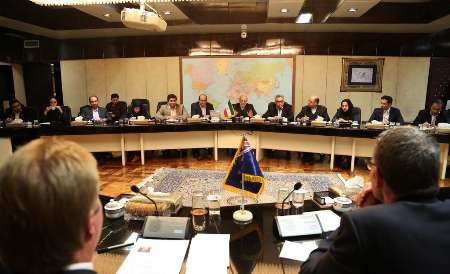
He called for cooperation on research, development and innovation.
Stressing the need for compiling a roadmap for strengthening industrial and trade relations, he said that New Zealand banking and insurance experts are currently on a visit to Iran to help resolve problems facing these sectors.
McClay voiced Wellington's interest to boost ties with Iran, saying that New Zealand boasts of suitable capacities in the refining and dairy industries.
Ne'matzadeh, for his part, said that Iran-New Zealand ties have always been excellent, noting that however proper plans should be made to help raise level of exchanges.
Stressing the need for removal of banking obstacles and strengthening ties between the two countries' banks, he said that bilateral and multilateral talks between the Iranian and New Zealand banks would be useful to regulate the banking and commercial relations.
Nematzadeh said that Iran possesses remarkable capabilities in the oil and petrochemical, agricultural products, communications, plastic and tool manufacturing sectors, and is ready for promoting ties with New Zealand in the spheres.
He declared Iran's willingness for joint investment ventures on implementing projects and transfer of technology know-how, saying that Iran's situation in the region has prepared a suitable ground for using neighboring states' markets of 400-million.
That's for the same reason most of the countries favor boosting ties with Iran, Nematzadeh said.
McClay arrived in Tehran on December 2 at the head of high-ranking trade delegation comprising representatives of 18 companies.
Upon arrival in Tehran, he described Iran as a traditional partner of New Zealand, saying that the two countries' commercial exchanges are projected to reach 708.8 million dollars a year.
The New Zealand minister said in a meeting with Governor of Central Bank of Iran Valliollah Seif that his country has the most commercial exchanges with Iran in the Middle East.

Palace of the Alhambra, Spain
By: Charles Nathaniel Worsley (1862-1923)
From the collection of Sir Heaton Rhodes
Oil on canvas - 118cm x 162cm
Valued $12,000 - $18,000
Offers invited over $9,000
Contact: Henry Newrick – (+64 ) 27 471 2242

Mount Egmont with Lake
By: John Philemon Backhouse (1845-1908)
Oil on Sea Shell - 13cm x 14cm
Valued $2,000-$3,000
Offers invited over $1,500
Contact: Henry Newrick – (+64 ) 27 471 2242

|
|