
MSC NewsWire

Founded by Max Farndale 1947 - 2018
  • Home
    • About Us
    • Pricing
    • Global Presswire
    • Industry Organisations
  • News Sectors
    • Headlines Through Today
    • Environmental Talk
    • Out of The Beehive
    • Primary Sector Talk
    • Reporters Desk
    • The MSC NewsReel
    • MSCNetwork
    • FinTech Talk
    • The FactoryFloor Newsreel
    • Trade Talk
    • News Talk
    • Industry Talk
    • Technology Talk
    • Blockchain
    • Highlighted
    • The TravelDesk
      • TravelMedia
      • Sporting Tours
      • Holidays Tours Events + More
      • Airfares
      • Travel Enquiry Form
      • TravelBits
    • Travel Updates
    • The MSC TravelDesk Newsreel
    • Travel Talk
    • Travel Time
    • The Bottom Line
    • Regional News
    • News to Run Advice Form
    • World News
    • NewsDIRECT
    • MSCVoxPops
    • Press Releases
  • National Press Club
  • Contact Us

Law of the land: What’s the best way to deal with RMA rule-breakers?

  • font size decrease font size decrease font size increase font size increase font size
  • Print
  • Email

Assault, burglary or a breach of the RMA – all are criminal offences under New Zealand law. Yet the likelihood of being prosecuted for the latter is considerably less than for those other crimes.

For nearly 30 years, the Resource Management Act 1991 (RMA) has generated debate, yet one largely overlooked aspect is the legislation’s use of criminal prosecution as the “big stick” to deter people from breaking its rules.

University of Canterbury College of Business and Law doctoral student Mark Wright is critically reviewing the RMA’s sanctioning regime and exploring potential alternatives. He has worked both as a Crown prosecutor in Auckland and Rotorua, and as a lawyer prosecuting environmental non-compliance cases in Tauranga.

Mr Wright says it is striking that the same system that is used to punish assailants and burglars is also used to punish people who have broken RMA rules. Equally, from his legal experience, he knows the system can play out substantially differently in RMA cases.

“There is a difference between the law itself and how it works in practice. There are thousands – if not tens of thousands – of breaches of the RMA every year, yet under 100 prosecutions a year. In addition, every council has a different approach to prosecution.

“Criminal law can be a very effective deterrent as it can result in large fines and, in extreme cases, individuals being sent to prison, but it’s also a very expensive and time-consuming process. Some of the smaller councils would never consider taking a prosecution. What it leads to is a system where there are not many prosecutions being undertaken, and a lot of variation between regions.”

Using deterrence theory, Mr Wright is exploring how well the current system is working to discourage breaches of the rules. If rates of prosecution are low, he suggests the deterrent effect is also likely to be diminished. As well, he plans to investigate the deeper question of whether it is even appropriate for RMA breaches to be called criminal offences.

Part of Mr Wright’s doctoral research will involve looking at how other countries sanction breaches of environmental law and considering what alternatives may exist. He is also reviewing the history of the RMA and how its sanctioning regime evolved. The final step will be to look at options for possible sanctions reform.

This ground-breaking research could ultimately influence legislative decision making in this area.

Mr Wright began his doctoral research in December 2016, after successfully applying for a doctoral scholarship with UC’s School of Law. He was also awarded a UC Doctoral Scholarship and a New Zealand Law Foundation Doctoral Scholarship.

His co-supervisors are UC School of Law academics Professor John Hopkins, who specialises in public law, Professor Elizabeth Toomey, who includes land law as one of her research fields, and Professor Neil Boister, who has a criminal and international law focus.

  • Source: Canterbury University
Published in BUSINESS
Tagged under
  • Business
  • news talk

Related items

  • Sir Bill English to be honoured by Victoria University of Wellington
  • Higher bank capital better for banking system and NZ
  • Plastics industry helps designers create easy-to-recycle packaging
  • Great Barrier unhappy with Auckland’s marine sludge plan
  • XE Update Friday 30 November, 2018
More in this category: « A&G Price Ltd Rises Again Got time on your hands? »
back to top

Palace of the Alhambra Spain

Palace of the Alhambra, Spain

By: Charles Nathaniel Worsley (1862-1923)

From the collection of Sir Heaton Rhodes

Oil on canvas - 118cm x 162cm

Valued $12,000 - $18,000

Offers invited over $9,000

Contact:  Henry Newrick – (+64 ) 27 471 2242

Henry@HeritageArtNZ.com


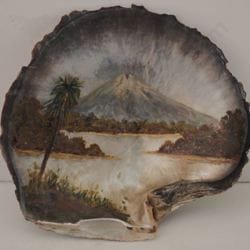
Mount Egmont with Lake

Mount Egmont with Lake 

By: John Philemon Backhouse (1845-1908)

Oil on Sea Shell - 13cm x 14cm

Valued $2,000-$3,000

Offers invited over $1,500

Contact:  Henry Newrick – (+64 ) 27 471 2242

Henry@HeritageArtNZ.com

MSC NewsWire is a gathering place for information on the productive sector in New Zealand focusing on Manufacturing, Productive Engineering and Process Manufacturing

  • Home
  • Global Presswire
  • Industry Organisations
  • National Press Club
  • Disclaimer
  • About Us
  • Pricing
  • Sitemap
Copyright © 2025 MSC NewsWire. All Rights Reserved.
Site Built & Hosted by iSystems Limited
Top
Factory Floor Talk