At the Climate Change Conference in Paris last month world leaders, for the first time, agreed that capturing carbon in the soil is a crucial element in reducing global warming.
Their decision was echoed by French Agriculture Minister, Stephane Le Foll, whose proposal calls for the return of carbon to the soil through appropriate land use practices. She endorsed “conservation agriculture” as making a major contribution to meeting the criteria established at the conference.
While reversing existing practices seems, at first glance, to be a huge and near impossible challenge, New Zealand has the technology to make it happen and is already achieving success in 18 countries around the world.
According to international soil scientist and agricultural engineer, Dr John Baker, the world doesn’t need to think of new ways of returning CO2 to the soil. They’ve already been invented.
This country has developed the tool to recapture carbon from the atmosphere and put it back into the ground.
The answer is low-disturbance no-tillage of the soil.
To understand this you need to take a step back. Through the process of photosynthesis, green plants combine CO2 from the atmosphere with sunshine, water and other nutrients to create carbohydrates. The plants soak up the CO2 that’s already in the atmosphere at no cost to anyone. And they’ve been doing this since life began on earth.
As they grow, their roots exude some of the carbon they’ve absorbed back into the soil.
But more importantly when they die they decompose on the surface of the ground and the soil fauna, led by earthworms and many other species, take the carbon-rich decomposition products into the soil as their foodstuff.
The challenge is how to keep it there. The plant’s lifecycle is over and it’s provided food so new seeds must be planted to grow fresh crops. And that’s essential because annually sown arable crops, which behave the same way as every other green plant, provide about 85 percent of the world’s food.
In the process they soak up huge amounts of CO2 from the atmosphere. We eat the grain they produce which accounts for about half their biomass or biological material. But sadly we largely waste the other half of the carbon rich biomass.
This wastage – the leaves, straw, roots, seed husks, chaff and other debris after harvesting – is treated as trash when, in fact, it represents mankind’s best ever opportunity to re-enrich the soil with the captured carbon that it contains.
That’s what last month’s Paris convention recognised.
The problem is cultivation – ploughing the soil and/or burning off the trash – which oxidises much of the carbon present and releases it back into the atmosphere as CO2. We don’t realise there’s a downside every time we cultivate the soil to sow a new arable crop or pasture. Just remember nature doesn’t cultivate the soil at any time.
Traditional cultivation of the soil produces about 20 percent of the CO2 in the atmosphere at any one time which is what the Paris manifesto wants to reduce.
Worse still cultivation to bury or remove trash achieves nothing and burning causes even more damage. More carbon is released into the atmosphere from those processes than is gained from eliminating the trash to produce a nice tidy paddock.
The cumulative decline in soil organic matter and health of the world’s arable soils is testament to this. It’s now at crisis point. Arable soils are struggling to maintain crop yields, let alone increase them, to meet the growing demand for food by a world population that’s expected to grow by 50 percent to nine billion by 2050.
The United Nations FAO predicts the world, on average, has 60 more harvests left.
So what’s the answer that the Paris Conference is seeking?
Sixty years ago “no-tillage” and other conservation tillage practices were invented to reverse the process by leaving the trash on the surface of the ground and sowing the next crop through it without general cultivation.
But most of the conservation tillage machines disturbed the soil too much and did little better than maintain the status quo. They weren’t good enough.
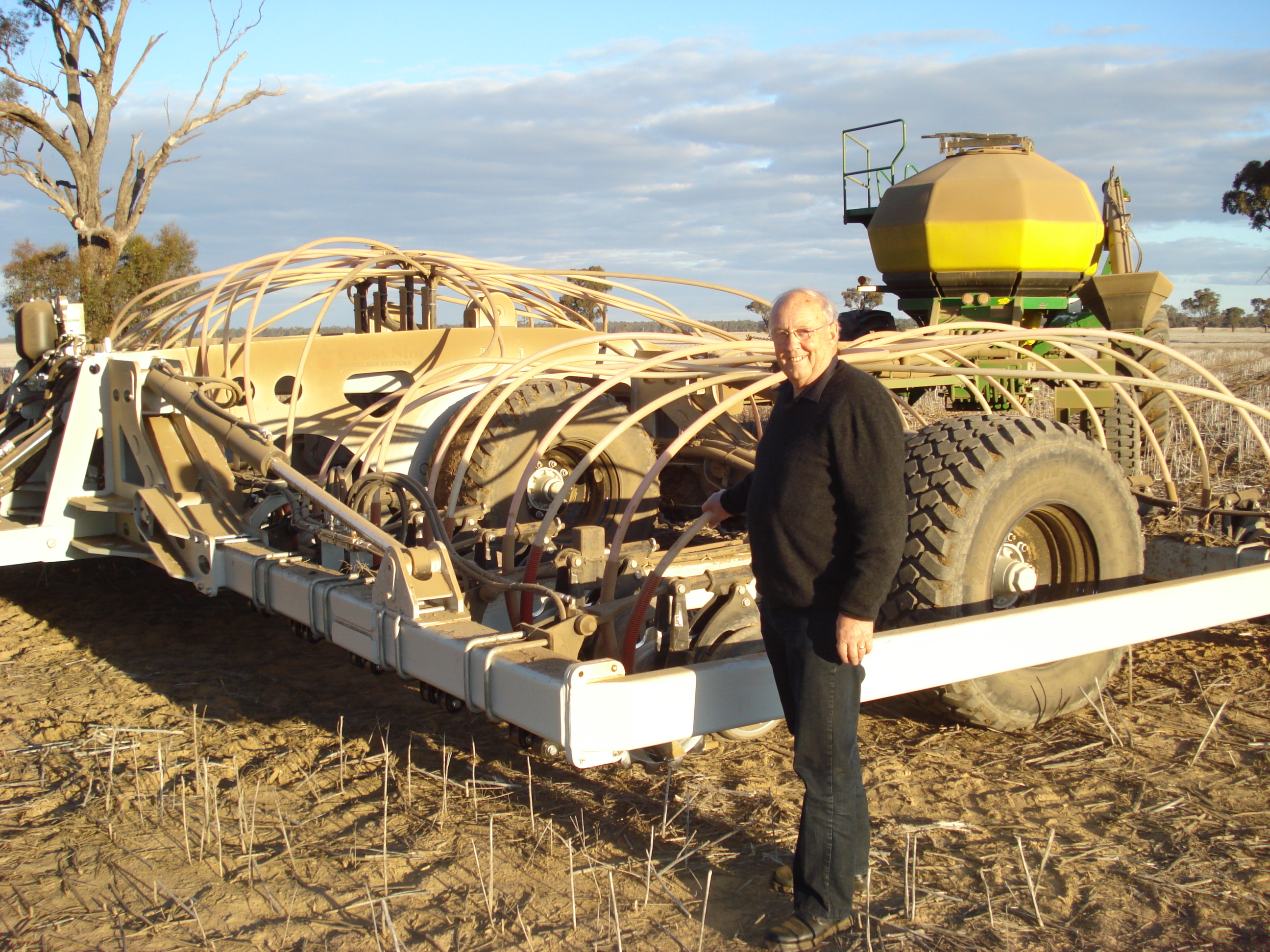
However a Massey University project, began in 1967, produced the world’s only true low-disturbance no-tillage machine which has since become a commercial reality. This machine is so good that an independent Massey University study in 2012 showed that the soil, supporting an arable crop sown by the machine, gained and captured more than 800kg of carbon (equivalent to three tonnes of CO2) per hectare each time it was used.
If, by multiplying that out, New Zealand’s one million hectares of soil re-seeded each year were sown with the Cross Slot low-disturbance no-tillage drill – as it’s become known - approximately three million tonnes of carbon dioxide would be removed from the atmosphere and stored in our soils that year.
What’s more the same thing would happen every year thereafter if the same technique was used. Globally if all the 1,386 million hectares of the world’s arable land (as defined by FAO) was sown with the same seed drill, more than 4,158 million tonnes of carbon dioxide would be eliminated from the atmosphere and stored in the soil that year.
That would contribute significantly to the challenge issued at the Paris conference.
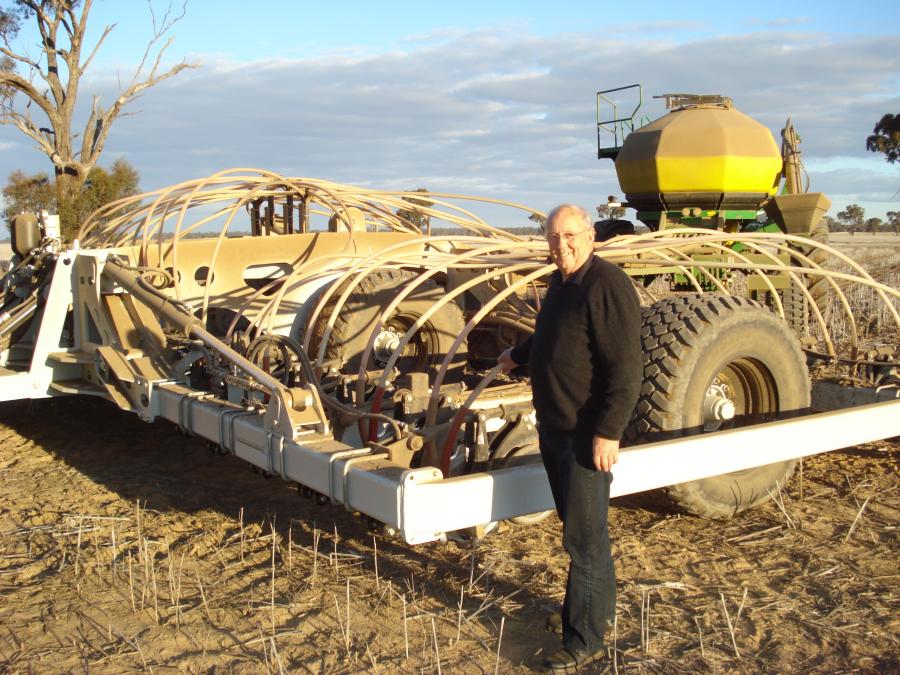
To achieve what it’s accomplished to date, the Cross-Slot low disturbance no-tillage machine does something very different. Its openers penetrate through the trash on top of the soil and sow seeds and fertilisers in separate bands beneath it, causing minimal disturbance to the soil, trapping the humidity, preserving the organisms and soil life, increasing yields and largely preventing carbon from escaping.
It’s the equivalent of keyhole surgery whereas other conservation tillage machines and conventional cultivation are invasive surgery.
Cross-Slot machines currently sow approximately 60,000 hectares in New Zealand annually and machines, to the value of $30 million, have already been exported but there’s almost no limit to their export potential and their ability for New Zealand and the world to meet the quotas required by the Paris Conference.
It now needs a multinational sales effort and government recognition for the technology to become New Zealand’s most successful manufactured export ever.
One industrial leader has described it as the “Microsoft of Agriculture” and FAO has confirmed its pre-eminent status as the best no-tillage machine in the world. Its creator, Dr John Baker, has twice been nominated for the World Food Prize.
It’s a wonderful example of utilising New Zealand scientific research for it to become the poster boy for reducing global warming while changing the way we feed ourselves forever.
A Baker No-Tillage press release
Whom you can reach on:Dr John Baker, CEO, Baker No-TillageP: +64 6 323 1119 M: 64 021 715 205 Email: This email address is being protected from spambots. You need JavaScript enabled to view it.