
New Zealand was once Britain’s Farm on the other side of the world. In the 1950s the UK bought almost all of New Zealand’s agricultural exports. Somewhat ironically, it was our decision to enter the European Economic Community (EEC) in the 1973 that forced New Zealand to embrace free trade, opening up to other export markets and developing other products. While the country initially experienced a difficult transition period, New Zealand slowly transformed itself from one of the most regulated and protected economies in the world into one of the most market-orientated.
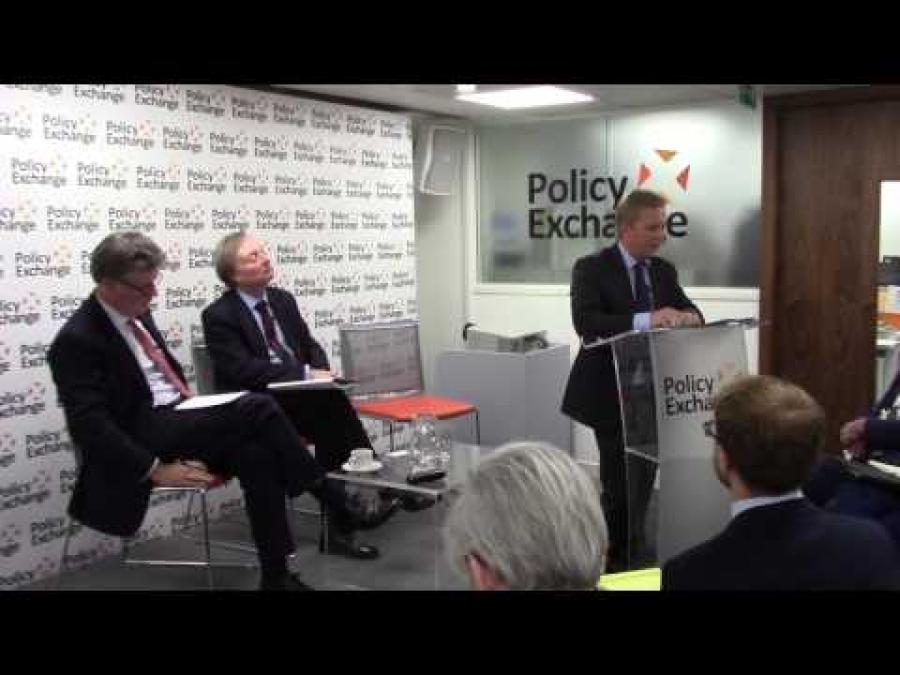
New Zealand’s experience in redesigning its trade strategy after splitting with a close trading partner is particularly instructive for the UK after Brexit. Policy Exchange was therefore delighted to host the New Zealand Minister of Trade, the Hon Todd McClay MP, who provided some timely advice on how the UK might navigate its new trading relationships with the rest of the world. A number of interesting points were brought out in the discussion.
First, while free trade is important for all nations it is significantly important for small countries. New Zealand depends on fair access to foreign markets to maintain domestic living standards. The country has a very small internal market with a population of only 4.7 million (roughly half the size of Greater London). However, it produces enough food for 40 million people. The UK is a much larger country than New Zealand but it is still a small country by international standards. Further trade liberalisation after Brexit will provide UK exporters with significant opportunities to sell their products in larger foreign markets.
Second, the New Zealand experience shows that trade liberalisation can help to cultivate new export industries. Mr McClay highlighted the fact that New Zealand now exports much more wine than it did thirty years ago, with exports rising from NZ$18 million in 1990 to $NZ1.5 billion by 2015. This is partly because the removal of external tariffs on foreign wines, particularly from Australia, encouraged producers to look to external markets to remain profitable. The success of New Zealand exports is all the more surprising given that its major competitive advantage is in agriculture, which is a sector that many countries want to protect from foreign competition.
Third, the Minister spoke extensively about the importance of Free Trade Agreements (FTAs) for boosting trade activity. Around 52% of New Zealand’s exports are currently covered by FTAs, rising to 90% if current and prospective negotiations are successfully completed. The Minister emphasised the importance of agreeing high-quality trade deals that tackle behind border, non-tariff barriers and create a level playing field between domestic and foreign firms. Mr McClay argued that the UK should make sure that the first FTA it agrees is of high quality because it will probably act as a benchmark for future negotiations with other countries.
Some economists have argued that Britain should pursue unilateral free trade after Brexit rather than entering bilateral FTAs. The argument is that FTAs divert trade from the most efficient producer and therefore increase consumer prices. However, the New Zealand experience shows the importance of FTAs for stimulating trade activity, highlighting the fact that Germany (which doesn’t have an FTA with China) finds it much more difficult than New Zealand to export certain goods to the country. Moreover, New Zealand was the first OECD nation to negotiate a trade deal with China. Two way trade in services between the countries has gone up by almost 300% since it was signed in 2008, which demonstrates the huge potential advantages for an independent UK in agreeing bilateral FTAs.
Finally, the Minister commented on the role of public opinion in agreeing trade deals. Mr McClay argued that the internet has enabled people to more easily mobilise against certain elements of a trade deal. For example, around 10,000 New Zealanders originally protested against the Trans-Pacific Partnership (TPP) which envisages an FTA between the 12 Pacific Rim countries. Consultation is therefore more important than ever. The Trade Minister explained how he had recently completed 50 public events around the country to convince voters of the merits of TPP. Mr McClay also argued that promoting the views of workers whose livelihoods depend on expanding export markets was also a good way of getting public buy-in. For the UK Government, securing public support for new trade agreements will clearly be a crucial part of any successful trade strategy.
Overall the New Zealand experience is instructive for the UK and demonstrates how the prosperity of a nation can be transformed through ambitious trade liberalisation measures.
A full copy of the speech can be found here. A vote of thanks was given by Lord Hill of Oareford, the former European Commissioner for Financial Stability.