
Work dispersal contingency now needs priority over social engineering
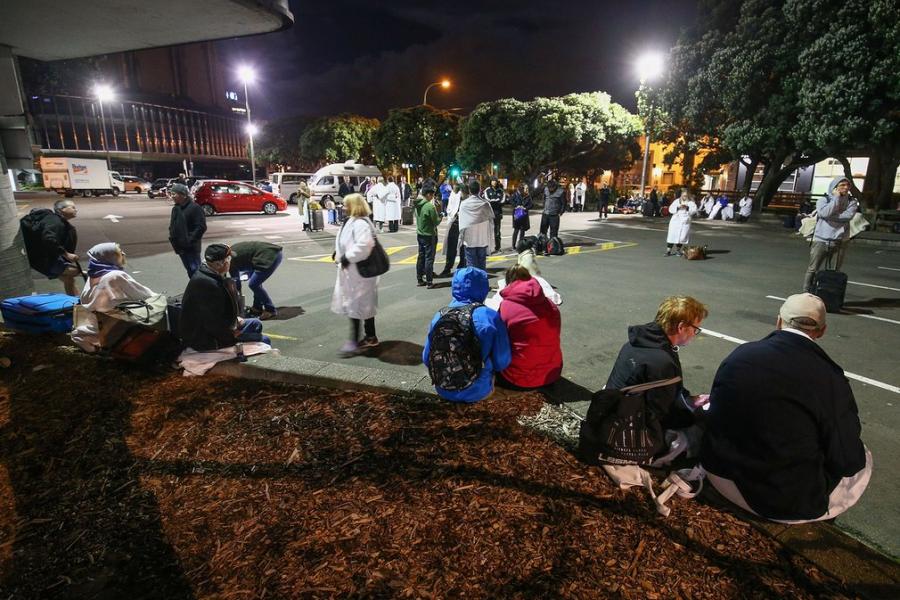
| Napier, MSCNewsWire, Nov 24, 2016 | - Earthquake damaged and currently uninhabited government buildings in New Zealand’s capital Wellington indicate a practical reappraisal of implementing a distributed or cottage workforce contingency.
This especially applies for the stricken government buildings in the defence and emergency services category.
These structures house people who are in information business and who do not need to be in the buildings in the first place, regardless of how safe or unsafe their condition.
Most of the staff are in fact candidates for remote working, meaning that they can just as easily do their job from their place of residence.
After a promising start in the remote working sphere which was characterised by such things as glide time and hot desking, the departmental scene in Wellington reverted to its literally time-honoured custom of bottoms-on-seats 9-to-5.
In spite of its intense susceptibility to other social trends in this same era the government employment scene after dabbling in things such as flexi-hours clung to traditional time/place work practices.
The sector clung to established practices with a singular determination, and has done so in the face of the infrastructure consequences so visible in the working week day rush hour traffic jams.
Remote working was taken up by the Arthur D Little management consultancy in the late 1980s. The underpinning facilitator was the technology of networked personal computers. This merged with the concept of the paperless office.
The demonstrable result was that the bureaucrat could just as easily fulfill their functions from their home, or anywhere else, as from their place of work.
This early official enthusiasm now gathered force as it coincided with the property Klondike which saw public service-grade office space literally spiral through the roof in cost terms.
Another factor in the early enthusiasm for remote working was that it now became legislatively and thus expensively necessary to house public servants in modern or retro-fitted buildings because of the threat of claims resulting from things like frayed linoleum (falls), rickety furniture (falls +internal anatomical injury) and poor ventilation (general ailments.)
The subsequent property bust and a huge new public building administration construction scheme, especially in what became known as the Parliamentary “precinct,” (pictured) dampened down office costs and it was now that the emphasis slid away from remote working.
The recent round of earthquakes and the vulnerability of this same precinct to seismic activity now indicates that remote working will have to be re-considered. If not as an integrated reality, then as a well-rehearsed contingency response.