
MSC NewsWire

Founded by Max Farndale 1947 - 2018
  • Home
    • About Us
    • Pricing
    • Global Presswire
    • Industry Organisations
  • News Sectors
    • Headlines Through Today
    • Environmental Talk
    • Out of The Beehive
    • Primary Sector Talk
    • Reporters Desk
    • The MSC NewsReel
    • MSCNetwork
    • FinTech Talk
    • The FactoryFloor Newsreel
    • Trade Talk
    • News Talk
    • Industry Talk
    • Technology Talk
    • Blockchain
    • Highlighted
    • The TravelDesk
      • TravelMedia
      • Sporting Tours
      • Holidays Tours Events + More
      • Airfares
      • Travel Enquiry Form
      • TravelBits
    • Travel Updates
    • The MSC TravelDesk Newsreel
    • Travel Talk
    • Travel Time
    • The Bottom Line
    • Regional News
    • News to Run Advice Form
    • World News
    • NewsDIRECT
    • MSCVoxPops
    • Press Releases
  • National Press Club
  • Contact Us

Polish designer Oskar Zieta uses an inflated steel technique for larger works of architecture.

  • font size decrease font size decrease font size increase font size increase font size
  • Print
  • Email
Polish designer Oskar Zieta uses an inflated steel technique for larger works of architecture.

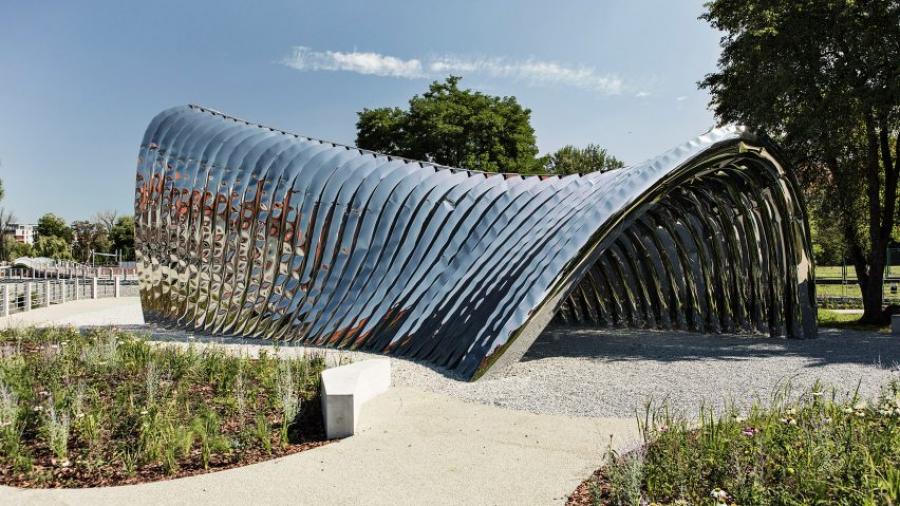
Polish designer Oskar Zieta has created a public sculpture in Wrocław using an inflated steel technique he plans to use for larger works of architecture writes Rima Sabina Aouf for dezeen.

The Nawa pavilion is installed on Daliowa, one of many small islands in the Oder River where it runs through Wrocław.

The reflective, undulating structure — composed of 35 metal arches — was sculpted using air to inflate the cavity between two thin steel sheets, welded at their edges.Daliowa pavilion by Oskar Zieta

Zieta calls this technique FiDU, or freie innen druck umformung in German, which roughly translates to internal pressure forming. It is a process he developed while studying at ETH Zurich in the early 2000s and has continued to evolve since.

"It is the most flexible tool-less metal forming technique ever," Zieta told Dezeen. "It allows us to create innovative, customised bionic shapes and fully recyclable objects using very efficient mass-production processes and individualised shaping methods."

Zieta used the method to make his Plopp stool for design brand Hay in 2008. Since then, his aspirations for FiDU have grown. . .

  • Source/ReadMore: A de Zeen release
Published in ARCHITECTURE
Tagged under
  • Engineering
  • architecture
  • factory floor articles
  • keepingintouch
  • mscnetwork
  • news talk

Related items

  • Sir Bill English to be honoured by Victoria University of Wellington
  • Higher bank capital better for banking system and NZ
  • Plastics industry helps designers create easy-to-recycle packaging
  • Great Barrier unhappy with Auckland’s marine sludge plan
  • XE Update Friday 30 November, 2018
More in this category: « Shipping containers (Intermodal Steel Building Units, or ISBU's) ideal microTowers Victoria University of Wellington Visiting Architect Exhibition: At This Stage »
back to top

Palace of the Alhambra Spain

Palace of the Alhambra, Spain

By: Charles Nathaniel Worsley (1862-1923)

From the collection of Sir Heaton Rhodes

Oil on canvas - 118cm x 162cm

Valued $12,000 - $18,000

Offers invited over $9,000

Contact:  Henry Newrick – (+64 ) 27 471 2242

Henry@HeritageArtNZ.com


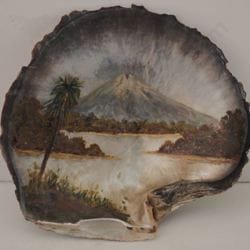
Mount Egmont with Lake

Mount Egmont with Lake 

By: John Philemon Backhouse (1845-1908)

Oil on Sea Shell - 13cm x 14cm

Valued $2,000-$3,000

Offers invited over $1,500

Contact:  Henry Newrick – (+64 ) 27 471 2242

Henry@HeritageArtNZ.com

MSC NewsWire is a gathering place for information on the productive sector in New Zealand focusing on Manufacturing, Productive Engineering and Process Manufacturing

  • Home
  • Global Presswire
  • Industry Organisations
  • National Press Club
  • Disclaimer
  • About Us
  • Pricing
  • Sitemap
Copyright © 2025 MSC NewsWire. All Rights Reserved.
Site Built & Hosted by iSystems Limited
Top
Out of The Beehive