
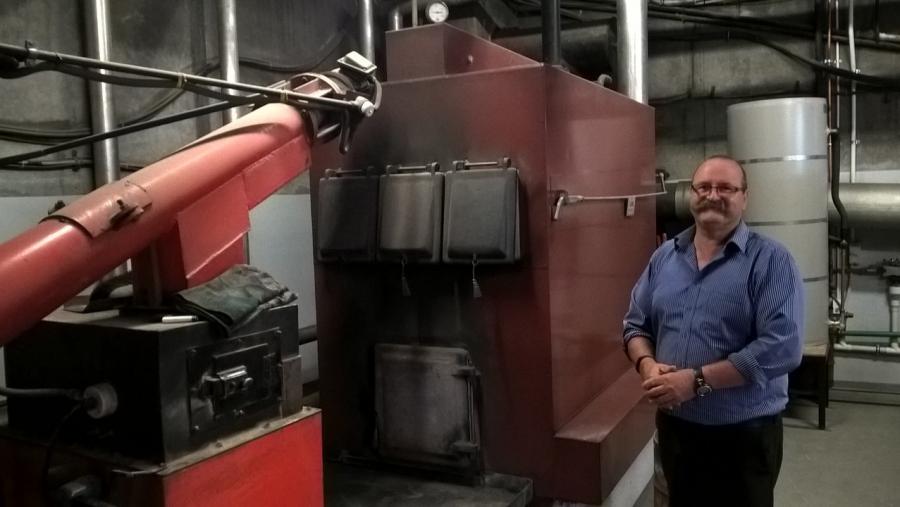
The Ara Timaru Campus is continuing to successfully reduce carbon emissions after converting the main heating system from coal to wood pellets. The campus is mitigating 248.04 tonnes of CO2 every year; that’s a possible 6,201 tonnes of CO2 emissions saved over the 25 year life of the boiler.
The move three years ago to a wood pellet boiler has several other benefits too, Facilities staff have reported.
Unlike coal, wood leaves no toxic ash behind. Formerly, two to three 40 litre drums a day of coal ash containing toxic heavy metals such as mercury and cadmium had to be sent to the landfill. Now, a smaller amount of ash that is produced by the wood pellets is so clean it can be used as garden fertilizer on the Timaru Campus gardens. It amounts to about 60 litres of ash a week.
Alongside the cleaner ash is cleaner air. The wood pellet fired boiler produces less smoke, which is not charged with toxic particles - and consequently the system no longer requires an air discharge consent. “It’s much cleaner for the guys, they are not breathing in sulphur gas, and now when you walk in there is lovely fragrance of pine,” Facilities Manager Timaru Roger Luscombe says.
All these benefits come with another bonus – the wood boiler requires less input from the Facilities team. The old coal boiler was high maintenance; it had to be tended three times a day and cleaned on the weekend. However the new wood boiler requires a clean of the tubes once a week and “a wee rake” first thing in the morning.
“The new wood boiler was an investment for the organisation and a very tangible commitment to more sustainable practice, but we are seeing the pay off. Yes we have the satisfaction of providing good leadership through our example, because reducing the country’s emissions is going to take effort from all of us, but we are also seeing all of these other benefits too,” Ara Sustainability Manager Shaun Bowler says.
The move to a wood pellet is in line with the Ara Sustainability Charter, which commits the institute to principles for action, such as sustainable operation and graduating students who are leaders in sustainability in their field.New initiatives such as the wood pellet boiler, which was introduced in 2013 by the former Aoraki Polytechnic, demonstrates the benefits of sustainable practice to students, staff and the local community.
Local industry is benefitting too. One more gain is that using wood pellets has supported local Timaru jobs. Supplier Starwood are now buying a second pellet mill to meet local demand.
Each year the Timaru wood pellet boiler is saving the Timaru Campus at Ara about 16% of total Scope 1 & 2 carbon emissions, which are the emissions from combustion of fossils fuels in operations owned by the organisation and emissions from purchased electricity or other energy sources.
Wood pellets are a win for both the institute and the community when all aspects are accounted for. Fuel for the wood pellet boiler costs $30,000 a year in pellets, as opposed to $18,000 spent on coal, however this is offset by savings related to the cleaner ash and air, reduced labour requirements and increased efficiency to heat 6,906sqm of campus buildings, as well as indirect but significant benefits, including community health improvements and other indirect gains as a result of a cleaner Timaru.
| An ARA release woith MSCNewsWire || September 6, 2017 |||