
Founded by Max Farndale 1947 - 2018

Sophisticated multinational persuasion techniques are unseen by New Zealanders including Federated Farmers
The climate industry in a cruel assertion of its power now seeks to ensure that funds scheduled for post Covid recovery are instead diverted to the climate change industry itself.
This means that funds badly needed already in New Zealand will be substantially disbursed overseas and for no practical return to New Zealand taxpayers.
The display of the climate industry’s power is such that the organisations tasked with countering such demands are mute.
None dare say for example that the money thus diverted could and should be used for the benefit of families who have had surgical treatment delayed through the crisis.
Or to alleviate the chronic shortage of housing caused by Covid 19 as returning New Zealanders put unparalleled demands on an already strained availability of accommodation.
Neither does anyone in authority dare to point out that these Covid -19 problems inevitably fall on the very people that a Labour government is sworn to protect—the poor.
Only Federated Farmers now has the status to block the momentum of the urban-based climate business.
Federated Farmers without knowing it has been deliberately targeted by the climate business in a sophisticated marketing exercise designed to soften it up.
It has been told that the pending carbon budget, as it is officially known, will be a shocking one.
The climate industry intends for there to be levied some damaging though not “shocking” impositions and thus grateful farmers will be so relieved that they will even praise the climate industry for its forbearance and moderation.
Another advanced marketing trick used by the climate sector is to portray the image that its many operatives are in their jobs through their devotion to public welfare.
In fact these urban practitioners are on high-ranked public service level remuneration packages.
Their job is to keep the pressure up on the taxpayer to keep funding them.
The exaggerated display of righteousness is another marketing tactic disguised in the industry’s sincerity-dripping publicly related narrative centred on the devoutness of its cause.
Only Federated Farmers among still-respected New Zealand institutions can present a united front in the face of this determined presentation of urban piety of purpose.
The National Party has found itself consistently wrong footed by these manipulators of its supporters loyalty.
The Labour government has found the business so useful that it has become part of it.
Industries which originate in North America, as this one does, always find New Zealand a stand-out receptive ground.
There is for example the jargon which the target market which means most New Zealanders only partially understand.
Yet they are afraid to appear out-of-touch by admitting their lack of familiarity with the industry’s dictionary of new and modified words.
Then there is the climate industry’s claiming of the moral high ground which is another straight out lift from the multinational selling methods play book.
It means that buying will improve you and the world at large.
Now we have the reference sale technique. Celebrities such as Prince Charles are referred to as buyers, with the inference that they must be right.
A corporate technique known as client management is also used.
It is designed to hold the sale and the buyer securely in place and make sure that they resolutely stay with the product, in this case the climate deal.
This can be seen in the many publicly-funded inducements to those showing signs of straying that they better stay with it and stay on message. Those who do stray find their public funding unavailable or cut off.
Federated Farmers is not immune to this aspect of the climate industry.
But it is better placed than any other institution to stall the climate industry, at least until the Covid crisis has passed, and then been paid off.
Multinationals demonstrate their moral conscience through well-publicised good works such as sponsorships.
In the climate business this high mindedness takes the form of its already privileged operatives conveying the impression of self-sacrifice and that personal reward is the last thing on their minds.
Marketing it is said can sell anything and the scheme to divert critically-needed Covid recovery money from those who need it in New Zealand and hand it to the North American-driven climate industry proves it.
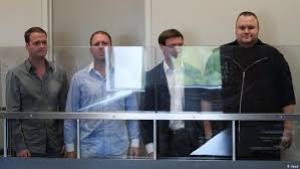
Diplomatic intervention only solution to interminable Dotcom Four process
Eight years of intensive court house toing and froing failed to dent the Dotcom extradition process and merely reinforces the only possible resolution to the case, a political one in which it is declared moot.
This will end the present public expense in which cohorts of lawyers of varying hourly billing firepower tramp through courtrooms of varying status and show every sign of continuing to do so into the foreseeable future.
A moot declaration is straightforward and starts with the incoming United States ambassador who must be apprised of a basic New Zealand political fact which is the existence of the FBI case as the elephant in the caucus room of the Labour government.
The Labour government’s brand is kindness.
How kind is it to forcibly return for incarceration in United States gaols a quartet of family men who after years of intensive investigation may even have rendered substantial benefit to the nation which invited them in?
Impenetrable clouds of words emanating from all those involved in protracting the case to date have created an emissions overload camouflaging the political rawness of the Dotcom drama.
The Dotcom Four were encouraged to base themselves in New Zealand under an official policy known as technology transfer.
In this concept the mechanics and the marketing of the original Megaupload would rub off on the local specialists and engender in institutions as a whole an appreciation and respect for the possibilities of information technology.
Hovering over the whole episode then and now is this.
If the Dotcom Four believed that they were involved in anything illegal why did they allocate their servers to Virginia when they must have known that New Zealand had a bilateral extradition treaty with the United States?
Plenty of opportunity to establish the immense server capability in say Scandinavia where no such treaties exist, and where there would have been no danger of the servers being unplugged in the first place.
In the world of cloud computing eight years is a lifetime.
The Dotcom case has about it the aura of a dispute centred on horse drawn carriages extending into the era of the motor vehicle.
The underpinning contention of the Dotcom Four is that Megauplod was a celestial version of the three dimensional storage warehouse which rents out space on demand.
How did they know what was being stored in their space any more than the owner of a concrete warehouse with space to hire knows exactly what its users are filling its space with?
The determination of the FBI to imprison the Dotcom Four extends to the RICO washing up clause which threw a racketeering blanket over them meaning that once in the United States there is truly no escape for the Four.
Now with the avuncular Joe Biden installed in the Oval Office the Labour government can test this new Morning in America in ridding itself of one of its greatest identifiable pending embarrassments.
This is corralling into a Federal Bureau of Investigation chartered Con Air a quartet of technologists who did for New Zealand exactly what they said they would do.
They generated jobs out of thin air and in doing so transferred the comprehension of the infinite possibilities of technology.
Without diplomatic intervention there remains only the outcome of the infinite cost to the taxpayer of an infinitely protractible vista of courtrooms, each one more costly to the taxpayer than the one before.
Watch the documentary Kim Dotcom: Caught in the Web.

Ideology booby trap sank Party pledged to reality and Ordinary People scribe tells influencers
Winston Peters and his NZ First Party evaporated in the general election simply because he departed from the teachings of his guiding light, the late National Party prime minister Sir Rob Muldoon.
It was Muldoon who inculcated Peters with the principle of avoiding entanglement with any exotic ideology or doctrine and to always put the practical needs of New Zealand first, National Press Club president Peter Isaac told the Wanganui Club.
In the event Mr Peters and his party had become inexorably enmeshed in climate doctrine and this perceived entanglement only intensified as Mr Peters had sought to minimise the association by taking a bet each way, Isaac in the immediate aftermath of the general election told Wanganui Club members.
NZ First’s compromising with the all-embracing climate ideology of the other two coalition partners now became progressively more visible.
It took the form of triangulation, hedging, and meant that NZ First became reluctantly yet utterly and unwittingly mired in the ideology, notably as champion of the “billion trees” planting campaign.
The tree planting scheme was designed to appease NZ First’s Green and Labour coalition partners and at the same time demonstrate to the productive sector that NZ First was still behind them.
In the event the productive sector saw it as NZ First acquiescing in a Green ploy to gobble up grazing land in order to eliminate cattle and sheep.
Warnings later on from Mr Peters’ right hand man and now ex Northland MP Shane Jones that resurgent Greens meant a “tsunami from hell” for farmers only accentuated the question about what Mr Peters and his party were doing in harness with the Greens in the first place.
Coalition sponsored globalist-inspired showboating such as territorial local governments proclaiming “Climate Emergencies” further dismayed NZ First’s base as being an exhibition of voguish, frivolous irresponsibility.
A few months after this public posturing the true “extinction” threat the Covid -19 virus swept in from China.
It was unforeseen “and nobody wants to talk about this” by the very global agencies before which the coalition government demonstrably prostrated itself.
In addition to this obeisance the coalition disbursed immense levies in order to receive real, actual emergency alerts instead of fanciful self-serving ideological ones.
Mr Peters at the start had believed that he could weave his way around the booby trap presented by the climatic ideology without actually becoming identified, smeared with it.
He misunderstood the way in which climate was viewed by the Labour Party as a unifying doctrine, and one to be given the maximum emphasis at every opportunity, notably by the coalition’s deputy prime minister – Mr Peters himself.
This was especially so in Mr Peter’s additional portfolio of foreign minister in which he found himself obliged to emphasise and even give priority to the climate ideology in all his dealings with foreign governments about anything at all.
Rob Muldoon had warned the young Mr Peters at his political career outset to avoid abstract foreign doctrines and to concentrate only on what was good for New Zealanders, hence NZ “First.”
Mr Peters’ role as the hero of the nation’s wealth earning sector and thus the older sector of the population that created and sustained it was damaged from the inception of the Labour-led coalition by the abrupt ideological ban on oil and gas exploration.
Isaac went on to describe Rob Muldoon as a green-compatible politician and one dedicated in policy terms to bio diversity.
His negotiation of the Clyde dam had made New Zealand 80 percent power renewable. Muldoon’s support of the wine industry had put it on the global map. He was responsible for the Kiwifruit Licensing Authority and consistently shoved horticulture to the forefront. He was a fellow of the Royal Institute of Horticulture.
Isaac said that the departure of NZ First from Parliament with its vote ranking with that of start-up parties marked the extinction of Rob’s Mob as the Muldoon faithful were known.
He sheeted home the collapse of the NZ First vote to the attempt to blend reality with ideology and the mixed messages that this formula generated, especially the one to the effect that the party of everyday people had abandoned them in favour of the cultural elites.
“While you might not have agreed with what Rob was saying, you were in no doubt what he was saying,” concluded Isaac.
See also:- https://www.nationalpressclub.org.nz
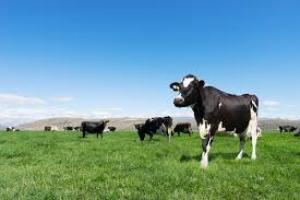
Overseas Investment Commission Loophole allows acquisitions by climate credit speculators
United Nations success in inducing a lacerating self-guilt among New Zealand activists has relegated the nation’s total dependence on agriculture to a mere side-issue in the pending general election.
Farming for United Nations- sponsored financial credit instruments means that immense swathes of productive farm land are under replacement by forestry for the purpose of global emission offset gains.
The United Nations sponsorship means that foreign owners under this scheme can acquire land without encountering New Zealand’s once powerful Overseas Investment Commission.
In fact, only half of one percent of New Zealand is built up. Grass like trees absorbs carbon dioxide in order to grow.
So New Zealand, heavily forested anyway, can process all its own carbon dioxide in what used to be known as the carbon cycle, before orchestrated hysteria overtook the nation’s agri science.
Those using the UN-induced climate fervour to acquire New Zealand farms are doing so in order to use the farms as a countervailing sink to the pollution they are generating in other countries.
Neither is there any guarantee that these forests will ever be harvested.
This is at a time when United Nations is forgiven, and even exalted, for the way in which it has wrought such havoc on New Zealand, a country in which the only economic advantage is that grass grows all the year around.
Last year United Nations encouraged city councils and local government authorities across the nation to declare States of Emergency in support of the UN climate scare
When the real emergency which turned out to be a viral one actually swept the world United Nations whose job it is to warn of such pandemics merely responded to it instead of predicting it. Neither did United Nations have in place any plan of action to deal with a SARS type plague even after at least two recent near-pandemics.
A feature of cults is that the followers consistently forgive their cults for unrealised prophesies. Neither United Nations nor the silly New Zealand municipal councils that last year proclaimed the UN State of Emergency have apologised. Not to anyone.
Meanwhile as foreign buyers acquire once closely-guarded farms the UN-guided activists take every advantage of New Zealand’s drift away from STEM education in emitting clouds of confusing percentages and decimal fractions to back up their fervour.
The Opposition National Party and the once-powerful agri lobby Federated Farmers can only dance around the United Nations fearmongering.
New Zealand agri scientists find their input blocked under a regime which cuts off state institutional funding should these bodies challenge the UN doctrine.
Retired scientists, even New Zealand’s world authorities, find their voice subsumed under, for example, that of various the saints in this UN-inspired cult.
One is Britain’s David Attenborough former presenter of a television programme called Zoo Quest about trapping wildlife for zoos, and who later became a broadcasting administrator.
The UN’s hypnotic grip on the politico-media sector has meant that throughout the Covid crisis, a real one this time, this influence sector has given priority to wrestling back onto the agenda what it sees as its central doctrine, the climate one.
Readers of chain newspapers for example interested in lengthy features on the imperative to find a vaccine found the vaccine in question intended not for humans but for ruminants as an antidote to climate-altering flatulence.
Since United Nations began its focus on nurturing activist causes it has found some little-talked about cravings of the New Zealand psyche to be easy prey for its urban-centred propaganda.
Foremost among these is the New Zealand desire to be viewed as the international leader in any moral cause at all, and to be seen, and admired, ascending to this moral high ground. The words “to be seen” in this moral ascension are critical.
United Nations has pretty much taken over the role in New Zealand once held by established religion, and even the nation’s political – public sector – industrialist Establishment itself.
United Nations bungling most recently in the matter of identifying the wrong crisis and then having no contingency in place for the real disaster, Covid -19, has been deliberately overlooked in the single-minded determination of many politicians to garner its approval, regardless.
Another worrying by-product of this obsessive quest for the UN’s approval is the existence of an only partially disguised official belief that slips out from time to time to the effect that farming which provides 80 percent of the nation’s wealth is a sunset industry, a relic of the industrial era.
This belief is encoded in the uttering. An example is New Zealand government coalition components regularly proclaiming what they describe as the nation’s “bio-diversity crisis.” Translated, this means in fact eliminating cattle and sheep farming.
This is the very industry that has insulated New Zealand from the worst economic effects of the Covid “crisis” the one that United Nations failed to foresee or know how to handle when it erupted.
State television in New Zealand routinely entertains its audience in showing religious zealots in other nations bloodily flagellating themselves in pursuit of a self-cleansing nirvana.
Yet as the nation prostrates its economy in order to meet a New York centred purity cult, the UN one, nobody dare point out the similarity.
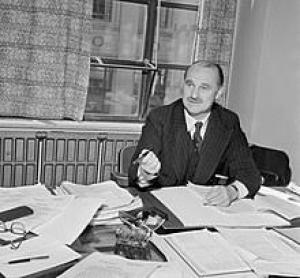
Western Intelligence believed that mystery mandarin Nation Builder was actually demolition agent.
When Keith Ovenden married Helen Sutch only daughter of Bill and Shirley he can be forgiven if he believed that in this alliance he had also become heir to a cultural hegemony.
There were though early indications that Keith’s induction chez Sutch would be anything but smooth.
Indeed Keith Ovenden newly arrived in New Zealand and supping with his new in-laws found the experience difficult to the point of indigestion.
This froideur could not be alleviated by the ingestion of a chardonnay or pinot, local of course. A moral absolutist, Bill Sutch was an aggressive teetotaller.
On one of his rigorous hikes in the Makara region of the Wellington coast one of the Sutch companions in the freezing weather pulled out a hip flask of whisky, took a swig, and received a dour dressing down from Sutch on the evils of liquor.
A well set up cove, urbane, the young Ovenden wondered about the cause of this dinner dyspepsia, unrelieved as it must have been by the emollient of any booze.
The reason for the tension as anyone who knew the Sutch menage at this time understood was that Keith was too urbane, too smooth.
Wanted on this familial doctrinal voyage was a firebrand son-in-law. Someone with an audacious disregard for the niceties….A preacher who could pack the Sutch intellectual church.
By the time Keith had digested this there came an event that defined the family forever.
At 2040 hours on September 26 1974 on a bleak Wellington evening and outside a brick public convenience elements of the Security Intelligence Service apprehended William Ball Sutch whose mystical writ across economics, the arts, and geopolitics until this very moment was unquestioned
Bill Sutch must have known that CAZAB as Five Eyes was then known was in the language of those days still “tearing the house down” to expose the high placed New Zealand public servants deemed to be assisting the USSR since the 1930s. Yet he all but offered himself up in the Soviet hand-over bust that night in Wellington.
What was he passing over? Probably the New Zealand meat schedule which gave the Soviets a position on their pricing for their own global meat procurement. The Soviet food shortage had in turn been created by Moscow’s doctrinal meddling in agriculture.
Sutch as the long term and defining supremo of trade during his tour as head of the department of industries and commerce might reasonably have retained access to this extremely useful early-warning data. After all, Bill’s reputation as an economist was founded on centralised pricing.
The subsequent trial in which Bill Sutch was acquitted made him the Dreyfus of the South Seas. Arguments see-saw back and forth and time has not diminished the debate.
Dr Sutch, as he liked to be known, was a mystery within a mystery, a one-man Russian doll, a series of contradictions and irreconciliable differences.
Why do some people flourish in large-scale institutional life while others seemingly equally gifted wither on the vine?
Bill personifies the answer to this riddle. He was all things to all men. You wanted the running on globalism? You went to Bill. Nationalism? Bill was your man. The books were there to prove it, the ones with ringing titles such as Quest for Security, Responsible Society, Takeover New Zealand.
A characteristic of any examination at all of the duo is that the author/commentators seek to focus on Shirley.
Shirley, a human rights lawyer, is a recognisable figure in the causes of the last century. It is in Bill that we find the contradictory persona that will ensure that the Sutch syndrome will continue to be mined for years to come.
For example it was Shirley who looked as if she was from an everyday provenance and Bill with his David Niven-meets Claude Rains aspect who looked posh. In fact Shirley was the daughter of a judge. Bill was the son of a carpenter and a seamstress.
Bill thought of himself as an architect, hence his vaunted role as a nation builder. He saw how real-life architects needed to get alongside the cultural elites, the people who ran the show, and thus he immersed himself in the arts. Nobody likes a dull boy, however adept at administration. He was chairman of the Arts Council at the time of his arrest.
When a year later, at a mere 68, Bill Sutch died the ensuing festschrift, collection of tributes, testified to Bill’s quasi-mystical intellectual status with the most boffo of all the titles in the Sutch constellation – Spirit of the Age, a tag which has about it still now an eerie accuracy.
There are two recent books on the Sutch syndrome. First off the rank was Sarah Gaitanos with Shirley Smith: An Examined Life (Victoria University Press.) Now we have Keith Ovenden with Bill & Shirley: A Memoir (Massey University Press.)
The portrait of a marriage could have been entitled The Long Shadow because this is where Keith has dwelled. He has become frozen in time as the eternal son in law. One recalls his crisp worldly contributions to Column Comment, the local tv version of What The Papers Say. He co-founded The Week a disappointingly short-lived ideas and opinion newspaper. Academia has beckoned over the ensuing years. He was made ONZM.
Oxford, the university, looms over the Sutch saga. Shirley went there. So did daughter Helen and of course Keith was there also. One recalls the words at the end of his long Oxford career of the late Master of Balliol, Benjamin Jowett.
“We sought truth, perhaps sometimes finding it…..
“But was there any fun?”
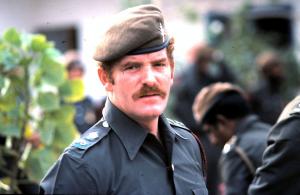
Soldier of Fortune & Scholar was present at the creation of global co-operation shift
A soldier of fortune turned humanitarian and increasingly recognised pivotal figure in the last Balkan wars is now thought to have had New Zealand origins.
Major Bill Foxton (pictured) who served with the European Commission Monitoring Mission was present at the hinge of history when it became obvious that United Nations by its structure was unable to deal with conflicts such as those in the breakup of Yugoslavia.
The fall of Srebrenica and other towns that the Security Council had identified as safe areas, but then refused to authorize enough troops to defend can be viewed now as the decisive moment for the UN.
United Nations now switched its emphasis away from policing and instead turned to non-partisan idealistic causes that transcended ethno-politics and belief systems and above all sidestepped dangerous interventions in nationalism.
Its fixation on Climate now evolved as its standard-bearing campaign
It was this Balkan vacuum, the one left by United Nations, into which now plunged Major Bill Foxton.
One of the hottest spots in Bosnia was the Bihac Pocket and it was there that Bill Foxton immersed himself for two years of fratricidal in-fighting. “Bosnia’s Forgotten Battlefield-Bihaj” by Brendan O’Shea is dedicated to Major Foxton
After this Major Foxton moved to Sarajevo as the European Commission Monitoring Mission’s training officer.
After Bosnia, Bill Foxton became in May 1998, an unarmed observer for the Organisation for Security and Cooperation in Europe in northern Albania, gaining the trust of the local leaders and of the refugees from Kosovo who were pouring into his area.
“Major Foxton ensured that the OSCE headquarters received a steady stream of accurate information and intelligent analysis from throughout the Kosovo crisis in early 1999,” recalls a general officer in the Balkan theatre
“Bill could not abide unfairness and injustice. As such he was a natural peacekeeper, a peerless unarmed monitor and a perfect candidate for humanitarian work. What made him so effective was his determination to act, in addition to his ability to spot and report accurately on injustice and humanitarian need,” noted the same general officer.
Major Bill Foxton in his career served in Africa, the Middle East, Asia, and Europe itself ever since in fact he joined the Foreign Legion as a 17 year old.
As a soldier of fortune he can be seen now as a transitional figure in the profession of arms, a practitioner whose sword became forged into a ploughshare.
With his red hair, barrel chest, and waxed moustache Bill Foxton started his career with the Legion in the last of the colonial wars in Algeria and continued all the way to Afghanistan and in doing so traversing in a personal way modern history.
Along the way he had become one of the English-speaking military sphere’s foremost linguists conversant with the variegated Balkan languages among many others. He is the compiler of the standard Baluchi-English dictionary.
In June 1999, he was made an OBE for rescuing a child from a minefield in Bosnia.
He had earlier lost his left arm while trying to de-fuse an unexploded shell while serving in Oman, a British protectorate. His forearm now became replaced with a prosthetic with a hook on the end of it.
No stranger to military symbolism Major Foxton was to use this hook which had several Swiss Army knife-style attachments as his own trademark.
After continuing to serve in the Balkans for several years after hostilities ended, Major Foxton took one last assignment, this time in Afghanistan reprising his humanitarian assignments.
He was eventually persuaded to leave this war zone only after intelligence reports signalled that he had become a marked man, and was therefore a magnet to attacks which would inevitably involve his civilian charges.
A former intelligence officer with the British army in Ireland during the Troubles he knew exactly what this meant and after an active military career approaching half a century he reluctantly and finally hit civvy street.
His extraordinary life in three armies would beyond the military sphere have gone unnoticed had not Major Foxton become irrevocably bound up with the Madoff scandal in which he lost his life savings and which caused him in consequence to take his own life and which conferred on him a kind of posthumous celebrity.
He had crawled through minefields, disarmed unexploded ordnance, yet ultimately he was done in by the people he trusted, his investment advisers – civilians.
Now there are indications that this soldier of fortune, humanitarian and scholar sprang from New Zealand origins.
It is thought that his father was a New Zealand serviceman who had married in Britain during the war - and stayed there . Major Foxton, the son, was born in 1943.
Meanwhile Major Bill Foxton’s humanitarian operations during the last Balkan wars are considered to have been extensive.
This was particularly so in his ability to deploy regional languages as NATO rapidly took over operations from United Nations.
Asked on one occasion how he was able to assimilate so many diverse languages he said simply that it was a matter of listening to them.
Meanwhile, there is a strong indication that as the Balkans once again became the tinderbox of history there was at this pivot a character who could have walked out of any adventure book and who had a New Zealand connection to boot.
Jason Connery 2009 film proves that Life does follow Art
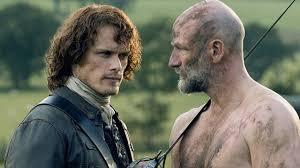
Graham McTavish might not be everyone’s idea of a travelling companion. A grotesque dwarf in Sir Peter Jackson’s Hobbit trilogy, the grizzled fiery lead in Preacher, the only actor to play opposite to Sly Stallone in both Rambo and Rocky…..
Sidekick Sam Heughan presents a milder aspect as the two Outlander stalwarts hit the glens in their Clanlands travel book aided by a strong tailwind in the form of a forward by Outlander creator the American author Diana Gabaldon.
All a bit other worldly you might think as the footloose buddies emerge from behind the footlights to hit the traffic lights in road book on the Highlands.
If Outlander takes viewers through ethereal epochs of time travel, its two real life stars take readers on a feet-on-the-ground terra firma traverse of the highland highways and byways interspersed with the unreconstructed characters who populate them.
Graham McTavish in fact divides his time between Scotland and New Zealand traversing time zones instead of epochs.
He had a big role in a 2009 film called Pandemic in which he played Captain Riley whose mission was to “save the world.”
The film was directed by Jason Connery.
Just this year Britain’s Radio Times readers voted for Sam Heughan to take over the James Bond role from Daniel Craig.
Jason’s dad, Sean, was of course the first James Bond and who is generally considered the first celebrity superpatriot to take up the cause of Scots independence.
This leaves us with Graham McTavish who as he travels between Scotland and his New Zealand-based family and as he cools his heels in managed isolation in the process must be wishing that his film Pandemic had been taken rather more seriously.
Rotten Tomatoes did. It’s verdict on the 2009 film Pandemic was:-
“Moving this exciting thriller along at just the right pace, director Jason Connery builds considerable suspense concerning how it will end…..”
So in relishing their rollicking trail through the Highlands we can discern in the travelogue duologue a foggy whisp of ghostly and indeed deadly Outlander-grade supernatural forces.
Encouragingly for these rowdy latter day Monarchs of the Glen and their publishers, Hodder, is the fact that New Zealand boasts the largest consumption of printed books per head of population and is only rivalled by Norway.
The itinerant actors find themselves pathfinding a print/cinematographic blend in the form of Clanlands being a prequel to Men in Kilts which his described as a docuseries.
Meanwhile, in Scotland’s Highlands the past is the present and so the travellers’ japes and capers are interspersed with historical context.
The authors note that the lockdowns attendant on the current pandemic, the real one, had the effect of putting a sock into their reminiscing and forcing them into the serious business of actually getting their book written.
Time travel is one thing and nowadays true travel is something else involving as it does necessary quarantine hibernation, an interruption absent in the science fiction version.
Not too outlandish then to suggest that Graham McTavish for one will have the time on his hands to start work on Clandlands volume 2?
New Zealand is often described as the Scotland of the South Seas and it is a country that Graham McTavish has visited for the past 30 years.
Since in fact Alice Fraser, granddaughter of the nation’s defining prime minister Peter Fraser, arranged for him to stage his touring Van Gogh show there.
Another coincidence.
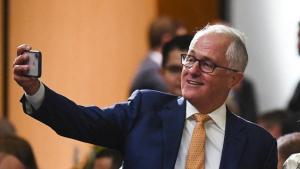
Liberal Leader Malcolm Turnbull’s true belief in Opposition policies haunts Australian politics
The Turnbull Test is designed to show the degree to which a political party leader has their heart in their own party. Or in the other side’s. It is named after Australian Liberal Party leader and federal prime minister Malcolm Turnbull.
He consistently demonstrated that far from being a conservative his leanings were anything but conservative and that in fact that his heart was very much with the Opposition in the form of the Australian Labour Party and the Green Party.
Mr Turnbull’s inability to disguise his preference for leftist causes notably republicanism and climatism continues to haunt the Liberals.
National Press Club NZ president Peter Isaac now analyses the New Zealand party leaders against the Turnbull Test and does so as the New Zealanders tool up for their imminent general election. Do they really believe in their own party? Really?
Let’s look at them:-
- Jacinda Ardern Labour Leader and Prime Minister. Turnbull Test score: 100 percent. Her obvious delight in identitarian politics and the whole United Nations line singles her out as a true socialist looking for underdogs with which to empathise. Her motto is “Be Kind,” and she means it.
Judith Collins Leader of the Opposition and the National Party: 100 percent. She is the governess of Parliament, impatient with mawkish sentimentality, and demonstrably stern with those she views as indulging in it.
- Winston Peters Leader of the New Zealand First Party and deputy Prime Minister: 60 percent. Once a stalwart of the National party he broke away to form his own party. He is at heart what is known in the United States as a Prairie Populist. He is non doctrinal and will dip into other party’s policies as he did with his off-peak travel and discount Gold Card scheme for pensioners.
- James Shaw co- Leader of the Green Party: 65 percent. His buttoned down look continues to betray the corporate financial figure he once was. This in a coalition party whose members often give the aspect of having strolled out of a rock concert. The Green Party heavying of the rest of the Labour-led coalition cabinet in diverting money to a no-no private school, even a Green one, indicates a doctrinal fissure.
- David Seymour Leader of the ACT Party: 110 percent. The leader of this one-seat Parliamentary Party is in a de-facto voting arrangement with National. Mr Seymour has come into prominence through his right-to-die legislation which is subject to an integrated referendum at the general election. Mr Seymour’s upper lip curls in contempt at the mere contemplation of the United Nations omnibus agenda which plays such a large part in the ruling Labour-led coalition doxology.
The Turnbull Test reveals that for the most part the New Zealand political leaders sidestep the perils of the syndrome in which leaders find their sympathies lying in fact with their opponents instead of with their own parties.
Even so, and with the New Zealand leadership emerging convincingly from the Turnbull Test, we find a selection of intriguing ironies and contradictions, some of them centred on the Labour Party’s imperative to inhabit the moral high ground.
Bizarrely New Zealand’s heart-string pulling Labour Party must suppress the ardours of its most activist devotees who are prone in their zeal to tossing their second vote, the party one, to the Greens.
Neither does Labour want to have to forge together another coalition with the Greens, dedicated as the Greens are to the aspirations of an elite constituency that is light years removed politically from Labour’s own face-value worker base.
Jacinda Ardern’s Labour Party must somehow deter the Labour Party’s ultra activist devotees from tossing this second vote, their ideological vote, once described as the conscience vote, to the Green Party.
This second vote is a huge bloc and includes for example those involved in education at any level and a large slice of professionals including quasi professions such as the media.
This elites vote as it is often described is earmarked for the Greens in the justified belief that the Greens will enforce a hard left agenda while Labour of necessity must implement bread and butter policies if only to keep the economy going in order to keep Labour in power.
Skilfully, the Greens use their influence with the mainstream media to take both sides of their load-bearing climate policy plank. Thus, if there are floods it is due to “carbon” as they describe carbon dioxide. If there is a drought, then it too is due to “carbon.”
The New Zealand proportional representation system is based on the German one. There are two votes. One for a candidate. One for a Party.
Our test indicates the absence in New Zealand party politics of a Malcolm Turnbull whose stewardship of the Australian Liberal i.e. conservative party was conducted while in his breast beat the progressivist heart of a university social sciences undergraduate.

NZ Herald takes up eccentric infectious diseases scientist’s trolling retribution
Microbiologist Siouxsie Wiles publicly advocated the required national response to Covid-19 and at the same time estimated the effect of this response.
Having nudged the nation toward sidestepping the worst of the virus the clinician has taken on the power of making uncomfortable the very people who should be grateful to her.
Phillida Perry’s documentary Siouxsie and the Virus www.loadingdocs.net/Siouxsie intriguingly taken up by the New Zealand Herald has taken the scab off this undercurrent and will ensure that the bizarre outcome will remain a suitable case for study.
In the event Dr Wiles entered the Covid-19 debate when casualties were being forecast in tens of thousands.
Her widely publicised forecasts turned out to be correct and having successfully in advance calibrated the deadliness of the virus and how the nation could sidestep all but its fringe effects Siouxsie (say it “Suzy”) Wiles could have expected to have been elevated into the pantheon of respect and admiration reserved for New Zealand’s over achievers in a few other fields of endeavour…..sport and the accumulation of wealth, for example.
Instead she has become the epicentre of another type of viral attack, the electronic variety, in which she is pilloried for having spoken out in the first place.
Had she been a political scientist then few doubt that Miss Wiles would now be accorded adulation of the type accorded to women who stick their necks out and that she would be receiving much institutional covering fire and protection.
How different attitudes might be had Miss Wiles’ science doctorate from Oxford had been let us conjecture a sociology doctorate from Waikato?
Miss Wiles who is married with children has trade mark flowing pink hair of the variety often associated with fair grounds.
The infectious diseases transmission specialist is of a fuller figure with a round youthful cherubic countenance and dismisses her own startling appearance seized upon so avidly by her trollers as evidence of sorcery and witch craft and self-deprecatingly says she is merely “fat and middle-aged.”
There the matter might have rested had not the New Zealand Herald taken up the documentary which illuminates the darker underside of human nature and the smouldering envy and corresponding resentment detonated in so many breasts by the achievements of someone such as Miss Wiles with her dumpy figure and candy-floss hair-do.
A salient point is that Dr Wiles cannot dispense with social media and thus the trollers just because her brief is in communicating public health imperatives in the causes and the effects of an insurgency such as the Covid plague.
This expertise was why she was recruited in the first place via Edinburgh and Oxford Universities and Imperial College.
The trolling connected with Miss Wiles has about it characteristics often associated with quite a different moral stereotype to the ever-present generalised social injustice one.
This is not the routine drumbeat of the social justice signallers with their ready access to mainstream mass communication.
This is a new claque that has found a common voice and a common target. It is composed of those who find it hard to reconcile the purple-haired clinician’s eminence in relation to her otherwise ordinariness.
Their message to the clinician? If you are so smart, why don’t you go home?
She has shifted and diversified the paradigm of the outrage industry by showing how quickly it can reframe itself from signalling generalised injustice to a contemporary fixation on someone who rises above the noise level and also what is seen as their station.
The lesson of the niche Siouxsie as Sorceress unease boils down to the perils of being different.
In this new and still less obvious sullen electronic chorus there lies a much deeper and more personal signalling bubbling up of resentment and envy.
This devolves onto the “issues” many have here with internationally qualified scientists who break their stereotype by becoming public figures.
As an expert in transmission Dr Wiles must be contemplating her own transit from that of laboratory scientist to high profile public cultural touchstone, icon for some, witch for others.
Political Class Activism Eclipsed Quarantine priorities
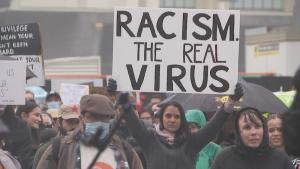
Identity politics submerged climate change as the overriding moral issue in New Zealand, often considered a global weather vane of moral causes.
Mass marches switched from the extinction-rebellion climatic catastrophe ones to those vilifying the colonial era and those seen as benefiting from it, then and now.
The political-class rendition of this mild-mannered, fair-minded, and considerate nation as being in fact the repository of a bigoted, tyrannical majority, the kindest categorisation being racist, often delivered in the local dialect as “rashe-ist,” writes National Press Club president Peter Isaac.
This followed on the heels of the extinction-rebellion marches which saw city councils actively encouraging demonstrations seeking to portray a nation dedicated to hygiene, method and order as one of feckless polluting and contaminating.
This U-turn in causes was theatrically-defined by the mea culpa proclamation of the governing coalition’s cabinet who, in one instance, saw one of its members in front of an audience flagellating himself for having enjoyed what he saw as the advantages of being from a white middle class and thus pitifully unfair background.
This hair shirt exhibition was only one of many bizarre such displays as the political establishment turned itself inside out to signal its support of the freshly supercharged identity campaign in which for example senior police representatives were encouraged to attend in mufti solemn ceremonies of atonement.
Greens, by now suffering from acute publicity deprivation, seek to wrestle climate back on the agenda: notably by encouraging the mainstream media to make connections between Covid-19 and man made climate change.
Identity politics in washing man-made climate change out of the popular forum has given agribusiness an opportunity to regain a front foot at a time when its productivity is crucial.
Identity’s subsuming of the political class’s backbone cause of causes, the climate one, in another opposing interpretation has left this particular wing of the media political class, the climate one, pretty much free to implement its agenda, and do so unseen.
The centrepiece of this agenda is to hobble with international-grade show boating political correctness the nation’s underpinning primary and extractive industries.
In the shorter term, few doubt that the media and political class take-up of identity causes and the vitriolic righteousness inherent in this accelerated mass guilt transfer diverted official attention from the myriad details involved in the administration of the nation’s Covid 19 quarantine management.
The viciousness with which this same class, sensing blood, now turned upon elements of public health administration and on the prime minister Jacinda Ardern was itself a lesson on how virtue in its eyes becomes transformed overnight into villainy.
The prime minister and her officials who had successfully implemented a campaign that thrust the nation into the top rank of the Covid-free must have felt a bit like the primary producers who delivering year after year a successful economy, find themselves denounced as threats to human survival.
To what extent did the United Nations’ preoccupation with the Greta Thunberg campaign divert it and, so fatally, its agency WHO from the true threat: the looming one in the form of Coronavirus?
To what extent did the aftermath of this United Nations-sponsored extinction campaign, the one which so hypnotised this same media political class, devalue the meaning of “emergency?”
There followed the regional climatic emergencies, the ones which otherwise responsible local governments, egged on by the equally gulled mainstream media, fell over themselves to endorse and support.
This particular round of institutional mass hysteria has been eclipsed by the real thing, a true emergency in the form of the pandemic.
Moral movements exert a strange force, one of extreme excitability, on otherwise sober sectors of New Zealand society.
Authority figures such as politicians once sought public gatherings to promote themselves. Now, however, in these new-era collective guilt gatherings, these same politicians still do this, but do so in reverse.
They heap guilt upon themselves, about their skin colour, the advantages bestowed upon them by the accident of birth….the word “privilege” recurs…..
They pepper this with selective statistics designed to underline this undeserved head start.
The personal outpouring is a litany starting at the apology which is for being a thoughtless contributor to the destruction of civilisation (climate). It is for being a man (feminism). It is for being white (identitarian). It is for being middle class (poverty).
It is subtle self-praise of the type in which this class excels.
The impression is conveyed that the apologists in their penitence are, or have been, in a position to influence all these. That they have striven to alter the drift of mankind but, having been caught in the tide and that they have been unable to turn it back. That their lives certainly mattered, still matter. Will matter even more.
More such movements will wash up on these shores to be swiftly taken up by the political class whose representatives will turn themselves inside out in self-abasement with finely turned apologia which as we have seen is simply a reverse form of big noting.
Mass guilt transfer movements with their nurtured hysteria will continue to be imported here, and they will continue to arrive at times when nerves are under strain as they are now, by a pandemic and the economic consequences of it.
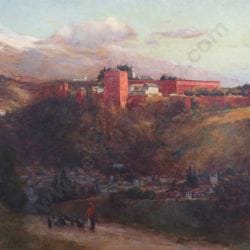
Palace of the Alhambra, Spain
By: Charles Nathaniel Worsley (1862-1923)
From the collection of Sir Heaton Rhodes
Oil on canvas - 118cm x 162cm
Valued $12,000 - $18,000
Offers invited over $9,000
Contact: Henry Newrick – (+64 ) 27 471 2242
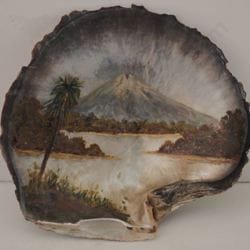
Mount Egmont with Lake
By: John Philemon Backhouse (1845-1908)
Oil on Sea Shell - 13cm x 14cm
Valued $2,000-$3,000
Offers invited over $1,500
Contact: Henry Newrick – (+64 ) 27 471 2242

|
|