
Founded by Max Farndale 1947 - 2018
L’Affaire Tapie now engulfing Francis Fillon campaign
IMF managing director Christine Lagarde’s exit from the Paris court room with only the charge of “negligence” attached to her has served only to intensify the anger in France over the porosity between their country’s judiciary and it politicians, writes our European correspondent.
The gathering storm is of interest to New Zealand because of a widespread impression that former prime minister John Key is in line to succeed her as chief of the International Monetary Fund, an economic stabilising agency that had its origins in Bretton Woods.
The possibility initially arose when Mr Key was still serving as prime minister and Miss Lagarde’s five year tenure came up for renewal amid the re-convening of a high level investigation into what is known as the Tapie Affair.
In the event Miss Lagarde toughed it out and signed on at the IMF for another five years.
This seemed to close off the opportunity for Mr Key.
But with the presidential election looming in France the burner keeps getting turned up on the Tapie Affair.
The reason is that the episode was ignited during the tenure of the previous president Nicolas Sarkozy whose minister of finance was Miss Lagarde.
It was she who signed off on the pivot of the whole affair which was to submit the Tapie Affair to special external arbitration rather than run it through the standard judicial process.
The recent Paris trial revealed that her advisers had recommended that Miss Lagarde do exactly this—turn the matter over to the standard judicial process.
In the event the finance minister, Miss Lagarde, handed the matter over to an ad-hoc collection of arbitrators.
The upshot of this was that the external arbitrators now proceeded to award to the sometime politician-impresario-speculator Bernard Tapie considerably in excess of half a billion dollars of taxpayer money.
This was in compensation for a Barnard Tapie business deal that went wrong.
This was the famed Adidas deal.
It remains a deal for which most French taxpayers still cannot work out how in the first place they became involved in, let alone how they became liable for it.
In France the affair is often described as an “arnaque par l’etat contre l’etat,” a swindle by the state against the state.
An extraordinary insight during the recently-completed proceedings into the French politico-judicial relationship was that a big slice of this half billion dollar compensation was awarded directly to the Tapie family and tax free.
This it turned out was because of the stress that the Tapie family were considered to have endured during the family’s efforts to claim the compensation.
Even by Latin standards of the spoils system, this was considered a bit much
The unspoken inference hovering over the affair was to the effect that the appointed independent arbitrators in arriving at their generous compensation had somehow and personally been accessed during their deliberations.
By forces favourable to the litigant.
Back now to Mr Key.
He is the logical replacement to Miss Lagarde for a number of reasons.
There cannot be a third IMF managing director from France because the last two have figured so prominently in court proceedings.
There was Dominique Strauss-Kahn who was Miss Lagarde’s predecessor. He figured in a New York courtroom. Then, just days ago, and in Paris now, there was Miss Lagarde herself.
The tradition has always been that the head of the World Bank comes from the United States and that the International Monetary Fund chief comes from Europe.
The World Bank swerved away from this. It was felt that that the IMF would follow.
When it looked as if Miss Lagarde might have to stand down there was mooted an idea to recruit someone to fill the IMF role from a developing nation.
The problem is that developing nations are highly suspicious of the IMF and its motives. So a candidate from an emerging economy, should they be made available, is likely to be regarded as part of a wider conspiracy perpetrated by the United States.
Even so, it is the United States that has in effect the casting vote on the appointment of the IMF managing director.
President Obama is something of a soul brother with Mr Key and if public indignation were to mount to boiling point in France there is still time for Mr Key’s name to go forward.
The reason the Tapie Affair will stay on the burner is that front-runner to become the next president of France is Francis Fillon.
He was prime minister during the previous Sarkozy presidency.
It was during Mr Fillon’s watch as prime minister that the Tapie deal was so surprisingly routed through arbitration instead of the judicial process.
The endless Tapie Affair is now lapping around his presidential campaign.
More recently still there are signs that a president Donald Trump might be favourable to the appointment of the New Zealander to head what he regards as a chaotic and even dangerous agency, the IMF.
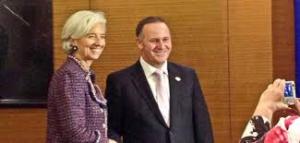
Mr Key (pictured above with Chrstine Lagarde) is said in Europe to be grateful to be out of the political epicentre to a large extent because of the way in which in the Westminster sphere such as New Zealand, a prime minister assumes a show business status in which every aspect of their life, private and public, becomes part of the national entertainment.
Curiously under the republican modus operandi in France this is forbidden by statute and the way in which media can cover the lives of elected official is drastically curtailed.
The belief therefore is that if Mr Key with his solid Wall Street and international political careers was to be called, that he would serve.
| From the MSCNewsWire reporters desk | saturday 24 december 2016 |

Immersive Construction with guest writer Alison Crady
Immersive reality technology has exploded throughout 2016, with more creative uses invented every day. Many huge corporations are placing massive investments in its development. According to ABI Research predictions, immersive reality will balloon into a $100-billion-dollar industry by 2020.
The exciting technology can be broken down into three distinct categories: Mixed Reality (MR), Augmented Reality (AR), and Virtual Reality (VR). The Microsoft’s HoloLens is a great, recent example of mixed reality, which is a split combination of reality and the virtual world. Augmented reality uses “markers” to add pieces of virtual information within the known world. And then there’s virtual reality which fully immerses users into an alternate world.
Whether you’re creating safer training scenarios, developing project blueprints, working out technical issues or showing off a completed project, immersive technologies will take construction to a new level of efficiency and effectiveness. Though immersive devices are still very early in commercial development stages, experts and industry leaders are grasping on. Because when you can change the way you see the world, you can change the world you see.
HOLOLENSES HEADSET MASTER MIXED REALITY
Perhaps one of the most exciting, user-friendly pieces talked about this year has just been released. Microsoft has been working all year to produce the HoloLens headset, which noticeably resembles a StarTrek device. This wireless headset hit the market just in time for 2016 Christmas gifts. Though with a $3,000 price tag, only a privileged few will find one wrapped beneath the tree.
The headset resembles two rings of a 3D solar system, which unfold in concentric circles. The first, inner circle rests around your head and uses a bicycle-helmet-style ratcheting dial to tighten it securely. The front sticks to your forehead, and the back rests below the backside of your skull.
Users interact with their environment by making specific changes with their index finger. Journalists with early-release experiences noted some user inconvenience due to the precise index finger movement and overall headset discomfort. But at the end of the day, it lets you add the virtual world to your current reality, completely transforming the world you see. Comfortable or not, that’s pretty amazing.
DEVELOPERS PRODUCE AUGMENTED REALITY GLASSES
Using “markers” AR glasses allow users to note ultra-specific adjustments in real time and space. Participants add pieces of virtual information to the known environment. Google glass has already begun providing AR glasses for military uses. But the goal is to branch out into enterprise customers within the year.
DAQRI, a California-based company, has a mission to create the most powerful AR platform humanly possible. They made a huge push forward with their smart helmet, which has great construction project application. It can accurately be described as a visionary tool for the 21st century worker.
Using AR glasses, field workers can find enhanced solutions. Entire repair manuals can be displayed before their eyes during technical difficulties. DAQRI’s smart helmet greatly improve efficiency with an enhanced degree of situational awareness. The glasses could easily be used in construction helmets, opening up the next level of project possibilities.
BETA-TESTING FOR VIRTUAL REALITY EXPANDS AND EXCITES
Completely surrounding and all-encompassing environments are possible with VR. Single-users can don a device which allows them to move within a virtual scene. Using kinesthesia and proprioception, the device can track the direction of motion distinct from the direction of eye gaze. While the range of view will vary according the device, participants will be able to turn around, look up and down and see a complete environment, known as virtual reality.
Several construction companies, such as PCL Construction Services and Sellen Construction, have begun beta-testing VR uses onsite using a new product from a Seattle startup called Context VR. It’s a mobile app that contractors can use for as-built records, remote walk-throughs, progress reports, estimating, safety training and facility management. By simply uploading engineering drawings or floor plans as PDF, app users can “walk through” the space, taking photos from a 360-degree camera.
This startup is just one example of the many ways VR can transcend the construction industry. Using VR can help construction workers discover new ways to envision projects. They can allow potential buyers and investors to explore first-hand the new environment without needing to be present in the exact location.
The Cave Automated Virtual Environment (CAVE) is another great virtual reality technique with direct application for construction. Firms such as the Boston-based Suffolk Construction have begun using this technique for immersive experiences through mid-construction project sites. This ability has greatly cut down on time and costs due to a reduced number of changes requested mid-project.
THE RAPIDLY EMERGING STARTREK DREAM WORLD
If you grew up watching futuristic series such as the Star Wars or Star Trek phenomenon, then the emerging immersive technology will seem familiar. We are entering a whole new phase of possibilities with our technological advances.
At this point, it’s more about the price range and its wide-spread availability. Companies such as Facebook, Google and Microsoft are constantly exploring new ways to fully utilize immersive reality. Emerging headsets, interactive hand controllers and movement sensors will revolutionize the entire construction process.
Developing construction firms should take note. Not only could safety be significantly improved through enhanced off-site training scenarios, but also the production and display of commercial projects can significantly improve. Designers, contractors and architects will be able to make better decisions, earlier on. While there’s a high ticket price, VR, AR, and MR are here to stay.
| An MSCNewsWire Guest Post by Alison Crady from This email address is being protected from spambots. You need JavaScript enabled to view it. | Friday 23 December 2016 |
Therapeutic value restores hill country
Cultivation of the manuka tree has become a priority on hillsides from Nelson to Waikato.
The manuka tree, a member of the myrtle family, is the basis for the sharply growing industry in the production of therapeutic manuka honey.
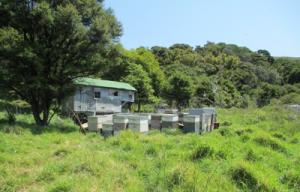
The health benefits of the manuka tree (pictured) were introduced to the rest of the world by Captain Cook who dubbed it the tea tree.
The demand for manuka honey has created another cooperative opportunity in the form of share production between farmers and apiarists.
In return for allocating blocks of land for the location of hives, the farmer receives a cut from the revenue derived from the honey produced.
International demand for manuka honey more than matches supply which means that apiarists are in the most coveted position of New Zealand primary exporters in that they are able to set their own premium price.
This is as opposed to accepting the international commodity price.
Because the manuka tree flowers out of synch with other nectar-producing flora, the manuka content of the honey can be defined.
StatisticallyNew Zealand is the world's third-largest exporter of honey by value, behind China and Argentina.
Manuka honey accounts for most of this.
Even so these figures account only for the foodstuffs value of the honey. They do not take into account the branded manuka honey dedicated to medical applications.
The activity around the hives is conferring meanwhile a healthy transfusion to regional joinery firms and transport operators among others.
The joiners who once made trusses, doors and window frames are rapidly converting to making hives while truck operators are busy transferring the hives between locations.
Similarly regional construction firms are building honey pack houses.
Farmers are finding their marginal lands, especially the areas on which sheep cannot be enticed to graze, have become a new source of shared profit..
What could go wrong?
In a word, Australia.
The manuka tree also grows in Australia. It is claimed too that it originated in Australia and found its way to New Zealand as an element of the southerly migration of flora and fauna.
Australia offers economies of cultivation scale and viewed as even more significant is its terrain allowing for the rapid shuttling of hives between flowering districts and pack houses.
Some have seen a comparison between the New Zealand kiwifruit boom and the resulting competition from countries such as Chile.
But such quibbling aside, it is hard not to see a new and diversified frontier opening up for hill country farmers.
There is no investment in things like heavy duty fencing (deer and goat farming.)
Even where manuka plantations need to be established, farmers are able run sheep in the plantation once the trees became established after 3-4 years.
In addition there is now good shelter for the stock.
|From the MscNewsWire reporters' desk | Tuesday 20 December, 2016 |

Ethnic Communities Portfolio is Gesture to New Zealand First ties
Judith Collins held the police portfolio before the reshuffle, along with Corrections, but she has lost them both and picked up Revenue, Energy and Resources, and Ethnic Communities.
She has also been moved down two places on the Cabinet rankings, but new prime minister Bill English insisted she had not been demoted in the cabinet shuffle. We foresaw this tactical re-assignment..
Our report last Monday, a week ago......
Monday, 12 December 2016 07:54NZ National Government new Co-Leaders Curb Rebels
Day one of the Dream Team means coping with problems before they become bigger problems and in politics this means people which is what the word politics actually means.
Top priority is hardly surprisingly Mrs Judith Collins MP, minister of police.
The new team knows that Mrs Collins must be kept in the tent and also kept busy, very busy.
Mrs Collins demonstrated her determination of purpose when she reached for the top job and did so without any support from the National government’s king-makers, people such as Murray McCully MP or of enforcers such as Steven Joyce MP, the new minister of finance.
She compounded this by mooting that she was the one, the match maker, within the National government to bring into the fold permanent stormy petrel Winston Peters MP of New Zealand First Party.
She might just as well have offered her colleagues a cup of tractor sump oil.
Mrs Collins is the National Government MP who most equates to Margaret Thatcher, also a tax lawyer.
So as today draws on and the coronation caucus smiles however insincere, along with the sound of clinking glasses recede into the evening the new premier Bill English MP and his deputy Paula Bennett MP will crystalise their thoughts on Mrs Collins.
They will do so in concert with solving another problem..
It is one to which long running National governments have found themselves in the quite recent past to be prone.
This is of the seemingly spontaneous but in fact carefully orchestrated advent of a middle class revolt.
It is currently a low-level threat in the form of a peoples’ party currently being nurtured by pop-economist Gareth Morgan.
Mr Morgan’s movement centres on the need for an asset tax .
This it is claimed is required to cope with the problem of the well-off sidestepping paying tax.
Voiders and evaders alike slide past it by a process of expensing blended with the advantages presented by the much storied absence of a capital gains tax..
Enter now the solution to be seen to be at least facing the problem.
It is Mrs Judith Collins MP.
But now with a new title.
That of revenue minister..
Trade finance remains poor relation of populist state industry hand-outs
As the 1980s dawned the Silicon Valley of the South Seas was the Hutt Valley. Apple’s Steve Wozniak cruised the valley in awe of the digital presentation skills of the state television operation based on the Avalon studios. The state’s own physics and engineering laboratory was at work on advanced integrated circuitry and superconducting.
A privately held company variously known as Systems and Programmes Ltd, SPL, and Progeni had designed a desk top product that had taken interactive screen graphics further than any other developer had taken the science up to this time.
More significantly still, the company had a branded product ready to sell. Better still, it had a customer ready and waiting, wanting to buy the new product range aimed which was aimed at the education sector.
At this time China had not yet become the market star it was to become several decades later.
China was then a nightmare for anyone exporting anything other than raw commodities. The problem was in getting paid – a problem that continues now still throughout Asia.
The deal was an early forerunner of what became an established yet still unspoken and thus unrecognised problem
Samples and drawings are required (and copied). Everything was, and still is, forthcoming but payment.
This was before the era in which China transitioned to a virtual free market economy.
The specific selling proposition underpinning the Lower Hutt desk tops was the graphical user interface and thus their application in practical teaching.
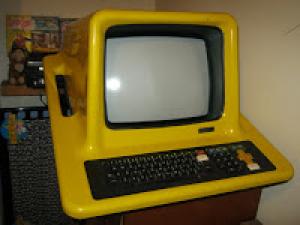
A Chinese mining company said it wanted thousands of the machines in order to instruct employees in safe mining practices. The photograph of the Poly desk top computer, as it was known, shows its custom moulded rugged sealed casing. (Photograph courtesy Retrowe Museum.)
The demand was now identified. But in the classic tradition of such deals in the region then as now, the method of payment remained floating in the air.
Banks at all stages within China and outside it were involved in order to devise a scheme of credit finance.
More samples were sent to China.
At this time New Zealand’s rigorous import licensing/quota restrictions were still in force.
Steel, the logical counter trade commodity in the deal was out of the question because of the need to protect New Zealand Steel.
At this time the Chinese had not yet developed their consumer range products such as whiteware to the stage of being considered as barter trade products.
SO the deal languished. Until that is someone thought of bicycles. New Zealand didn’t make them. The kit assemblies of the Raleighs and Rudges of the era was confined to the back rooms of the retail bike shops.
SO there was no concerted vested-interest lobby against bicycles becoming the counter trade counterweight to the sending to China of the desk top computers.
A test shipment of bicycles duly arrived in Lower Hutt. And failed to sell.
The early enthusiasm for bicycling had waned, and was not to reappear until much, much later when it again became viewed as a fashionable, rather than an eccentric, pastime.
The episode which amounts to one of lost opportunity, remains of value now because it points up the lack of export trade finance capability in New Zealand, a nation which no longer even has its own merchant bank, or one to rank with the international version.
The conditions of the era described here exist substantially to this day. The existing banking structure is attuned to restricting risk to the taking of real estate collateral.
The official trade promotion and development departmental apparatus refuses to acknowledge even the chronic problem now of receiving payment for manufactured or processed goods sent to Asia.
It has a see-no-evil stance on things like Asian buyer fees for tender and tender deposits along with endless and unacknowledged copying problem.
A favoured official dead-end referral is to the development banks such as the Asian Development Bank.
New Zealand has never really been on the must-help list of these banks, in spite of a generalised reluctance to admit it.
| From the MSCNewsWire reporters' desk | Wednesday 14 December 2016 |
Media-encouraged hysteria feeds false hopes.
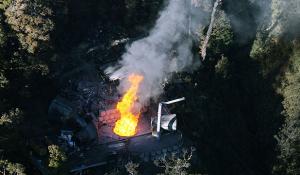
The first priority of the National government’s new dream team is to confront a nightmare. A real one. It is the moral issue of the Pike River aftermath and which takes the form of reopening the mine in order to seek for the mortal remains of the 29 brave miners who perished there.
It is a fevered issue which must now be cauterised in the national interest and in the interest of the bereaved. .
The new prime minister Bill English is the authority figure to do it. He must now state quite definitely that the mine cannot be reopened because it is too dangerous to do so.
The reason that Mr English must be quite definite that the mine cannot be reopened is because of the spiralling hysteria about the Pike River coal mine disaster and its aftermath.
Much of this is based on a generalised ignorance, and in some instances a feigned ignorance, about the specific dangers of coal mining in these latitudes. Also the way in which coal mining differs from, civil engineering tunnelling in transport or in hydro electric projects.
Coal mining in New Zealand is much more dangerous than coal mining is in most countries.
The reason is that the mining is carried out in the midst of relatively recent rock formations. This means that the drives are constantly passing through only recently formed rock through which permeates the gas of the decaying vegetation from which the coal is derived.
This gas known as firedamp-–damp is German for vapour– and it is the inflammable component.
The extent of this inflammable gas will have multiplied since the Pike River coal mine has been sealed off.
In the absence of ventilation the mine will have become one vast bottle of compressed gas.
Flushing out the firedamp from the mine in itself will be fraught.
The reason is that it will require pressure ventilation.
Where there is ventilation installed there is air handling equipment and in coal mines such equipment, notably fans, can emit sparks which can ignite this highly volatile gas.
The entire history of the short-lived mine demonstrates the dangers of what happens when moral and ideological desiderata conflict with the practical objectives of human safety.
In the case of the Pike River coal mine the conflict was embedded from the outset.
It was known that the area contained high value coal deposits.
Yet it was declared a National Park.
What followed was a moral trade-off as the demands of safety were set against the requirement of the preservation of flora and fauna and vistas.
Mr English must now use his authority to bring this lethal saga to a close. Decisively and firmly. He must say that the mine will stay sealed. He must state the reason which is Safety First .
Few will doubt his sincerity. His words though will appear harsh, most of all to Mr English himself.
He can temper the severity of his announcement by declaring that there will be a state-funded memorial to the victims of the explosion at the mine.
There are a number of such memorials on the West Coast. Among them is one to those who perished in the Strongman mine disaster of 1967. There is the memorial to those killed in the Brunner disaster of 1896.
A road has been donated to give easy access to the Pike River mine. It will provide access to the constructors of the memorial and to those who wish to pay their respects to those who perished in it.
An underground coal mine is always dangerous. Especially a disused underground coal mine .
Mr English must be blunt. He must avoid the temptation to be ambiguous.
It is never nice down there.
| From the MSCNewsWire reporters desk | Tuesday 13 December 2016 |
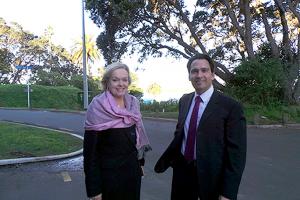
Day one of the Dream Team means coping with problems before they become bigger problems and in politics this means people which is what the word politics actually means.
Top priority is hardly surprisingly Mrs Judith Collins MP, minister of police.
The new team knows that Mrs Collins must be kept in the tent and also kept busy, very busy.
Mrs Collins demonstrated her determination of purpose when she reached for the top job and did so without any support from the National government’s king-makers, people such as Murray McCully MP or of enforcers such as Steven Joyce MP, the new minister of finance.
She compounded this by mooting that she was the one, the match maker, within the National government to bring into the fold permanent stormy petrel Winston Peters MP of New Zealand First Party.
She might just as well have offered her colleagues a cup of tractor sump oil.
Mrs Collins is the National Government MP who most equates to Margaret Thatcher, also a tax lawyer.
So as today draws on and the coronation caucus smiles however insincere, along with the sound of clinking glasses recede into the evening the new premier Bill English MP and his deputy Paula Bennett MP will crystalise their thoughts on Mrs Collins.
They will do so in concert with solving another problem..
It is one to which long running National governments have found themselves in the quite recent past to be prone.
This is of the seemingly spontaneous but in fact carefully orchestrated advent of a middle class revolt.
It is currently a low-level threat in the form of a peoples’ party currently being nurtured by pop-economist Gareth Morgan.
Mr Morgan’s movement centres on the need for an asset tax .
This it is claimed is required to cope with the problem of the well-off sidestepping paying tax.
Voiders and evaders alike slide past it by a process of expensing blended with the advantages presented by the much storied absence of a capital gains tax..
Enter now the solution to be seen to be at least facing the problem.
It is Mrs Judith Collins MP.
But now with a new title.
That of revenue minister..
Now to the other rebel Mr Simon Bridges MP, minister of transport.
He is a good-looking boyish chap.
He is of a definable National Party type which is known and categorised as being too clever by half.
The new leadership duo by nature are conciliatory. They will be tempted by inclination to overlook his premature and youthful power grab..
Then as the evening wears on and the Beehive cat has been put out, they will remind themselves of the first rule of being in power.
It is that once you have power then you must use it.
As the sun begins to set they will remind themselves of the second rule.
You must also be seen to be using it.
Cohesion, or at least the external perception of it, is central to the National Party
So it is now that Mr Bridges will find himself confronting a tour on the back benches where his presence will be a highly visible example to anyone else in the National government contemplating breaking the ranks.
The National Party though believes in second chances and thus in redemption.
So as 2017 advances and the general election looms so will the need to attend with still greater intensity to electoral window dressing, of the type that requires a 40 year old mediagenic type such as Mr Bridges.
With his international legal qualifications who better pre-election than Mr Bridges to take over the always troublesomely delicate portfolio of minister of police?
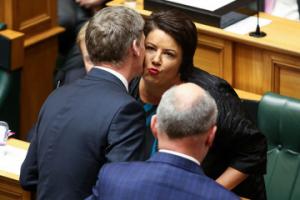
Duo master every contingency. But honeymoon will be brief
The pending official emergence of the new top two at the helm of New Zealand’s National government confirms the National Party’s routine boast that it represents the cross section of the nation’s electorate.
The new top team of Bill English and Paula Bennett has been crafted by outgoing premier John Key with the active assent of his leading lieutenants, notably Murray McCully, the foreign minister – strategist.
Paula Bennett who will emerge Monday at the National Party’s caucus-coronation personifies the National Party’s operational formula of being all things to all people.
She is posh and she is working class. She carries one of the most aristocratic of names in the Maori sphere, Bennett.
She is a solo mother whose early career was janitorial, she was a dishwasher for a while, before she segued into the social studies academic world.
She has the essential component for success in politics which is luck having fallen into the aegis of National strongman Murray McCully while working for him in a secretarial role.
Like her pending boss Bill English she is at one and the same time a professional politician or not a career politician which ever way you look at it.
The point being that she is not an immediate candidate for what has now become a bad brand, that of professional politician.
She fits the generational identi-kit being still comfortably in her 40s. She has the experience, having entered parliament in 2005.
Her cabinet career has been characterised by urban social issues portfolios which she has handled with a smiling equanimity in spite of the inevitable incendiary episodes which such roles must traverse.
Geography is always a National Party preoccupation and here again the dream time comes up, well, trumps.
She is from the north. He is from the south.
The honeymoon though will be brief.
The pair must confront a low-level radiation of opposition from Her Majesty's official Opposition.
But their biggest worry will be the more elusive cabal within their own party led by Mrs Judith Collins in the Brutus role.
In a cross-bencher sense they must also confront lurking like a Muldoon-era wraith in his own perennial Shakespearean role the brooding King of Coalition, Winston Peters MP.
Outside parliament and the party structure they must devote a weather eye to the activities of prairie populist Gareth Morgan.
His threat?
Drawing attention to National’s embedded technique of burying the nasty issues under the carpet of face-value prosperity.
Think here of things such as entitlements, national debt, immigration, ........
One could go on.
But let's not spoil that honeymoon.
From the MSCNewsWire reporters' desk | Friday 9 December 2016
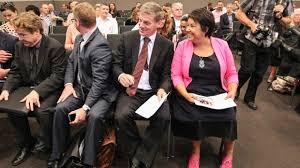
Restores National Party traditional era of Farmer- Prime Minister
Bill English will be the first farmer prime minister since Jim Bolger.
In selecting him for the top slot the National Party reinstates and restores a line which gave the appearance of becoming extinct.
Mr English will remain as prime minister at least until after the next general election.
With the Brexit/Trump syndrome in such recent memory the National Party will not make the mistake of assessing Mr English’s electoral popularity or otherwise prior to the 2017 general election on the basis of media opinion or poll samplings.
Mr English’s party branding as a farmer removes him from the now suddenly despised class of professional politician.
It is a breed that has now become especially vulnerable.
Populist, media-friendly, and extremely wealthy gadfly Gareth Morgan hovers in the wings promising to swat the category with the most effective instrument at hand, such as a new political party.
In the event, though Mr English, who is actually of Irish lineage, looks like a farmer and usually sounds like one. But his non-career politician credentials do not stand up to all that much scrutiny.
His time devoted to the family farm in Dipton was fairly brief.
It was sandwiched between Otago University where he earned a degree in commerce and Victoria University (English literature) before he began ascending the politico-administrative ladder back in Wellington as a policy analyst with the Treasury department.
The clue to Mr English’s seamless transition from trusted lieutenant to prime minister is the unqualified and public support from his long time boss, John Key himself.
Mr Key will have run the numbers on Mr English before his surprise announcement of his own resignation as premier.
It is the appointment though of Mr English’s deputy prime minister that will present the clearest view of the National Party line of succession.
The importance of this pick was underlined in the unusual-purpose press conference suddenly called by government transport minister Simon Bridges.
The National Party has a horror of things like primary campaigns and other such public personal preferment promotional devices.
So Mr Bridges had to weigh this up before calling his self-nominating press conference for deputy premier .
It was convened in order to notify the public that his hat was very much in the ring .
He knows that in the deputy premiership resides the post-Bill English leadership of the National Party.
The opening could be next year.
Or it could be much, much later.
Nobody doubts that should Mr English lose the 2017 general election, which seems unlikely, but given Brexit/ Trump, is nonetheless possible, the leadership will fall upon Judith Collins.
Mrs Collins MP shares with the late Margaret Thatcher, another non-career politician, a pre-political profession as a tax lawyer.
From the MSCNewsWire reporters' desk
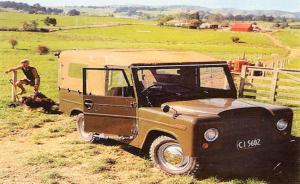
Forgotten deal relied on common sense instead of currency
The advent of New Zealand’s only branded home-grown vehicle the Trekka 50 years ago was the result of a counter trade, a barter, that even today is still staggering in its simplicity. Indeed, the sheer scope of the barter even today is still unrecognised just because it was so straightforward.
New Zealand had a surplus of wool.
Czechoslovakia’s Skoda Works had a surplus of vehicles.
Therein lay the deal.
Until this moment it has remained a secret. We will now reveal how it worked out in practice.
The organisation to see the opportunity was Motor Holdings of Auckland. The company in that era decided to run the deal through an offshoot in Palmerston North known as Five Star Motors.
In those days 50 years ago Palmerston North was an important centre of the auto industry in terms of assembly and distribution.
It was now that the government was approached with the outline of the deal.
The reason that a government approval was necessary was that at this time any import of any kind at all was controlled by quota and licence.
At this time. 50 years ago, the export price of wool declined by 40%.
New Zealand's sheep population continued to rise. Available storage space everywhere was crammed with unsold wool.
But still the government sought to squelch the deal on the grounds that the barter or counter-trade was simply a device to by-pass the rigid import licencing of that era.
But Five Star motors had a trump up its sleeve which it now played carefully.
Fifty percent of the showroom floor price of the New Zealand-ised Skoda would be local input.
Moreover, it would be branded as a New Zealand product and with a New Zealand name.
It was now that the Customs Department began to give way. The Trekka had taken on a political life of its own. The department backed down. The Trekka had arrived.
The skill and patience of the Palmerston North negotiators who implemented the Trekka counter trade had much to do with Palmerston North’s presence as a swinging parliamentary seat between National and Labour.
The rest of the story is relatively well-known. The Trekka, which looked like a boxier version of the Land Rover was one of the cheapest vehicles available in a market where new car prices were high, and cash deposits of up 60 percent were mandatory.
Better still, the Trekka, a forerunner of the SUV, was available off the floor, on low deposit, making new car ownership accessible to many for the first time.
The Trekka though will be remembered as the most successful counter deal ever. Its success was in its simplicity.
The most curious thing about it was that it was so hard to repeat as New Zealand trade began to turn eastward. In spite of Asian customers being notoriously and institutionally bad payers – another topic still rarely talked about, especially departmentally—it proved a hard act to follow.
In our next revelation on the silent, and officially-ignored world of counter-trades, we will detail an example of one that did not work out and very largely because of the absence of official support.
From the MSCNewsWire reporters desk - Wednesfday 7 December 2016
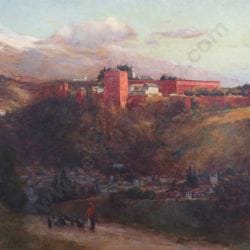
Palace of the Alhambra, Spain
By: Charles Nathaniel Worsley (1862-1923)
From the collection of Sir Heaton Rhodes
Oil on canvas - 118cm x 162cm
Valued $12,000 - $18,000
Offers invited over $9,000
Contact: Henry Newrick – (+64 ) 27 471 2242
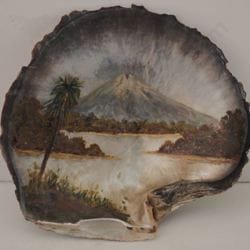
Mount Egmont with Lake
By: John Philemon Backhouse (1845-1908)
Oil on Sea Shell - 13cm x 14cm
Valued $2,000-$3,000
Offers invited over $1,500
Contact: Henry Newrick – (+64 ) 27 471 2242

|
|