
Founded by Max Farndale 1947 - 2018
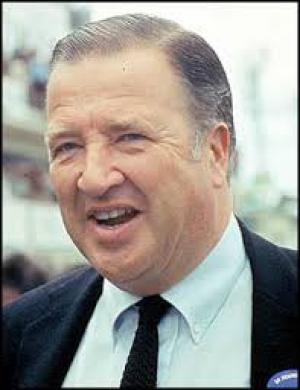
Henry Ford offered Keith Holyoake a game changer.
| Napier - MSCNewsWire - Tuesday 22 Nov, 2016 | Just over a half century ago Henry Ford proposed to New Zealand prime minister Keith Holyoake a deal that would have forever changed the face of the economy. The deal was this...
If the New Zealand government would allow Ford to bring its cars into New Zealand fully built-up and ready for the road, then the Ford Motor Company, said Mr Ford (pictured at the time) would make New Zealand one of its key centres globally for the supply of castings and forgings.
At this time New Zealand was the acknowledged leader in castings and forgings in Oceania.
The problem the industry had was short-run production. There was not the scale for the long runs required to embed the industry so that it did not have to be protected, which it was, and heavily.
This was the height of the protectionist era. The Ford cars were shipped into New Zealand as kitsets, known as CKDs – completely knocked down. In effect, disassembled vehicles. These were reassembled again in the Hutt Valley providing immense employment and thus contributing to the reverse unemployment of that era. Too many jobs. Not enough people to do them.
The Ford Motor Co had seen all this. Now was the time to put forward the offset in the form of designating New Zealand as what would now be known as a centre of “ excellence” for castings and forgings components.
In the event premier Keith Holyoake whose operating principle was “steady as she goes” turned down the scheme and the CKDs poured into New Zealand for another 20 years.
Obvious benefits emerging from shrouds
| Napier - MSCNewsWire - Monday 21 Nov,2016 |- Now that the media-led hysteria attendant upon the election of Donald Trump is fading we can obtain a clear fix on the new United States trade policies.
They in fact indicate an increasingly fair wind for New Zealand.
The priority is to in-shore what was once United States based engineering and manufacturing and return it to the rust-belts where the electors voted heavily for Trump.
This will not affect New Zealand which in the 1980s and in pursuit of globalisation ceased the manufacture here, actually added value, of all the most contentious products from the Trump point of view, notably vehicles.
The real shoot- out is between the United States and China. Here, New Zealand is in a strong position. An example will illustrate this point.
U.S. trade and commerce authorities in 2009 after President Obama took office imposed a punitive 35 percent tariff on vehicle tyres from China. In response, China took retaliatory steps of imposing tariffs on US chicken products with the result that importers now started by-passing the United States.
The point being that New Zealand stands to benefit in any forthcoming tit-for-tat trade war by acting as default supplier.
In New Zealand the emphasis on the Trump victory has centred on the Trans Pacific Trade wrap-up signed in Auckland earlier this year.
In fact and as MSC Newswire has consistently pointed out this now represents an earlier move to contain China by ensuring that the bulk of world trade, 80 percent, continues to be conducted in the USD.
This was a half-way house because of the Obama-Clinton adherence to the globalisation philosophy.
An anti-globalist president-elect Trump is bent on suppressing China’s currency while also stalling its exports to the United States
Tariff rates as high as 45 per cent have been floated as deterrents to Chinese manufactured goods imports into the United States.
China is the US largest trading partner, with USD $598 billion in total goods traded between the two nations in 2015.
Of that $598 billion, U.S. exports to China amounted to $116 billion, while goods imported from China amounted to $482 billion. This means the U.S. goods trade deficit with China was $366 billion in 2015, a 6.6 percent increase over 2014.
Meanwhile the détente between the United States and Russia implicit in the Trump victory is scheduled to end the US led embargo on Russia. New Zealand is party to this.
The embargo was imposed at the same time as EU production started moving away from quota restrictions and this has led to massive farm surpluses in Europe to New Zealand’s detriment.
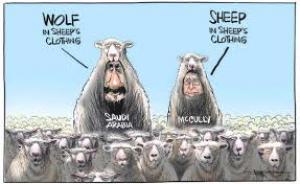
Reader insists that the question must be asked
Dear Sirs,
In regard to the mysterious “agro Centre” which has appeared somewhere in the Arabian desert seemingly built and constructed by the New Zealand taxpayer you, the Taxpayers Union, and other questioners have all been asking the wrong question.
The question that you should be asking is this: Is this agri hub the pivot of a counter trade deal between New Zealand and the Saudis?If it is the central component of a counter trade deal then the New Zealand government deserves credit for its imagination in implanting itself into a valuable trade opportunity.
If it is not, and as no direct payment from the Saudi royalty involved appears to be expected, then, you and Mr Williams of the Taxpayers, are correct in assuming that it is all a magnificent bungle.
One contributing reason is that in the Middle East now the demand for live sheep is lessening and the reason is the problem throughout the region in keeping them alive with fresh water.
The reason I am inclined to think, and indeed, hope, that this is a counter trade, perhaps still to be realised at the Saudi end, is that it makes such sense. We could well be looking, for example, at a third country involvement somewhere in say South America or Africa.
In such an instance it would make sense for the Saudi acquirers to send oil to a third party in one of these countries which in turn would send a commodity such as fertiliser to New Zealand in conclusion of the payment cycle.
Such a contingency should now be investigated. Sufficient time has elapsed for such a counter deal to have been rotated. It’s existence or not should now be determined.
Yours trulyHenry KoenigSingapore

Was too busy to pick up award from Governor General
| Napier-MSCNewsWire-18 Nov 16 | Bob Dylan is too busy to meet the Nobel Prize committee to pick up his Nobel Prize. He has, instead, he claims “other engagements.”
The musician's determination to stick to his routine will remind New Zealand provincial historians of a similar business-as-usual determination in the face also of the collection of an award.
The local incident similarly involved a notable, this time one involved in the practice of local government.
The mayor of Woodville was too busy to receive the Governor General Sir Bernard Fergusson, later Lord Ballantrae.
Sir Bernard was scheduled to meet the mayor, Mr Beale, in order to present him with an award.
This was a decoration for his long service to the remote junction town at the head of the Wairarapa Valley and which serves as the gateway to Hawkes Bay, and to the Manawatu Gorge.
This was quite some time before the explosion of such awards caused by the need to accommodate New Zealand decorations alongside the Imperial ones.
Mr Beale was up for a sturdy such order in the Queens Service class.
It was now that the problem intervened. The mayor was also the proprietor of Beale’s Bookshop, a flourishing concern in that era of the early 1960s. On the very day that he was to receive Sir Bernard he was also required to perform his annual stock take.
The stock take was performed on that same date every year, regardless. It took all day. He, the mayor, would be unable to attend. The matter was non-negotiable. Another date would have to be found.
Beale himself was from an early settler family hailing from London that had thrived in Central Hawkes Bay.
Officials at various levels gently pointed out to Beale that Sir Bernard was of dynastic stock, the fourth of his line to become viceroy. Beale was adamant. He was in his bookshop all that day. The viceroy to avoid disappointment would have to make another appointment
The Beale family continues to flourish in Central Hawkes Bay. The Fergussons until just a few years ago still serving officially here, but now at legation level, finally faded from the New Zealand scene.

MSCNewsWire articles published prior to 14 Nov earthquake#4 | 2 Nov 16 | Ministry of Works Dissolution started Leaky Buildings & Earthquake Vulnerability #3 | 26 Oct 16 | Ministry of Works Wellington Motorway Swathe Sowed Anti Big Engineering Project Whirlwind#2 | 24 Oct 16 | Ministry of Works had clear cut lines of Civil Engineering Responsibility#1 | 21 Oct 16 | Department was Repository of Exceptional Engineering Technical Ability & Management
More reading . . . .
Introduce quake star ratings for buildings - engineer
Structural engineers working hard to assess and analyse damage
CentrePort owes Wellington answers about the risk of its buildings
Wellington building likely to be 'deconstructed' after earthquake damage
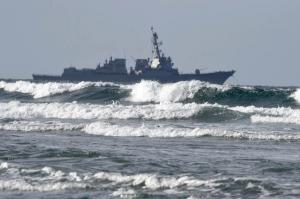
Reminder of HMS Veronica at Napier Earthquake
| Napier - MSCNewsWire - Thursday 17 Nov,2016 | The full steam to Kaikoura by the United States Navy brings to a close the high water mark of the New Zealand contribution to international political correctness which took the form of outlawing from ports US Navy vessels.
In the event the steaming of the USS Sampson to Kaikoura has about it overtones of the support provided by HMS Veronica to Napier when the British naval vessel happened to be in port during and after the Hawkes Bay earthquake, the nation’s worst.
New Zealand’s restriction on the entry of US naval vessels stipulated a requirement for the formal disclosure of whether or not the vessel featured any nuclear capability at all.
Such a disclosure contravened US security – and so the vessels stayed away.
US naval vessels such as the Truxtun and the Buchanan now entered New Zealand PC folklore in the various stand-offs that followed.
In fact, New Zealand’s unreliability in regard to US naval vessels had been displayed before this when the icebreaker Glacier, a strategic vessel in that era, had been locked up for many months by union action in the old Wellington-based floating dry dock.
Soviet era spy Kim Philby usually considered the most damaging of Britain’s deep penetration agents, in his memoirs, noted that the Lange move meant that New Zealand had been expunged from the Soviet retaliation map.
The USS Sampson’s appearance in New Zealand waters is to participate in the International Naval Review which is part of celebrations for the 75th anniversary of the Royal New Zealand Navy.
The visit is the first since the David Lange-inspired Anzus rift in the 1980s sparked by New Zealand's landmark anti-nuclear policy.

National Press Club president Peter Isaac interviewed about Commerce Commission upset merger veto.......
Napier - MSCNewsWire, Tuesday 15 November 2016
If someone from the two chains contacted you and asked, What should we do now? What would you tell them?My instruction would be to turn their strategy on its head and go in next time at this democratic literary end which means furnishing evidence of the freedom that the two pending proprietorial partners already allocate to their individual newspaper editors, and have done for many years.
The Commerce Commission would require evidence?The Commerce Commission response indicates that it wants working real-life examples of the chains’ ability to allow their editors and thus their newspapers to enjoy the freedom to say pretty much what they want to say. I would suggest for example that Fairfax management for one refers to the separate nature of The Dominion and The Evening Post which for so long co-existed under their old INL banner. They were entirely separate in regard to editorial staffs. They looked utterly different and had quite different contents and opinions. Similarly now with the Waikato Times, for example, which happily still co-exists under the Fairfax banner. Similarly with for example the Nelson Mail and of course with the The Press of Christchurch, Southland Times also in the stable, and so on.
Can we assume that the Commerce Commission is aware of this?The point that the two groups need to make is that it is simply not in their interests to have their combined newspapers all singing the same song. These newspapers must reflect their own communities and the issues therein. In my many years involvement with INL/Fairfax in a number of regions I cannot recall even one incident of the management strong-arming anyone, anywhere, to follow this or that party line.
Isn’t the Commission of the opinion that they will publish just the one nationwide daily?They have tried this from the Wellington end and also from the Auckland end on several occasions. The result has always been the same. Failure. The national daily business model does not exist here and the reason is that subscribers insist on localised news from their own localised newspaper. The proof of this theory is the litmus test in the form of the chains’ holdout, the flourishing and regional Otago Daily Times. Even Rupert Murdoch could not get off the ground a national daily here.
There are no guarantees that this hands-off legacy will continue?You have now several government-sponsored referee organisations. The Press Complaints Commission, the Advertising Standards Commission to name just the direct ones. So in the event of the amalgamation there exists in place these pressure valve authorities on subscriber daily newspapers. The state determinedly holds onto its own broadcasting channels, so there is a ready diffusion for the result of any such arbitration. In fact, if I had anything to do with the two newspaper chains and their dealings with the Commerce Commission I would start lobbying now for the re-instatement of Column Comment on the government’s own television channel.
Explain?Column Comment was the de facto newspaper referee for decades and was taken very seriously by newspaper people at all levels, more seriously, I think, than the channel itself realised. I know a version of it has been reproduced on the government’s Radio New Zealand. But it was the television delivery that carried the punch to the readers and thus to the industry itself. I don’t think anyone would suggest that such Column Comment commentators as Ian Cross, Keith Ovenden or the late Neil Roberts, among other presenters, could be bought.
It is said of the New Zealand press that it is either boring or sensational?You could say the same thing about the press anywhere in the world. A point not fully understood about the industry in New Zealand is that for legislative regulation reasons it took much longer here to establish Sunday newspapers than it did in the rest of the English-speaking world. When they did emerge I do concede that they tended toward the sensational. But if you look at the chains’ bulldog editions, the Saturday ones for weekend carryover, then they contain a greater proportion of what you need-to-know instead of what you-want-to-know frivolity.
Where are the proprietors going wrong then, that they need this shotgun marriage, and yet have now been left dangling so embarrassingly at the altar?They thought that the Commerce Commission would see things from their point of view, the one centred on economics. In the event the Commission saw things from the literary angle. Bureaucrats and newspaper people share one thing in common--they must not make assumptions with legal outcomes. This is a resounding lesson to the industry.
Your advice to the still-betrothed newspaper chains is?To fence off their spread sheets and get onto the Commission’s own wave-length which in the Commission’s own words is this literary liberal democracy preservation one. The chains’ message should be clear. It should be “if we are not allowed to merge then we will even overtake China within 10 years because there will be no daily newspaper proprietors in New Zealand whatsoever, and thus no daily newspapers free or shackled.”
Still, there remains the argument now that others will rush in and fill the gap?They will and they will be part of the free-model that the hitherto two subscriber daily chains will have already filled with their own weekly free-sheets. Nobody not even the Horton family has been able to start up a subscriber daily newspaper. Once they go, they have gone for ever.
In spite of the media being such a studied subject at universities, there is little in the public domain about newspaper economics?You have this argument to the effect, Oh! We will have as they do in London these free dailies. But in New Zealand there is insufficient commuter intensity to underpin them. Even in Auckland. As it is in New Zealand the weekly free-sheets do best in rural-provincial areas where the population is older and there is thus a lower take-up of screen-delivered free-model news and information in general.
Your point being?That once the current chain dailies disappear, the ones that dot the nation from Invercargill to Whangarei that they cannot be replaced by other subscriber dailies. Only by free sheets.
You were surprised at the Commerce Commission’s decision to stall the Fairfax-NZME merger?I was and I was in good company- -that of the two chains for a start.
Then you must have shared with them an underpinning belief?If you read between the lines of what emerged from the episode then we all got it wrong. The assumption was that the Commission as a government organisation would have been primarily pre-occupied with the cost in human terms of a centralisation of mechanical services, notably of the rotary presses. In the event the Commission saw the fusion in an intellectual context and said so unequivocally in terms of what it saw as this need to preserve the “liberal democracy” through diverse newspaper ownership.
You didn’t see this?I did the same thing that the strategists of the two chains did. I forgot my history. There is a strong backbone for this kind of regulatory reaction. The News Media Ownership legislation designed to keep Lord Thomson out of New Zealand remains the best example. So I was party to a fault that I routinely accuse everyone else in the industry of committing which is that of a failure to put issues into historical context. Background in other words.
Do you think it is curious the way in which certain journalists post Commerce Commission have turned on their paymasters and accused them of being out of touch?This is pretty much confined to older opinion peddling wafflers who talk in terms of the bosses needing to bring their editorial, data and privacy codes up to “international best practice” and suchlike. The proprietors are not running localised versions of United Nations. Not so widely known is the reason behind the often contradictory nature of daily newspaper content. They are in fact purchased and read by baby boomers and beyond. Yet the editorial formulation is aimed in large measure at the age categories which no longer actually buy newspapers but who view them via the internet editions, the free model in other words. . These are the people in their 20s 30s. It is this category, the early home-buyers, that the property sector, overwhelmingly the major advertiser, needs to reach.
How would you approach the government itself, the ultimate arbiter?I would quietly ensure that MPs became aware of something which is in fact considered best practice in some other OECD nations which is taxpayer subsidy of dailies in order to keep them afloat.
Final point?If I was remotely responsible for the return match with the Commerce Commission I would illustrate on what a delicate economic thread hangs these nationwide subscriber daily newspapers. To reinforce this point I would ensure that there was someone with no particular axe to grind, perhaps one of these academic types you refer to, who would step up and point out what a remarkable job the two chains have done in maintaining this score or so of daily newspapers in a population equivalent to that of many global cities and how this feat can only be sustained by the proposed amalgamation. The stormiest metropolitan editor I ever worked forwas the late Frank Haden. The unbiddable Haden loved imagery. He would say that it was the taste that any story left in the mouth of the reader that mattered. The taste the two chains with their revised submission should leave to linger in the collective palate of the Commerce Commission is this:-
Even if we wanted to, tried to, align our daily newspapers in a constant state of editorial harmony we could not achieve it. The reason is that our subscribers would bar us from conspiring in such regimentation by the simple act of cancelling their subscriptions. They would in response throw in their lot with the digital free model.
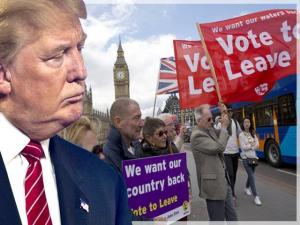
Why Trump’s Victory Really was Super-Brexit
Donald Trump’s victory has been described as “super Brexit” most notably by the president-elect himself. We now examine some of the similarities and we begin with the decision which can now be seen as a dangerous one for President Obama’s highly visible pro Hillary campaigning. This was all the more curious since it was then known in the United States that UK Premier David Cameron’s similar campaigning for his cause Remain had represented more of a burden than a blessing. President Obama’s campaigning was compounded by the intervention of Mrs Obama who had hitherto been universally admired just because of her public detachment from partisan party politics. Main points of similarity summarised:-
Presidential – Prime Ministerial Pleading & CampaigningIn both Brexit and Trump the leaders of the in-power establishment parties joined in the fray. British Premier David Cameron actively campaigned to remain in the EU. President Obama actively campaigned for Hillary Clinton and in doing so was joined by Mrs Obama. In both causes and in both countries this frenzied campaigning can now be viewed as having the opposite effect of the one intended.
Financial Sector Backed Lost Causes – Remain and HillaryHilary Clinton’s campaign and the Remain campaign were both openly backed by the financial sector
Non university voters backed the winnersIn both causes in both countries Brexit supporters and Trump supporters were solidly drawn from those who had not attended university
Opinion polls were wrong on both sides of the AtlanticPolling organisations were continuously wrong in both countries and in both outcomes
Movement leaders both emerged from outside established political partiesBrexit leader Nigel Farage had his own party. Donald Trump had had no previous political experience
Both victorious leaders ignored and talked over mainstream mediaIn the United States Donald Trump actively expressed his contempt for his media entourage describing members as “the worst people in the world.”
Mainstream media was wrong footedA characteristic of the mainstream media in both countries and from the outset was an inability to concede that either Donald Trump or Brexit had a chance of success
Project Fear aftermaths on both sides of the AtlanticFollowing Brexit the communication organisations responsible for monitoring and then making known shifts in public opinion started a diversionary campaign. This took the form of the generation of an atmosphere of public fear, uncertainty, and doubt about the effects of the events which they had failed to predict. This development is now evident too in the United States following Trump.
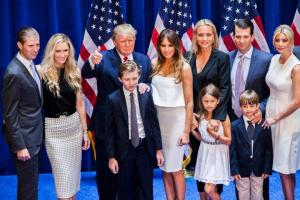
United States foreign worker clampdown will boost US milk production costs
MSCNewsWire - Nov 10, 2016 / New Zealand’s primary produce export opportunities are more likely to rise rather than decline with the election of Donald Trump as United States President. The reason is that the incoming president as a priority has the dismantling of the confrontation between the US and Russia.
The economic component of this stand-off is the United States-led embargo on exports to Russia. A détente will open up Russia especially to exports from the EU which is the United States main partner in the embargo.
The lifting of the embargo will introduce the free flow of food exports from EU nations into Russia. The problem for New Zealand since the embargo was installed is that the EU food exports, notably milk, have backed up all over Europe instead of going to Russia.
For its part Russia in defiance has enforced the embargo by destroying EU foodstuffs with back door labeling or being shipped under proxy bills of lading. French foodstuffs carrying face value Moroccan origination are just one example of this.
The dissolving of the US led embargo on Russia will also allow New Zealand which is also a partner in the embargo to start trading again directly with Russia.
New Zealand participation in this trade embargo with its self-damaging results has long been cloaked in a conspiracy of silence. Politicians and exporters alike have kept their mouths shut for fear of US reprisals.
Even though the incoming president has promised to scrap United States trade treaties in order to build US domestic employment, the abandonment of the Trans Pacific trade agreement signed by all participating countries in Auckland earlier this year is unlikely to present a serious problem to New Zealand exports.
The legislation attendant on the treaty is subject to a lengthy clearance process having only just navigated its latest reading in the New Zealand parliament. Other countries will take years to approve it. Critics claim that the Trans Pacific trade deal, and other such US treaties with other countries merely double up on what has already been achieved under the WorldTrade Organisation among other such bodies.
An additional point, and one that may make a President Trump resist pulling the plug on it is that the Pacific agreement is primarily viewed as a device by the United States to preserve its global supremacy in currency leadership. At least 80 percent of world trade is carried out in the USD and the United States is determined to stop China taking any part of this share with its own rival currency..
Meanwhile the central theme of Trump policy, curbs on immigration, is likely to add to the value of New Zealand primary products. This is because in the United States Mexico is the home of much of the US milk workforce at every phase.
A reliance on United States nationals to do the work will add greatly to the costs at every stage of US milk production.
From the MSCNewsWire reporters' desk / Thursday 10 November 2016
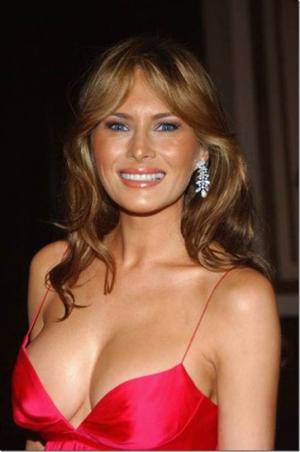
Will bring much needed internationalism to White House
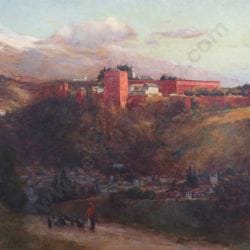
Palace of the Alhambra, Spain
By: Charles Nathaniel Worsley (1862-1923)
From the collection of Sir Heaton Rhodes
Oil on canvas - 118cm x 162cm
Valued $12,000 - $18,000
Offers invited over $9,000
Contact: Henry Newrick – (+64 ) 27 471 2242
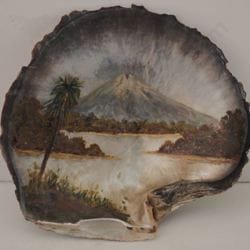
Mount Egmont with Lake
By: John Philemon Backhouse (1845-1908)
Oil on Sea Shell - 13cm x 14cm
Valued $2,000-$3,000
Offers invited over $1,500
Contact: Henry Newrick – (+64 ) 27 471 2242

|
|