MSC NewsWire

Founded by Max Farndale 1947 - 2018
  • Home
    • About Us
    • Pricing
    • Global Presswire
    • Industry Organisations
  • News Sectors
    • Headlines Through Today
    • Environmental Talk
    • Out of The Beehive
    • Primary Sector Talk
    • Reporters Desk
    • The MSC NewsReel
    • MSCNetwork
    • FinTech Talk
    • The FactoryFloor Newsreel
    • Trade Talk
    • News Talk
    • Industry Talk
    • Technology Talk
    • Blockchain
    • Highlighted
    • The TravelDesk
      • TravelMedia
      • Sporting Tours
      • Holidays Tours Events + More
      • Airfares
      • Travel Enquiry Form
      • TravelBits
    • Travel Updates
    • The MSC TravelDesk Newsreel
    • Travel Talk
    • Travel Time
    • The Bottom Line
    • Regional News
    • News to Run Advice Form
    • World News
    • NewsDIRECT
    • MSCVoxPops
    • Press Releases
  • National Press Club
  • Contact Us

AN ENERGY efficient mining machine is using mineral waste products to create a more environmentally friendly cement product.

Tuesday, 10 May 2016 21:08
  • font size decrease font size decrease font size increase font size increase font size
  • Print
  • Email
AN ENERGY efficient mining machine is using mineral waste products to create a more environmentally friendly cement product.

South Australian company IMP technologies (IMPTEC) have developed a super fine crusher that reduces comminution costs.

The company is currently trialling a semi-commercial unit at Hallett Concrete in Adelaide, South Australia’s capital.

The machine is being used to turn the waste from black sand or iron sand into a replacement for Portland cement.

IMPTEC Director John Doherty said the crusher was a game-changing invention that could eventually be at the forefront of the industry.

“What we’re involved in is reducing the amount of energy, which is usually electrical, and the cost of media. You can also include lower maintenance costs because it’s just one machine,” he said.

“The energy density of the crusher is greater than other machines and reduces around 30 per cent of energy costs.”

Comminution is the essential processor of minerals into cement, more commonly Portland cement, a known producer of a number of greenhouse gases.

It also accounts for almost 40 per cent of total mining costs and three per cent of the world’s energy consumption, prompting the search for a more efficient solution.

Conventional methods include breaking down large rocks to a few centimetres, crushing them further to fit into a ball mill, and grinding the minerals with the help of media and water till the material came out in slurry form.

The machine shortens the process by merging the second and third stage. It is unique because it also able to run the process dry and without the use of media.

Doherty said the company plans to produce a fully commercial product by the end of the year.

“Our semi-commercial unit takes in orders of two tonnes per hour,” Doherty said.

“If it approves itself over the next few months, it would be good. We’re looking at scaling up to 100 tonnes per hour.”

The transformation of black sand or granulated slag into cement is a world first.

Last month IMPTEC was awarded the Statewide Super Innovation in Resources Award for its super fine crusher at the inaugural South Australian Resources Industry Awards.

The judging panel included the leader of the Minerals and Energy strand at the University of South Australia’s Future Industries Institute Bill Skinner who said that as good deposits of high-grade minerals diminish, the need to grind more material finer was vital.

“Energy consumption is going to go up if we are trying to keep up with what is needed in terms of metals. So anything that is going to reduce the footprint of an operating plant is going to be good,” he said.

“Portland cement is very energy intensive to produce and produces a lot of CO2 in the process. If you are using something that is actually a waste product, that is what you want.”

“This (IMPTEC’s super fine crusher) particular technology offers much reduced energy consumption. Up scaling it is a challenge that needs to be overcome.”

A The Lead South Australia press release



Tweet
Published in Featured Articles
Tagged under
  • Manufacturing

Related items

  • Former Kiwi Olympian designing sustainable bags inspired by New Zealand's landscape
  • Free Design Guide - Markforged
  • Future of Work Forum Confirms Funding for Skills Shift in Manufacturing Initiative
  • MBIE decision on aluminium composite panel (ACP) CodeMark certificates
  • Markforged ships 100th metal 3D printing system
More in this category: « Milmeq looks to future by supporting young engineers The biggest single-level building in the South Island is about to get even bigger. »
back to top

Palace of the Alhambra Spain

Palace of the Alhambra, Spain

By: Charles Nathaniel Worsley (1862-1923)

From the collection of Sir Heaton Rhodes

Oil on canvas - 118cm x 162cm

Valued $12,000 - $18,000

Offers invited over $9,000

Contact:  Henry Newrick – (+64 ) 27 471 2242

Henry@HeritageArtNZ.com


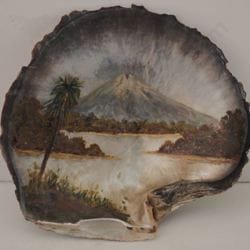
Mount Egmont with Lake

Mount Egmont with Lake 

By: John Philemon Backhouse (1845-1908)

Oil on Sea Shell - 13cm x 14cm

Valued $2,000-$3,000

Offers invited over $1,500

Contact:  Henry Newrick – (+64 ) 27 471 2242

Henry@HeritageArtNZ.com

MSC NewsWire is a gathering place for information on the productive sector in New Zealand focusing on Manufacturing, Productive Engineering and Process Manufacturing

  • Home
  • Global Presswire
  • Industry Organisations
  • National Press Club
  • Disclaimer
  • About Us
  • Pricing
  • Sitemap
Copyright © 2025 MSC NewsWire. All Rights Reserved.
Site Built & Hosted by iSystems Limited
Top
Technology Talk