
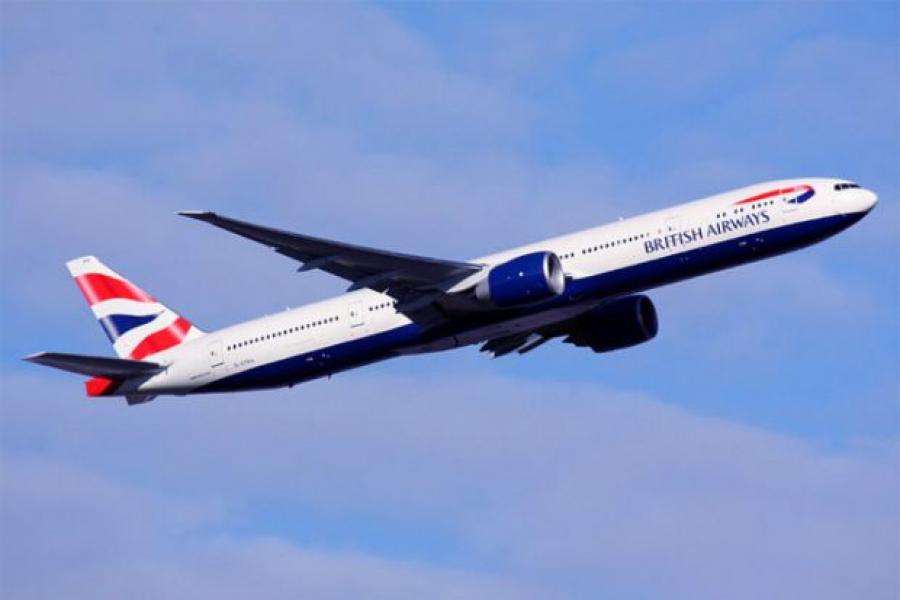
GreenSky London arrived on the scene a few years ago, an ambitious project led by British Airways to produce renewable aviation jet fuel from East London’s garbage.
Now, a group of four companies established a new partnership to prepare the business case for a commercial scale waste-to-renewable-jet-fuel plant in the UK. Subject to the successful completion of all development stages, the aim is to achieve a final investment decision in 2019.
British Airways spokesperson Cathy West said: “The government needs to support innovative aviation biofuels projects such as this if they are to progress. Aviation fuels are not eligible for incentives that road transport fuels receive, making it difficult to build a business case to invest in UK aviation fuels projects. This affects investor confidence.”
This week, the Department for Transport published changes to the Renewable Transport Fuels Obligation (RTFO), and for the first time, sustainable jet fuel is to be included in its incentive scheme. These changes to the RTFO are designed to promote sustainable aviation. Once implemented, they are expected to provide long-term policy support for this market.
Ultimately, BA speculated that the UK policy shift could stimulate as many as a dozen advanced biofuels plants in the UK by 2030.
The technology involved was a gasification system by Solena that would convert municipal solid waste to syngas, and it planned to convert that syngas to liquid transport fuels using Velocys’ micro-channel Fischer-Tropsh technology.
The plant would take hundreds of thousands of tonnes per year of post-recycled waste, destined for landfill or incineration, and convert it into clean-burning, sustainable fuels. The jet fuel produced is expected to deliver over 60% greenhouse gas reduction and 90% reduction in particulate matter emissions compared with conventional jet fuel, thereby contributing to both carbon emissions reductions and local air quality improvements around major airports.
The UK still sends more than 15 million tonnes of waste per year to landfill sites, which not only damages the natural environment but also releases further greenhouse gases affecting climate change.
The planned plant will produce enough fuel to power all British Airways’ 787 Dreamliner operated flights from London to San Jose, California and New Orleans, Louisiana for a whole year. It would be the first plant of this scale.
The jet fuel produced at the plant will deliver more than 60 per cent greenhouse gas reduction, compared with conventional fossil fuel, delivering 60,000 tonnes of CO2 savings every year. This will contribute to both global carbon emissions reductions and local air quality improvements around major airports.
Capacity is not entirely clear, since the business plan is under development, but there are three keys. First, a 60 per cent GHG savings, and 60,000 tonnes of CO2 savings budget. And, conventional jet fuel produces roughly 19 pounds of CO2 per gallon burned.
Back of the envelope math suggests a project of around 11.5 million gallons (42m litres) per year.
| A Biofuel digest release || September 28, 2017 |||