
I’ve been investigating the potential impact of technological change on building and construction in New Zealand over the next 15 years. It’s made me think, in particular, about how technology in buildings can help us reach our lower carbon targets – just what my colleague Nick Collins was talking about in February’s blog.
Technology is at the forefront of improving building performance, particularly in leveraging the potential of increasingly ‘smart’ or ‘intelligent’ sensors, systems and analysis to provide data which can improve building operation.
This often refers to commercial buildings with building managers, but technology has the capacity to help us meet carbon reduction commitments through energy efficiency in our homes.
Smart meters, for example, help consumers to manage and adjust their energy/water usage at the house level and enable smart grid infrastructure at the city level. Smart meters generate usage data which can, with the appropriate security and privacy measures in place, interact with city-wide systems to manage demand, identify households in fuel poverty and interact with micro-generation of renewable energy.
In New Zealand the rollout of smart meters was left to the market, rather than regulated (compare this to the UK government which wants smart meters in all UK homes by 2020). According to the Parliamentary Commissioner for the Environment, the meters rolled out are not particularly ‘smart’ – “They could have included a low cost component that would link the meter to a home area network – a network that connects the devices in the home that use electricity. This would have made it easy for householders to access real-time information on their electricity use using conveniently located displays, and enabled the introduction of smart appliances.”
Not only would smart meters benefit homeowners, they would enable smart grid implementation in New Zealand. Smart grids use modern digital communication technology to link with end user area networks (through really smart meters), establish better interconnection between distributed energy sources such as photovoltaic cells, and (ultimately) enable the integration of electric vehicles into the system. Distributed and autonomous power generation and usage is critical, with microgrids relying on typically renewable energy sources such as hydro, bio-mass, solar, wind, and geothermal.
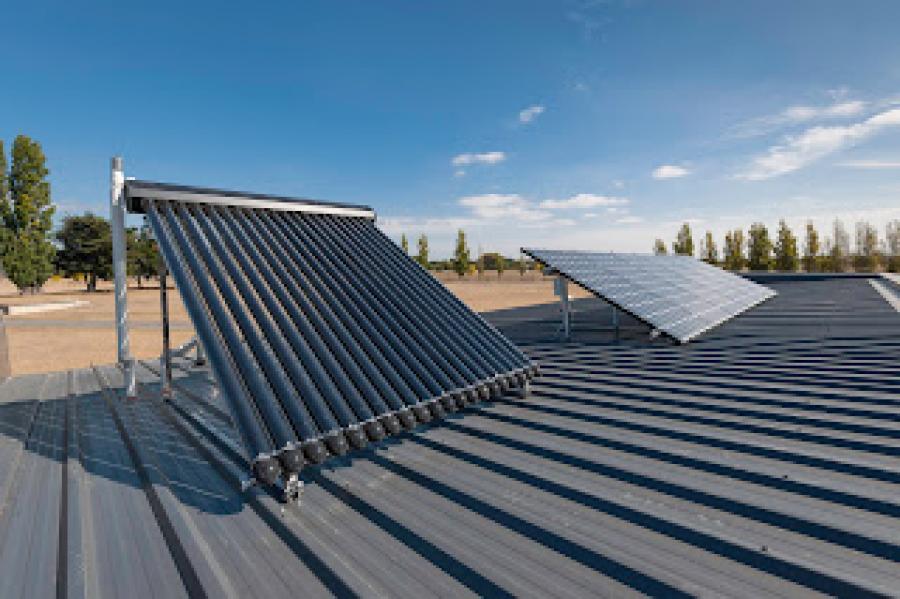
Meanwhile, rapid developments in solar, storage, sensor and ‘smart’ technologies are allowing energy consumers to gain direct control over energy resources - self generation, self storage and self energy management. Solar PV panels have been improving exponentially - as solar capacity doubles, the cost of solar goes down by 22% every two years since 1970. Developments in energy storage and improvements in battery technology (for example, Tesla’s Powerwall) are fundamentally transforming the energy sector by integrating renewable energy into electricity grids and turning intermittent renewable power into a direct competitor to base-load power. Solar storage costs are going down at the rate of 16% pa. The spread of these technologies is being helped by innovative concept business models involving zero money down and third party finance (for example, SolarCity which treats its product as a service) and the growth of smart appliances that help consumers maximise energy efficiency.
How efficiently our homes operate needs to be recognised as a key element in lowering our carbon emissions. Technology can help us get there!
| A BeaconPathway release || March 13, 2017 ||