
High Tech heats up von Neumann Bottleneck as do questions on Official Offsets incentives
Artificial intelligence opens up a refrigeration future for New Zealand not seen since the development of frozen meat exports.
The reason is that artificial intelligence processing hubs require cooling on a similar scale to the nation’s meat packing houses known as freezing works.
International data processing hub operators are prospecting in New Zealand for these cooling sites.
A futures and trade-offs market is developing as global companies prepare for the quantum increase in demand for accelerated coolant for the circuitry hubs.
Extra cooling is required everywhere because contrary to a widespread belief, and one propagated by the industry itself, there is no such thing as neural or fuzzy electronic processing that flows like input over the human brain.
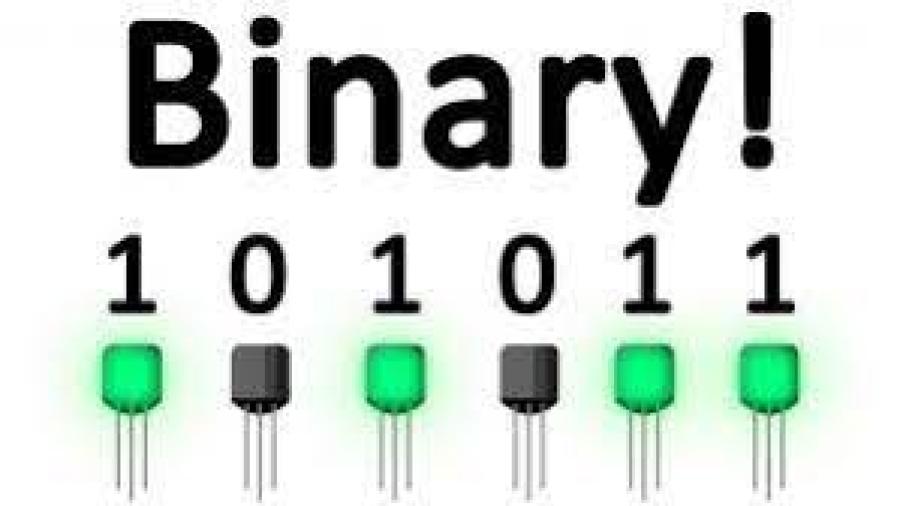
What happens is a massive acceleration of the binary impulses through the von Neumann bottleneck.
The faster the binary blips are crammed through this von Neumann bottleneck the greater the electronics under process will come to emulate the output behaviour of the human brain i.e perform virtual or imitated artificial intelligence.
In this process immense heat is generated and it has to be cooled down so that the supporting circuitry does not melt.
It is here that artificial intelligence intersects with that other heating preoccupation of this era which is the atmosphere version.
These hubs for eco ethical reasons are required to be cooled by renewables and this is the reason that New Zealand has become such a focus for these sites
These schemes began to take form under the cryptocurrency upheaval. Cryptocurrency uses a DIY banking method known as blockchain which is allied to but is not actually artificial intelligence.
Blockchain and artificial intelligence are the reasons for the intensity centred on acquiring renewables sites, anywhere.
The Klondyke of this latter day gold rush is the now famed Kaipara River site near Auckland. It has been flooded numerous times this year, often underwater for several days at a time.
But it is near to a national grid substation connection so its value remains unimpaired and so does the determination of its promoters to put a solar generating site on the floodway.
Other similar schemes are planned for other low lying tourist and dairy areas simply because of ready access to the national grid.
As with so many elements relating to the climate and officialdom little is revealed or known about the underpinning arrangements other than that they are on medium term leases.
Who owns them, and for how long? Then what happens?
This fuzziness applies also to the arrangements in removing the imported electro mechanical equipment at the conclusion of the lease, its disposal, and similarly with restoring the underlying pasture.
Artificial intelligence known then as expert systems was launched in 1965. Locally, Victoria University introduced a dedicated artificial intelligence unit 45 years ago.
The current wave of excitement has much to do with the convergence with entertainment such as de-aging, itself an application of facial recognition.
The generative description relates to its ability to learn as it goes along by expanding its own experience in such things as conversation as in the responsive talking or chat robots.
The inclination of the industry is to pretend that the bottleneck named after binary processing pioneer John von Neumann has somehow melted away under neural waves.
This deliberately nurtured fallacy disguises the accelerating intensity of the heat caused by the ever increasing rapidity with which the two binary symbols in the form of the presence of something or the absence of it must be rammed through this same bottleneck in the form of vast even infinite arrays of them functioning under what is known as parallel processing.
The data hubs required for all this need more and still more cooling and there are signs that the promoters will cut any deal to obtain the required eco refrigeration.
The counter trades allowing organisations and even whole countries to offset what they are doing in their own backyard by doing something else in someone else’s are the concealed driver in projects such as the Kaipara River one.
The demand for these trade-offs will increase and the reason is that the refrigeration required by the data and server centres is predicted to boost the greenhouse effect by a recognisable percentage.
Countries for example such as Germany and Switzerland have hitherto sent their energy demands to Russia
They have economies centred on an exceptional reliance on the ultra heavy electronic processing required by applications described as being in the artificial intelligence and blockchain sphere.
They are increasingly turning to remote offsetting schemes such as the Kaipara River one.
Descriptions such as neural or fuzzy are designed to hide the dependence of these data processing centres on old fashioned crackling mechanical circuitry and the resultant need for cooling.
Meanwhile the contractual wiring, the covenants, the official promises underpinning these schemes dependent as they are on imported equipment need to be revealed.
This is especially so after the less than encouraging outcome of the recent government offsets auction.
The notion meanwhile that computing had somehow transcended the laws of physic is an indication of how myths can become accepted and embedded even in a hard-edge industry such as high tech.