
Founded by Max Farndale 1947 - 2018
Prime Minister Bill English will travel to Brussels, London and Berlin next week to meet with leaders to discuss issues including trade and security.
“This is an opportunity to exchange views on a range of issues facing Europe and the world, and to reaffirm that New Zealand remains a committed friend and partner,” Mr English says.
“The focus of my trip will be to advance New Zealand business and trade opportunities in the region, including starting the negotiations on an FTA with the European Union this year.”
In Brussels, Mr English will meet with the three Presidents of the EU – European Council President Donald Tusk, European Commission President Jean-Claude Juncker and European Parliament President Martin Schulz. He will also meet with Belgium’s Prime Minister Charles Michel.
In London, Mr English will meet with Prime Minister Theresa May and Mayor Sadiq Khan.
“I will be interested to hear Prime Minister May’s views on Brexit and will take the opportunity to reaffirm New Zealand’s commitment to working towards a high quality trade deal when the UK is in a position to negotiate.”
In Berlin, Mr English will meet with German Chancellor Angela Merkel and Finance Minister Wolfgang Schäuble.
Mr English will also meet with a range of other government, business and academic leaders to hear their views on the political, economic and security situation in the region and about opportunities for New Zealand there.
The Prime Minister will be accompanied by Trade Minister Todd McClay in Brussels and Foreign Minister Murray McCully in London and Berlin.
Dr Mary English will also travel with the Prime Minister.
Mr English will leave New Zealand on 9 January and return on 18 January.
Get started with Fusion 360 & attend our Introduction Course
Fusion 360 Hands-On Introduction 1 Day Course for only $20** Limited time offer ends 18th January 2016
This course is designed to give any 3D CAD user a kick start into designing and engineering with Autodesk Fusion 360 software.
Date: 20th January 2017Time: 9:30 AM – 4:00 AMLocation: Avondale College, Auckland, New ZealandPromotion Price: NZD $20
| A CADPRO Systems release | January 9, 2017 |
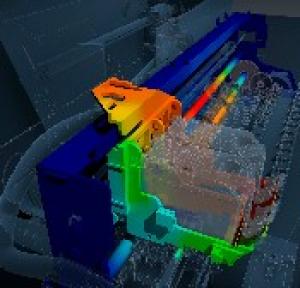
Introduction to Stress and FEA for Inventor Professional
This webinar will provide some understanding of how FEA works so that you have some idea if the results are meaningful or not!
Clearly this is just a tiny taste - the subject of “Mechanics of Materials” is a lengthy University taught subject that must be taken seriously – someone’s life might depend on it!
Find out what Mathew Weake has to say about it on January the 20th 2017 at 2pm.
Register nowThrough this Link: http://www.cadpro.co.nz/design-challenge/
| A CADPRO Systems release | January 9, 2017 |
SEE ALSO:
Fusion 360 Hands-On Introduction 1 Day Course - for only $20 - Friday 20 January 2017
Limited time offer until 18 January 2017
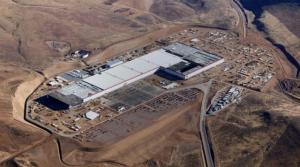
Tesla is now producing lithium-ion battery cells at its “Gigafactory,” the massive plant just outside Reno, Nevada, that the company claims will become the largest factory of its kind in the world. The cells will be used for Powerwall 2 and Powerpack 2 energy-storage battery packs, at first.
The company held a grand opening for the Gigafactory last year, but until now the factory has only assembled battery packs, and not the cells that go into them. Those cells have been imported by Panasonic, which partnered with Tesla on the Gigafactory and has been the sole supplier of battery cells for the company’s electric cars and energy-storage products.
Cells manufactured at the Gigafactory are a cylindrical “2170” design co-developed by Tesla and Panasonic, according to a company blog post. The Gigafactory is currently building them for Powerwall 2 and Powerpack 2 battery packs only, but Tesla expects to start cell production for the Model 3 electric car in the second quarter of this year. The Model 3 is the 215-mile, $35,000 mass-market electric car that is the Gigafactory’s main reason for existence.
Tesla needs the massive factory to provide the economies of scale necessary to make the Model 3 profitable at its sub-$40,000 price point. It also needs to produce battery cells in large volumes: Tesla CEO Elon Musk wants the company to produce 500,000 cars per year by 2018, and the Model 3 is expected to make up the majority of that total. That’s a lot of battery cells.
By 2018, Tesla expects the Gigafactory to be producing 35 gigawatt-hours of cells per year, which it claims is nearly as much as the rest of the world’s cell production combined. Tesla will keep expanding the factory, which it says is only 30-percent complete. The current footprint of 1.9 million square feet houses 4.9 million square feet of operational space on multiple floors. When the factory is completed, Tesla expects it to be the largest building in the world.
Tesla may be kicking off 2017 with some good news, but it ended 2016 with a disappointment. The automaker delivered 76,230 cars last year, meaning it missed its target of 80,000 units by a slim margin. In q statement, Tesla attributed this primarily to the transition to new Autopilot hardware, which the company believes interrupted the flow of production.Also watch: Sony 4K UHD Blu-ray Player, TVs, Projector At CES 2017
Read more: http://www.digitaltrends.com/cars/tesla-begins-gigafactory-battery-cell-production/#ixzz4VDDfebdK| DigitalTrends | january 5, 2017 |
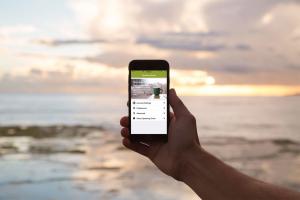
A Kiwi-made app is getting global attention after securing a strategic partnership with technology giant Bosch to bring email into cars.
Bosch is this week featuring Speaking Email as part of their stand at the renowned Consumer Electronics Show (CES) in Las Vegas from January 5-8.
Speaking Email is an app that reads emails aloud so people can safely check their email while driving.
Bosch is incorporating Speaking Email into their mySPIN platform, which enables drivers to use authorised apps on their iPhone or Android smartphone via a touchscreen integrated into cars and motorbikes.
“We are very happy that Speaking Email joined the mySPIN eco-system and are convinced that their existing solution will add further value to our customer’s offering to drivers” says Kay Herget, Global Head of Marketing at Bosch Softtec, Bosch’s business unit who develops mySPIN.
The event showcases the latest in innovative devices, gadgets, software and services and draws vast crowds. Last year 175,000 people attended the show.
Speaking Email was developed by small Auckland web development company, beweb, after director Mike Nelson got frustrated with the lack of such a product on the market.
Mr Nelson says the partnership with Bosch is major coup for the app which was launched last year.
“Bosch is way ahead in automotive technology - they have the only connected car system that allows apps to work seamlessly in the vehicle, so it is a perfect fit for us and very exciting they have chosen to partner with us,” he says.
“Thousands of technophiles will be able to see the app in action in Las Vegas so we are stoked that our New Zealand made app is making it on the global stage.”
Speaking Email differs from other alternatives in that it enables users to focus on important email content by avoiding reading out clutter - including signatures, disclaimers, reply chains and junk mail.
A premium version features the ability to archive, flag, trash or even reply on the move. Recently released features include voice selection and multilingual mode which detects emails written in other languages and reads them with native pronunciation.
Speaking Email can be downloaded free from the App Store or Google Play and works with all email platforms.
To download visit www.speaking.email
About Beweb:Beweb has been developing websites and web applications for New Zealand companies since 2000. Speaking Email is the company’s first app.
Reviewer Promo Code:To try out the premium version of the app, for a free 3 month premium subscription, enter this promo code on the Upgrade screen: snx3567ces
| A Beweb release | January 5, 2017 |
In the latest in our Five Questions For.....series we interrogate the West’s most seasoned operational intelligence officer on Russia......
Major General Peter Williams (pictured) is often considered the most experienced military specialist on Russia and its intentions. He was a member of the allied Cross Mission to the old USSR and this saw him for many years operationally involved in intelligence gathering within the Iron Curtain. At the conclusion of the Cold War he led the NATO mission to the new Russian Federation. Five questions now follow for General Williams:-
What will be the nature of the US-Russia rapprochement under Donald Trump?We are going to have to wait and see just how much free rein Trump finds himself to have. Clearly his personal outlook on the world, including on Russia, is coloured by his own lengthy career as a businessman. He is not a career politician or a Washington insider, but he and his new yet-to-be-confirmed by Congress Secretary of State will find themselves the recipients of advice from the departments of the US government, members of Congress and the US media, much of which will run counter to Trump's instincts and initial aspirations. It will all be about Trump getting better informed about the details of the many challenges to US interests posed by Russia and then coming up with a new, personal synthesis of the existing situation.In a nutshell, it's too early to say how Trump as President will react to the challenges and opportunities presented by the Kremlin, but he will stamp his own character on whatever redefined approach --possibly rapprochement, but not necessarily so-- emerges as 2017 progresses. And then there is the reality of 'events, events, events' - the unforeseeable developments that British prime minister Harold Macmillan once identified as the biggest challenge that would face any politician.
Will the trade embargo quickly dissolve?Almost certainly not. Congress seems much less likely to be in a forgiving and conciliatory mood where Russia is concerned than Trump may currently appear to be. Dismantling trade embargoes is not a simple procedure, not least where they are coordinated on a multinational basis.
Your opinion of the Russian espionage/hacking operations within the US?We will never get a clear explanation about what may have been the precise scale and details of the alleged Russian espionage/hacking operations in the US, but there is no reason, given the track record over many decades of Soviet and Russian disinformation and disruption operations, not to believe that the Kremlin has been seeking to take advantage of the perceived weaknesses of the Obama presidency, particularly during its dying months.
Others such as China, North Korea, and certain other allies will have been doing the same at the same time. The US, along with the West in general including far-off New Zealand, is a pretty soft target for disinformation and disruption operations. Whether any Russian hacking actually managed to affect the outcome of the US Presidential and Congressional election process we'll almost certainly never know for sure.
Where and why did Western-Russian relations go wrong during the Obama years?It is perhaps more accurate to describe what failed to happen, rather than what actually went wrong. Obama and Hillary Clinton sought to re-set the US-Russia relationship, but in truth the rupture went back to 2007 when Putin re-evaluated the relationship and decided that it had not been in Russia's national interests to allow the West to get too close to Russia.By 2007 NATO enlargement had brought the Alliance right up to the borders of the Russian Federation and now the threat of Ukrainian and Georgian membership of NATO was identified as a step too far into the cordon sanitaire that the Kremlin felt must separate the West physically from Russia. The EU had also been expanding to the east in a similar manner, taking into its fold nations that Russia had long viewed as Russian client states.
The 2008 Georgian war put paid to NATO's expansion - even if Russia's military campaign had been tactically and operationally less than flawless, the strategic result was clear: Russia had stopped NATO enlargement in its tracks. The final straw was the EU's active encouragement of the Euromaidan overthrow of the democratically elected albeit utterly corrupt Ukrainian president. The seizure and annexation of Crimea and the Kremlin-supported insurrection in Eastern Ukraine put paid to any chance of rapprochement between Russia and the West in all its forms, not least NATO and the EU.
Taking a world view, where do you see Western-Russian relations in five years?Whatever the situation will be in 2022, it is sure to be different from the situation today where Western-Russian relations are concerned. It is much too early to be able to predict whether Trump will actually launch a process that might deliver a substantive rapprochement with Russia. If he does so, such a rapprochement will not be without its risks, one of which must be a danger of fracturing the current common hard line that the West has been holding against Russia.
In the last year or so, sensing a vacuum in Western leadership, Russian strategy in Syria has wrong-footed the West. Russian military power has enjoyed a significant victory, which will both strengthen the position of the hawks in the Kremlin and will give a boost to Russia's state-controlled armaments sector, which can expect increased export sales as a result of the technology demonstration that the Syrian intervention has provided.
Finally, although I am by nature one of life's cautious optimists and I believe that rapprochement with Russia could be portrayed as a sensible act of realpolitik, it is hard to see just how Trump can deliver the re-set of the US-Russia relationship without which any wider Western-Russian rapprochement seems doomed to fail. If The Donald can pull off this deal, he will have confounded his sceptical enemies and will have earned the adulation of his new-found supporters.
| From the MSCNewsWire reporters' desk | Friday 6 January 2017 |
Japan has been notable for its avant-gardism, its leadership, and its competitiveness in the area of green technology and clean energy, considerably in terms of its investment in research and development for Smart and Renewable Energy efficiency technologies. In addition, Japan also tends to be the world’s second-largest investor in renewable energy, reaching a threshold of 23 GW of installed renewable energy sources (including 9 GW of hydro power and 5.6 GW of solar power).
World Smart Energy Week 2017, is organized by Reed Exhibitions Japan bringing 1,570 exhibitors including 9 renewable energy shows- FC EXPO 2017 -13th Hydrogen & Fuel Cell Expo, PV EXPO 2017-10th Int’l Photovoltaic Power Generation Expo, PV SYSTEM EXPO- 8th Int’l Photovoltaic Power Generation Expo, BATTERY JAPAN- 8th Int’l Rechargeable Battery Expo, 7th INT’L SMART GRID EXPO, WIND EXPO 2017-5th Int’l Wind Energy Expo & Conference, 3rd ENERGY MARKET LIBERALISATION EXPO, 2nd INT'L BIOMASS EXPO and 1st THERMAL POWER EXPO-1st Next-generation Thermal Power Generation Expo.
70,000 professionals from the sector are expected to visit, with simultaneous BtoB conferences and seminars are being held on major themes comprising expert panelists. World Smart Energy Week 2017 is welcoming internationally renowned green energy specialists, and influential figures from the business milieu to engage with the business opportunities.
There are plenty of business opportunities to be seized for Non-Japanese companies in Japan under the clean and green energy sector Banner. All professionals and companies having products in the following domains are welcome participate and visit the expo. to Electricity, energy efficiency; Natural gas,Petroleum, Petrochemicals, Solar energy (cells, modules, panels)
Wind energy, Biomass, Hydrogen, Nanotechnologies, Processing technology/products
Storage technology/products, Analytical technology/products, Hydrogen and fuel cell technology
Photovoltaic system integration/installation technology, Technology relating to smart grid systems
Eco-construction products,Insulation, refrigeration, climate control, heating systems, Automation systems, Cogeneration systems and all Products and services consisting of energy efficiency.
Japan is a country with high purchasing power, and exploring avenues to partner with Global companies on many dimensions. As such, quality and relevance are equally important along with pricing factors, which, for example, allows Global companies to explore business and trading options with Japanese counterpart companies.
World Smart Energy Week 2017, is held during March 1st to 3rd 2017 at Tokyo Big sight; invites Global green technology sector companies to exhibit and showcase the technologies/products there, and as well invites professionals operating in the sector and seeking to learn more about the most recent advances.
The first freight train has set off from China to the UK on the reintroduced historic Silk Road trade route.
The train, carrying household items, garments, textiles, bags and suitcases, will take around 18 days to travel more than 12,000km.
The train, which left on New Year’s Day from Yiwu in eastern Zhejiang province, will pass through Kazakhstan, Russia, Belarus, Poland, Germany, Belgium and France before arriving in London.
According to the China Railway Corporation (CRC), London will be the 15th European city to receive freight train services from China.
The CRC said the service would “improve China-Britain trade ties, strengthen connectivity with western Europe, while better serving China’s Belt and Road initiative, an infrastructure and trade network connecting Asia with Europe and Africa along ancient trade routes”, China’s state-owned news agency Xinhua reported.
Under China’s officially named One Belt, One Road initiative, billions of dollars will be ploughed into infrastructure along historic trade routes in a bid to shift the world’s centre of economic gravity.
China is the EU’s second biggest trading partner after the US and in 2015 the EU imported goods worth €350.5bn from China, up 4.4% on 2014.
| From Supply Management | January 3, 2017 |
 ∩ Company car tax perk to return: expert
∩ Bill English leaves on Monday for nearly nine days in Brussels, London and Berlin.
∩ Japan World Smart Energy Week 2017
∩ Freight train running from China to UK is a first
∩ Bellamy's organic infant formula derails in China
∩ Amazon files patent for flying warehouse
∩ Belgian deputy PM to discuss free-trade deal with EU and NZ
∩ Fonterra milk price rises in NZ shops as world dairy prices take a hit
∩ While you were sleeping: Stocks, greenback climb

Emirates, which offers five double-decker A380 services a day out of New Zealand, is welcoming in the new year with special fares to a selection of points around its global network, including Australia, the UK, Europe and Africa.
The Hello 2017 Economy and Business Class fares are also on offer to destinations in Asia and the Middle East, as well as India and the Americas via Dubai
The five daily New Zealand flights – a non-stop service to Dubai from Auckland and three others via Australia, plus a Christchurch service via Sydney – offer the chance to travel all the way by A380 from New Zealand to 17 destinations in Europe among other cities.
From today until January 23 the Hello 2017 fares will include Economy Class return to Australia from $439, Asia $899, Indian sub-continent $1,299, Europe $1,499, United Kingdom and Africa $1,599, the Americas $1,799 and the Middle East $1,899.
Special Business Class fares are also available.
The fares are inclusive of all taxes and are valid for select travel dates. They are subject to availability on specific flights and various conditions apply.
“Emirates likes to welcome in each new year with a special treat for travellers and this year’s offering is no exception,” said Emirates’ New Zealand regional manager, Chris Lethbridge. “In all, we have special fares to more than 80 destinations, including the most popular places on our network.”
In total, Emirates offers connections at its Dubai hub to 38 places in Europe, 22 in Africa and 17 in the Middle East.
Passengers travelling on the three-class, 491-seat A380 aircraft will enjoy spacious cabins and experience a peaceful journey in the world’s quietest long-range jet. They can use the onboard Wi-Fi; indulge in food prepared by international chefs, and be entertained by Emirates’ award-winning ice system which offers over 2,500 channels of inflight entertainment across all cabins.
Emirates has redefined the core experience of premium travel. First Class and Business Class passengers will have access to the A380’s onboard Lounge, with space to mingle whilst enjoying canapés and the beverages prepared by the onboard bartender. First Class passengers can enjoy the aircraft’s First Class Private Suites and experience the aircraft’s signature onboard Shower Spa.
Emirates is the largest operator of the Airbus A380 with 89 in its fleet, and has carried over 65 million passengers on its flagship aircraft since 2008
Bookings can be made through www.emirates.com/nz or phone 0508 364 728.

Palace of the Alhambra, Spain
By: Charles Nathaniel Worsley (1862-1923)
From the collection of Sir Heaton Rhodes
Oil on canvas - 118cm x 162cm
Valued $12,000 - $18,000
Offers invited over $9,000
Contact: Henry Newrick – (+64 ) 27 471 2242

Mount Egmont with Lake
By: John Philemon Backhouse (1845-1908)
Oil on Sea Shell - 13cm x 14cm
Valued $2,000-$3,000
Offers invited over $1,500
Contact: Henry Newrick – (+64 ) 27 471 2242

|
|