
Founded by Max Farndale 1947 - 2018

Sew-Eurodrive has launched a new website for the Australian and New Zealand market. It offers a wide selection of new and expanded content and functions and can be accessed from a range of devices, from PCs and tablets to smartphones. As well as restructuring the site’s content, the company has also revamped its design.
According to the company, the structure of the site ensures accurate responses to all enquiries, provides good orientation and points of reference, takes users to where they need to go reliably, and makes relevant information quick and easy to find and read.
Main features of the new website:
Construction of the 14,000 kilometre Hawaiki submarine cable that will link New Zealand to Australia, Hawaii and mainland United States has started with a ground breaking ceremony at Bream Trail Farm, Mangawhai Heads, Northland attended by NZ prime minister John Key and communications minister Amy Adams.
Through REANNZ the government has become an anchor tenant of the cable at a cost of NZ$65 million. Adams said the Hawaiki cable would increase connectivity for New Zealanders and contribute to the growth of the digital economy with more than 30Tbps of capacity, a fivefold increase on current capacity
When the cable is complete around mid-2018, New Zealand will have four cable links to the rest of the world – through the two Southern Cross cables, the Tasman Global Access cable and Hawaiki.
The NZ$500m project was confirmed in March this year when all-New Zealand equity funding was secured from Remi Galasso, a submarine cable industry veteran, New Zealand businessman Sir Eion Edgar and telecommunications entrepreneur Malcolm Dick.
Continue to the full article on Computer Eorld - Nov 24, 2016
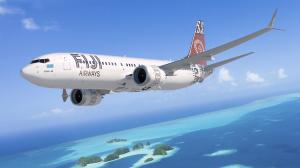
Boeing has secured a third 737 MAX customer in Oceania with Fiji Airways ordering five 737 MAX 8s for first delivery in 2018.
The Fijian flag carrier said in a statement on Wednesday the 737 MAX 8 would “replace its existing narrow-body fleet”. Currently, Fiji Airways has five 737s in its fleet, comprising one 737-700 and four 737-800s, that are used on short- and medium-haul routes to Australia, New Zealand, Hawaii, Kiribati, Samoa, Solomon Islands, Tonga and Vanuatu.
Fiji Airways chief executive Andre Viljoen said the selection of the new generation Boeing narrowbodies came after an “extremely exhaustive procurement and selection process”.
Further, Viljoen said the aircraft would be delivered via a 12-year sale and leaseback financing arrangement as part of a package deal with GE Capital Aviation Services (GECAS), Boeing and engine manufacturer CFM International.
“This is a major capital decision that had to be done correctly so we followed a rigorous, thorough and transparent process to find the right solution,” Viljoen said in a statement.
“As a consequence of the fierce competition between the rival bidders and the extensive process followed by Fiji Airways, we have achieved a ground-breaking package deal that represents excellent value for our shareholders, customers and stakeholders.”
Fiji Airways joins Virgin Australia and Air Niugini from the region as a MAX customer.
Virgin Australia is due to receive the first of 40 MAX aircraft in 2018, while Air Niugini is expected to take delivery of four MAX aircraft from 2020.
Boeing Commercial Airplanes senior vice-president for Asia Pacific & India sales Dinesh Keskar said: “Boeing is honoured that Fiji Airways has selected the 737 MAX for its fleet renewal plan and we look forward to welcoming Fiji Airways as our newest 737 MAX customer.”
“The 737 MAX, with its superior economics and capability, is the ideal airplane for Fiji Airways, allowing them to expand into new markets throughout Oceania and Southeast Asia.”
Viljoen said the MAX’s operating economics and efficiency would assist the airline in securing a four-star rating from Skytrax.
“Our team will now work on the cabin designs and fit-outs to Fiji Airways specifications,” Viljoen said.
“With 170 seats, we will continue with our existing two-class configuration (business and economy) and be able to offer an extremely competitive short- and medium-haul product.”
The 737 MAX program, which is currently in the flight test phase, has booked 3,339 orders through October 2016, according to the Boeing website. The figure does not include the Fiji Airways order, which will be added to the total once finalised.
Boeing said in May 2016 first delivery was forecast to take place in the first half of 2017.
The MAX competes with the Airbus A320neo Family, which has been flying with a number of airlines since January 2016. The Airbus website shows it has received 4,760 orders for the neo.
Qantas is expected to run a competition between the 737 MAX and A320neo at some future point for the replacement of its existing 737-800s.
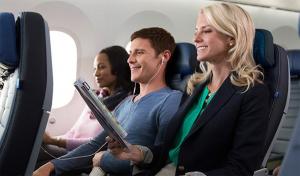
From 2017, United Airlines will offer its new Basic Economy ticket for travelers happy to fly with only a personal, under seat item and no carry-on.With a few additional restrictions, United Airlines’ Basic Economy fare offers customers the lowest possible price. Available from January 2017 on selected routes in the United States, the fare provides the same in-flight hospitality options as other economy fares. The biggest differences with a Basic Economy ticket are that seats are assigned at check-in, with no options for an upgrade, and travelers are not allowed to bring a carry-on bag. A personal item that can stowed under the seat in front, such as laptop bag or backpack, will be allowed on the flight.
Passengers that are rewards members of the airline will have more flexibility with the terms of the new fare. Depending on the ticket’s popularity, the airline will consider expanding the option to flights in Latin America as well.
Much of the innovation occurring in the travel industry focuses on making the booking process as simple as possible, like this app that pulls all trip details onto a single screen view. And airlines and airports are experimenting with smart options, like this robotic check-in assistant. How could technology help make low-cost flights more enjoyable?
Website: www.united.comContact: www.twitter.com/united
This article is written by Springwise and sponsored by Geovation
| Wellington, Nov 23, 2016 | - Advice to the building industry on restraining ceilings, ducting and other non-structural elements will improve the safety and resilience of commercial buildings during earthquakes, Building and Housing Minister Dr Nick Smith says.
The Ministry of Business, Innovation and Employment (MBIE) today released two practice advisories to the building sector on non-structural elements and secondary structural elements in commercial buildings.
“Structural failures in buildings pose the greatest risk to people’s lives but elements such as ceiling panels and ducting can injure people and cause death. These failures are a major component of the post-earthquake repair cost and can significantly disrupt businesses and their staff while repairs take place.
“We are seeing too many examples of ceiling panels, ducting and features such as hanging sculptures failing in the Christchurch, Seddon and now Kaikoura earthquakes. Often these features are added after the building has had its Code Compliance Certificate issued, without sufficient thought to the risks they pose in a seismic event. Particular care needs to be taken with those additions which are sufficiently large to cause an injury or death.
“The guidance is a clear reminder to architects, engineers, contractors, building owners and councils of their responsibilities under the Building Act, that they must make sure the risk of collapse of non-structural elements is low. The various players need to take a well-planned approach to make sure the design is co-ordinated and building elements are appropriately restrained.”
The guidance on secondary structural elements, such as precast panels and stairs, emphasises design requirements to ensure those elements perform in an earthquake. MBIE regularly issues and updates guidance on best practice in building design and construction.
“There is a heightened risk of aftershocks in central New Zealand and it would be timely for people to make sure items such as filing cabinets are adequately restrained. Too many people were injured in commercial buildings by falling cabinets, storage racks and computer screens during the Christchurch earthquakes. Just as people should be making sure large items of furniture or televisions at home are secured, employers should take care to restrain office furniture,” Dr Smith says.
The practice advisories can be seen at: https://www.building.govt.nz/building-code-compliance/b-stability/b1-structure/practice-advisory-19 and https://www.building.govt.nz/building-code-compliance/b-stability/b1-structure/practice-advisory-20

BNZ Weekly Overview with Tony Alexander
Hawaiki cable construction starts
AFT Pharmaceuticals posts $11 mln first-half loss after boosting R&D spend, launching OTC products
Crack found in oil drilling platform at Taranaki
While you were sleeping: US dollar strengthens
PowerbyProxi launches new wireless power product
Fears TPP failure will spur global trade war
Guidance on non-structural building elements released
Jetstar boosts regional economies by up to $40m

Workplace flexibility can be a double-edged sword for workers.By Professor Tim Bentley
Our workforces are entering a new age of flexibility, driven by new digital technologies, globalisation, environmental pressures, changing demographics and new forms of social interaction and organising. But flexibility is a double-edged sword that can be both good and bad for workers.The good: flexible working
Technology has transformed how, when and where work routines and personal activities are conducted. One critical and rapidly growing development in working practices, enabled by digital technology, is the notion of ‘anywhere, anytime working’, also known as flexible working.
Studies from several countries have shown productivity benefits from flexible working. Workers save time and energy by not commuting at peak times, or at all; they have increased autonomy and uninterrupted working time; such arrangements also provide for greater work-life balance, increased individual wellbeing and retention within the workforce.
In today’s workplace, flexible working is no longer thought of as a perk, but as a legitimate option for not only those with care responsibilities, but anyone who does ‘knowledge’ work. Organisations are rethinking what work is – rather than a place, work is now a process than can be done anywhere. An increasing number of organisations internationally are adopting flexible ways of working, including working from home and co-working centres and hubs. Continue to read full article

Fusion 360's engineers have continued their long march toward their end goal of creating an end-to-end product design package with their expansive November update. As of November 8th, Fusion users were treated to a number of new features, including simulation and milling enhancements as well as updates to drawings. In this piece, we’ll preview some of Autodesk's more interesting Fusion upgrades.
Fusion Adopts the Nastran SolverTo kick off its November update, the Fusion team has announced that Autodesk's 2014 acquisition of Nastran will now benefit 360's CAE portfolio. For users who are running simulations in the cloud, this solver upgrade won’t ever be noticed, but for those who prefer to do their simulations locally, a quick Nastran solver installation will run the first time you attempt a local study. With the addition of the Nastran, Fusion is gaining one of the best tested and consistently updated solvers on the planet.
Continue to the full article on Engineering.com

Personally wheeled in drinks trolley to New Zealand dealer employees
Gentlemen
Your news of the deal that Henry Ford 11 sought to make with New Zealand prime minister Keith Holyoake in Wellington in the mid 1960s has the ring of truth. Mr Ford, and it was always “Mr” Ford, was like his grandfather the founding Henry Ford (pictured) in that he was a production and marketing genius. He saw opportunities in terms of great simplicity. He had also the gift of the common touch.
When he and his Detroit group came to Wellington they stayed at the White Heron Lodge in Kilbirnie. The White Heron was the first of the modern hotels in the capital.
I was employed by one of the Ford regional franchisees in New Zealand and Mr Ford had stated that he wished to spend time with as many franchise representatives as possible including those at a junior level such as myself.
Mr Ford enjoyed fine living and was a connoisseur of wine, especially red. He traveled with his own cellar. At the conclusion of the formal dinner at the White Heron it was made known to our group that Mr Ford was allowing guests overnighting at the White Heron Lodge access to this personal cellar.
All we had to do, we were told, was to ring an internal hotel number for access to the private cellar and its contents. A steward would be on duty there until late, very late.
As our own company party gathered after the formal dinner in our manager’s suite there was at first a certain shy reluctance to avail ourselves of this offer.
Time wore on. We got bolder. Eventually someone took courage and rang the number of Mr Ford’s own cellar room. A voice answered and asked exactly what sort of wine we had in mind?
Whatever you recommend came the response from our side “and bring plenty of it.”
The party resumed. A few minutes after the call there was a knock at the door. In came a substantial bottle-laden trolley being pushed by Mr Ford.
Yours faithfully
S. GibbonsPalmerston North
An economic impact report estimates that additional visitor spending following Jetstar’s expansion to Nelson, Napier, New Plymouth and Palmerston North will result in GDP growth of up to $40 million for the regions in the first year of operation.
The report, prepared for Jetstar by Wellington firm Infometrics, says a GDP jump of this magnitude has the potential to support nearly 600 jobs across the airline’s regional markets.
Jetstar began flying from Napier and Nelson to Auckland on 1 December 2015. Flights from Auckland to New Plymouth and Palmerston North, and between Nelson and Wellington, commenced 1 February 2016. The airline operates up to 244 flights a week on its regional network using 50-seat Q300 aircraft.
The report notes that average growth in total passenger numbers at each of Jetstar’s four regional airports has grown as high as 27 per cent since the airline entered the market nearly a year ago.
Infometrics senior economist, Benje Patterson, said the results of the report show substantial projected increases to GDP in each region from the additional visitors. “Jetstar has brought competition to the domestic aviation market which has helped reduce airfares and greatly improve air connectivity, which is an important driver in economic activity for regional cities,” Mr Patterson said.
“We’ve seen visitors grow in greater numbers than Jetstar’s additional flights, suggesting that rather than simply cannibalising the incumbent’s passenger base, Jetstar has expanded the visitor market by making flying more affordable.”
Jetstar Group CEO, Jayne Hrdlicka, said the report highlights the important role that affordable air links play in growing local economies.“When airfares are lower it stimulates passenger growth because more people can fly more often, whether it’s for leisure or business,” Ms Hrdlicka said.
“It’s estimated that for every $1 spent on aviation, a further $10 is spent in the local economy.
“As this report shows, the benefits of lower fares don’t stop at the consumer. Competition and choice in airline travel is also a strong driver of growth for the wider economy in the markets that we serve.”
Regional breakdown*Region Economic growth Potential job creation (full time equivalent) Nelson-Tasman $17.1m 277Hawke’s Bay $8.0m 132Manawatu-Whanganui $9.3m 124Taranaki $5.2m 64* Results have been annualised to get a consistent period of comparison
The report referenced Statistics NZ data that shows additional competition helped to reduce domestic air travel prices by an average of 9.8% between December 2015 and September 2016. It was much higher in regional cities.
Jetstar’s regional expansion added more than 600,000 new seats to the New Zealand domestic market.Chris Roberts, CEO of Tourism Industry Aotearoa, said the increase in regional airline capacity and lower fares over the past year has helped to boost domestic tourism.
“Domestic tourism is worth $20.2 billion annually to New Zealand – more than international tourism. As the research shows, persuading more New Zealanders to use their discretionary dollars on a domestic travel experience results in more successful businesses,” Mr Roberts said.
“It’s not only tourism operators that benefit but other businesses that sell products and services to visitors, such as supermarkets, petrol stations, cafes and bars.
“Growing domestic tourism makes an important contribution to the tourism industry’s Tourism 2025 $41 billion aspirational goal.”

Palace of the Alhambra, Spain
By: Charles Nathaniel Worsley (1862-1923)
From the collection of Sir Heaton Rhodes
Oil on canvas - 118cm x 162cm
Valued $12,000 - $18,000
Offers invited over $9,000
Contact: Henry Newrick – (+64 ) 27 471 2242
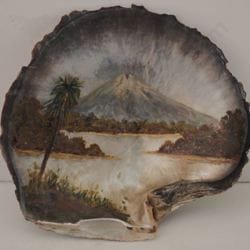
Mount Egmont with Lake
By: John Philemon Backhouse (1845-1908)
Oil on Sea Shell - 13cm x 14cm
Valued $2,000-$3,000
Offers invited over $1,500
Contact: Henry Newrick – (+64 ) 27 471 2242

|
|