
Founded by Max Farndale 1947 - 2018
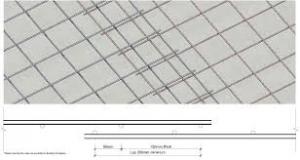
The Government has made changes to testing requirements to ensure all steel mesh being sold in New Zealand is up to standard, Building and Housing Minister Dr Nick Smith says.
“We’re increasing the number of samples which need to be tested, clarifying how that testing is done and requiring testing be done by internationally accredited testing laboratories,” Dr Smith says.
The updated Verification Method and Acceptable Solution will apply to all steel mesh of Grade 500E being sold in New Zealand, whether made locally or imported. The changes, which will be implemented by 30 May 2017, follow public consultation and were prompted by issues with the quality of a small amount of steel mesh, which the Commerce Commission is investigating.
“I want to ensure steel mesh used in new houses meets our standards. Ductility - the capacity of mesh to keep its strength when stretched - has been causing concern. The rules were strengthened after the Christchurch Earthquakes so steel mesh in all new homes had 10 per cent ductility, to increase the resilience of floor slabs after a quake,” Dr Smith says.
“The new requirements make it absolutely clear to industry exactly what should be tested and the standard to which that must be done. It will help ensure the product meets our 10 percent ductility requirements for residential buildings, and gives certainty to the public that the mesh used in new houses is fit-for-purpose.
“Ideally, steel mesh importers should be making sure the testing requirements are met in their supply chains but the testing can be done when the mesh comes into New Zealand. We’re in the midst of a building boom and we need to ensure quality is maintained by making sure our materials match the required standards.”
The Government has made changes to testing requirements to ensure all steel mesh being sold in New Zealand is up to standard, Building and Housing Minister Dr Nick Smith says.
“We’re increasing the number of samples which need to be tested, clarifying how that testing is done and requiring testing be done by internationally accredited testing laboratories,” Dr Smith says.
The updated Verification Method and Acceptable Solution will apply to all steel mesh of Grade 500E being sold in New Zealand, whether made locally or imported. The changes, which will be implemented by 30 May 2017, follow public consultation and were prompted by issues with the quality of a small amount of steel mesh, which the Commerce Commission is investigating.
“I want to ensure steel mesh used in new houses meets our standards. Ductility - the capacity of mesh to keep its strength when stretched - has been causing concern. The rules were strengthened after the Christchurch Earthquakes so steel mesh in all new homes had 10 per cent ductility, to increase the resilience of floor slabs after a quake,” Dr Smith says.
“The new requirements make it absolutely clear to industry exactly what should be tested and the standard to which that must be done. It will help ensure the product meets our 10 percent ductility requirements for residential buildings, and gives certainty to the public that the mesh used in new houses is fit-for-purpose.
“Ideally, steel mesh importers should be making sure the testing requirements are met in their supply chains but the testing can be done when the mesh comes into New Zealand. We’re in the midst of a building boom and we need to ensure quality is maintained by making sure our materials match the required standards.”

As the cash-free economy continues to grow, Bartercard NZ has launched an online marketplace for its thousands of members to make trading even easier.
More than 16,000 account holders throughout New Zealand belong to Bartercard, with more than $200 million worth of goods and services traded annually.
The company has ambitious growth plans, and Chief Executive John Scott says the new Marketplace – launching on Tuesday, 1 November – is a major step in that direction.
“Marketplace will greatly enhance our members’ experience, streamlining the trading process and giving them the ability to control what promotions they want to see and when they want to see them. It also analyses their search interest, provides insights and suggests deals they may not have thought of.”
Scott says the single gateway allows members to access all Bartercard portals via just one application, allowing for better management and a smoother end-to-end process, with more products and features being added to Marketplace over the coming months. “We’re continually improving our digital offering as we have identified this as an area where significant growth can be achieved.
Scott says the Marketplace launch follows research undertaken to better understand what information Bartercard members want to receive, how and when.
“We combined their feedback with comments from our trade brokers and developed this new platform to give Bartercard members greater control and improved trading opportunities across the network,” he says.
Features of Bartercard Marketplace include:
A browsing platform for member listings and promotions, products and servicesA streamlined process for receiving national promotions across the networkMembers can choose what they want to receive and whenAnalytics and targeting based on what members have selected to receive, as well as data on their own products and services
“It opens up greater opportunities to trade and enables us to become far more efficient in providing timely and relevant promotions to our members,” says Scott.
The launch of Marketplace ties in with the Bartercard Online Trade Show which runs from 1 to 15 November.
Scott says the key sectors active in Bartercard NZ are professional services, hospitality, automotive, construction and building, and food and drink.
A Bartercard release

While many Republicans in the United States are cheering candidate Donald Trump s resurgence, New Zealand exporters aren t so happy.
With Christchurch and Auckland services upgraded, Emirates now has five daily A380s to and from New Zealand
Emirates notched up a momentous double-header today when it introduced its flagship A380 double-decker aircraft on two New Zealand routes on the same day.
The airline’s step-up in capacity on both its Christchurch service and its non-stop Auckland-Dubai flight means that Emirates now has an all-A380 offering across its five daily New Zealand services.
On the same morning, flight EK448 set off from Dubai on its 16-hour journey to Auckland, signalling the start of daily scheduled A380 services on the non-stop route previously operated by Boeing 777-200LR aircraft, while an Emirates A380 took off en route to Christchurch as the airline upgraded the route to New Zealand’s main South Island gateway from a Boeing 777-300ER operation.As well as the non-stop route, Emirates currently also operates three other daily A380 services between Auckland and Dubai via Australia (Sydney, Melbourne or Brisbane).
Emirates will be the first airline to offer regular scheduled A380 services to and from Christchurch with the upgrade of the current daily Christchurch service, along with the removal of the en-route stop in Bangkok which will enable passengers to travel all the way between Christchurch and Dubai, with just one stop in Sydney.
The two new A380 services flew to New Zealand overnight, with the Christchurch flight arriving to an enthusiastic crowd who had waited for the aircraft in a viewing area especially set up for the day by Christchurch International Airport near the runway touchdown point, dubbed Planespotters Park.
The aircraft, commanded by Captain Shane Russell, formerly of Christchurch, taxied through a ceremonial water-cannon salute before parking directly in view of trade and media guests and VIPs at a special Emirates welcome function in the international terminal. Later, another former Christchurch pilot, Captain Alastair Reilly, was at the controls on the first outbound A380.
A traditional red London bus awaited the A380’s arrival, providing a contrast in size between the two double-deckers and signifying the fact that Emirates customers will now be able to fly all the way on A380s between London and Christchurch.
Northbound, flight EK413 departs Christchurch at 18:45 hours, touching down in Dubai at 05:15 hours the next day after its stop in Sydney, reducing the journey time to Dubai and Europe by about two hours in each direction.
Inbound, EK412 departs Dubai at 10:15 hours, seamlessly connecting with southbound services from European destinations such as Amsterdam, Barcelona, London, Manchester and many more of Emirates’ 38 Europe services. EK412 stops only in Sydney before arriving in Christchurch at 13:50 hours the next day (local time).
At the same time, the Dubai service from Auckland via Sydney, features the opportunity for travellers to explore Southeast Asia or Australia en route as this service, EK419, now operates via the popular hub that is Bangkok, as well as Sydney. Flight EK419 departs Auckland at 16:30 hours and arrives in Dubai the following morning at 06:45 hours.
Emirates is the only airline offering year-round scheduled A380 services to and from New Zealand.
All daily A380 flights provide connections in Dubai with direct Emirates flights to and from 38 destinations in Europe, as well as a number of cities in Africa and the Middle East. On many of Emirates’ routes, Auckland and Christchurch passengers will be able to fly all the way in both directions on an A380, including on services connecting New Zealand with London (Heathrow and Gatwick), Manchester, Paris, Amsterdam, Rome, Milan, Frankfurt, Munich, Barcelona and Zurich.
All New Zealand services will continue to offer three classes of travel – First, Business and Economy, with generous free baggage allowance (up to 35kg in Economy, 40kg in Business and 50kg in First Class).
On Emirates’ A380s, First Class passengers can look forward to quiet luxury in the comfort of their private suites and enjoy the industry’s only Onboard Shower Spa. First Class and Business Class passengers can socialise and sample canapés and cocktails at the popular Onboard Lounge and passengers in all classes can enjoy the gourmet cuisine, Emirates’ award-winning inflight entertainment, ice, with more than 2,500 channels and free Wi-Fi, which is available on all of Emirates’ A380s.
Judges for the 2016 NZI Sustainable Business Network Awards have announced the finalists for the EECA Business Energy Management Award.
The five finalists are: Capital and Coast District Health Board, ChargeNet NZ, Fonterra Edendale Site, Fulton Hogan (Bay of Plenty region) and NZ Bus.
The EECA Business Energy Management Award is a special award, open only to finalists in the Renewables and Mega Efficiency categories of the NZI Sustainable Business Network Awards. The finalists have to demonstrate significant energy efficiency through excellent energy management. They must have a record of achievement in reducing energy consumption and costs.
CEO of the Sustainable Business Network (SBN) Rachel Brown says the Awards finalists are leading the transformation, locally and nationally, to a more sustainable New Zealand.
“Our awards are all about recognising the tremendous role businesses play in this transformation and how important it is for us to share their stories of success,” she says.
“Energy management is a critical part of New Zealand’s renewables future and practical, positive action on climate change. This group of finalists is sending a very strong signal into their own operations as well as to other businesses about the value of managing energy and moving to renewable energy sources.
“Their success shows that good energy management has the potential for companies to avoid the need to burn fossil fuels – just by focusing on efficient use of their existing resources. We hope their success will encourage them to do more, and others too.
“I congratulate these organisations on their achievement in reaching the finals of the Awards. I’m really looking forward to celebrating their achievements at our Awards night.”
Greg Visser, General Manager Business at the Energy Efficiency and Conservation Authority (EECA), congratulates the five finalists for the EECA Business Energy Management Award.
“These smart companies and organisations have shown what’s achievable through good energy management. I hope they inspire others to start looking at the benefits they can also gain.
“Reducing energy saves money, reduces emissions and improves productivity. That’s good for individual organisations and businesses and it’s good for the whole country,” he says.
The Award winners will be announced at a black tie ceremony on Thursday 17 November at Shed 10 on Auckland’s waterfront. All are welcome and tickets are available to purchase.
Click here for further information about the EECA Business Energy Management Award finalists.
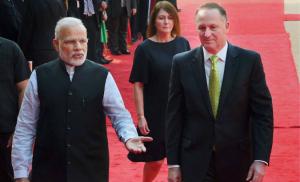
India’s Prime Minister Narendra Modi has said that his country was keen to establish a ‘Comprehensive Economic Cooperation Agreement’ but stopped short of mentioning anything about a Free Trade Agreement (FTA).
Speaking to the media at Hyderabad House in New Delhi on October 26, 2016 soon after conclusion of official level talks of the two governments led respectively by him and New Zealand Prime Minister John Key, he said that the two sides “agreed to continue to work closely towards an early conclusion of a balanced and mutually beneficial Comprehensive Economic Cooperation Agreement.”
Key Words
“Balanced and mutually beneficial’ are the key words that would dominate renewed talks between the two governments, notably the chief negotiators.
Mr Key is known for his positive approach to issues and more importantly his optimistic vision over India but New Delhi would not commit to a pact that would compromise its farming sector that includes agriculture and diary industries.
We have more on this in our Leader appearing under Viewlink.
Trade and Investment
Mr Modi said that trade and investment were important issues that were discussed at the official talks.
“We both recognised the need for greater economic engagement to effectively respond to the growing uncertainties in global economy and agreed that expanding business and commercial ties should continue to be one of the priority items of our partnership. I am sure that the large business delegation accompanying Prime Minister Key will not only witness first-hand the investment opportunities on offer in India’s growth story. Their interactions will also build new commercial partnerships between our two countries. I would like to mention food processing, dairy and agriculture, and related areas in their supply chain as some of the areas of particular potential for bilateral cooperation. New Zealand’s strength and capacity in these sectors can combine with India’s vast technology needs to build partnerships that can benefit both our societies,” he said.
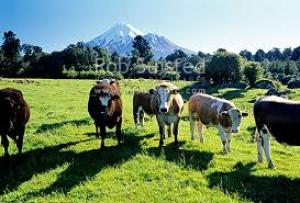
Dirty dairying in Taranaki appears to be decreasing as convictions against environmental offenders fall to new lows. Despite having the second highest number of dairy farms in the country and the highest number of farmers breaking the rules around ...
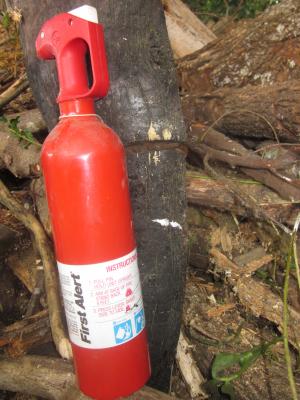
US-made First Alert extinguisher had undisclosed additional safety catch trigger
A US-made fire extinguisher on sale in New Zealand features an undisclosed second-tier safety trip which is in addition to the standard pull-pin release mechanism.
The second tier safety device on the extinguisher is comprised of a barely visible plastic filament. This must be pressed simultaneously with the white trigger at the top.
No indication is given on the instructions of the existence of this additional filament-press detonation mechanism. The three part operating instruction only states to Pull Pin/Aim/Press Lever.
Absolutely no mention is made of the barely visible filament device which also needs to be pressed in order to detonate the extinguisher.. Neither is this secondary device pictured on the extinguisher.A reader has presented the now-used extinguisher (pictured) to MSC-Newswire in order to draw attention to the need to for factories and workshops to test operationally one example of each of their fire extinguisher brands and model types in order for this type of problem to be identified prior to a fire instead of afterward.
The pictured extinguisher was thought to be faulty and valuable moments were lost in fighting a real-life fire. In the event hoses were required to put out a fire which could have been instantly extinguished had the pictured device been brought to bear at the start of the fire.
A problem with New Zealand’s imported extinguishers is that just because they are made for other jurisdictions with other national safety regulations so there will be differing levels of operating procedures and these, as in the instance of this US extinguisher, may not be pictured or described on the device itself.
All factory and works safety officials should test under operational conditions one sample of every brand and series model type of its extinguishers urged our informant. They noted that factory fires were volatile just because of the works environment. Every split second was crucial in suppressing them. Secondary, and in the instance of the pictured extinguisher, disguised activation steps must be factored in. Something that could only be achieved by practical and applied type-testing
“We want others to learn from our experience with this problem which itself seems to be hidden from sight.”
From the MESCNewsWire reporters' desk
Guinness World Record holder navigates for son, 73-year old ex-Formula 1 McLaren team manager, Alastair Caldwell in Oct/Nov rally
(PR NewsChannel) / October 31, 2016 / FLAGSTAFF, New Zealand
Dorothy Caldwell, who lives in Flagstaff, New Zealand, and is the Guinness World Record holder as the world’s oldest active rally navigator, is to take to the roads again in the New Zealand Haka Classic Rally, a 5,354 kilometer classic car competition on the North and South Islands of New Zealand. The rally starts in Auckland on October 30th and heads to Wanaka before coming back to Auckland again, ending on 25th November. Dorothy will be navigating for her son, 73-year old Alastair Caldwell, in his 1963 Rolls Royce Silver Cloud III. The same team and car took part in the TransAm rally from New York to Alaska four years ago and Dorothy won the “Spirit of the Rally” award and her team came 5th overall.
Alastair Caldwell grew up in New Zealand and in 1966 attended the Tasman series racing, where the mechanics encouraged him to come to England to work in motor racing. He did so and became a notable part of the multi-national McLaren Formula 1 racing team. In the 1970s he became team manager, managing world champions such as Emerson Fittipaldi, Nelson Piquet and James Hunt. In fact, this week, October 24th, marks the 40th anniversary of James Hunt winning the F1 World Championship at the Japanese Grand Prix in 1976, with Alastair as team manager, an event immortalized in the 2013 movie, Rush. Alastair has recently done an interview on Sky TV and a talk at London’s RAC Club to commemorate this anniversary.
Despite having retired from Formula 1, Alastair continues his colourful life both on the road and in business. In 1983 he established the United Kingdom’s first self storage company, Space Station.
Under increasing demand, Space Station is now the longest-running self storage company in the UK, operating in Berkshire, London and Birmingham, for domestic, business and student use – where Alastair can be found hard at work when not hard-rallying classic cars and taking part in public engagements in the racing world.
Released through PRNewsWire
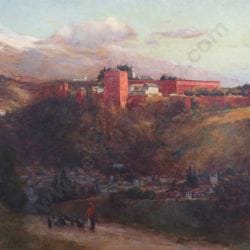
Palace of the Alhambra, Spain
By: Charles Nathaniel Worsley (1862-1923)
From the collection of Sir Heaton Rhodes
Oil on canvas - 118cm x 162cm
Valued $12,000 - $18,000
Offers invited over $9,000
Contact: Henry Newrick – (+64 ) 27 471 2242
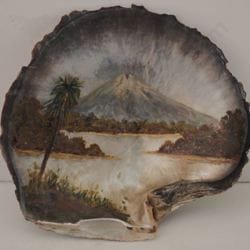
Mount Egmont with Lake
By: John Philemon Backhouse (1845-1908)
Oil on Sea Shell - 13cm x 14cm
Valued $2,000-$3,000
Offers invited over $1,500
Contact: Henry Newrick – (+64 ) 27 471 2242

|
|