
Founded by Max Farndale 1947 - 2018
Commerce and Consumer Affairs Minister Paul Goldsmith has announced an appointment to the Takeovers Panel, the regulator of the corporate takeovers market.
Nathanael Starrenburg has been appointed as a new member of the Panel for a five-year term, from 25 October.
“Mr Starrenburg has a strong background in corporate and transactional law. His practical experience in securities law compliance and equity capital markets transactions will add considerable value to the Takeovers Panel,” Mr Goldsmith says.
Mr Goldsmith also acknowledges outgoing panel member David Flacks.
“I would like to thank Mr Flacks for the significant contribution he has made to the performance of the Panel since his appointment in 2011,” says Mr Goldsmith.
Further information on the Panel can be found at www.takeovers.govt.nz.
New Zealand’s oceans, coasts, and marine wildlife are under growing pressure, according to the first national report from the Ministry for the Environment and Statistics New Zealand about the marine environment.
Our marine environment 2016, released today, identifies three top areas of concern:
global greenhouse gas emissions are causing ocean acidification and warming – changes that will continue for generationsmost of our native marine birds and many mammals are threatened with or at risk of extinctionour coasts are the most degraded of all marine areas, due to sediment and nutrients washed off the land, introduced marine pests, and seabed trawling and dredging.Statistics NZ also released the companion report, New Zealand’s marine economy: 2007–13 today. It showed that the marine economy contributed 1.9 percent, or $4 billion, to our gross domestic product (GDP) in 2013, about the same as the 2 percent contribution in 2007.
Government Statistician Liz MacPherson said the economy and environment reports complemented each other, and provided a wider picture of our relationship with the marine environment.
“We’re a maritime nation. Having healthy and resilient oceans is important for all New Zealanders and for our economy. Today’s marine environment report shows that our marine environment is facing a number of serious challenges,” she said.
Secretary for the Environment Vicky Robertson said our oceans are facing multiple and cumulative pressures that have been building over generations. They are pressures from both land and sea-based human activities.
She said the report shows that one of the biggest challenges for our oceans comes from global greenhouse gas emissions.
“Our waters have become more acidic from absorbing excess CO2. This affects the creatures that live there. Among other things, ocean acidification makes it more difficult for shellfish, like pāua and mussels, to form shells.
“Climate change is also warming the ocean and causing sea-level rises, which impact not only on fish but also other wildlife and our own coastal communities.”
Ms Robertson said the report shows that some marine wildlife and coastal habitats are in a fragile state.
“Ninety percent of our native seabirds and shorebirds are threatened with or at risk of extinction. More than a quarter of our native marine mammals are threatened with extinction.
Fishing bycatch, introduced predators, and habitat change are among a raft of reasons for the poor state of much marine wildlife.”
Ms Robertson said where we have identified the challenges and worked together on addressing the issues, we are seeing results. For example, changes in fishing practices in recent years have eased some pressures on the marine environment.
“The number of seabirds caught by commercial fishing bycatch almost halved from around 9,000 in 2003 to 5,000 in 2013. The improvements are likely to be helped by mitigation measures, such as bird-scaring and sea lion exclusion devices.
“By shining a light on the issues through this report we are able to focus on the most pressing and urgent areas to address. It also gives us a better understanding of the size of the challenges ahead. We now have to come together to focus on what each of us can do to protect its future,” Ms Robertson said.
Ms MacPherson said offshore minerals (mainly oil and gas) were the largest contributor to the marine economy, at $2 billion in 2013. Shipping contributed $980 million and fisheries and aquaculture contributed $896 million.
The marine economy provided 102,400 jobs, mostly in shipping, and fishing and aquaculture.
Ms MacPherson said Our marine environment 2016 used the most up-to-date data available.
“National data on many marine issues are limited, but the report also draws on scientific literature and expert opinion.
“Another theme that came through in producing this report is how much we don’t know about our marine environment,” she said. “The environmental reporting programme is working to improve our data over time. However, New Zealanders need to consider the costs of delaying action in the absence of perfect information.”
The report is the first since the Environmental Reporting Act was enacted in June 2016. The next report – about fresh water – will be out in April 2017.
Moving manufacturing operations back home is in full swing in the US and UK, and is starting to happen here, as Alan Johnson reports on Australian Manufacturers Monthly.
WITH the Australian dollar now firmly ensconced around the 75c level against the US greenback, more and more manufacturers are seriously looking at moving their manufacturing operations back to Australia.
The move will counter decades of off-shoring, which to date has faced no substantial market-based challenge within Australia.
The trend of “off-shoring” – sending work overseas – hit manufacturing across the developed world decades ago, and in most cases it was inevitable, as it was just not feasible at the time to compete with Asia on cost for repetitive manual labour.
Today, global competition has steered Australian manufacturing towards its advantages, for example investing in automation and hi-tech machinery, as well as meeting specialised local requirements, such as flexibility and fast turnarounds.
Given these advantages, the balance between off-shoring and re-shoring production, also known as on-shoring, is now finely balanced in Australia.
Not so in the UK for example, where last year one in six manufacturers brought production back from overseas, or are in the process of doing so.
Most industries and regions have more businesses and staff than last year, with growth led by the construction industry, Statistics New Zealand said today. Mining is the only industry to go against the trend.
The latest business demography statistics showed 515,000 enterprises in total in New Zealand at February 2016, up 1.6 percent from the previous year. Those businesses employed 2.1 million paid staff, up 2.4 percent in the same period.
For the fourth year in a row, more businesses are starting up than shutting down.
“Increases in business and employee counts over the year to February 2016 – employee counts in particular – were spread across almost all industries and regions,” Business Register manager Mary Reid said. “Of the 19 industries, 16 had more enterprises, and all except mining had more staff than they did a year ago.”
Continuing its steady growth trend of the past few years, the construction industry had rises of 3.7 percent in the number of enterprises, and 4.8 percent in the number of staff over the February 2016 year. Construction engaged 148,000 staff at February 2016.
Over the past decade, the health care and social services industry has added 39,000 or 21.1 percent more employees – the highest addition by any industry. This industry employed 224,000 people at February 2016, making it a close second to manufacturing – historically, the largest employer. Manufacturing employed 235,000 people at February 2016.
The Auckland and Bay of Plenty regions had the highest growth in the number of business locations over the year, with increases of 3.3 percent and 2.4 percent, respectively. Auckland continued to dominate the employment scene. More than a third of all staff in New Zealand at February 2016 worked in Auckland. Job numbers in Auckland were up 27,000 (3.8 percent) compared with February 2015.
Canterbury continued to be the second-largest region in terms of business locations and staff, and had a 1.0 percent annual rise in both these measures during the year to February 2016. This was lower than in the previous three years, where Canterbury business numbers and staff grew more than 3 percent on average.
Note: Labour market statistics for the September quarter are due out in early November.
New Zealand Business Demography Statistics: At February 2016 – for more data and analysis
"Nick Crocker sold his first company, We Are Hunted to Twitter and his second company, Sessions to My Fitness Pal. He now invests in Australian startups through Starmate, works as Chief of Staff at Under Armour Connected Fitness and is a Venture Partner at Australian fund Blackbird Ventures.We’re looking to bringing him to New Zealand next week and to find out what he has learnt in the process of building two successful startups. Venues Christchurh, Tauranga, Wellington and AucklandTickets here
Emirates has signed an agreement with Thales to equip its new Boeing 777X fleet with Thales AVANT inflight entertainment system.
The airline will work in partnership with Thales to develop and enhance the state-of-the-art inflight entertainment and connectivity (IFEC) system to be fitted on its Boeing 777X aircraft due for delivery starting in mid-2020.
This major investment underscores Emirates’ continued commitment to providing the best possible passenger experience, and its strategy to ensure the best and latest technology complements its young and modern fleet.
“Our partnership with Thales represents a significant investment and emphasis on customer experience, which has always been a priority for us. The new Boeing 777X aircraft will herald a new era for the Emirates fleet, and we want to ensure that our product offering on these fuel-efficient planes will be a benchmark for the industry, including the inflight entertainment experience. We look forward to revealing more details when the time is right,” said Adel Al Redha, Executive Vice President and Chief Operations Officer, Emirates Airline.
He added: “In addition to customers, the size and long-term nature of this deal also benefits the broader aviation industry, and we are pleased that this new partnership will help support thousands of highly skilled jobs across the Thales ecosystem - in France and elsewhere around the world.”
The multi-million dollar deal covers IFEC systems for Emirates’ first 50 Boeing 777X aircraft. The airline has a firm order of 150 Boeing 777X aircraft. The new Thales AVANT system will feature an innovative and highly customisable user experience, providing a further boost to Emirates’ award winning inflight entertainment system, ice.
"Thales is proud to be selected by Emirates to provide the award winning AVANT inflight entertainment solution for their future B777X fleet. Emirates is at the forefront of innovation in passenger experience delivering remarkable services to its customers and Thales is honoured to support this continued success. We are committed to delivering excellence in customer satisfaction and driving the highest standards in passenger engagement, now and into the future,” said Dominique Giannoni, CEO, Thales InFlyt Experience.
Emirates has an unbeaten 12-year record as the winner of World’s Best Inflight Entertainment award at the Skytrax World Airline Awards. The airline offers up to 2,500 channels on demand including the latest blockbuster movies, award-winning television box sets, comedy series, live TV, music and computer games. Currently, 85% of Emirates’ fleet of 250 passenger aircraft is equipped with Wi-Fi on board including all A380 aircraft, and 107 aircraft are equipped with live TV, which has up to nine channels of live news and sport.
Victoria University of Wellington astrophysicists are part of an international team that today releases one of the widest-ever radio wave surveys of the Universe and the first to reveal it in such technicolour detail.
Published in the Monthly Notices of the Royal Astronomical Society, the GaLactic and Extragalactic All-sky MWA, or GLEAM, survey has produced a catalogue of 300,000 galaxies observed at frequencies from 70 to 230 MHz by the Murchison Widefield Array (MWA), a $50 million radio telescope located at a remote site in the West Australian outback.
Victoria Associate Professor of Physics Melanie Johnston-Hollitt and postdoctoral fellows Dr Cathie Zheng and Dr Luke Hindson were the New Zealand arm of a 19-strong multi-country team that designed and executed the survey and processed the data.
Associate Professor Johnston-Hollitt is also Chair of the MWA Executive Board.
GLEAM began collecting data in 2013 and Associate Professor Johnston-Hollitt says the work has significantly expanded the parameters of scientific inquiry and knowledge.
“There are a number of questions we have about the Universe we can use this survey to answer,” she says.
Two studies by Associate Professor Johnston-Hollitt, Dr Zheng, Dr Hindson (now at the University of Hertfordshire in the United Kingdom), former student Luke Pratley (now at University College London) and current Master’s student Stefan Duchesne have already benefited from GLEAM and Associate Professor Johnston-Hollitt is preparing to publish papers on the results.
“We know from other indicators our galaxy should have about 1,000 ‘supernova remnants’—the remains of exploded stars. But before we could only see 300. One of the reasons is because the older, dimmer ones are hard to detect at high frequencies. With GLEAM, observing at lower frequencies, we have been able to find about 20 percent more remnants.
“The other thing my group at Victoria has been working on are ‘galaxy clusters’. Galaxies in the Universe are not distributed uniformly. They cluster together in anything up to thousands of galaxies and those clusters move and at some point collide, producing shockwaves and turbulence on an epic scale. But those shockwaves are very, very faint and when we have looked for signatures of collisions using radio telescopes with higher frequencies we haven’t found that many. Since January, using GLEAM, we have doubled the number previously known—identifying more than 240 radio signatures of shockwaves or turbulence in clusters.”
Lead author of the GLEAM catalogue Dr Natasha Hurley-Walker, from Australia’s Curtin University and International Centre for Radio Astronomy Research (ICRAR), says some of the radio waves observed in the survey have been travelling through space for billions of years.
“The GLEAM survey is a significant accomplishment for the MWA radio telescope and the team of international scientists that worked on it,” says Dr Hurley-Walker.
Completing the survey is a big step on the path to SKA-low, the low frequency part of the international Square Kilometre Array (SKA) radio telescope to be built in Australia in the coming years.
“By mapping the sky in this way, we can help fine-tune the design for the SKA and prepare for even deeper observations into the distant Universe,” says MWA Director Associate Professor Randall Wayth, from Curtin University and ICRAR.
If tourism is producing massive income for New Zealand why are John Key and Bill English putting it in their “back pockets” and distributing just a few “coins” to the real earners?
“That’s exactly what they did this year by giving local councils just a paltry total of $12 million funding over four years to support their infrastructure costs,” says New Zealand First Leader and Northland MP Rt Hon Winston Peters.
“Meanwhile, the government has collected GST from international tourism of $1.1 billion.
“The government is out of touch with the burden put on ratepayers. In small town NZ tourist coaches, rental cars and campervans are parked up at the toilet blocks where they don’t pay a cent, and too few spend in the town on food and drinks.
“Tekapo has an $800,000 cost for its toilet project, Hot Water Beach at Hahei used paid parking to fund toilets and Kaikoura is now wondering how to pay for toilets near the popular seal pup waterfall north of the town.
“Last year, a local government working group revealed that they spent $140 million on the tourism industry mostly in funding promotions, events and I-Site visitor centres. That excluded toilets, sewerage costs, extra water costs and bylaw enforcements.
“Why isn’t a slice of the government’s take being diverted to communities to help pay for infrastructure that support tourism?” says Mr Peters.
“A Lincoln University study estimated that in 2015 councils spent $37.90 per head of population on the tourism industry, that rose to $59.60 per head in areas with less than 10,000 people and in some councils, such as Mackenzie and Waitaki, it was over $80 a head.”
A New Zealand First release
As questions mount over the Air Force’s Boeing 757’s being used as the Prime Minister’s private jet, New Zealand First can reveal that the government ignored 2010 advice to sell them.
“At $31,000 an hour to fly, the Prime Minister’s luxury fleet of Boeing 757’s were deemed poor Value For Money in a 2010 high-level report,” says New Zealand First Deputy Leader and Defence Spokesperson Ron Mark.
“Strangely, the recommendation to sell the 757’s and charter Air New Zealand instead, were one of the few recommendations not adopted from the Defence razor gang led by Dr Sir Roderick Deane and Pacific Road Corporate Finance.
“In 2010, Sir Roderick concluded: “In terms of reduced operating costs for NZDF, the sale of the [Boeing 757] aircraft and the acquisition of certain Strategic and VIP Transport services from the likes of Air New Zealand would deliver the greatest VFM [value for money]”.
“Air New Zealand was even sounded out because they said that they’d be able to: ‘meet all NZDF's needs with the possible exception of certain freight services, flights to and from the Antarctic Continent and flying in or close to hostile environments’.
“These impediments are easily solved because the Hercules can fly to the Ice, we can buy space on larger allied aircraft while specialist charters can be used for ‘hostile environments’.
“So why did National disastrously ‘civilianise’ swathes of the Defence Force and even axe territorial bands but refused to part company with their precious Boeing 757’s? These aircraft cost $31,000 an hour to fly in 2010 at 700 annual flight hours but given the current annual average of 571 hours will be costing us a lot more.
“This 2010 report reinforces New Zealand First’s point that VIP aircraft like the B757 are square pegs in the Defence Force’s round hole. The opportunity cost for each VIP aircraft is a new C130-J Hercules type aircraft and New Zealand First knows which one we’d prefer in RNZAF colours,” says Mr Mark.
Microsoft wrapped up its New York Windows 10 event a few hours ago and the two-hour keynote packed a lot of announcements about upcoming Windows 10 features, new Surface hardware and more. As usual, these kind of fast-paced events are a bit hard to digest and if you’re looking for a good summary of everything Microsoft unveiled today, the company just helped us by highlighting its top announcements from the conference.
Following the release of the Windows 10 Anniversary Update last summer, the next major Windows 10 release will be called the Creators Update and will be available as a free update in early 2017. While Windows Insiders already had a chance to test some new features and improvements in recent preview builds (codenamed “Redstone 2“), this upcoming Creators Update, as it names suggests, will turn the lights on designers, makers, and content creators. Expect to read a lot about 3D design, game streaming, and more in the coming days and weeks.

Palace of the Alhambra, Spain
By: Charles Nathaniel Worsley (1862-1923)
From the collection of Sir Heaton Rhodes
Oil on canvas - 118cm x 162cm
Valued $12,000 - $18,000
Offers invited over $9,000
Contact: Henry Newrick – (+64 ) 27 471 2242
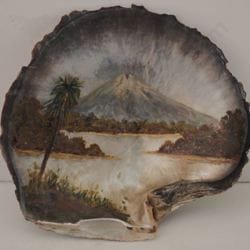
Mount Egmont with Lake
By: John Philemon Backhouse (1845-1908)
Oil on Sea Shell - 13cm x 14cm
Valued $2,000-$3,000
Offers invited over $1,500
Contact: Henry Newrick – (+64 ) 27 471 2242
