
Founded by Max Farndale 1947 - 2018
Reaching for the moon with NASA - A Victoria University of Wellington PhD graduand is investigating what new information can be gained about moonquakes during his postdoctoral fellowship at NASA.
Jesse-Lee Dimech, who is completing his PhD in Geophysics at Victoria, says seismic energy is useful for looking inside planets.
“Using the energy from earthquakes, or in this case, moonquakes, we can gain insight into the composition and structure of the Moon.”
Between 1969 and 1972, five of the Apollo missions successfully placed seismometers at landing sites on the Moon, which recorded ground motion and radioed this information back to Earth. Contained in this dataset are more than 13,000 moonquakes that were recorded up until 1977.
“I’m working on categorising and detecting moonquakes using the Apollo seismic dataset, as well as some extra datasets not previously used for this purpose. This particular work is being done in collaboration with Dr Renee Weber, my advisor at NASA, and Dr Brigitte Knapmeyer-Endrun, a scientist at Germany’s Max Planck Institute for Solar System Research.
“It's a great opportunity to work with some of the world's top planetary seismologists. By applying new seismic analysis techniques we may be able to learn new information about the Moon—even from such an old dataset,” says Mr Dimech.
One of those new techniques is shear wave splitting analysis, a key research interest of Professor Martha Savage from Victoria’s School of Geography, Environment and Earth Sciences, who has collaborated with Mr Dimech to undertake the first shear wave splitting analysis off Earth.
“When seismic waves travel through layers of rock they split in much the same way light does when it hits a crystal. By measuring how much splitting occurs, we can infer physical properties from the rock, such as stress and fracturing, the presence of fluids, and rock laminations,” says Mr Dimech.
Another technique, developed by Victoria’s Associate Professors Richard Arnold and John Townend, is a statistical method of examining the geometry of the faults responsible for earthquakes.
“I applied this technique in my PhD to earthquakes we found in the upper mantle—the layer beneath the crust—which was able to tell us what type of faults produced them. We will be using a modified version of this code to understand the type of faulting associated with ‘deep’ moonquakes, which are situated about halfway between the Moon’s surface and its core.
“I’m continuing to work with Professor Savage and Associate Professor Arnold while I’m at NASA. New Zealand has some great scientific talent and I’m excited about maintaining these relationships and building new ones.”
Some of the techniques Mr Dimech uses may also be useful in helping NASA learn about the composition of Mars when they land a seismometer there in two years’ time as part of the InSight mission to Mars.
Australian-born Mr Dimech says he has loved space since he was a child, and a postdoctoral role at NASA is the culmination of a lifelong ambition.
“I was actually pen pals with Australia’s first astronaut Andrew Thomas. We exchanged several letters when I was a kid, and I even talked to him on the phone once, as well as fellow astronaut John Glenn who just happened to be in the office at the time. They definitely inspired me. I was also the youngest member of an astronomy club. I’ve always been fascinated by NASA.”
Over 150 people from all over the country with gather at Victoria University of Wellington this week to examine how China’s modernising agricultural sector may impact New Zealand exporters, business relations and trade policies.
The two-day conference, The Rise of Chinese Agriculture, has among its guest speakers 17 international speakers representing Chinese and New Zealand government departments, New Zealand practitioners in China and top international scholars from five countries. The conference is organised by the New Zealand Contemporary China Research Centre.
image013.pngVictoria University International Relations Senior Lecturer and Research Fellow at the China Centre, Dr Jason Young, says China’s agriculture and food sector is in a period of “profound transformation” as it shifts from small-scale family plots to large industrial and commercial agriculture activities.
“The transformation is driven by the Chinese government’s focus on agricultural modernisation, greater use of science and technology, and improved food regulation and safety, as well as a growing demand from consumers for high quality food products.”
Dr Young, who will present at the conference, says the modernisation of China’s agriculture creates opportunities for New Zealand food exporters but could also generate new competition and regulatory requirements.
“New Zealand food exporters need to understand what these policy changes may look like so they can be prepared for them, and also be in a good position to make the most of new opportunities.
For example, Chinese agribusinesses are increasingly looking overseas for international partnerships. At the conference, we’ll discuss the potential opportunities, as well as the motivations for Chinese companies seeking investment opportunities in New Zealand or with New Zealand companies in China.”
New Zealand Contemporary China Research Centre chair and conference organiser, Tony Browne says the conference will be “New Zealand’s most comprehensive analysis of China’s food and agricultural policies and market characteristics”.
“We have an incredible line up of speakers, including representatives from China’s Ministry of Agriculture, international policy and strategy advisors, plus leading international experts across agricultural policy, economics, international trade and investment and Chinese economic reform. This conference will be very helpful in gaining a better understanding of the challenges and changes ahead.”
Visit the conference webpage for more information on the conference including the programme, list of speakers and registration details.
Australia's beleaguered farmers are poised to unlock vast new export markets as producers, peak bodies and both sides of politics prepare to bury their differences to sell products into China under a "one brand, one logo" approach for the first time.
The new strategy – under wording and a trade symbol designed for maximum Chinese impact – would pitch Australia in a head-to-head race against the gold-standard in export marketing, "100% Pure New Zealand".
'Grey market' exports of vitamins and baby formula to China brought in $1.3b in revenue last year. The breakthrough, facilitated by the recent free trade agreement, would have all Australian food products including beef, vegetables, cheese, wine and high-end condiments predominantly branded as Australian ahead of their individual branding, while also certifying them as clean, green and safe.
The proposed high-tech, high-visibility labelling would also be designed to be counterfeit-proof and to allow China's increasingly safety and quality-conscious consumers – in a country where the middle class is projected to grow by 350 million people over the next four years – to trace the origins of individual products back to a specific animal or producer.
Pacific Aerospace along with its Chinese joint-venture will announce further plans to grow China’s general aviation sector at the upcoming aviation spectacular Airshow China, just days after opening a big custom-built aircraft manufacturing plant at Changzhou.
The opening of the 10-hectare facility at Changzhou airport on October 21, attended by several hundred Chinese and New Zealand businesspeople, joint venture leaders and Chinese and New Zealand government officials and plant workers, celebrated the company’s first aircraft, a reassembled P-750 XSTOL, to roll out through the new facilities. The P-750 XSTOL is the world’s most versatile utility aircraft, pioneered in New Zealand.
The aircraft, registration number XL204, was flown immediately after the plant opening to Zhuhai in Guangdong, where it will participate from November 1-6 in the China International Aviation & Aerospace Exhibition, also known as Airshow China, the largest aviation event in mainland China.
Pacific Aerospace and joint venture chief executive, New Zealander Damian Camp said the new company would announce at the Zhuhai airshow at least two major initiatives to spur general aviation sector development in China, as well as showcasing the P-750 aircraft in “a significant demonstration that we are in this market and serious about it”.
“This intensive eight-day programme, Te Tira Toi Whakangao, is part of the Government’s push for more export growth and high-value jobs for Māori,” Māori Development Minister Te Ururoa Flavell says.
“Innovation and technology careers and businesses offer a path to doing that. We need to connect Māori to the best programmes that connect themn to jobs and income growth. Much of this happens at a whanau and community level. But this programme offers it on a global scale which is huge.
“Māori-owned technology is an area with huge growth potential. The start-ups and established technology companies taking part in this visit are already on a growth trajectory, and many have exciting commercial developments coming together.
“The challenge for the delegation, the New Zealand Government and our industry partners is to take this experience and apply this knowledge to benefit other emerging Māori tech start-ups and encourage more rangatahi to enter the tech space, for the benefit of New Zealand.”
The technology companies will be accompanied by leading Māori investors who have assets across a range of sectors, and are looking to learn more about global tech opportunities and where New Zealand businesses fit in.
The programme aims to:
“The US is already our third largest trading partner and there is plenty of opportunity for New Zealand technology companies to expand business partnerships and explore new ones, and leverage US knowledge networks to learn more about the global technology landscape.”
The programme will run from 30 October – 8 November and has been organised by New Zealand Trade and Enterprise with support from Ernst Young’s Māori advisory practice EY Tahi.
Last month, Science and Innovation Minister Steven Joyce and Māori Development Minister Te Ururoa Flavell opened applications for the Government’s Māori Digital Technology Development Fund, designed to improve and promote pathways for Māori to enter the digital technology sector.
Energy and Resources Minister Simon Bridges leaves for Singapore today to attend International Energy Week.
The global event brings together 28,000 representatives of the energy industry, Governments and non-government organisations from across the Asia-Pacific region and from around the world.
Discussions will focus on the future of energy supply and ensuring people across the region have access to reliable energy.
Mr Bridges will take part in panel discussions at the Singapore Energy Summit, the Energy Access Forum, the Asia Clean Energy Summit and the Gas Asia Summit.
“Globally we are seeing low oil, gas and coal prices but at the same time we have to take significant steps to reduce our carbon emissions if we are to manage the impacts of climate change,” Mr Bridges says.
“For the Asia-Pacific region in particular, which contains many developing nations, this situation raises some big questions. It is important for New Zealand to take part in the debate.
“With more than 80 per cent of our electricity coming from renewable sources, it’s an ideal opportunity to share our experience with renewable energy and promote our considerable expertise in renewable technologies.”
New Zealand has been ranked the top country in the world for doing business in the World Bank’s 2017 Doing Business Report - up one place from last year and up from third in 2014.
The report, which examines regulations that enhance or constrain business activity, assesses 190 countries and ranks them according on the impacts of their regulatory environment on business.
“This is the first time New Zealand has topped this list. For the past two years we have ranked second after Singapore, and in 2014 we were third behind Singapore and Hong Kong,” Mr Joyce says.
The report is made up of ten different indicators that affect the life of a business. New Zealand ranks first in half of these including starting a business, dealing with construction permits, registering property, getting credit, and protecting minority investors.
The report also notes:
“The report highlights the good work government agencies are doing through our comprehensive Business Growth Agenda to reduce the cost of doing business. There is always room to improve further and the Government will continue to work hard to make it easier to do business in New Zealand,” Mr Joyce says.
Reducing the regulatory burden is all part of creating a competitive and productive economy that provides more and better paying jobs for New Zealanders and their families.
The full report is available at http://www.doingbusiness.org/reports/global-reports/doing-business-2017
BATTLEBORO, NC (PRWEB) OCTOBER 25, 2016 - Ossid, powered by Pro Mach, introduces at Pack Expo 2016, November 6 - 9 in Chicago, the OTS-32 tray sealer, a rugged mid-range machine designed for those growing markets that require a robust, affordable, and flexible solution for tray sealing. At the show, Ossid will also showcase the OTS-10VMAP table top tray sealer and the 500Si high speed stretch overwrapper. The tray sealer comes loaded with new vacuum skin pack and modified atmosphere packaging capabilities, and the company’s premier stretch overwrapper will be demonstrating PVC stretch overwrap, along with application of decorative labels to tray tops and bottoms. (Ossid Pack Expo Booth #S-3716)
Featuring Three Exceptional Application SolutionsThe flexible OTS-32 tray sealing machine for mid-range packaging line speeds can produce ambient, modified atmosphere, and vacuum skin pack packaging. It is printed film capable and features quick tooling changeover and rugged stainless steel construction. Like all Ossid machines, it offers exceptionally stable and trouble-free operation shift after shift.
The OTS-10VMAP table top tray sealer, which was introduced earlier this year, will demonstrate for the first time its vacuum skin pack/modified atmosphere packaging capabilities, which produce long shelf life for case ready pork, chicken, beef, vegetables, and other fresh foods. The OTS-10 family of machinery is designed to meet the production requirements of small to medium sized processors. The OTS-10 tray sealer is also ideal for larger processers involved in test marketing products and/or for laboratory production of sample packaging.
For the first time at Pack Expo, the Ossid 500Si high speed stretch overwrapper features seamless integration with top and bottom application of decorative labels. The 500Si produces tightly wrapped, PVC case ready packaging at speeds of up to 120 trays per minute. An intuitive HMI ensures ease of operation, and rapid, tool-free changeover between package sizes. The open stainless steel frame and other construction aspects are compatible with the harsh environments of poultry and meat packaging facilities. The 500Si has a relatively small footprint and is ideal for space-constrained environments.
Additional Show DemonstrationThe Ossid Integrity form fill seal machine will demonstrate pharmaceutical packaging – syringe packs – as an integral part of the Pro Mach integrated pharmaceutical packaging line in the Brenton Engineering Booth # S-3738.Be sure to visit the Ossid Booth # S-3716. For more information on the OTS-32, OTS-10, 500Si, and Integrity, call the Ossid sales department at 1-800-334-8369 and visit http://www.Ossid.com.
Universities, polytechnics, local councils and hospitals are being given a leg up to get started on projects to improve their energy management to save money, reduce emissions and improve the quality of services they provide.
The Energy Efficiency and Conservation Authority (EECA) today opened the latest funding round for Crown loans to support energy efficiency and renewable energy projects across public sector organisations.
EECA Business General Manager Greg Visser said public sector organisations could access the low-cost, interest-free loans to finance investments in energy efficiency improvements and renewable energy technology.
“The opportunities are incredibly varied, a hospital may choose a more environmentally friendly system to heat their building while a council may want to invest in electric vehicles.
“These kinds of projects can benefit the communities they work with greatly, whether it’s improved comfort for hospital patients, better accommodation facilities for students, or reduced costs for rate payers.”
Like businesses, public sector organisations could save up to 20% of the energy they use through smarter energy use. EECA can support efforts to improve energy management through Crown loans, advice to create a long-term focus on energy management, and through other forms of co-funding.
Mr Visser said the loans were a great chance for public sector organisations to be innovative and prioritise energy management. There is $2 million in funding available for the loans in total. The round closes on 25 November.
“Kapiti Coast District Council has used almost $1.5 million in Crown loans to fund a wide variety of energy efficiency projects, from sewage sludge drying to swimming pool efficiency. As a result itsenergy costs decreased by about $350,000 a year.
“Southern District Health Board was able to upgrade energy management systems at Kew Hospital using a combination of Crown loans and EECA funding in 2014,” Mr Visser said.
“The project will provide annual energy cost savings of $138,000 and carbon reductions of 1,350 tonnes a year.
“Those results speak for themselves, they’re good for the organisation but all New Zealanders benefit when a public sector agency is energy efficient.”
In the past five years, around 40 projects have received Crown loans, resulting in total cumulative savings of $9 million for the public sector and additional carbon reductions of over 5,000 tonnes each year.
The Commerce Commission has given clearance to the Wallace Group Limited Partnership to acquire up to 100% of the assets and business of Wallace Corporation Limited, Farm Brands Limited (and related companies) and Keep It Clean Limited.
The merging parties are involved in the rendering of animal waste materials into finished products, such as animal feed.
The Commission considered the impact of the acquisition on various buying markets. Namely it looked at the purchase of mixed animal material from shops in Canterbury, the purchase of mixed casualty material in the lower South Island and the direct purchase by individual species from meat processors in the Canterbury region. It also considered the effects on two selling markets: the supply of toll rendering services of animal material on behalf of customers and the supply of various finished rendered products, including meat and bone meal.
Chairman Dr Mark Berry said the Commission is satisfied that the acquisition will not have, or would not be likely to have, the effect of substantially lessening competition in the affected markets.
“In shop collection and the direct collection of pork material, the Commission considers that the merger is unlikely to result in any significant change to the competitive situation. In the other affected markets, we consider that suppliers of animal materials would continue to have alternative options after the merger,” said Dr Berry.
A public version of the written reasons for the decision will be made available on the Clearances register when ready.

Palace of the Alhambra, Spain
By: Charles Nathaniel Worsley (1862-1923)
From the collection of Sir Heaton Rhodes
Oil on canvas - 118cm x 162cm
Valued $12,000 - $18,000
Offers invited over $9,000
Contact: Henry Newrick – (+64 ) 27 471 2242
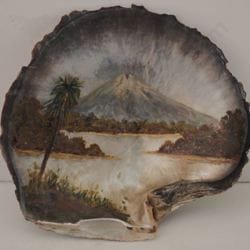
Mount Egmont with Lake
By: John Philemon Backhouse (1845-1908)
Oil on Sea Shell - 13cm x 14cm
Valued $2,000-$3,000
Offers invited over $1,500
Contact: Henry Newrick – (+64 ) 27 471 2242
