
Founded by Max Farndale 1947 - 2018
"Infrastructure New Zealand better reflects the wide range of priorities facing the organisation today, including transport funding, project procurement and regional governance and planning reform," says Infrastructure New Zealand chief executive Stephen Selwood.
"When NZCID was created 12 years ago, New Zealand's infrastructure challenges were of a different kind. We had severely under-invested in assets critical for economic and social development for a generation. We needed investment and we needed it urgently. Our entire organisational focus was on infrastructure development.
"Pleasingly, as a country we have since tackled many of our most urgent priorities. We've invested in our electricity backbone, ramped up investment in transport networks across the country and transformed our telecommunications sector from a global laggard to world leader, for example.
"But significant opportunities for improvement remain. "Lifting capability in public procurement of major projects has potential to save the country billions of dollars over coming years. Getting land use and pricing right could make our transport dollars go much further - especially in Auckland. Revising infrastructure responsibilities so that asset owners have the resources and capability to deliver could see a step change in service delivery in the provinces.
"Our new name - Infrastructure New Zealand - better encapsulates our role as New Zealand’s peak infrastructure industry body. "Our immediate priorities will be to focus on the really challenging issues that continue to hold New Zealand back including:
"The new logo represents a connected New Zealand. It symbolises networks across transport, energy, water, telecommunications and social infrastructure.
"It also symbolises our strong desire for effective partnerships between the public and private sectors to deliver better outcomes for all of New Zealand," says Selwood.
Infrastructure New Zealand can be found at www.infrastructure.org.nz
Applied management training
The Ministry of Works was a prime mover in further education and this especially applied to ensuring that its engineers were given practical management training. Throughout the 1960s, for example, its chief training officer G.P. Rabey with the Institute of Management conducted applied training sessions throughout the country.
In your anonymous communique “Do you Want Another Ministry of Works?” Your correspondent defines the problem which was becoming discernible in the 1960s of the government being the major operator, in this case of public works, while at the same time being civil engineering sector regulator. As was pointed out, this dual role had the immediate impact of an extreme safety regime everywhere, all the time.
The wisdom of the state relinquishing operational participation in civil engineering works, as your correspondent indicated, became abundantly obvious with the Pike River mining disaster in which there was a deliberate attempt to smear the state which was vulnerable as both operator and regulator.
The Ministry of Works had come to the end of its useful life by the 1980s. The private sector by then had developed to the point at which it could take over, and which it proceeded to do.
The notion that the Ministry of Works was behind the times, feather-bedded, or otherwise unequal to the technical demands placed upon it is quite untrue, and quite unfair to the dedicated people who successfully staffed it all levels and right to the very end.
As your correspondent states, it should instead be held up as a shining example of quite recent New Zealand civil engineering excellence.
Your correspondent likened its structure to that of the military. My recollection is that its administrative structure also resembled the Imperial one with its district officers, commissioners, and Residents.
All this did nothing to dispel the fusty image that now attaches to the old Ministry.
Yet it was exactly this clear-cut structure that pinned down responsibility and successfully sidestepped the type of multi-layer administrative duck shoving that has come to characterise big projects in the current era. Whoever was operationally responsible for projects at the MoW, it was always the engineer.
With good wishes
A.J. Springhall
Applied management training
The Ministry of Works was a prime mover in further education and this especially applied to ensuring that its engineers were given practical management training. Throughout the 1960s, for example, its chief training officer G.P. Rabey with the Institute of Management conducted applied training sessions throughout the country.
In your anonymous communique “Do you Want Another Ministry of Works?” Your correspondent defines the problem which was becoming discernible in the 1960s of the government being the major operator, in this case of public works, while at the same time being civil engineering sector regulator. As was pointed out, this dual role had the immediate impact of an extreme safety regime everywhere, all the time.
The wisdom of the state relinquishing operational participation in civil engineering works, as your correspondent indicated, became abundantly obvious with the Pike River mining disaster in which there was a deliberate attempt to smear the state which was vulnerable as both operator and regulator.
The Ministry of Works had come to the end of its useful life by the 1980s. The private sector by then had developed to the point at which it could take over, and which it proceeded to do.
The notion that the Ministry of Works was behind the times, feather-bedded, or otherwise unequal to the technical demands placed upon it is quite untrue, and quite unfair to the dedicated people who successfully staffed it all levels and right to the very end.
As your correspondent states, it should instead be held up as a shining example of quite recent New Zealand civil engineering excellence.
Your correspondent likened its structure to that of the military. My recollection is that its administrative structure also resembled the Imperial one with its district officers, commissioners, and Residents.
All this did nothing to dispel the fusty image that now attaches to the old Ministry.
Yet it was exactly this clear-cut structure that pinned down responsibility and successfully sidestepped the type of multi-layer administrative duck shoving that has come to characterise big projects in the current era. Whoever was operationally responsible for projects at the MoW, it was always the engineer.
With good wishes
A.J. Springhall
The US$11 million refurbishment project took two years to complete and is part of the airline’s continuous investment to improve and upgrade its products for a seamless and enjoyable travel experience.
Emirates’ premium customers, including those on the airline’s five daily New Zealand services to Dubai and beyond, can now look forward to an enhanced lounge experience with three new distinct concept areas within the Emirates Business Class Lounge. The latest food and beverage concepts cater to diverse tastes and include a barista experience in partnership with Costa Coffee, a Health hub with Voss water featuring healthier options, and an exclusive Moët & Chandon champagne lounge.
The new offering is in addition to the seven other locations within the lounge with gourmet cuisine prepared by on-site chefs and a complimentary full bar service, which includes premium wine, spirits and champagne.
All the food and beverages offered within the lounge are complimentary for Emirates First Class and Business Class customers, as well as Emirates Skywards Platinum, Gold and Silver members - the airline’s frequent flyer programme.
Barista experience
Customers passing through the Emirates Business Class lounge in need of a caffeine fix can enjoy complimentary freshly- brewed beverages prepared by Costa Coffee baristas as well as pastries, provided round the clock. The coffee bar will serve signature Costa drinks made from slow-roast beans of the coffee house’s own unique Mocha Italia blend.
Beverages available include iced coffees and favourites like cappuccinos and caffe lattes.
Health hub
For the health conscious traveller, Emirates has introduced the Health hub in partnership with Voss water. With an increasing demand for health, well-being and more nutritious meals, Emirates is the first airline to have a dedicated health hub within its lounge.
The new station allows travellers to rehydrate and recharge before their flights with a selection of fruit and water infusions. It also features a healthy menu of gourmet sandwiches, wraps, and salads. Healthier beverages such as a selection of juices and smoothies are also available.
Champagne lounge
Customers looking to unwind before their flight can look forward to the Moët & Chandon champagne lounge created exclusively for Emirates. The first-of-its-kind lounge to be located in an airport reinforces Emirates and Moët Hennessy’s longstanding partnership of over 25 Years.
Moët Hennessy champagnes are a mainstay of the Emirates experience; however, this is the first time an airline is serving four of Moët & Chandon's finest champagnes in one place. This includes Moët Impérial, Moët Rosé Impérial, Moët & Chandon Grand Vintage and Moët Nectar Impérial.
To complement each champagne, chefs from Emirates flight catering and the in-house lounge teams collaborated with Moët & Chandon, to create a unique selection of canapés - from sweet to savoury flavours. The canapé menus are changed monthly and include selections such as smoked salmon wrapped in nori with wasabi mayonnaise to complement the Moët & Chandon Grand Vintage 2006 and passion fruit and jasmine tea macaroons to be paired with Moët Nectar Impérial.
Guests can enjoy their drinks at the chic bar featuring a golden wave design adorned with 2,400 intricate gold leaves applied individually by hand.
The three new refreshment areas are the first of a several new concepts planned for the lounges at the Emirates hub in Dubai. In the coming year, Emirates is looking to further improve the customer experience by introducing a sports bar and a cocktail bar within its lounges.
The Business Class lounge in concourse B is one of six Emirates lounges at Dubai International Airport and is part of a network of 39 dedicated airport lounges located within major airports around the globe. Each lounge has been designed with the same attention to detail and exceptional service offering premium customers the highest standards of comfort and ease at every stage of their journey.
The newly refurbished lounge measures close to 10,000 square feet to accommodate over 1,500 customers – a 40% increase in seating capacity. In addition to the new refreshment stations, the children’s play area with arcade quality games has been doubled in size, and the Timeless Spa within its premise has been renovated and offers hair, beauty and therapy treatments.
Lounge guests can also refresh with a shower, unwind at designated quiet areas, stay up to date with the latest news and live sports and stay connected with complimentary Wi-Fi.
New wireless control technologies are being adopted by manufacturers and users of cranes and other lifting equipment.
Most of us find it odd to look back five or ten years to when our home computers were tethered to the wall by a cable. Somehow we just accepted that the cable restricted the mobility of the device and lived with that limitation. Now, of course, it is completely normal to pull a mobile phone out of your pocket and dial up the internet so that we can look up obscure information, book tickets or connect with a computer many miles away.
In the industrial and commercial arenas, wireless technology has revolutionised many practices. Logistics companies now routinely track the progress of every single parcel in their charge; field engineers collect data from and send instructions to remote facilities such as water pumping stations; customer accounts can be updated in real time, etc.
Britain’s wealthy Gupta family is reportedly interested in Arrium’s steel and iron assets.
The Australian reports that the Guptas’ Liberty House has submitted a bid for Arrium’s assets, which are being sold as Arrium Australia, separately from Moly-Cop.
Liberty is run by Sanjeev Gupta, and it had previously attempted to acquire Tata’s British Steel assets prior to Brexit.
The article notes that the Guptas’ plan would be to invest in Arrium Australia to produce higher-grade ores and better quality steel at the Whyalla factory, which is forecast to lose $11 million next financial year, down from a previous $43 million loss.
According to a BBC profile from April, Sanjeev Gupta founded Liberty while studying economics at Cambridge University. It has revenues of 3.5 billion pounds and offices in London, Dubai, Singapore and Hong Kong.
Mark Mentha of administrators KordaMentha last week said there were “quite a few” bidders who wants to keep Arrium Australia whole. This is the “strong preference” of the administrators.
The sale is being run by Morgan Stanley, and separately from the Moly-Cop mining consumables business, which appears likely to float on the ASX.
Arrium went into administration in April, owing $4 billion.
Source: Manufacturers'Monthly
The four fastest-growing regional council areas accounted for over 75 percent of New Zealand’s population growth in the year to June 2016, Statistics New Zealand said today.
Auckland’s population swelled with a 2.8 percent increase, followed by Canterbury and Waikato (2.3 percent each), and Bay of Plenty (2.2 percent). These regions all exceeded the national level of 2.1 percent growth.
Fifteen of New Zealand’s 16 regions experienced growth, and three-quarters had greater increases than in the year to June 2015.
“The most significant component of growth in most areas was record net migration – more people arrived and fewer departed,” senior analyst Kirsten Nissen said. “Not only was growth high in the big cities, but also in their surrounding areas.”
The Queenstown-Lakes district overtook the Selwyn district as the fastest-growing territorial authority area in the year to June, with a 7.1 percent population increase. Growth in Queenstown-Lakes and the greater Christchurch area accounted for about 73 percent of the population increase in the South Island.
Subnational Population Estimates: At 30 June 2016 (provisional) – for more data and analysis
Brisbane-based Accelerated Concepts has appointed Melbourne’s NPS (Network Professional Services) as a master reseller to speed up sales of its Australian-designed 4G failover routers.
Designed by an engineering team based in Brisbane, Accelerated routers use an embedded, carrier-certified cellular modem to provide Internet access via 4G LTE and 3G cellular wireless data networks when primary access fails. The devices are sold globally by US-based Accelerated Concepts Inc.
With a long background in routing products, Richmond-based NPS employs network engineers with experience from SME to enterprise service and sales staff familiar with channel sales in Australia and New Zealand. NPS already partners with Centrify, CrowdStrike and Intel.
NPS is also a member of the Apple Consultants Network with expertise in LAN / WAN deployment, Active Directory and UNIX / Linux operating systems. NPS is ideally placed to assist in the deployment of Accelerated Concepts 4G LTE solutions, whether as a standalone installation in a retail store or with 4G LTE bandwidth for enterprise networks.
Accelerated Concepts Pty Ltd Managing Director Matt Ramsay said NPS would address the large opportunity for the company’s products in Australia and New Zealand. “Our team in Brisbane is basically the engineering arm for Accelerated Concepts globally,” he said.
“Accelerated Australia is 100 per cent focused on building a quality product that is tailored for the Australian, US and global markets. Our engineering team designs all the firmware, software, hardware and packaging for Accelerated products, manages their purchasing and manufacturing and is responsible for gaining appropriate certifications for both our domestic market and abroad.
“Rather than build a local internal sales team, we’ve decided to deliver our products in the ANZ market through a partner. David Malcolm and his team at NPS have the technical skills and sales experience to quickly understand our products and how they will work in the local market.
“David’s focus is relentless, so I know he will grab this bull by the horns and wrestle it into the dirt.”
NPS Executive Director David Malcolm said Accelerated’s 4G failover routers offered tremendous value for both resellers and customers. “Accelerated provides a fast alternative to keep businesses running when the broadband breaks down on Australia's ageing copper infrastructure,” he said.
“Capable of speeds as fast as 300 megabits per second, the Accelerated 6350 router can give the NBN a run for its money without having to roll out expensive infrastructure or wait for months or years.
“We believe this is a cost-effective investment in failsafe operation for organisations that demand reliable Internet connectivity, from point of sale support for retailers and popup shops to medical practices needing fast, high capacity Internet access.
“We’re seeking resellers such as vertical software solutions providers, system integrators, communications companies and telcos that support clients in industries as diverse as fast food, retail, infrastructure and automotive sales and service.
“Accelerated offers advanced products that are highly configurable and easily deployable when compared to other products. And they’re available at a great price.” For more information about Accelerated products in Australia, visit www.acau.com.au
Organisers, Exhibitions and Trade Fairs, have opened registrations for the free to attend AUSPACK 2017, taking place at Sydney Showground, Sydney Olympic Park on 7 – 10 March 2017.
AUSPACK 2017 is on track to be the biggest Sydney show in its history coinciding with the recent announcement that with five months out, 95% of exhibition space has already been sold.
“Visitors can expect a number of new elements to the offering on the exhibition floor,” said Exhibition Director Luke Kasprzak.
“We’re always looking for ways to innovate, which includes the ongoing strategic partnership with the Australian Institute of Packaging (AIP) and their full schedule industry-led educational forum and the launch of a dedicated Processing Day which is sure to attract the interest of the food and beverage processing industry at our free, four day event.”
“As the industry moves towards smarter engineering, data, automation and robotics become key so it is imperative we highlight this trend on the show floor. Other trends featured include food safety and hygiene, active and intelligent packaging and a continued focus on food processing.”
Leading exhibitors include Walls Machinery, insignia, Case Packaging Systems, Biotec Solutions, Matthews, Contract Packaging Systems and Visy and major international exhibitors include Cama, Concetti, Multiplex Packaging, Qimarox and Krueger & Salecker Mascinenbau.
Some highlights on display will include the recently launched Ishida X-ray inspection systems, an Australian First Multi Flex1 Twin Stretch Hooder from Danish company Lachenmeier, intelli-flav OMS 5 a new seasoning system from tna and new Shrink Tunnels for robotic packaging from AUTOPACK.
“It’s all about maximising the visitor’s time while onsite at AUSPACK 2017 to ensure their business objectives are met and their expectations exceeded,” said Mr Kasprzak.
“As Australasia’s most comprehensive, free, food, beverage and pharmaceutical processing and packaging exhibition, there is a lot to pack into four days so we want to make their experience as simple and useful as possible.”
Concurrent events include the Official Networking Drinks, on the first day for exhibitors and VIP Visitors to network and unwind, the 2017 AIP National Technical Forums and the inaugural Packaging and Innovation Design Awards (PIDA).
AUSPACK 2017 is Australasia’s most comprehensive processing and packaging event, and is taking place 7 – 10 March at Sydney Showgrounds, Sydney Olympic Park. The event is free to attend.
To register for free, please visit the AUSPACK website: http://www.auspack.com.au/
Kyle Maxey writes on engineering.com that the CAD landscape is littered with firms trying to sell you their CAD products. But when the rubber meets the road, there are only a handful of firms that are swallowing up most of the market share.
In this infographic, you'll get a precise look at exactly who the biggest players in the CAD market are and find out how one of the biggest and faster emerging trends, cloud-based CAD, is quickly gaining ground and even overtaking many established software stalwarts.

Palace of the Alhambra, Spain
By: Charles Nathaniel Worsley (1862-1923)
From the collection of Sir Heaton Rhodes
Oil on canvas - 118cm x 162cm
Valued $12,000 - $18,000
Offers invited over $9,000
Contact: Henry Newrick – (+64 ) 27 471 2242
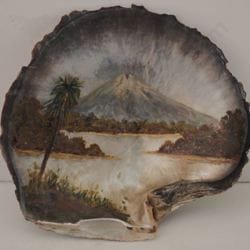
Mount Egmont with Lake
By: John Philemon Backhouse (1845-1908)
Oil on Sea Shell - 13cm x 14cm
Valued $2,000-$3,000
Offers invited over $1,500
Contact: Henry Newrick – (+64 ) 27 471 2242

|
|