
Founded by Max Farndale 1947 - 2018
A vessel carrying 23,000 tonnes of palm kernel expeller (PKE) will not be permitted to discharge its cargo in New Zealand.
The Ministry for Primary Industries initially prevented discharge from the MV Molat after finding some of its cargo had come from an unregistered PKE facility in Malaysia.
The vessel arrived at Tauranga on 6 September.
MPI’s decision comes after considering an application from the importer to have the PKE treated in New Zealand.
“We spent a lot of time assessing whether there was a solution that would meet biosecurity requirements, but unfortunately nothing ticks all the boxes in terms of mitigating the risk of pests and diseases entering New Zealand,” says Steve Gilbert, MPI Border Clearance Services Director.
In making the decision, MPI considered the amount of product involved, the availability of heat treatment facilities in the region, transport and storage.
“My decision ensures that potentially contaminated PKE will not enter New Zealand,” says Mr Gilbert.
MPI has strict biosecurity requirements for importing PKE. They include heat processing to least 85 degrees and that foreign facilities be approved and regularly audited by the exporting country.
“MPI has a lead role in protecting New Zealand from biosecurity risk. It’s a job we take very seriously.”
WELLINGTON, Oct 17 (Bernama) -- The New Zealand government Monday said it is to review its free trade agreement (FTA) with Southeast Asia, citing a rising number of non-tariff barriers and other concerns, China's Xinhua news agency reported.
The ASEAN-Australia-New Zealand FTA (AANZFTA) - covering New Zealand, Australia, Brunei Darussalam, Cambodia, Indonesia, Laos, Malaysia, Myanmar, the Philippines, Singapore, Thailand and Vietnam - had helped lift New Zealand trade with the region by 25 per cent since 2010, said Trade Minister Todd McClay.
However, McClay said in a statement he was concerned that New Zealand businesses were "leaving money on the table."
Since coming into force in 2010, the FTA has reduced or eliminated tariffs across many of New Zealand's exports into key Southeast Asian markets, and was expected to deliver NZ$71 million (US$50.42 million) in cost-savings for New Zealand exporters this year.
This was expected to rise to around NZ$96 million (US$68.18 million) once the staged elimination of tariffs was completed after 2020.
"However, from a New Zealand perspective, it is not clear that all businesses use the FTA when exporting to Southeast Asia and this means they could be paying unnecessary tariffs," said McClay.
"Exporters of both goods and services also face an increasing number of non-tariff barriers in Southeast Asia, such as import quotas, subsidies, customs delays and technical barriers, which are holding them back."
The government review would take place ahead of a comprehensive review of AANZFTA by New Zealand, Australia and the ASEAN (the Association of Southeast Asian Nations) countries next year.
"This review will help us better understand the New Zealand business perspective going into that broader review and equip us to seek possible improvements to the FTA," said McClay.
The introduction of more liberal and transparent trade rules under the FTA had helped grow New Zealand's trade with ASEAN from NZ$12 billion (US$8.52 billion) in 2010 to over NZ$15 billion (US$10.66 billion) last year.
"This region is home to 600 million people, with a combined economic output of NZ$3.5 trillion (US$2.48 trillion). It is a huge market for the goods and services we produce and an important source of competitively priced imports that make everyday items cheaper for New Zealanders," he said.
Trade Minister of Todd McClay has established a trade policy dialogue with his United Kingdom counterpart, Secretary for International Trade Liam Fox in London today.
"For New Zealand, this is about being ready to cement our formal trading relationship with our fifth largest trading partner, once the UK is in a position to negotiate independently of the European Union.
"I discussed with Secretary Fox the importance of remaining closely engaged, particularly as New Zealand advances our priority of a free trade agreement with the European Union.
"I thanked Secretary Fox for assurances that New Zealand's trade interests will not be compromised by Brexit," says Mr McClay.
Mr McClay is also scheduled to talk with EU Trade Commissioner Malmström later in the week.
"The trade policy dialogue with the U.K. will also be an important forum for engaging across a range of shared trade policy issues, such as the World Trade Organisation, as it develops its approach to trade policy.
"Secretary Fox and I commend the value of this engagement, both to underpin our strong economic relationship, but also given New Zealand's recognised perspective in international trade policy."
The Trade Policy Dialogue will be convened at senior officials' level and cover market access and trade policy issues of mutual interest, including WTO processes and current and prospective negotiations. The first meeting will take place by early 2017, with subsequent talks to be held roughly every six months
The joint statement by Mr McClay and Secretary Fox is available on MFAT's website.

Three 2,000-year-old pieces of history currently sit in the middle of the Engineering Quad. And hardly anyone even knows they exist The Daily Pennsylvanian reports.
“I can’t believe I’ve never noticed them!” said Engineering sophomore Caroline Atkinson when asked about the columns.
These items, two columns and an elaborate pillar head, were given to the City of Philadelphia by King Hussein of Jordan to mark America’s 1976 bicentennial. The pieces came from a column from the ancient city of Philadelphia, which was located in present-day Amman, Jordan. Despite the Penn Museum of Archaeology and Anthropology's promise to look after the artifacts for Philadelphia, these items have been left exposed to the elements for around 40 years, currently serving as a makeshift bench for mid-day diners and furniture for squirrels.
Why is Penn treating these pieces of history as such?
After Julian Siggers, the current Williams Director of the Penn Museum, arrived in 2012, he said the conservators there suggested moving the columns inside the museum.
“In Jordan they would be outside but their climate is less brutal than ours," he said. I don’t want Philadelphia winters to do any more damage than they already have."
The columns have remained outside without a sign even denoting what they are.
“People remove a lot of signs on campus ... it’s sort of a game. It’s possible that sign was removed at some point in the past,” Siggers said.
An additional problem is the lack of clarity as to who owns the columns — Penn or Philadelphia.
“[The city] may not even know about it,” Siggers said. “Somebody at Penn is looking into it, tracking down the records they may have about the actual transaction."
The museum plans to renovate most of its galleries and, as it moves the exhibits into storage beforehand, will also try to bring the columns inside, Siggers said.
“The only delay we have in that is that the museum has launched a renovation of 70 percent of our public galleries ... it is a giant 3-dimensional chess game," he said. "In the short term we will store them off-site until we can move them into the museum."
Anthony Pratt, the executive chairman of packaging companies Visy Industries and Pratt Industries, has encouraged other businesses to invest in expansion rather than boosting dividends to shareholders.
The Australian, which visited Pratt Industries’ Beloit, Wisconsin factory, reports that Beloit, the company’s newest factory, is rolling out robotics at this site as the first step in a $200 million deployment of such automation.
“You need to take a 20-year view of robotics,” Pratt told The Australian.

The availability of Solar Gard Ecolux 70 window insulation product into the New Zealand market has meant new ways and reasons to consider when thinking how could such a thin product provide window insulation properties.
The secret is gold that is part of this product and specifically a function of gold which is its emissivity. Emissivity is the ability to reflect radiation (energy). It’s why you often see satellites coated with gold, it has a natural ability to reflect energy.
The emissivity of gold is around 0.03 so what that means is it wants to reflect 99.7% of the energy back!
In comparison the emissivity of glass on its own is around 0.82 meaning it can only reflect 18% of the energy and hence why glass on its own is not a good insulator.
“This great news when you are considering installing an insulation product that provides all year round benefits ,365 days/24 hours” says Mr Ross Eathorne ,Managing Director of SWF Distribution that company that imports and distributes Solar Gard window film. He goes onto say that this is a cost effective solution causes no inconvenience to customers and is supplied with a manufacturers limited life time warranty.
When Solar Gard sputter gold onto a film they do it extremely thinly so it can still transmit the visible light (so you can see through it) but it retains its ability to reflect what’s called far infrared energy. Far infrared energy is what comes from a fireplace or a heater in the home and by having the thin layer of gold on the glass we are able to selectively reflect that type of energy (heat) back into the room.
So it’s the inherent emissivity property of gold that provides insulation ability and it doesn’t need to be thick, in fact making the layer thicker will not make it more reflective of the energy.
This type of insulation through emissivity is a different way to insulate versus double glazing or roof insulation batts. Those types of insulating products use a combination of different materials and air pockets / layers to make it hard for the heat energy to pass through. Every time the energy encounters another material it has to change its wavelength to pass through it so when you have 2 layers of glass plus an air gap in between or you have a fibrous roof batt which is layers of fibreglass with many air pockets it is hard for the energy to pass through and so you are not losing as much heat. This type of insulation is not reflecting the energy, think of it as trapping the energy so more can’t get through and escape.
Thermodynamics can be a very complex area and we understand it is hard to grasp that a thin sheet of film can provide high insulation ability but it’s all to do with the gold and its special properties.
As something to refer to as an example of this ,there is good reason quality kettles are shiny metal. They are polished because it makes the metal lower emissivity so it keeps the water inside hotter for longer.
Eathorne comments that home and building owners need to be more open to new technology and the fact that there is more than one option to achieve a result. The shiny kettle example is a good example. You don’t see kettles with a thick outer casing that incorporates an air gap. Shiny kettles have been around a long time and Ecolux 70 with gold just takes this a stage further. You don’t need to necessarily have installed insulation product that is thick and bulky.
A Solar Gard release and for more information contact This email address is being protected from spambots. You need JavaScript enabled to view it.
WorkSafe has released guidance for managing and removing asbestos in the workplace, the first of its kind in New Zealand. The Approved Code of Practice for the Management and Removal of Asbestos will help contribute to WorkSafe’s target of a 50% reduction in asbestos-related disease by 2040.
Asbestos is the single biggest cause of deaths from work-related disease. On average about 170 people die every year from asbestos-related diseases. Breathing in airborne asbestos fibres is a serious risk to health - once the fibres are breathed in, they lodge in the lungs and may cause asbestosis, lung cancer or mesothelioma.
Designed for the web so that it can be used on the go, the code was developed in consultation with unions, employer organisations, other key stakeholders and the public. “WorkSafe received the most responses for any guidance consultation in its history,” says WorkSafe Chief Executive, Gordon MacDonald. “By working together with industry, we were able to establish a common view of what ‘good’ looks like. This lessens the need for businesses to obtain independent advice, which may reduce compliance costs.”
Previous asbestos guidance focused only on asbestos removal, while this code is applicable to a more comprehensive range of people who are exposed to asbestos. The code sets out WorkSafe’s expectations for working safely with asbestos and is designed for businesses that manage or control workplaces, carry out asbestos removal, or asbestos-related work, and licensed asbestos assessors. The code applies to landlords too, but not to home occupants doing DIY.
Included is information and guidance on keeping safe around asbestos, like the types of work allowed when working with asbestos, how to identify and manage asbestos and asbestos-containing material in the workplace, prohibited and restricted tools and equipment, personal protective equipment and health monitoring.
The code is available online at: http://construction.worksafe.govt.nz/guides/acop-management-and-removal-of-asbestos/
Note:

Auckland, 17th October 2016 - Last week New Zealand’s leading Autodesk reseller of BIM and Manufacturing software, CADPRO Systems hosted an event for the construction industry with Sharp Corporation, to present the next generation of technology revolutionising the sector.
BIM technology helps to minimise errors and omissions during building design, find and reduce costly design conflicts before construction begins and improve project consistency with all parties involved.
Held at Sharp’s state-of-the-art showroom, in Auckland, the event was specifically designed to best present BIM technology in action through the use of Sharp’s latest 80” Interactive Touch panel.
Sharp’s Touch panel enables BIM software users to make changes on screen, overlaying notes, diagrams and points of interest which can be effortlessly saved, emailed and printed.
“Design Review and Site meetings are an essential part of the construction industry work process, so having tools such as the Interactive Touch panel that encourage interactive and dynamic meetings is really important,” says Hans Grootegoed, Managing Director, CADPRO Systems.
“Industry leaders surveyed believe that products and services they sell today will not be relevant in three years. To meet this challenge, innovation is the key,” states Jan Nicol-Winitana, Managing Director, Sharp Corporation of New Zealand
“To drive innovation, collaboration and sharing of ideas and information seamlessly is the answer. Sharp and CADPRO’s leading-edge interactive technology provides the perfect collaboration tools for business across construction, architecture and manufacturing,” adds Nicol-Winitana.
By being able to present the new BIM technology via the Interactive Touch panel guest were able to see the numerous benefits of the technology, including virtual reality, and how it could be applied to their business, this included:
• Building industry – the VR technology dovetails with BIM workflow and serves an integral part of virtual design review and construction planning.
• Architects - a highly effective means of visualising, marketing and selling an architectural project - opening up a new world of possibilities for design review, functional testing, client approval and training.
• Manufacturers - enabling full scale design reviews to allow ergonomics testing for maintenance of equipment, as well as collaboration between geographically distributed teams.
• Sales teams - can also utilize the technology to engage with designs and when planning factory layouts, the technology can be used to quickly test workability of various iterations of equipment placement.
Sharp also showcased the use of video conferencing (VC) with the Interactive Touch panel. Demonstrating how its VC solution provides unsurpassed quality and reliable communications with staff and customers anywhere on any device, leading to better meeting outcomes.
Prime Minister John Key will lead a high-level business and education delegation to India next week, visiting Mumbai, New Delhi and Kochi.
“India is a key partner for New Zealand. It is a leading source of skilled migrants, international students and tourists, and in the five years since I last visited our two way trade has grown by 41 per cent to $2.4 billion,” Mr Key says.
“The India-New Zealand relationship will only continue to grow, and this visit will help drive New Zealand’s political and commercial partnership with the world’s third-largest economy.”
In New Delhi, Mr Key will meet with India’s Prime Minister Narendra Modi and President Pranab Mukherjee, who visited New Zealand earlier this year.
“Along with further strengthening New Zealand’s political, security, and economic connections with India, my meeting with Prime Minister Modi will be an opportunity to discuss his efforts to reform India’s economy and how New Zealand can be part of India’s growth.”
Mr Key will also attend a range of events focused on showcasing the innovation of leading New Zealand companies doing business in India, as well as our reputation as a high-quality education and tourism provider.
Mr Key will also be accompanied by MPs Mark Mitchell and Kanwaljit Singh Bakshi. The delegation will be away from 24 – 28 October.
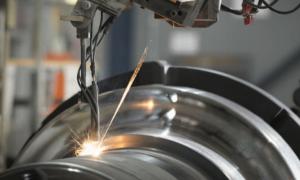
LaserBond has been using thermal coating techniques to produce hard-wearing components and products for the mining, power generation, manufacturing and agriculture industries since 1992.
But a downturn in the mining industry is helping to fuel demand for its products as companies look to maximise productivity.
LaserBond Chairman Allan Morton said the company’s laser-applied coatings typically tripled the life of a product.
“This is effectively 3D printing using industrial robots and industrial lasers to add material to existing substrates to create better performing products,” he said.
“The economic benefit is not so much that the components are lasting longer, it’s that you don’t have to shut the system down to change components so they’re getting longer cycles out and that has ramifications in the workplace health and safety area as well.
“When everything was going fine in our boom times people said ‘we will not pay that’ because even though we might have four times the life we might be double the price but now companies are looking at costs and the cost of downtime overwhelms any incremental cost of a higher-performing component that we supply.
“We’ve said our day will come at the bottom of the cycle.”
Founded in New South Wales, the company has about 65 staff and has had a plant in South Australia since 2013.
It has recently formed a research collaboration with the University of South Australia’s Future Industries Institute and is establishing a new “laser cell” in Adelaide featuring a 16kW laser, which it hopes to have up and running in September.
“We know that we make a 60 per cent energy saving, we get higher efficiency and we get less waste with these new lasers. We currently have the three most powerful lasers in Australia in this industry and the one we’re buying will be twice as big again – it will be the highest power laser beam used for laser cladding in the southern hemisphere.
LaserBond predominantly manufactures for the mining industry and exports about 80 per cent of its products to countries including Chile, Mongolia and South Africa.
Products are typically made from steel and then applied with materials such as nickel alloys, tungsten, titanium carbides and ceramics. Manufactured items include mining picks, furnace doors and ‘down the hole’ hammers.
“Basically any metal component that wears we can apply a surface to make it last longer for new parts as well as we can make an old part with new surfaces that are better than new,” Morton said.
The company expects the new laser to allow it to double production.
“We’re able to deposit material quicker than we currently do and also it’s all about energy.
“We can put a certain amount of composite material on a part, we want to be able to increase that speed to enable us to be more cost effective for our customers.”
LaserBond Founder and Executive Director Greg Hooper is recognised as a world-leader in the field. He has moved from Sydney to Adelaide to play a key role in the Research & Development side of the business and the collaboration with UniSA at Mawson Lakes, which is just a five-minute drive from the company’s SA base at Cavan.
“There is a lot of opportunity in a lot of different industries. I’ve been working on materials and depositing those materials better and quicker so we can be more competitive,” he said.
“We envisage that South Australia has the focus for the R&D and it will become our product manufacturing division, which will be our biggest division over time.
“It appears to me that the time is changing with regard to the collaboration of universities with private industry and it’s very enlightening.”

Palace of the Alhambra, Spain
By: Charles Nathaniel Worsley (1862-1923)
From the collection of Sir Heaton Rhodes
Oil on canvas - 118cm x 162cm
Valued $12,000 - $18,000
Offers invited over $9,000
Contact: Henry Newrick – (+64 ) 27 471 2242
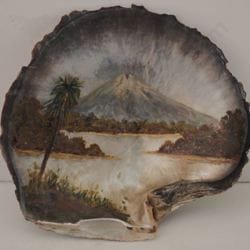
Mount Egmont with Lake
By: John Philemon Backhouse (1845-1908)
Oil on Sea Shell - 13cm x 14cm
Valued $2,000-$3,000
Offers invited over $1,500
Contact: Henry Newrick – (+64 ) 27 471 2242

|
|