
Founded by Max Farndale 1947 - 2018
Emirates Skywards, the award-winning frequent flyer programme of Emirates airline, has partnered with Dubai Duty Free, one of the leading airport retailers in the world, for instant Miles redemption at participating stores.
Emirates Skywards members can spend their Miles at Dubai Duty Free stores at Dubai International Airport and Al Maktoum International at Dubai South.
Emirates’ five daily New Zealand services all go through Dubai International Airport.
Emirates customers travelling to or from its hub at Dubai International Airport or passing through on transit or direct connections to over 150 destinations in its global network, can look forward to 34,000 square metres of shopping at Dubai Duty Free.
Emirates Skywards members will enjoy a new payment method using Miles to redeem for more than 35,000 products from international and luxury brands including fashion accessories, perfumes, electronics and more. Customers simply need to present their Emirates Skywards membership card or provide their membership number, along with their passport and boarding pass at the check-out counters.
Redemptions start from 4,500 Miles which is equivalent to AED 100 (dirhams). Each additional dirham is equivalent to 45 Skywards Miles, and there is no limit to the number of Miles one can spend. Members can pay for products using a combination of Skywards Miles and cash or credit card.
Emirates Skywards, which is free to join, is in its 16th year and has over 16 million members. In addition to special offers with partner airlines, hotels and retail brands, members also enjoy special access to global sporting, arts and cultural events.
Since 1990 Dairy Production almost Double But Waste Water Treatment Capacity Unchanged
Agri process threat to rural drinking water deliberately ignored
You claim that pastoral pollution is first, foremost and always New Zealand’s top environmental priority?Let us look at dairy production. Since 1990 dairy output has increased 85 percent. So during this time we can say that the output of waste has similarly almost doubled. Yet waste treatment capacity has hardly increased at all during this time.
What is your advice?Fifty years ago urban New Zealand faced the same problem and in much the same percentage growth. The cities were filling up. The difference was that something was done about the attendant water problem. A strategy, mainly an engineering one, was put in place and then successfully implemented. Auckland and Wellington are the two obvious examples. So my advice is that as with the urban example, the rural water/waste problem is (a) officially recognised and (b) a plan is put in place to bring the problem under management.
What is happening at the moment?We see the people who should be dealing with problem in a state of paralysis caused by fashionable analysis. This is artfully disguised by the appearance of seeking to deal with this kind of problem by haring off to a variety of international conferences. On their return they grandstand and mouth off about global issues instead of doing something about this critical localised problem of agribusiness waste treatment. It is hardly a laughing matter but I am reminded of the quip when the man proudly states that he is the one who decides if the United States should invade Russia; but that his wife decides where the couple will in fact live.
You claim that in Europe this pastoral production waste treatment problem has been recognised and dealt with?We are lagging. Worse still, we have our heads in the sand about it. Deliberately so. The technology exists, it is called closed-loop and turns waste into energy. It is now proven and standard in many parts of the world including the Far East. The country that once pioneered things like refrigeration, top dressing, and milking shed automation can no longer dispose of agribusiness process waste by pumping it under the ground, over the ground, or into streams hoping that it dissolves somewhere out to sea.
So what is happening at the moment, here?We are inviting disaster and I am not just talking about the obvious danger of a pastoral-export economy such ours being seen to be deliberately lagging in the installation and application of standard public hygiene-related technology. I want to take this opportunity of flagging also the danger of all this to our next biggest industry, tourism, which is going to be the next one affected by this failure to deal with an obvious public health problem.
From the MSCNewsWire reporters' desk - Friday 14 October 2016
Business leaders from some of New Zealand’s most iconic companies have come together today, with a shared vision to transition their fleets to electric vehicles (EVs).
The initiative driven jointly by Air New Zealand and Mercury, with the support of Westpac, represents a total corporate sector commitment of more than 1,450 vehicles and will increase the number of EVs on New Zealand roads by more than 75 percent within the next three years. Along with the significantly lower running costs of electricity, this could remove almost 3 million kg of carbon emissions annually.
The business leaders, representing more than 30 organisations, each committed to transition at least 30 percent of their company vehicle fleets to plug-in electric vehicles by 2019 at the breakfast briefing in Auckland which was also attended by Transport, Energy & Resources Minister, Hon Simon Bridges.
The collective commitment – which spans a diverse spectrum of industries including telecommunications, transport, waste and facilities management, finance and energy – follows announcements from Mercury in 2014 and Air New Zealand in March this year on their moves to EVs.
Air New Zealand will transition more than 75 percent of its light vehicle ground fleet to electric by the end of this year. Chief Executive Officer Christopher Luxon says today’s event is a landmark in addressing New Zealand transport emissions and demonstrating genuine sustainability.
“We knew other business leaders were interested in the potential of electric vehicles, both from an environmental and commercial standpoint. We wanted to get the business community together to lead the way on EVs and create the critical mass of demand necessary to really launch the market in New Zealand.
“The government has been a great partner to business in rising to the EV challenge. I know they will be keen to see even more EVs in the government fleet in the future. I also hope lots of other organisations will be inspired to come on board too.”
Mercury introduced plug-in vehicles to its fleet more than five years ago and will have more than 70 percent plug-in electric by 2018. Chief Executive, Fraser Whineray, says the business case for organisations and the logic of electric vehicles in New Zealand is clear, given the country’s renewable electricity supply, which is the envy of other countries around the world.
“This is New Zealand’s greatest green-growth opportunity. It’s very hard to argue with home-grown fuel at the equivalent of 30 cents per litre, no tailpipe emissions, reducing our dependence on imported fossil fuels and helping preserve our hard-earned export dollars.
“New Zealanders are already on this journey with over half of all EVs in this country owned privately. Today’s commitment by business is significant both in showing leadership and because these cars will end up in the second-hand market, where most Kiwis buy their cars.”
Westpac Chief Executive, David McLean, says it was an easy decision becoming involved and supporting this initiative.
“We’ve started a trial of EVs and we’re committed to building this out across our fleet over the next few years and have undertaken to transition to 80 electric vehicles by 2019.
“Being a good corporate citizen is not just about the decisions that organisations make about their own business but about taking a broader leadership position.”
An Air New Zealand press release
Worldfishing & Aquaculture reports that Optimar has signed a contract for delivery of complete fish handling factory on board Sealord's newest trawler.
It will include a modern factory where all parts of the catch are taken care of, including processing fillet, head/gutted and frozen products of Hoki, Hake, Ling, Squid, Jack Macarel.The rest of the raw material will be used for further processing of oil and fishmeal. Optimars newest automated solutions will be delivered with the factory, such as semi-automated batching systems, automated freezers, automatic sorting of finished products and automated palletizers.It is 82.9m in length and 17m in breadth meaning that Sealord’s newest trawler will be the largest factory trawler in New Zealand.The boats capacity per year is estimated to 20,000 tonnes and will be an extremely efficient fishing- and factory vessel.It will be built at Simek shipyard in Flekkefjord, Norway and is designed by Skipsteknisk in Aalesund.The vessel is expected to be delivered at the end of 2017.
Since 1990 Dairy Production almost Double But Waste Water Treatment Capacity Unchanged
Agri process threat to rural drinking water deliberately ignored
You claim that pastoral pollution is first, foremost and always New Zealand’s top environmental priority?Let us look at dairy production. Since 1990 dairy output has increased 85 percent. So during this time we can say that the output of waste has similarly almost doubled. Yet waste treatment capacity has hardly increased at all during this time.
What is your advice?Fifty years ago urban New Zealand faced the same problem and in much the same percentage growth. The cities were filling up. The difference was that something was done about the attendant water problem. A strategy, mainly an engineering one, was put in place and then successfully implemented. Auckland and Wellington are the two obvious examples. So my advice is that as with the urban example, the rural water/waste problem is (a) officially recognised and (b) a plan is put in place to bring the problem under management.
What is happening at the moment?We see the people who should be dealing with problem in a state of paralysis caused by fashionable analysis. This is artfully disguised by the appearance of seeking to deal with this kind of problem by haring off to a variety of international conferences. On their return they grandstand and mouth off about global issues instead of doing something about this critical localised problem of agribusiness waste treatment. It is hardly a laughing matter but I am reminded of the quip when the man proudly states that he is the one who decides if the United States should invade Russia; but that his wife decides where the couple will in fact live.
You claim that in Europe this pastoral production waste treatment problem has been recognised and dealt with?We are lagging. Worse still, we have our heads in the sand about it. Deliberately so. The technology exists, it is called closed-loop and turns waste into energy. It is now proven and standard in many parts of the world including the Far East. The country that once pioneered things like refrigeration, top dressing, and milking shed automation can no longer dispose of agribusiness process waste by pumping it under the ground, over the ground, or into streams hoping that it dissolves somewhere out to sea.
So what is happening at the moment, here?We are inviting disaster and I am not just talking about the obvious danger of a pastoral-export economy such ours being seen to be deliberately lagging in the installation and application of standard public hygiene-related technology. I want to take this opportunity of flagging also the danger of all this to our next biggest industry, tourism, which is going to be the next one affected by this failure to deal with an obvious public health problem.
From the MSCNewsWire reporters' desk - Friday 14 October 2016
Heres a piece out of the Phoenix Business Journal - A rocket manufacturing company that started in a garage is opening a 400-employee corporate headquarters and micro satellite launch vehicle manufacturing facility in Tucson.
The $290-million economic benefit from Vector Space Systems will be centralized on 15 acres in the Pima County Aerospace, Defense, Technology Business & Research Park. The company will hire 200 in the next 12 months and the additional employees over the next few years. The company will be a neighbor to high-altitude balloon maker World View.
Stanley Black & Decker Inc. (IW 500/95) agreed to buy Newell Brands Inc.’s tools business for $1.95 billion in cash, helping the workshop giant push deeper into consumer and industrial equipment.
Stanley will gain the Irwin, Lenox and Hilmor brands as part of the transaction, which is expected to add 15 cents to earnings within a year of its completion. The division generated $760 million in revenue over the past 12 months, according to Newell. It makes everything from industrial saw blades to screwdrivers.
Activity in New Zealand's manufacturing sector picked up in September, according to the latest BNZ - BusinessNZ Performance of Manufacturing Index (PMI).
The seasonally adjusted PMI for September was 57.7 (a PMI reading above 50.0 indicates that manufacturing is generally expanding; below 50.0 that it is declining). This was 2.5 points up from August, and the highest level of activity in the sector since January this year. The sector remains solidly in expansion in almost all months since October 2012.
BusinessNZ's executive director for manufacturing Catherine Beard said that the lift in expansion levels was welcome after two consecutive months of softening expansion.
"The two key sub-indices of production (61.3) and new orders (60.9) returned to post-60 point values, while employment (50.3) moved back into slight expansion mode after showing contraction in August".
"The overall improvement in expansion levels was mirrored by the proportion of positive comments increasing to 63.8% in September, compared with 58.4% for August. A number of positive comments again centered on preparation for the summer/Xmas season, while international orders continued to hold up relatively well".
BNZ Senior Economist, Craig Ebert, said that "while the PMI kicked back up, the details of the survey again highlighted some fraying at the edges. This was not so noticeable by region anymore, but large firms (45.0) were more clearly lagging the impetus that relatively smaller firms maintained in September".
The World Energy Council's Energy Trilemma Index ranks countries onhow well they achieve the energy 'trilemma' balance of security, equity andsustainability and shows New Zealand ranking 9th out of 130comparator countries, up from 10th last year and maintaining its overallbalanced rating of AAB.
This year the top ten ranked countries are Denmark, Switzerland, Sweden, theNetherlands, Germany, France, Norway, Finland, New Zealand and Austria. New Zealand was the best performing countryin the Asia-Pacific region.
BusinessNZ Energy Council Chair David Caygill said that while well placed, this year'sresult highlights the challenges and opportunities facing countries ofachieving an overall balanced approach to energy policy.
"The ranking suggests that New Zealand is in a good position performing relativelybetter on energy security and energy equity than environmental sustainability.
Maintenanceof New Zealand's top ten ranking demonstrates our consistent approach to thepursuit of balanced energy policies. Butthere is room for improvement.
Despite being a world leader in renewable electricity we are ranked 36th in thesub-index of environmental sustainability largely as a result of our carbonemissions performance. Having justratified the Paris Agreement this ranking shows we have room to improve our performancerelative to our top ten peers.
We need to constantly learn from what other countries are doing, but also what wecan improve, regardless of what others do.
The 36th ranking raises important policy questions; how do we achievethe rapid uptake of new technologies, high economic growth and deliver on theenvironmental goals all New Zealanders aspire to, while keeping the economyresilient to a range of future outcomes?
What policy balance do we strike between encouraging greater energy efficiency inour primary industries versus a structural shift towards high value-creating,low energy intensity and low carbon opportunities?
"The BusinessNZ Energy Council's recent report – BEC2050: A deep-dive into 2030 energy targets for New Zealand – isdesigned to aid thinking and provoke debate on these and other questions. It seeks to help companies, consumers andpolicy makers make informed choices that balance energy policy outcomes acrossthe dimensions of energy security, equity and sustainability.
"The deep-dive report can be found here. The full New Zealand Energy Scenarios:Navigating energy futures to 2050 report on which the deep-dive is based can befound here
TOMRA signed an agreement with the owners of Compac Holding Ltd (Compac) on October 11, 2016 to acquire 100 percent of the shares in the company. In this article, members of TOMRA and Compac management provide answers to key questions surrounding the acquisition.

Palace of the Alhambra, Spain
By: Charles Nathaniel Worsley (1862-1923)
From the collection of Sir Heaton Rhodes
Oil on canvas - 118cm x 162cm
Valued $12,000 - $18,000
Offers invited over $9,000
Contact: Henry Newrick – (+64 ) 27 471 2242
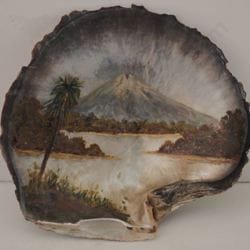
Mount Egmont with Lake
By: John Philemon Backhouse (1845-1908)
Oil on Sea Shell - 13cm x 14cm
Valued $2,000-$3,000
Offers invited over $1,500
Contact: Henry Newrick – (+64 ) 27 471 2242

|
|