
Founded by Max Farndale 1947 - 2018
BEIJING (Scrap Monster): The latest statistics released by the Malaysian Department of Statistics indicate that the country’s ferrous scrap imports increased sharply in June ’16, in comparison with the previous month. The imports during the month touched the highest level so far this year. However, cumulative scrap imports by the country during the half-yearly period were down significantly by over 61% when matched with the corresponding six-month period in 2015.
Malaysia imported 30,193 tons of scrap steel during the month of June this year. The imports were up by 5.2% when matched with the previous month. The country had imported 28,711 tons of scrap steel during May 2016. However, monthly volume touched the highest level of 2016, providing early indications of sustained recovery in scrap import volumes.
The biggest exporter of ferrous scrap to Malaysia during June this year was Singapore. The imports from Singapore totaled 13,065 tons, accounting for more than 43% of the total scrap imports by Malaysia during the month. The imports from the country witnessed 6% rise from May ’16. The US was the second largest exporter during the month, with 8,670 tons. The ferrous scrap imports from the US surged higher by 42% over the previous month. In third place was Australia with 2,949 tons. The other key exporters of ferrous scrap to Malaysia during the month were Japan (2,270 tons), the UK (1,002 tons), Thailand (823 tons), New Zealand (494 tons) and Papua New Guinea (356 tons).
The country imported 123,158 tons of scrap steel during the initial six-month period of the year. The imports were down considerably by 61.4% when compared with the net import volume of 318,750 tons during the period from January to June in 2015. The monthly imports averaged at 21,000 tons so far this year. At the current rate, the country’s scrap steel exports are estimated to total around 250,000 tons during the entire year 2016.
The largest exporter of ferrous scrap to Malaysia during the initial six-month period of the year was Singapore. The imports from Singapore totaled 52,309 tons, accounting for 42.5% share of the total imports by the country during the period. The imports from Singapore dropped sharply by over 25.9% from the previous year. The United States was the second largest import source during the first half of the current year. Malaysia’s ferrous scrap imports from the US totaled 31,253 tons, accounting for 25.4% share of the country’s imports during the period. The imports from the US dropped heavily by nearly 57% year-on-year. In third place was Australia with 9.8% share of total Malaysian imports. The imports from Australia tumbled by 89% year-on-year to 12,012 tons during Jan-June ’16. The other key suppliers of ferrous scrap to Malaysia during the six-month period were Japan (11,738 tons), the UK (4,019 tons), Latvia (2,010 tons), New Zealand (1,778 tons), Thailand (1,608 tons) and Papua New Guinea (1,606 tons). Thailand was the only supplier to report jump in ferrous scrap export volumes to Malaysia during Jan-June ’16. The scrap imports from Thailand were up by nearly 15% when compared with the corresponding half-yearly period in 2015.
The yearly scrap imports by Malaysia during 2015 had touched the lowest levels since 1998. The yearly imports had totaled 445,513, dropping sharply by 53.7% over the previous year. Australia was the key exporter of scrap steel during the year. The country accounted for 28.3% share (126,069 tons) of the total imports by Malaysia during the year. In second place was the US with 113,578 tons, accounting for nearly one-fourth of the total monthly imports. The US was closely followed by Singapore. The imports from the country had totaled 110,350 tons during the entire year 2015.
A Scrap Monster release
It is yet another record-breaking year for Hawke's Bay apple exports.
CEO Garth Cowie said, so far an 8.5 per cent increase on last year had been exported, with a record 22,205 twenty-foot containers shipped.
"Despite a late start to the season and a shortage of pickers, it has been a record harvest for our local growers," he said.
"Exports through Napier Port were up by more than 2000, twenty-foot containers on last season."
Volumes are expected to grow further, with an extensive programme of planting underway across the region.
"The pipfruit industry has set a target of achieving $1 billion in exports by 2020 and is well on the way toward achieving that. That's projected to translate into approximately 35,000 twenty-foot containers for export by 2025."
For the season to October 2 the port has shipped 22,205 containers.
"This represents significant growth since 2008, when we exported just 12,936 containers of apples through Napier Port."
Pipfruit New Zealand chief executive Alan Pollard said prices were strong and returns would be another record.
"We haven't got final numbers - we were forecasting $700 million and are confident of $720 million, which will easily be our export double in four years. In 2012 we did $341 million.''
While volumes steadily increased, the value increase was mainly due to price.
"It is being driven primarily by New Zealand-exclusive varieties. We have moved the product category out of the commodity space into the high-niche premium-product space."
A season two weeks earlier than normal compounded the problem with exporters shipping straight to Asia instead of storage.
Major innovations were added to the port, including an off-site depot for empty containers, a vehicle booking system, new mobile harbour cranes, container handlers that can lift two containers at once and added refrigerated storage.
Emirates will launch a daily service between Dubai and Fort Lauderdale on December 15, 2016, serving the South Florida area, including Fort Lauderdale, Miami, and West Palm Beach.
This will be Emirates’ 11th passenger route in the United States.
The airline will operate a GE-powered US-built Boeing 777-200LR aircraft in a three-class configuration on the route, offering eight First Class suites, 42 Business Class lie-flat beds and 216 Economy Class seats for travellers, and up to 15 tonnes of bellyhold cargo for shippers.
“Fort Lauderdale and Miami are two of America’s most exciting destinations for leisure and business travel,” said Sir Tim Clark, President Emirates Airline. “Broward County and Dade County combined to host more than 25 million visitors last year, mainly from the United States and Latin America."
He added: “We anticipate our service will contribute to the economy of South Florida by bringing new travellers to the area from across our route network, at the same time offering greater competitive choice for consumers and new one-stop passenger and air cargo connectivity for the region to the global destinations that we serve. We launched our non-stop Dubai-Orlando service roughly a year ago and its strong performance encouraged us to select Fort Lauderdale as our 11th US destination.”
Emirates’ daily flight EK213 will depart Dubai (DXB) at 3:00 a.m. local time and arrive in Fort Lauderdale-Hollywood International Airport (FLL) at 10:25 a.m. The return flight EK214 will depart FLL at 8:20 p.m. arriving in Dubai at 7:40 p.m. the following day, with a flying time of 14 hours and 20 minutes.
Fort Lauderdale is one of the most popular tourist destinations in the United States thanks to its abundant sunshine and temperate weather. Its pristine beaches and championship golf courses attract leisure travellers year round, and are home to millions of “snowbirds” – US residents from cold-weather states who own second homes in the area. Fort Lauderdale is also a popular destination for the cruise industry. Broward County's Port Everglades, one of the top 3 busiest cruise ports in the world, welcomes more than 4 million annual visitors.
Miami is one of America’s most vibrant cultural destinations and one of the Western Hemisphere’s financial capitals. Just a 30 min drive to Fort Lauderdale, Miami is home to the largest concentration of international banks in the US. Miami’s metropolitan area is the eighth-largest in the US with a population of 5.5 million people. The Port of Miami is the busiest cruise port in terms of both passenger traffic and cruise lines. Miami is one of America’s cultural meccas, famous for its proprietary take on nightlife, art, music, architecture and cuisine.
Emirates has carried more than 14 million passengers on U.S. flights since launching services to New York in 2004. The airline currently serves 10 U.S. gateways – Orlando (MCO), Chicago (ORD), Boston (BOS), San Francisco (SFO), Los Angeles (LAX), Seattle (SEA), Dallas (DFW), Houston (IAH), Washington (IAD) and New York (JFK), as well as operating a trans-Atlantic route between JFK and Milan and freighter services to Atlanta and Columbus. Emirates SkyCargo transports up to 650 tons of U.S. exports each week – including auto parts from New York, apples and cherries from Seattle, and oil and gas equipment from Houston – stimulating trade and opening new markets for American businesses across the Middle East, Africa and Asia.
An Emirates release 12 October 2016
Wunderkind CEO Josh Valman about how AI, niche supply chains, and chips with everything will change R&D and manufacturing forever.
When he was 10 years old, Josh Valman had a passion for robots. Today, he’s founder and CEO of a UK company, RPD International, that works with them – along with a global network of designers, engineers, and manufacturers. Before that, the serial entrepreneur founded two startups and, seven years ago, kicked off a successful consultancy career, running multi-million-dollar supply chains remotely for blue-chip corporations.
Nothing unusual there – thousands of boys play with robots and grow up to be successful businessmen. But for one startling fact: Valman is just 22 years old. Read his CV again, do the maths, and the implications are mind-blowing.
It started with a 10-year-old’s love for British TV show Robot Wars, in which teams design and build bots to do battle. At 13, Valman finally decided to have a go himself, but found he was too young for the main competition. So he taught himself to use Google’s SketchUp design app and entered the engineering part of the tournament, designing a robot and using his school’s metalwork lab to machine the components.
But he quickly discovered he needed to get them professionally made:
In the UK, factories didn’t want to talk to me: they didn’t think it was valid for a kid to come and use their machine shop, so they pointed me to China – as a joke. They were full of sarcasm and sent me on what they thought was a wild goose chase, but I found some Chinese factories and set up relationships there. We started making things, and everyone saw that what we were making – pneumatics, valves – was a step above what everyone else was doing.
Pretty soon, all these UK heads of engineering started saying to me: ‘Can you fix this?’ or, ‘Can you make these?’ And that turned into a consultancy career: I did two and a half years consulting for public companies. Until I got fired.Why was he fired? Simple, says Valman:
They found out how old I was.
Continue to the full article on Diginomica
The Fieldays 2016 Economic Impact Report, independently prepared by consulting economist Dr Warren Hughes and the University of Waikato Management School’s Institute of Business Research, was released this evening at a function at the Mystery Creek Events Centre.
The Minister of Primary Industries, Hon. Nathan Guy, spoke at the event, along with NZ National Fieldays Society CEO Peter Nation and University of Waikato economics professor Frank Scrimgeour.
"I am delighted with the report," said NZ National Fieldays Society CEO Peter Nation. "This report further reinforces the massive economic contribution to Waikato and New Zealand." The report found that Fieldays 2016, which ran from June 15 to 18, generated $430 million in sales revenue for New Zealand firms, up nine per cent from 2015. Of that, $124.5 million in revenue was generated for firms in the Waikato region.
The impact to GDP was calculated at $58 million for the Waikato and $191 million for all of New Zealand.
"One of the highlights of the report is that, despite the downturn in dairying, the results were better than expected," said Dr Warren Hughes, the report’s author. "The number of exhibitor sites went up four per cent to 1507, and the number of gate entries also increased to 130,684, about four per cent higher than 2015."
It was found that for every visitor through the gate, the 2016 Fieldays generated $3,300 in sales revenue for New Zealand firms including machinery and equipment sales.
In total, 60 per cent of Fieldays visitors purchased or planned to purchase equipment this year, compared to 53 per cent in 2015.
Fieldays helped generate 708 (full-time equivalent) new jobs for the Waikato, and a total of 2021 new jobs across all of New Zealand for 2016 (up 13 per cent since last year). "It’s not only about the goods and services sold during and after the event," said Mr Nation. "It’s about the jobs created and the surrounding towns and cities that benefit hugely during Fieldays, as well as pre and post-event."
VALUE OF THE FIELDAYS BRAND ESTIMATED AT $380M
This year, for the first time, economists were asked to put a value on the Fieldays brand. Dr Hughes estimated it to be $380 million - very high for a New Zealand-based brand. He said Fieldays had a valuable brand identity which offered something positive and valuable to sponsors and exhibitors. Mr Nation said that reinforced what is already known from travelling around the world and visiting other agricultural shows. "The Fieldays brand is recognised both internationally and nationally as a world-class event."
The report said Fieldays was without peer as a platform for demonstrating New Zealand’s agricultural expertise and world leadership in key areas, as well as acquainting grass roots farmer and growers with the latest productivity enhancing equipment and techniques. Dr Hughes said the Fieldays brand was "in a class of its own" compared with other regional events and "unique in this part of the world". However, he felt that the Government could do more to support Fieldays - including supporting roading and infrastructure, and in publicising the event internationally.
IMPACT ON THE WAIKATO
Although overall revenue for all New Zealand firms increased from $396 million in 2015 to $430 million in 2016, the Waikato region was slightly down, likely due to the then subdued dairy prices.
Overall revenue for the Waikato region decreased by 13 percent from $143 million in 2015 to $124.5 million in 2016 and equipment sales for Waikato firms at Fieldays dropped nine per cent from $75 million in 2015 to $68 million this year.
Mr Nation thinks the environment in June may have meant more day-trippers to Fieldays this year. In the hospitality and accommodation sector, average visitor spending dropped from $303 in 2015 to $208 this year. "I think that is understandable, given the current environment, that people might be coming for one day rather than staying over."
But he said Fieldays exhibitors contributed hugely to the regional economy. "Each year a mini-city moves in for Fieldays, and it takes a mini-city to build it and then break it down," said Mr Nation. "This year exhibitors brought about 10,000 staff to Fieldays. They needed somewhere to sleep and eat, they needed groceries from local supermarkets and timber and supplies for their sites from local stores - so the impact goes beyond sales on site."
STILL SPENDING, JUST NOT ON LARGE CAPITAL EXPENDITURE
Mr Nation said people spent money at Fieldays this year, but not necessarily on large capital items. "We’ve had some exhibitors tell us they had record sales this year," said Mr Nation. "In terms of quad bikes, trucks, cars, Utes and clothing - all of those things were strong this year. When it comes to the larger investments, the spend would appear subdued. However, everyday items and essential items were a different story. Farmers are not going to put up with holes in their gum boots or substandard equipment for items that are a necessity to their business. But there were probably fewer new dairy conversions signed up for this year, or dairy platforms purchased."
Dr Scrimgeour agreed: "It appears that people were more budget conscious, but they weren’t closing their wallets completely."

France’s English-speaking colony
The Franco-German investment in New Zealand is just as extensive in its way as the British presence was in its heyday prior to UK membership of the EU. This is the main reason why the New Zealand/EU (sans Britain) trade deal is regarded with such favour by the two pillars of the EU. The scope of the French presence in New Zealand is especially pervasive encompassing as it does so many industrial sectors. It is one reason why New Zealand premier John Key seen here on the reviewing stand with French cabinet members was accorded such a warm welcome in Paris (photo: Roland Berjon)
In order of industry dominance here are the major French-owned companies in New Zealand:-
These are just the French companies with site operations here. We can also consider L’Oreal, and in the industrial category, Laval, Michelin and St-Gobain (glass) which is also the world’s longest established company.
If we look at the Franco-German EU axis, then we can also see complete dominance in the luxury car sector here with BMW, Mercedes, Audi, Citroen, Renault.
The presence of Danone and Parmalat underline the way in which French companies, after some delay, are filling the pastoral process vacuum left by the old British companies.
The arrival of Bollore in New Zealand with the acquisition of Gameloft is a pointer to French intervention here in computer inspired leisure.
from the MSCNewsWire reporters' desk - Wednesday 12 October 2016

France’s English-speaking colony
The Franco-German investment in New Zealand is just as extensive in its way as the British presence was in its heyday prior to UK membership of the EU. This is the main reason why the New Zealand/EU (sans Britain) trade deal is regarded with such favour by the two pillars of the EU. The scope of the French presence in New Zealand is especially pervasive encompassing as it does so many industrial sectors. It is one reason why New Zealand premier John Key seen here on the reviewing stand with French cabinet members was accorded such a warm welcome in Paris (photo: Roland Berjon)
In order of industry dominance here are the major French-owned companies in New Zealand:-
These are just the French companies with site operations here. We can also consider L’Oreal, and in the industrial category, Laval, Michelin and St-Gobain (glass) which is also the world’s longest established company.
If we look at the Franco-German EU axis, then we can also see complete dominance in the luxury car sector here with BMW, Mercedes, Audi, Citroen, Renault.
The presence of Danone and Parmalat underline the way in which French companies, after some delay, are filling the pastoral process vacuum left by the old British companies.
The arrival of Bollore in New Zealand with the acquisition of Gameloft is a pointer to French intervention here in computer inspired leisure.
from the MSCNewsWire reporters' desk - Wednesday 12 October 2016
Today, Crown research institute Scion released its annual report, which presents a very successful year in creating science impact and financial performance.
Chair Tony Nowell says Scion’s success is founded on high-quality relationships with customers, iwi partners, industry and government agencies.
"Our strong focus on customers and partners has generated a dynamic working relationship that has resulted in excellent science solutions.
"Take our rural fire researchers for example. They carried out experimental, controlled burns in wilding pines to collect information that will help rural fire fighters manage increasing forest fire risk. And in real-live situations the same researchers used fire simulation software to help plan and direct field operations for rural fire teams fighting two major fires in Marlborough.
"Assessing the quality of wood in our forest resource is hugely important to both forest growers and wood processors. Our wood quality scientists addressed this need by building a world-first multi-measurement instrument, which they called ‘Discbot’. This novel wood scanning technology helps forest growers and wood processors assess a range of wood properties that affect the quality of sawn timber and other end products," said Mr Nowell.
Scion’s impact continues to be realised in other sectors, such as commercial packaging. A unique commercial-scale, cool room test facility was commissioned and is now being used to test different coating and ink technologies to help packaging companies improve the performance of their cardboard boxes along the supply chain.
Scion also successfully scaled-up environmentally-friendly bioadhesives under commercial conditions in two wood processing plants. This technology responds to growing consumer demand in high-value export markets for wood products made with natural, non- formaldehyde glues.
Scion’s Te Papa Tipu MaÌori Plan to develop and deliver outcomes in partnership with MaÌori is continuing to gain momentum. Partnerships include working with NgaÌti Porou around governance models, restoring the critically endangered white ngutukaka, which was returned to the East Coast iwi in September, and enhancing options for propagating and breeding indigenous trees and also ways to build commercial and amenity value from toÌtara in Northland.
Chief Executive Warren Parker says during the year Scion additionally delivered savings of more than an estimated $20 million to businesses through its unique science problem- solving capabilities.
"Our commercially sensitive work maintained access to export markets, reduced mill down time and product faults, lowered waste disposal costs and lessened biosecurity threats.
"The ability of our scientists to solve technical problems in an advanced manufacturing plant one day, and next day discover globally unique intellectual property in one of our laboratories, is enormously valuable to our customers and New Zealand, said Dr Parker.
The company’s financial results were very positive. Revenue grew 4.6 per cent to $49.6m (budget $49.1m) and net profit after tax of $1.8m ($1.6m) yielded a pre-reinvestment return on equity of 7.8 per cent.
Scion’s win at the KiwiNet Research Commercialisation Awards on 30 June for a partnership to commercialise a new wood reinforced plastic product that could be used in cars, appliances and a range of consumer products finished the year on a high note.
Scion’s complete Annual Report can be downloaded here
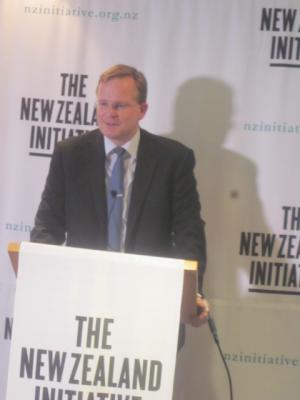
1. You predicted pre-BREXIT the end of the EU. But did you envisage at this time anything like the Deutsche Bank crisis?
Yes, Deutsche Bank has been in crisis for many years. I did write about it late last year in November in the Australian Financial Review. I put my thoughts down this way:-
“Bankers are overpaid, bonus payments are useless and there is an inflation of fancy job titles in banking
“That was the essence of a speech recently delivered at Frankfurt’s Goethe University.
“Had the speaker been a sociology professor in a graduate seminar, that would not be worth reporting. But when the new chief executive of Deutsche Bank turns on his own industry in such harsh words, that is a different story.”
I first wrote about the sorry state of German banking in 2010:
So I always thought that sooner or later the problems in Germany’s banking system would come to the surface, and they now have for all the world to see.
2. In general how would you rank the problems facing the EU now in terms of immigration, terrorism, finance for example? The EU faces so many problems simultaneously, it’s hard to even rank them. I think banking, finance and monetary policy remain the most important problems. Security and immigration are a massive headache, too – not least the EU’s stance on Russia and Turkey. And then there is the minor complication of Brexit.
3. How much water will any NZ/EU free trade agreement hold? I am relatively confident we will see EU/NZ FTA. Having said that, any free trade initiatives are highly contentious in Europe, just think of CETA (Canada) and TTIP (US). Finding an agreement with NZ is not at the top of the EU’s priority list.
4. Your forecast on the US presidential election? It will be a bad outcome. Regardless who wins. Neither of the candidates has any idea on how to deal with America’s long-term fiscal problems. Neither of them is pro trade. Neither will touch the US welfare state. The Americans only have the choice what kind of mess they prefer.
5. How do you see the TPPA emerging from this? The best we can hope for is for a lame-duck President Obama to sign it before his successor has a chance to kill the deal.
From the MSCNewsWire reporters' desk - Tuesday 4 October 2016
The Government is right to make adjustments to our immigration system in response to high numbers causing housing and infrastructure pressures. However, the focus on skilled migrants may add pressure on manufacturers and exporters who are already finding it hard to get skilled staff they need to grow, say the New Zealand Manufacturers and Exporters Association (NZMEA).
NZMEA Chief Executive Dieter Adam says, “Government has finally acknowledged that the mismatch between net inward migration and infrastructure development - housing first and foremost - particularly in Auckland.
“Unfortunately, the changes introduced constitute a significant lift in barriers for skilled migrants, while leaving other migrant categories largely unchanged.
“New Zealand businesses, right across all sectors, are increasingly held back from growing by a lack of highly skilled workers. The reasons behind this are complex, including a tertiary education policy that is not meeting our skills needs, and immigration alone cannot be the whole answer, now or in the long term.
“In the short term, however, allowing employers to find highly skilled staff abroad that are simply not available domestically, is important for the future economic development of New Zealand. Highly skilled workers means people capable of operating complex, computer controlled machinery in the manufacturing sector, for example. The government claims that the changes it introduced yesterday “will prioritise access for higher-skilled SMC migrants ...” – Given the Government’s sketchy track record to date in managing the skilled migrant scheme to match what the economy most urgently needs, it remains to be seen whether that will actually be the case.
“We believe our immigration system is leaky at a different point, people coming in on a student visa and then being allowed to seek employment when they have completed their studies, which can be after as little as one year.
“New Zealand approved visas for around 85,000 overseas students in 2015, and it would be interesting to see how many of these are able to gain employment at the end of their studies. There are reports that 50% of all skilled migrant visa applications these days come from foreign students. These students may be highly skilled in their subject of study, but often have few of the skills and experience industry needs and as a consequence end up in low-skills jobs in retail or tourism, for example.
“We would also like to see a more in-depth review on how our immigration system can best serve New Zealand over-time and provide skilled people to fill skill gaps industry face now, and into the future." Says Dieter.

Palace of the Alhambra, Spain
By: Charles Nathaniel Worsley (1862-1923)
From the collection of Sir Heaton Rhodes
Oil on canvas - 118cm x 162cm
Valued $12,000 - $18,000
Offers invited over $9,000
Contact: Henry Newrick – (+64 ) 27 471 2242
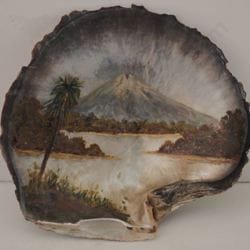
Mount Egmont with Lake
By: John Philemon Backhouse (1845-1908)
Oil on Sea Shell - 13cm x 14cm
Valued $2,000-$3,000
Offers invited over $1,500
Contact: Henry Newrick – (+64 ) 27 471 2242

|
|