
Founded by Max Farndale 1947 - 2018
Auckland Airport today announced that it is to build a brand new 7000sqm warehouse and office facility for international freight forwarding specialist, Röhlig Logistics.
The site at 13 Maurice Wilson Avenue will also accommodate two 3000sqm general purpose warehouse and office facilities, further accelerating the Airport Company’s successful speculative build programme which continues to support South Auckland’s strong industrial leasing market.
Delivery of the new Röhlig facility will complete Stage 2 development of The Landing – Auckland Airport’s world-class business park, located less than five minutes from the airport terminals. Development focus will now shift to Stage 3 and the preparation of a further 12 hectares of land. Earthworks on Stage 3A are scheduled for completion in March 2017.
Mark Thomson, Auckland Airport’s general manager – property, is delighted to welcome Röhlig to The Landing, where they will join a roll-call of major logistics and manufacturing companies.
“We have developed The Landing to attract quality long-term tenants, not simply through proximity to the airport but through the overall master-planning and our ability to design buildings to the unique requirements of our tenants. With more than 150 years’ history and over 150 branches in 33 countries worldwide, Röhlig is an ideal partner for us and we are excited to be able to provide a new base for them in New Zealand that will directly benefit their customers.”
Röhlig New Zealand’s managing director, Andrew Antonopolous, says the move to The Landing will not only benefit existing clients, but support the company’s growth strategy here in New Zealand.
“We are committed to growing our New Zealand business here in Auckland. This new purpose-built facility, and its surrounding amenities, will cater for this growth and play an important role in enabling us to attract and retain the high calibre of staff that will help to drive our business forward.”
To help small businesses and their advisors improve customer relationships and cashflow, we today announced Live Contacts in Xero.
Live Contacts is a new way for small businesses and advisors to better manage customer and supplier information, by linking and enriching information of millions of businesses into their accounting platform. Delivering a complete customer record.
With smart address verification to check information at point of capture, this helps to improve the user experience, reduce costs and ensure data accuracy. Getting accurate address data at the point of entry, reduces the need to clean it once it’s in your company database. By validating business records against a range of data sources it will give small businesses, up-to-date information about their customers and suppliers.
We’re taking the work out of adding new contacts. Reducing data entry, enriching the data we hold and making easy work of adding new contacts in Xero. We’ll suggest the business you’re looking to create and auto-fill their information including business name, address, ABN/NZBN, industry classification and much more.
In the future, as we add more data sources, it will ensure the records of millions of small businesses are always up-to-date. For example, if a business changes an address or phone number we can instantly notify and update the records held by their customers or suppliers. The quality and detail of the information provided will give small businesses a complete, current customer picture, helping you focus on running and growing your business.
Contacts in Xero already integrates directly with some of our largest partners, including Google Apps for Work and Microsoft’s Office 365 suite. Allowing small businesses to see their email communications against their contact records, showing a full picture of their relationship. Bringing email out of the inbox into their business processes.
The introduction of Live Contacts will enable further innovations to make small businesses more productive. For instance, Xero customers will be able to search for a plumber in their vicinity that uses Xero and easily contact and do business with them, exchanging invoices and payment through their accounting dashboard.
Commenting on the announcement, Craig Walker, Chief Technology Officer at Xero, said: “Xero was developed to help its global accounting partners and small businesses do beautiful business. That means empowering our community with rich data that can inform better business relationships, decisions and risk management.
“We’ve re-imagined Customer Relationship Management (CRM) in the cloud as up to date public information of all companies is available. Rather than each small business maintaining their own information about customers and suppliers, they can now link to company information maintained by Xero and partners. This is just the start of what we can do.”
These announcements were made at Xerocon South, Australasia’s largest accounting technology conference, bringing together more than 2000 accountants, bookkeepers, financial professionals and exhibitors from Australia, New Zealand and Asia.
A Xero press release

More on the weasel word
Dear Sir,
The term transparent is as your correspondent correctly observed is dangerous in that it conveys the impression of underpinning specialist knowledge. It is as if a person whose medical knowledge was confined to what they had gleaned from popular magazines and television shows went around cocktail parties telling people that they were in the best of health.
In fact even professional auditors sign off their reports with the qualification that their audit report is based only on the data supplied.
Your correspondent correctly blames the word transparent on the false confidence prior to the collapse of New Zealand’s secondary banking industry.
In the event, neither were professional auditors in a position to divine the true circumstances of the submitted balance sheets. This was because of the accounting convention in which liabilities can be safely posted on the assets side of the ledger.
In the run up to the finance sector crash this took the form of unpaid interest which should have been written off appearing on the asset side of the ledger as an unpaid debt and thus as an asset.
The same goes for the original capital sum, by now clearly a bad debt, appearing as an asset.
Yours
James Springhall
With over 200 cars and 800 trucks across New Zealand, Waste Management runs one of the country’s largest fleets of trucks and cars.
The first diesel trucks are being converted to electric with world leading electric mobility integrator EMOSS in The Netherlands. We will evaluate their performance once they are on the road here in New Zealand.
Tom Nickels, our Managing Director, said combining EVs with the ability to generate power from waste was an example of a sustainable “circular economy” in action.
“Sustainability is what we do. From recycling, to generating energy from waste, managing hazardous materials and making compost from green and food waste, we play an integral role in the sustainability of our communities and our economy.”
We capture 95% of gas emissions from landfill, putting enough power back into the national grid to power 18,000 homes.
Modern landfill technology holds all waste in a fully sealed environment, meaning it captures the naturally emitted gas from the waste as it digests anaerobically. It is then fed into generators to create power. The Redvale facility is Auckland’s largest renewable energy generator.
We also produce 60,000 tonnes of compost from green and food waste through our Living Earth brand.
The first waste collection truck to be trialled will be a box body which will appear on Auckland streets later this year. The first familiar side-loader waste collection truck –used for residential curb-side wheelie bin collections – is expected to go into use in Auckland as soon as Christmas with another planned for Christchurch in early 2017.
A Waste Management press release
A new online tool which allows businesses to compare their energy management practices with others has been launched by EECA BUSINESS.
The Energy Management Journey Tool is a simple self-assessment tool which allows businesses to rate themselves in 6 key areas and then compares results against 450 other businesses across New Zealand.
The tool also tells users which areas of their energy use (including transport fuel use) they should focus on, recommends actions to take and their estimated savings potential, and the process to follow when developing a business’s energy management plan.
EECA BUSINESS General Manager Greg Visser says businesses use about 50% of New Zealand’s energy and generate more than 40% of energy-related carbon emissions.
“EECA estimates that on average businesses can cost effectively reduce their energy use by up to 20%, improving their bottom line and shrinking their carbon footprint,” Mr Visser says.
“But reducing energy usage requires knowing how well you are managing it, and this tool tells businesses what is involved, where to start, what to do next, and who can help them.”
Mr Visser says if all businesses took action, this could save the country $1.6 billion each year.
The tool was developed by the Energy Efficiency and Conservation Authority with data from national end use energy consumption data, and from Energy NZ.
The tool is available on the EECA BUSINESS website https://www.eecabusiness.govt.nz/tools/energy-management-journey/
An EECA press release - Thursday 8 September 2016
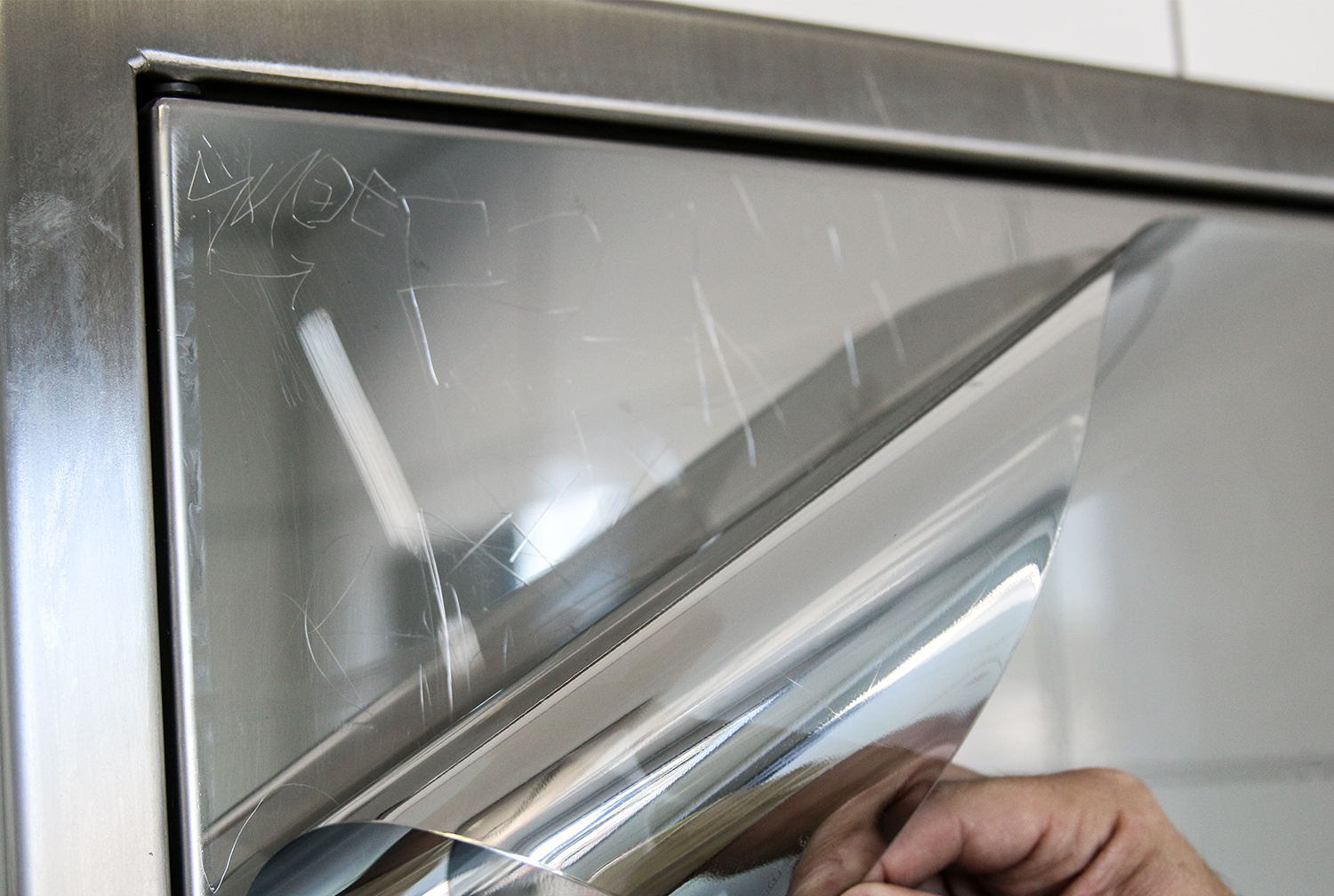 Replacing broken or damaged mirrors can be an expensive and time wasting business not to mention the seven years bad luck many associate with it!Well now with the release in New Zealand last month of the Solar Gard Mirror Shield this has all changed. This innovative product is practicle, cost effective and has many benefits. For application all that is required is a flat surface to apply it on so, this opens up significantly those areas where a mirrored look can be applied. It is ideal for those locations where there is human contact such as gyms, clothing stores and restaurants. One benefit that will please many is Mirror Shield's resistance to acid etching, the new method employed by graffiti vandals these days where glass etching compounds are used. Solar Gard's Ross Eathorne is the person to direct your questions to. Ross can be reached on 09 441 0040 or by email This email address is being protected from spambots. You need JavaScript enabled to view it.
Link here to reach a spec Sheet
Foreign Minister Murray McCully has named Peter Marshall as New Zealand’s new High Commissioner to the Cook Islands.
“New Zealand and the Cook Islands have a special relationship, based on historical ties and shared citizenship,” Mr McCully says.
“Last year marked the Cook Islands’ fiftieth anniversary of self-government in free association with New Zealand and year-long celebrations culminated in reciprocal prime ministerial visits.
“In commemoration of the sacrifice made by 500 young Cook Islands soldiers who served in World War I, New Zealand is hosting a programme of events throughout 2016.
“New Zealand and the Cook Islands are important development partners. New Zealand’s aid is focused on economic development and supports critical infrastructure upgrades, the tourism sector, and quality education and health services,” Mr McCully says.
Mr Marshall is a Companion of the New Zealand Order of Merit. He has served as the Commissioner of the New Zealand Police and Royal Solomon Islands Police Force.
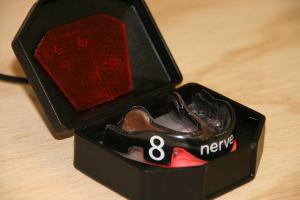
A device that makes it easier to identify and manage concussions in rugby games has won Massey University industrial design graduate Spencer Buchanan top prize in the New Zealand section of the 16th James Dyson Award.
The global product design competition celebrates, encourages and inspires the next generation of design engineers.
Mr Buchanan (pictured), 22 from Warkworth, designed a prototype mouthguard called Nerve with motion sensors worn by rugby players 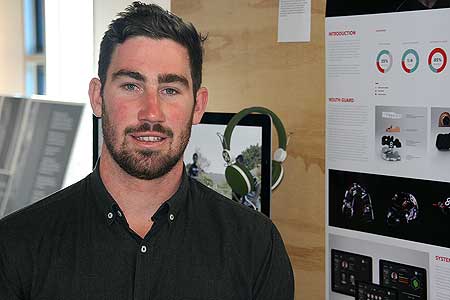 to identify concussion risks after the player has taken a rough knock. He wins $4000 to help commercialise his design concept and an official prize package from the Intellectual Property Office of New Zealand (IPONZ) tailored to his design’s intellectual property needs, a year’s membership to The Designer’s Institute and a Dyson vacuum cleaner.
His design uses motion sensors to identify possible impact injuries to the head but missed by the human eye. If an athlete wearing the mouth guard takes an impact over a certain threshold, the sensors communicate wirelessly to the team doctor’s iPad or tablet. It then calculates the risk based on an algorithm that measures the impact and where it was located along with the player’s previous concussion history to determine whether the player should return to play.
Mr Buchanan, who suffered several concussions playing rugby and snowboarding, says his design was a good match for his sporting interests and background in design.
“Rugby and concussion is a topical issue that is constantly under the spotlight,” he says.
Medical professionals confirmed at the start of this design process that existing headgear only protects against cuts and abrasions and not concussion. With wearable technology becoming an emerging trend in contact sport, I thought it was a perfect opportunity to combine my industrial design knowledge and look to find a solution to the problem.”
The mouthguard is designed to be custom-made to fit the individual requirements of players and its microelectronics are laminated within the design to prevent any health and safety concerns too.
The judges were unanimous in their decision. Head judge Mike Jensen says Spencer’s design addresses a topical issue for New Zealand sport and culture.
“We must be coming close to a culture change with an older generation of All Blacks linked with dementia.
“What is exciting about Spencer’s design is that it is not one product; he’s developed an entire system encompassing sensors in a fully sealed, non-corrosive mouth guard, a charger unit and an app. These components also reveal his sensitivity to good design, while offering peace of mind to athletes involved in any contact sport, their medical support and their families,” Mr Jensen says.
Other finalists included fellow Massey industrial designers Geoff Desborough who designed a camera attachment called a gimbal for hand-held filming of action sports and Cameron Holder who designed a temporary safe habitat, in the shape of a pool, to rehabilitate wildlife caught up in oil spills. All three designers studied at Massey’s College of Creative Arts. Victoria University graduate and Nelson designer Stuart Baynes was also a finalist with his design of a swimming prosthesis that helps lower leg amputees to walk unaided to the pool, dive in, and swim with symmetry and ease
The New Zealand finalists now progress to the international final to be announced on October 26. It includes prize money of NZ $60,000 for the winner and NZ$10,000 for the winning designer’s university.
A device that makes it easier to identify and manage concussions in rugby games has won Massey University industrial design graduate Spencer Buchanan top prize in the New Zealand section of the 16th James Dyson Award.
The global product design competition celebrates, encourages and inspires the next generation of design engineers.
Mr Buchanan (pictured), 22 from Warkworth, designed a prototype mouthguard called Nerve with motion sensors worn by rugby players to identify concussion risks after the player has taken a rough knock. He wins $4000 to help commercialise his design concept and an official prize package from the Intellectual Property Office of New Zealand (IPONZ) tailored to his design’s intellectual property needs, a year’s membership to The Designer’s Institute and a Dyson vacuum cleaner.
His design uses motion sensors to identify possible impact injuries to the head but missed by the human eye. If an athlete wearing the mouth guard takes an impact over a certain threshold, the sensors communicate wirelessly to the team doctor’s iPad or tablet. It then calculates the risk based on an algorithm that measures the impact and where it was located along with the player’s previous concussion history to determine whether the player should return to play.
Mr Buchanan, who suffered several concussions playing rugby and snowboarding, says his design was a good match for his sporting interests and background in design.
“Rugby and concussion is a topical issue that is constantly under the spotlight,” he says.
Medical professionals confirmed at the start of this design process that existing headgear only protects against cuts and abrasions and not concussion. With wearable technology becoming an emerging trend in contact sport, I thought it was a perfect opportunity to combine my industrial design knowledge and look to find a solution to the problem.”
The mouthguard is designed to be custom-made to fit the individual requirements of players and its microelectronics are laminated within the design to prevent any health and safety concerns too.
The judges were unanimous in their decision. Head judge Mike Jensen says Spencer’s design addresses a topical issue for New Zealand sport and culture.
“We must be coming close to a culture change with an older generation of All Blacks linked with dementia.
“What is exciting about Spencer’s design is that it is not one product; he’s developed an entire system encompassing sensors in a fully sealed, non-corrosive mouth guard, a charger unit and an app. These components also reveal his sensitivity to good design, while offering peace of mind to athletes involved in any contact sport, their medical support and their families,” Mr Jensen says.
Other finalists included fellow Massey industrial designers Geoff Desborough who designed a camera attachment called a gimbal for hand-held filming of action sports and Cameron Holder who designed a temporary safe habitat, in the shape of a pool, to rehabilitate wildlife caught up in oil spills. All three designers studied at Massey’s College of Creative Arts. Victoria University graduate and Nelson designer Stuart Baynes was also a finalist with his design of a swimming prosthesis that helps lower leg amputees to walk unaided to the pool, dive in, and swim with symmetry and ease
The New Zealand finalists now progress to the international final to be announced on October 26. It includes prize money of NZ $60,000 for the winner and NZ$10,000 for the winning designer’s university.
Chorus has today announced that it will extend its one gigabit (1Gbps) residential and SME business fibre broadband service across its entire Ultra-Fast Broadband (UFB) footprint from 1 October 2016.
The move follows Chorus leading the introduction of gigabit services to New Zealand – proving both the demand and the technical viability – after the launch of its gig services in Dunedin in February, 2015. The company has long had national gigabit broadband services on its product roadmap and from October will make them available on any UFB connection.
“We are delighted that other fibre providers have joined Chorus in championing gigabit residential and business services,” said Mark Ratcliffe, Chorus CEO.
“Making New Zealand a true 'Gignation', beyond the 5000-plus connections we have in Dunedin, should see us catapulted up the league tables of broadband speed rankings and reinforce the high quality of the broadband infrastructure we're rolling out.”
Currently, the average download speed across Chorus' networks is 30.5 megabits per second (Mbps). Gigabit broadband offers real world download speeds approaching 1000Mbps and uploads of up to 500Mbps. This is the equivalent to uploading 25 high resolution images to Facebook in under five seconds; downloading 25 MP3 songs in a second or streaming ultra-HD movies to 40 different devices simultaneously.
Chorus' Gigabit broadband service will run at the maximum speed the network electronics allows today. In practice this means customers will see download speeds of between 900Mbps and 970Mbps and upload speeds of up to 500Mbps.
Chorus’ residential wholesale gigabit broadband service will be available to broadband retailers at an introductory price of $60 per month until 30 June 2017 after which it increases to $65 per month. The business service will be priced at $75 per month from launch. Existing fibre customers looking to upgrade to a gigabit plan will not require a Chorus technician to visit their home.
Chorus is working closely with Crown Fibre Holdings for their approval of the gigabit service pricing, however if approval is not obtained by the end of September the services will launch on a trial basis.

Palace of the Alhambra, Spain
By: Charles Nathaniel Worsley (1862-1923)
From the collection of Sir Heaton Rhodes
Oil on canvas - 118cm x 162cm
Valued $12,000 - $18,000
Offers invited over $9,000
Contact: Henry Newrick – (+64 ) 27 471 2242
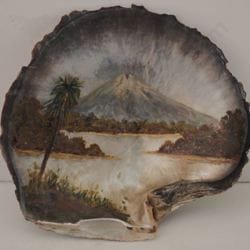
Mount Egmont with Lake
By: John Philemon Backhouse (1845-1908)
Oil on Sea Shell - 13cm x 14cm
Valued $2,000-$3,000
Offers invited over $1,500
Contact: Henry Newrick – (+64 ) 27 471 2242

|
|