
Founded by Max Farndale 1947 - 2018
Victoria University of Wellington has launched a new initiative that will enable local industry to more easily commercialise the University’s innovative research.
In a New Zealand first, Viclink, Victoria’s commercialisation office, is offering simple, free licences for selected technologies using the Easy Access IP programme.
Easy Access IP is an international collective of universities and research institutions who give discoveries and inventions to companies and individuals at no cost, with the aim of translating more research into products and services that benefit the community.
Bianca Grizhar, Viclink’s Open Innovations Manager, says the Easy Access IP agreements will make it easier for local companies to work with the University.
“The programme removes many barriers and complex legal negotiations, as it allows Intellectual Property (IP) to be licensed with a simple, one-page, royalty-free licence agreement. The licensees can then develop products and services as they please.
“We also encourage licensees to work directly with the researchers who invented the IP to utilise their expertise. This means faster product development times.”
Bianca cites Ropata Medical Centre as a great case-in-point for how well Easy Access IP works. As one of Wellington’s largest medical centres—with 19,450 registered patients averaging 6,500 consultations a month—the centre was looking for a way to streamline patient check-in.
Practice Manager Adrian Tucker knew of an automated patient check-in system developed for the Victoria’s Student Health Centre, and that had worked successfully in a Gisborne practice.
“I contacted Viclink to see if we could purchase or licence the system. To be honest, I had my doubts, and thought that it might be too expensive or difficult,” says Adrian.
“In fact, the opposite was true. I met with Bianca, who talked to me about the Easy Access IP programme. I wrote a statement of intent outlining how we planned to use the software, and Bianca prepared the contract. We had the software within a week.”
Easy Access IP complements Viclink’s existing commercialisation efforts, says Bianca.
“The programme will work alongside our traditional research translation, and allow us to join a prestigious international network. We have seen how it can work overseas and we are very excited about the potential new opportunities and relationships.”
“It’s also a big benefit for Victoria’s researchers, who will have more opportunities to showcase their research and create partnerships with industry—which could lead to more research funding and scholarships for students.”
Geoff Todd, Managing Director of Viclink, says Easy Access IP focuses on technologies that will benefit society.
“Viclink has a great record of developing technology that benefits the local economy, with notable spin-out successes like AuramerBio, Avalia Immunotherapies, Boutiq and Magritek. It’s important to ensure Victoria’s knowledge resource remains open and accessible, as it has the chance to improve our quality of life.”
Chair of the Viclink Board and Vice-Provost (Research) Professor Kate McGrath says this new commercialisation approach embeds the University in the international technology sector.
“As a global-civic university, and with its excellence in research, Victoria has a leading role to play in expanding New Zealand’s innovation ecosystem.”
Thank you for taking the time to be here today.
I said earlier this year that I view one of the most important roles that I have is to better make the case with the New Zealand public about why trade openness and trade agreements are vital for the success of New Zealand businesses and the prosperity of New Zealanders.
Why trade is important to NZ
Whilst we are too small to produce everything we need, in some areas we also produce far more than we need.
We have to import medicines and medical technology, vehicles and agricultural machinery. We also like enjoy seasonal and tropical foods, the latest smart phones or Netflix episodes.
To pay for those imports we need to export.
Some of our biggest export sectors produce far more than we can consume – dairy exports 95 per cent of its production; sheep meat about 90 per cent. Wine will earn a record $1.5 billion this year. The people who work in these sectors need secure access to much larger markets than just New Zealand. Tourism depends on foreign visitors. Tourism earns more than $12 billion in export receipts each year and many New Zealand jobs depend on these visitors to our shores.
We say it a lot - and it deserves repeating; we will not prosper selling to ourselves. We cannot shut ourselves off from the rest of the world.
Engagement
I have been discussing our Trade Policy Strategy with a wide range of stakeholders and other interested New Zealanders, including from civil society. Other Ministers are also having such discussions.
This provides a valuable stream of input.
It is important that all New Zealanders are given the opportunity to share in the benefits of trade.
Trade agreements are not about big companies. They are about levelling the playing field so that the men and women who work for those companies, and who work for their own companies, have greater job security and greater opportunity.
I announced at the beginning of August that, as part of the process for the refresh of New Zealand’s Trade Policy Strategy, we would hold public meetings in the main centres, open to all New Zealanders, to provide an opportunity to hear their views.
To enable New Zealanders that do not live in those centres to participate, these meetings are being webcast and there is an opportunity for people to send in questions during the meeting.
This meeting is the first in a series of open public meetings that deliver on that undertaking.
I have also continued dialogue with Iwi around the significant benefits to all New Zealanders and in particular Maori businesses that high quality trade agreements can deliver.
Taken as a whole, I hope this even greater engagement with New Zealanders will ensure that there is much wider understanding of, and comfort with, our trade policy strategy and the overall direction of New Zealand’s trade policy.
The Trade Policy Strategy refresh
Turning to the refresh of New Zealand’s Trade Policy Strategy.
We need a broad strategy that will help us to deliver on some basic objectives.
We need to create opportunity and increase international connections, especially for New Zealand businesses – large and small. We need to use strategy to reduce the enduring challenges that New Zealand faces: we’re a long way from some of our key markets, we have a small domestic market, and our major comparative advantage is in products that some of our trading partners want to protect from competition.
If our trade policy strategy can address those objectives it will help to make the New Zealand economy more resilient, and in turn help to lift growth and raise living standards for New Zealanders. Ultimately, New Zealand’s Trade Policy Strategy contributes to meeting the government’s goal to lift the share of exports to 40% of GDP by 2025.
At the same time, we will negotiate trade agreements that protect the government’s right to pass law and regulate for legitimate public policy purposes.
I outlined in a speech at the beginning of August four broad shifts that I expected we might see over time in a refreshed Trade Policy Strategy. I am pleased that feedback to date from business has been broadly supportive of these shifts.
I also want to stress that throughout these shifts, the WTO will remain important. It’s the only forum where we can achieve disciplines on agricultural subsidies; and with New Zealand companies trading globally, setting trade rules globally through the WTO makes sense for New Zealand companies.
New Zealand has had and must retain an important and influential role in shaping these developments at a multilateral level. Our capacity at the WTO must be maintained and, where it makes sense, enhanced.
While it has had some well-documented difficulties, the WTO can still surprise us.
The achievement of the 10th Ministerial Conference in Nairobi in eliminating agriculture export subsidies was truly historic.
I hope that success breathes new life into the negotiating function at the WTO and we do not slip back to the situation where negotiations drift for years. There is too much at stake. Key objectives for New Zealand, such as disciplining agricultural domestic support, can only be achieved in the WTO.
An important medium term goal as part of a refreshed New Zealand Trade Policy Strategy should be to seek to reinvigorate multilateral trade negotiations centred on the WTO.
The first shift was in the balance between negotiation of further agreements and making the most of those we have, or ‘implementation’.
We have achieved a lot already.
Having invested heavily in building what you might call ‘architecture’, the fact that the majority of our exports go to markets that are now covered by FTAs means in future we are likely to spend less effort looking to negotiate new agreements and more effort on implementing and upgrading our existing agreements.
I want to underline a couple of things about the nature of this shift, in response to points that business has raised with officials. First, this is a process that will take a number of years; it’s not a light switch. It’s about shifting the emphases, or weightings, in our Trade Policy Strategy over time.
Before we shift the weighting of our effort, we have to complete the existing agenda of negotiations.
And we’re not ruling out negotiating new agreements, or upgrading some of the existing ones in future. But the emphasis would shift mainly to getting the most out of the agreements that we have.
Business has noted that more effective implementation will need more coordination, especially between business and government. I agree. A number of elements in the Trade Policy Strategy refresh will raise new challenges for New Zealand business.
Business has also pointed out that greater emphasis on implementation of existing agreements will also highlight the importance of alignment of New Zealand’s domestic policy settings with those agreements. New Zealand’s trade policy strategy and New Zealand’s overall economic strategy need to be mutually supportive.
A second shift in our trade policy strategy arises from a combination of what we have achieved to date, and the new challenges faced by business.
Our bilateral FTAs have delivered significant benefits for exporters.
At the same time, non-tariff barriers have been repeatedly identified as a concern by a wide range of businesses. Government has heard this concern.
With the progress on tariffs, we should be able to increase our focus over time on the barriers and distortions to our goods exports caused by non-tariff barriers.
Addressing NTBs is typically long-term, resource-intensive work. There are very few quick fixes.
The breadth, complexity, technical character and timeframes needed to address many NTBs will require both government agencies and business to further strengthen our existing means of engagement on this.
Ministers are already taking steps to improve coordination and focus across agencies on NTBs. But as with other aspects of the Trade Policy Strategy, effective progress by New Zealand to address NTBs will also require business to strengthen its capability to engage government on these very technical issues in a meaningful way, and to sustain that engagement and technical support over the medium and long-term.
There has been some debate among business about the speed of this shift towards more emphasis on NTBs and what it may imply for the focus on tariffs.
I want to emphasise that government recognises that high tariffs are still critical impediments for some industries, notably dairy. As I said in a speech at the start of August, we will still seek opportunities, including in future negotiations and the WTO, to address these remaining tariff peaks and the tariff escalation which affects a wider range of value-adding businesses.
A third, important shift arises from the changing nature of business. Services and investment are of increased importance. The digital economy is transforming the operating environment for New Zealand.
Services make up the majority of New Zealand’s GDP, and are a key source of employment for New Zealanders.
A number of mainly ‘services’ exporters have told officials that they share an interest in the success of ‘goods’ exporters, because the latter are also important customers for them. I am encouraged by that. We are increasingly moving beyond rigid divisions of interest between our ‘goods’ exporters and our ‘services’ exporters. In modern business the boundaries between selling goods, services, intellectual property and making investments are blurring.
Over time I expect that goods and services trade will increasingly have an equal weighting when it comes to trade policy in New Zealand.
Services and increasing overseas investment – typically so that businesses can get closer to end customers - are key elements for New Zealand firms to enable them to add value to volume.
One of the most valuable insights from business in talking about the proposed Trade Policy Strategy refresh has been the perspective that firms need to identify a place in a value chain or value network where they can see themselves able to extract significant value, and to then work backwards from there how to occupy that place – rather than the simple production-driven narrative of ‘moving up the value chain’.
E-commerce or digital trade has emerged as a vital channel to market; and with modern communications technology an increased range of ‘digital products’ can now be delivered to customers directly over the internet.
This is also of particular importance to New Zealand, as another means to reduce the enduring challenges of distance from market and small scale. There are opportunities for goods trade as well.
The time is here where a small business in Invercargill can export to a consumer market of billions of people through online e-commerce platforms. These platforms can navigate the cultural and linguistic challenges whilst arranging secure payment, freighting and customs procedures all with the click of a button.
We often read about NZ consumers buying online from overseas. E-commerce means those very same New Zealanders can now share in the benefits of trade directly - as exporters.
The fourth shift that I see is that, over time, as we improve the rules to ensure a level playing field, we will want to put more effort into appropriately assisting New Zealand businesses to compete successfully in offshore markets.
This also raises a challenge over time to New Zealand businesses, to grow their capacity to engage with government and then to succeed overseas, and to the government to further strengthen its capability to engage meaningfully with business.
So there are four broad shifts in our Trade Policy Strategy that I believe make sense for New Zealand and will provide a useful guide to the future.
Thank you.
The New Zealand government will have to work more closely with local businesses and may need to tinker with domestic policy to get the most out of the nation's free-trade agreements, Trade Minister Todd McClay says.
McClay is holding a series of public meetings on a planned refresh of the government's trade policy, which includes increased efforts to get more out of existing deals covering more than half the country's exports. The minister didn't rule out negotiating new agreements or upgrading existing ones, but said the new emphasis will be on getting the most out of current deals and will need more coordination between government and the private sector.
Tertiary Education Skills and Employment Minister Steven Joyce has today congratulated all eight of New Zealand’s universities who are ranked in the top 450 universities worldwide, according the annual Quacquarelli Symonds (QS) World University Rankings.
The QS Rankings were released today and show six New Zealand universities have improved in the rankings, while all eight are ranked in world’s top 450.
“New Zealand has a world class tertiary education system and it’s great to see our universities continuing to excel in a highly competitive international environment,” Mr Joyce says.
The QS Rankings considers 3,800 institutions worldwide and ranks the top 916. Auckland University was ranked New Zealand’s highest at 81st, Otago University 169th, Canterbury University 214th equal, Victoria University of Wellington 228th equal, Waikato University 324th, Massey University 340th equal, Lincoln University 343rd equal and Auckland University of Technology 447th.
“Government has shown our commitment to universities by increasing funding for the sector by 24 per cent since 2008. We also announced $761M in new funding for the Innovative New Zealand package of science, tertiary and regional development initiatives in Budget 2016, a lot of which will flow into the university sector.
Innovative New Zealand includes two major initiatives specific to universities as part of Budget 2016. Those initiatives will help our universities remain competitive on the world stage,” Mr Joyce says.
“Entrepreneurial Universities, is a $35 million initiative which will attract more of the world’s leading researchers and their teams to locate their labs here and base themselves in New Zealand. We also announced $34.5 million for Centres of Asia Pacific Excellence (CAPEs) which will be cross-institutional centres of excellence in the language, culture, politics and economics of countries or groups of countries within the Asia-Pacific region.”
The QS Rankings consider academic reputation, employer reputation, faculty to student ratio, citations per faculty, international faculty and international students.
More information about the rankings can be found at http://www.educationcounts.govt.nz/statistics/tertiary-education/univers
Turboprop aircraft manufacturer ATR has renewed its contract with DHL Supply Chain to provide global inventory management and orders of aircraft spare parts.
The new contract covers a three-year period and it is the third time ATR has renewed its contract with DHL.
The new contract includes inventory management, international distribution of spare parts, as well as operations related to maintenance that require a very high level of responsiveness.
DHL Supply Chain also ensures the management of custom operations for spare parts and equipment, in collaboration with DHL Global Forwarding.
DHL relies on four logistics platforms in managing the distribution of spare parts: a warehouse located in Bonneuil, France; two regional hubs for the US and APAC respectively located in Miami and Singapore; and a warehouse located in Auckland, New Zealand, for local clients.
As part of the new contract, DHL Supply Chain will also carry out kitting operations for ATR.

Leaders from the world's largest economies have agreed to promote free trade to tackle the sluggish global economy.
Al Jazeera 5 September 2016
The Australian envelope market is down but not out as the sector regroups in the wake of recent corporate acitivity.
Market intelligence service Pulp & Paper Edge (PPE) reports that Australian Paper’s recent acquisition of the assets of two envelope over-printers has “churned the market, created a flurry of merger and acquisition activity” and has resulted in reduced envelope imports.
In a year when Australia Post “stunned the direct mail sector” by dramatically increasing delivery rates, many in the paper and printing industry considered Australian Paper’s asset acquisitions to be at least curiously timed, PPE said.
However, on closer examination of the sector and its supply chain, the purchase of assets from Trade Envelopes (Queensland) and Envelope Specialists (Western Australia) makes far more sense.
According to PPE, what is most important in these acquisitions is that Australian Paper purchased no envelope manufacturing equipment or trade and removed no envelope manufacturing capacity. What it acquired, in bothcases, were over-print assets of businesses that bought envelopes and printed on them for their trade customers.
PPE estimates Australia’s total envelope market currently approximates 3400 million envelopes per annum with an additional 600 million envelopes per annum in the New Zealand market.
The total market has declined approximately 10 per cent, with the major factor impacting the market being Australia Post’s price hikes for delivered mail.
In that context, the decline in the number of envelopes in the market may well continue, but the worst may well be over, PPE said.
Major commercial users of direct mail are expected to continue to use mail and therefore envelopes in largenumbers, for marketing purposes, as well as for billing. That situation is unlikely to end quickly, making the totalmarket a little more attractive than it may otherwise look on initial examination.
Candida Stationery, the second largest envelope manufacturer after Australian Paper, manufactures in New SouthWales and in New Zealand. In June, seemingly in response to Australian Paper’s acquisitions, Candida Stationery purchased the assets of South Australia’s E.S. Wigg & Son (the third or fourth largest envelope manufacturer in Australia).

Water is typically something you want to keep out of your engine, but a new engine design from Bosch actually injects water into the combustion chamber to enhance performance. Called WaterBoost, which sounds like something you would have on a powerboat, not a car, injects distilled water into the intakes.
Malaysian airline Air Asia X Service Pty Limited (AirAsia) has agreed to end its preselection of checked baggage and change how it discloses its processing fee when selling flight tickets to New Zealand customers online.
The Commerce Commission believes that in preselecting luggage at an extra cost to the advertised flight price, and not properly disclosing a mandatory processing fee, AirAsia was likely to have misled consumers over the price of its services. The Commission has issued AirAsia with a formal warning.
AirAsia introduced flights from Auckland to the Gold Coast in March 2016. The Commission became aware that, in selling those flights, AirAsia was advertising a price that did not include a pre-selected checked baggage allowance. It was also charging a payment processing fee that was not avoidable for New Zealand consumers. The Commission wrote to AirAsia at that time advising it of these concerns.
AirAsia subsequently agreed to change its online booking process to sell checked baggage on an ‘opt in’ basis. It also now discloses the processing fee early in its booking process and has introduced an alternative payment method that enables customers to avoid the fee entirely. These changes were made in July 2016.
Chair Dr Mark Berry said AirAsia had cooperated fully with the Commission’s investigation and a warning was appropriate in this case.
“We have been proactive about tackling opt out pricing, with the travel industry a particular focus for us. We are pleased that AirAsia has moved to improve their pricing practices, including how they disclose their processing fee, after we contacted them with concerns when they re-entered the New Zealand market earlier this year,” Dr Berry said.
“Since we began investigating opt out pricing last year we have now seen seven companies put an end to this practice, which is great for consumers. We have made our position very clear on this issue and expect businesses to stick to an ‘opt in’ sales approach to avoid any possibility of breaching the Fair Trading Act.”
Last year the Commission called for all New Zealand businesses to end the use of opt out pricing, with Air New Zealand, House of Travel, Dash Tickets, Ticket Direct and Naked Bus all agreeing to do so. In March this year Jetstar gave court enforceable undertakings to the Commission ending its preselection of a range of services. The Commission does not have any further ongoing investigations into this issue at this time.
Industrial property occupiers wanting to move or up-size their premises do not have many options left in Wellington's more popular business precincts. An article posted on Stuff's Business Day quotes a real estate agent who says that the supply of industrial property is falling andthe demand is high. "[But] there isn't enough land left to construct many new buildings in Petone, Lower Hutt, Ngauranga and Grenada, which are the suburbs businesses want to be in."

Palace of the Alhambra, Spain
By: Charles Nathaniel Worsley (1862-1923)
From the collection of Sir Heaton Rhodes
Oil on canvas - 118cm x 162cm
Valued $12,000 - $18,000
Offers invited over $9,000
Contact: Henry Newrick – (+64 ) 27 471 2242
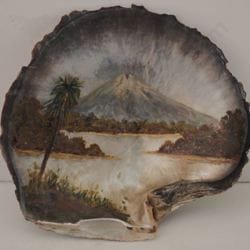
Mount Egmont with Lake
By: John Philemon Backhouse (1845-1908)
Oil on Sea Shell - 13cm x 14cm
Valued $2,000-$3,000
Offers invited over $1,500
Contact: Henry Newrick – (+64 ) 27 471 2242

|
|