
Founded by Max Farndale 1947 - 2018
Callaghan Innovation and New Zealand Trade and Enterprise are busy planning an innovation mission to the 2017 Consumer Electronics Show (CES), which is being held 5-8 January 2017 in Las Vegas. We want to take 15 companies with us - could one of these be you? In allocating the available co-funding, priority will be given to earlier stage companies who would not otherwise be able to attend. Expressions of interest close this Friday the 2nd of September 2016
Continue for more information and conatct details
Colorado's Air Academy High School students Blake Danis and Hannah Peters began their senior engineering class with a problem and ended it with a business: Castanova Fishing Nets.
The nets, which are spring-loaded to extend at the press of a button, will be the first of their kind once produced, Danis said.
The class is part of Project Lead the Way, a national nonprofit that is meant to give students a more realistic education in engineering, biomedical science or computer science and prepare them for the workforce. Danis and Peters said it's thanks to their teacher, Jason Buhler, that they were able to design a marketable product and plant the seed for a business they may return to after college.
Christchurch-based Challenge Steel has appointed two new directors as it prepares to increase imported volumes of fabricated steel from China. At the same time, a liquidator's report has been filed over an unrelated failed steel fabricator Elphinstone & Morris set up just two years ago.
The business of motivation is always changing, but the last few years have been an especially exciting time. There are two key trends: engaging the latest technology, and incorporating just the right blend of motivators. With millennials comprising more than 50 percent of the workforce by 2020 — along with many baby boomers staying in their jobs — it is imperative to design motivation programs to appeal to a multi-gen workforce.
Construction is advanced on a new helicopter terminal and hangar at Auckland Airport. The new facility will be built, owned and managed by local helicopter tour operator Helicopter Me, and will cater for the airport’s growing number of affluent and adventure-seeking passengers.
Anil Varma, Auckland Airport’s acting general manager – aeronautical operations, says the helicopter terminal is a timely addition to the services provided by Auckland Airport for its customers.“Our international passenger numbers continue to rise, up 8 per cent in the last financial year to just under 9 million. This has led to an increase in the number of high-spending tourists wanting to connect quickly to their luxury holiday destinations.”
“The new helicopter terminal will also provide international and New Zealand tourists with greater choice when it comes to heading out for a scenic flight, lunch or a wine tour while visiting Auckland.”
Situated just 200 metres from the international terminal, the heliport is believed to be one of the closest such operations to an international airport anywhere in the world. Helicopter Me’s Richard Poppelwell says the quality and accessibility of the heliport will have immediate benefits for the New Zealand tourism industry.
“The enhanced helicopter service will provide a seamless travel service, essentially enabling international travellers to fly directly from their port of origin to their end destination, be it a lodge, golf course, island or even the city centre just 8 minutes away. Equally importantly, customers can be picked up from the front lawn of their accommodation in, say, the Bay of Islands and be landing beside the international terminal within an hour, thereby saving themselves half a day in travel.”
The new hangar will also allow helicopters to be based at Auckland Airport for the first time, rather than being specifically flown in for every booking.
“Having helicopters on site will significantly reduce the cost for passengers and therefore open up the opportunity to add a touch of luxury to a broader audience,” says Mr Poppelwell.Auckland Airport’s new helicopter terminal and hangar are scheduled to open in November this year.
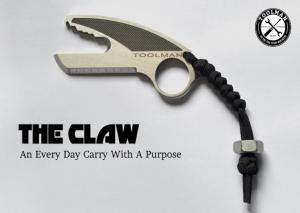
There are common features on this multi-tool that can be seen on other products out there, but they way they are implemented makes The Claw unique.
The hex ratchet section of the multi-tool allows you to operate the tool like a ratchet, without the mechanism seen in ratchet wrenches. Stepped faces on the hex ratchet also keeps you from hassling with correct sizing issues, seen on many other multi-tools.
One of the most appealing things to us, at least, is that it is made from solid steel. That means there are no joints to wear out, and it will keep working, as long as you don’t lose it.
ARLINGTON, Va. — Boeing has been tapped by the New Zealand government to upgrade the anti-submarine acoustic processing system of the nation’s P-3 Orion maritime patrol aircraft with a system similar to that of the U.S. Navy’s P-8A aircraft.
Boeing’s Defense, Space & Security unit was awarded a $24.1 million contract on Aug. 24 by the New Zealand Ministry of Defence to upgrade the six P-3K2 aircraft of the Royal New Zealand Air Force (RNZAF), according to an Aug. 24 Boeing release. The company “will develop, install and test” the processor and also “will provide associated airborne, ground and classroom training and spares and maintenance support.”
The significant labour costs and geographic isolation of the New Zealand manufacturing industry has meant that in order to compete with international players, local manufacturers must look to innovate with new technologies and automate their production processes.
To compete with global manufacturing hubs, leading Auckland based injection moulding company, TCI New Zealand (TCI) were looking for an automated solution that would offer a more cost-effective means of producing its customer’s products.
For the first time ever, next year's graduate intake at engineering giant Aecom will reflect society's 50/50 gender split.
It took a concerted effort by the global firm's Australian and New Zealand businesses to hit this target, especially given that many of the company's specialisations still don't attract large numbers of women at tertiary level.
Leading Australasian automotive accessory company, Best Bars Ltd, has introduced a series of upgrades at its high-tech factory in New Zealand which have resulted in improved efficiencies and better quality towbars being produced.
Best Bars only moved into its state-of-the-art facility at Wiri in South Auckland three years ago, but has already implemented changes that are designed to maintain its position as a world-class manufacturer.
The latest include improvements to the welding process, new plasma steel cutting equipment and a more comprehensive powder coating system.
These investments follow on from the installation of a brand new paint shop at the Best Bars site in 2014 costing three-quarters of a million dollars.
Stephen de Kriek, CEO of Best Bars, says the object of the newest changes is to further raise the quality and consistency of the towbars it produces.“Our production systems are already world-class, but you never stop trying to make improvements that will keep you ahead of the competition and satisfy the needs of our customers,” he says.
The welding process has come in for the greatest attention at the Best Bars factory. The company now has six robotic welders and a seventh is soon to be added to the production line to automate the most repetitious tasks, thereby ensuring product consistency day-in, day-out and freeing up welding staff for more specialised roles.
Investment has also been made in a series of new manual welding machines for jobs that cannot be easily automated, which improves the ease of work and makes it more efficient. This move, together with other changes in this area, has contributed to improving the working conditions for manual welders, according to Mr de Kriek.
That’s especially important, since the company has now introduced five night shifts per week for its welding team in order to keep up with customer demand for towbar products.
Other investments include the installation of an automated nesting system for profile cutting, which used to be a five-step manual job. The new nesting system is not only more productive from a time-saving point of view, it can also make more products from a sheet of steel, which reduces wastage.
Three new, highly efficient plasma cutting machines have been installed, too. These are faster, more accurate and more efficient in cutting steel plate.
In the paint shop, the powder coating process has been upgraded to include a three-step pre-treatment before the under-coat and then the final coat, which is baked at 240 deg C. The upgraded paint process delivers a superior finish that complements modern vehicle design and will look good for years to come.
Along with the upgrading of equipment, Best Bars is also making further investments in its staff, to develop leadership skills among those who wish to progress to the next level.
Staff leadership courses have been introduced across each department in the company, consisting of a ten-month business management study programme accredited to NZQA level 3.
“Those who are taking part in the course are seeing a lot of benefit from it personally, so it’s a win-win for them and for Best Bars,” adds Mr de Kriek.
The latest developments are part of a carefully planned strategy of continuous reinvestment made in recent years by Best Bars in cutting-edge technology and staff enhancement to ensure customers are provided with products that employ the latest innovations, whilst also ensuring best quality, best value and best service.

Palace of the Alhambra, Spain
By: Charles Nathaniel Worsley (1862-1923)
From the collection of Sir Heaton Rhodes
Oil on canvas - 118cm x 162cm
Valued $12,000 - $18,000
Offers invited over $9,000
Contact: Henry Newrick – (+64 ) 27 471 2242
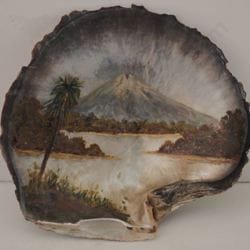
Mount Egmont with Lake
By: John Philemon Backhouse (1845-1908)
Oil on Sea Shell - 13cm x 14cm
Valued $2,000-$3,000
Offers invited over $1,500
Contact: Henry Newrick – (+64 ) 27 471 2242

|
|