Founded by Max Farndale 1947 - 2018
Highlights1. Financials
• Net Profit After Tax was $84m, up $21m on last year.• Underlying profit before tax was $70.6m up $1m on last year.• Declared dividend of $54.3 million for the 2015/16 financial year. This compares with last year’s dividend of $41.7 million.• Revenue was $211.1 million, down $7.2m and underlying expenses were $105.7m, down $12.7m.• Investment property valuation increase of $12.2m primarily reflects value created by improvements to Ports of Auckland’s Wiri Freight Hub.
2. Volumes• Container volumes down 6.7% to 907,099 TEU.• Car and light commercial vehicle volumes up 1.7% to 248,065 units.• Breakbulk and bulk volumes (including cars & LCVs) down 2.2% to 5.79 million tonnes.
3. Customer service and performance• In 2016 we were voted Best Port in Oceania by our customers.• Our crane rate averaged 36.6 moves per hour over the year, 7% up on the year prior and the highest in New Zealand. Crane rate has improved 25% over the past five years.
4. Strategic Initiatives• Developing a North Island supply chain network to support future growth.• Proceeding with partial automation of our container terminal.• Investing in container terminal infrastructure, wharves and cranes.
Ports of Auckland today released its results for the 2015/16 financial year.
Chief Executive Tony Gibson said “I am pleased with what we have achieved. We continue to make significant economic and social contributions to Auckland and New Zealand, despite operating in a difficult market environment. We thought it was going to be a tough year, and so it proved, but we still increased profit and dividend. That we have been able to deliver a strong result in current conditions is a sign that our company is in good health.”
“Two factors have contributed to a more difficult market. Lower iron and steel prices have resulted in significantly lower iron sand exports and while this was partially offset by increased cement throughput due to Auckland’s booming construction sector, bulk volumes were down 5.5%. However, imports of cars, light commercial vehicles and ‘high & heavy’ vehicles increased, keeping the total fall in bulk and break-bulk volumes to just 2.2%. We expect similar volumes in the current financial year.
“Secondly, the container industry is facing ongoing difficulties caused by ship construction outstripping trade growth. The resulting overcapacity has led to a significant reorganisation of shipping services internationally, which is also affecting ports. Twelve of the world’s top 30 ports have reported volume reductions this year. In New Zealand, the changes have resulted in volume leaving Auckland. The situation is expected to continue. Global container throughput is expected to grow by only 0.3% this year while shipping capacity will increase by 4.6%. We are expecting our container volumes to be flat or fall this financial year.
“Our strategy has been to offer great service to customers, focus on improvements we can make through technological advancements, keep costs low and extend our reach into the supply chain so we can offer better value and service to freight owners. This is how we have been able to deliver strong results on lower volumes. We will continue and extend this successful strategy this year.
“On port we are completing the container terminal infrastructure we will need to cater for larger ships. We will also start work to automate our container terminal, the first in New Zealand to do so. This innovation will increase capacity and reduce cost, making us even more competitive.
“We are continuing to build our freight hub network. We have a cross-dock under construction at Wiri, South Auckland, and our Mt Maunganui Hub will open in September. We will soon lodge resource consent for enabling work at our Waikato freight hub, which will be our largest. This hub is ideally located in the fast growing Waikato region, with excellent links by road and rail north, south and east. Like all our hubs it will be port neutral and so will help facilitate the movement of freight by the most efficient, natural supply chain.
“We have recently entered a strategic alliance with Napier port, which will strengthen the position of both companies in the supply chain. With similar ownership structures, cultures and a complementary customer base, we see much potential in this partnership.
“There are many changes happening in our industry and it is an exciting time to be part of it. We look forward to the years ahead.”
Serko Limited (NZX:SKO), a leader in online travel booking and expense management, and Sabre Corporation (NASDAQ: SABR), the leading technology provider to the global travel industry, today announced a collaboration to develop the next generation of Sabre Online.
Sabre Online is Sabre’s corporate online booking tool for small and mid-sized businesses in Australia and New Zealand. The collaboration serves as a launch pad for the next generation of Sabre Online, while simultaneously expanding Serko’s market footprint.
The new version of Sabre Online, under the same name, will combine Sabre’s end-to-end offering with Serko’s established cloud-based booking platform. This provides existing Sabre Online customers with the ability to combine add-ons from Serko, such as Expense Management, whilst also providing a more scalable online booking tool with the unique ability to upgrade to a premium offering.
Darrin Grafton, Serko, CEO, said: “This is a really exciting opportunity for both Serko and Sabre. It gives Sabre access to a broader corporate online booking portfolio and gives Serko access to a market of mid-sized organisations, which is growing faster than any other market. Additionally, both Sabre and Serko’s Travel Management Company (TMC) customers will have access to a wider range of corporate travel solutions while enjoying the operational benefits of using a single underlying booking platform.”
Richard Morgan, regional director, Sabre Travel Network South Pacific, said: “By harnessing both Sabre’s and Serko’s expertise and technologies, this relationship will enable both companies to create a unique user experience that allows agents to include add-ons from Serko based on corporate customer needs. This ensures that we continue to meet the evolving needs of our customers, and provide our TMC and corporate customers with a unique competitive advantage.”
Roshan Mendis, senior vice president, Sabre Travel Network Asia Pacific, added that: “With corporate travel in the Asia Pacific region on an accelerated growth trajectory, corporate travel management companies are now required to achieve tighter cost control but without compromising the comfort of travellers. As a highly respected company in the market, Serko’s solutions for corporate travel in Australia and New Zealand perfectly complement Sabre’s. Our relationship demonstrates how innovation and technology can play an enabling role, ensuring that corporate travellers are having more of their personal preferences met.”
Upgrade of existing Sabre Online customers onto the new version of Sabre Online will start in Q3, 2016 and is expected to be completed before the end of the current financial year.
The deal is expected to be worth a minimum of NZ$1 million per annum and will start contributing to Serko’s revenue in the second half of FY17.
Investors should also read the trading update provided in the Chairman's Annual Meeting address released by Serko today. The Chairman's address is available on the NZX market announcement platform.
Monetary policy challenges extend well beyond the normal parameters and stresses envisaged when policy frameworks were designed and inflation goals were first specified, Reserve Bank Governor Graeme Wheeler said today.
In a speech written for the Otago Chamber of Commerce, Mr Wheeler said the scope and influence of monetary policy, particularly in small, open economies, is heavily constrained by economic and financial developments outside their borders. As a result, expectations of what monetary policy can achieve often run ahead of reality.
“Nearly 10 years on from the Global Financial Crisis, economies face a difficult global economic and financial climate, with below-trend growth despite unprecedented monetary stimulus, declining merchandise trade and rising protectionism, very low inflation and interest rates, and high asset prices presenting financial stability risks. Many of these issues have complex structural elements that are unlikely to fully self-correct as global growth recovers.
“Central banks must make finely balanced judgements when setting monetary policy, based on evidence, research, scenario analysis, and continual review of their policy record and international experience,” he said.
“As is the case elsewhere, there are a range of views about what monetary policy can achieve and how it should be operated. In New Zealand, these include a view that flexible inflation targeting is no longer an appropriate framework for conducting monetary policy.”
Mr Wheeler said that flexible inflation targeting remains the most appropriate framework for conducting monetary policy in New Zealand. Provided sufficient flexibility is allowed to accommodate the frequent and often severe impact of external shocks, the most important contribution monetary policy can make to promoting efficiency and the long-run growth of incomes, output and employment is the pursuit of price stability.
“There is nothing sacrosanct about what particular inflation band or target should be adopted as a measure of price stability. However, changing a target when times become tougher reduces the incentives on central banks to achieve earlier agreed goals. It could damage the central bank’s credibility – particularly if a perception develops that the central bank will continually seek to respecify goals.”
The Bank also encounters a view that it should not lower interest rates, because current strong economic growth makes interest rate cuts unwarranted and undesirable.
However, if financial markets believe that the Bank is content with below-target inflation, they would conclude that the easing process is over and proceed to bid the exchange rate up, perhaps substantially.
“The TWI exchange rate is already at a high level based on the Bank’s models. A sizeable appreciation would further squeeze incomes in the tradables sector, and drive tradables inflation lower for longer, thereby lowering overall headline inflation.”
Low headline inflation could also bring down inflation expectations in a self-perpetuating spiral.
“If inflation expectations fall too far, it can be very difficult to raise them back up. In such a situation, even further cuts in interest rates would be needed to stimulate economic activity and increase inflationary pressures.”
Mr Wheeler said a third view maintains that the Bank should rapidly lower interest rates to bring inflation quickly back to the mid-point of the inflation band.
However, an aggressive monetary policy that is seen as exacerbating imbalances in the economy would not be regarded as sustainable, and would not deliver the exchange rate relief being sought.
Rapid ongoing decreases in interest rates would likely result in an unsustainable surge in growth, capacity bottlenecks, and further inflame an already seriously overheating property market. It would use up much of the Bank’s capacity to respond to the likely boom/bust situation that would follow, and place the Reserve Bank in a situation similar to many other central banks of having limited room to respond to future economic or financial shocks.
Mr Wheeler drew heavily on and emphasised the messaging contained in the recently released August Monetary Policy Statement.
“The key rationale for cutting the OCR in August was to lower the risk of a further decline in short-term inflation expectations.
“Our present judgement is that the current interest rate track, involving an expected 35 basis points of further interest rate cuts, balances a number of risks weighing on the economy, while generating an increase in CPI inflation back towards the mid-point of the 1 to 3 percent target range.
“We remain committed to the inflation goals in the Policy Targets Agreement. We do not believe that the outlook and balance of risks warrants a position of no policy change, nor a position of rapid easings. If the emerging information and risks unfold in a manner that warrants a change in our judgements, we will modify our policy settings and outlook.”
Read the speech: Monetary Policy Challenges in Turbulent Times
Air New Zealand is to spend more than $100 million increasing the number of premium seats on its Boeing 787-9 Dreamliners and refurbishing its Boeing 777-300 fleet in response to customer trends.
Increasing demand for premium travel means the three Dreamliners scheduled to be delivered from October 2017 will arrive with a fresh new cabin configuration that will increase the number of Business Premier seats from 18 to 27 and Premium Economy seats from 21 to 33.
From February 2017, all seven of the airline’s Boeing 777-300s will also progressively complete a refurbishment programme, including the installation of the Panasonic eX3 in-flight entertainment system customers already enjoy on the Dreamliner fleet, and refreshed seating options.
Each of the 777-300s’ interiors will be completely refurbished as part of the project. The refurbished aircraft will feature refreshed Business Premier and Economy seats as well as Air New Zealand’s luxury leather Premium Economy seat which debuted on the 787-9 Dreamliner in July 2014. These will replace the Spaceseat and take the number of Premium Economy seats on this aircraft from 44 to 54.
The Boeing 777-300 refurbishment programme is expected to be completed by late November 2017.
Air New Zealand’s General Manager Customer Experience Carrie Hurihanganui says since its introduction on the Dreamliner, the new ink coloured luxury leather Premium Economy seat has become extremely popular with customers.
“When we unveiled the Spaceseat in 2010, it was revolutionary and clearly the best option in the market at the time, as a string of international awards has proven. However, seating technology and materials have come a long way since then and our customer research now shows consistently higher satisfaction scores for our newest Premium Economy offering so it’s time to continue Air New Zealand’s evolution in this space,” Ms Hurihanganui says.
“With these changes, we look forward to being able to offer our customers a consistent Premium Economy product across our long haul fleet and being able to welcome even more customers into our premium cabins with the expanded premium footprint on our Dreamliners.”
“The reconfiguration of our Dreamliners and refurbishment of our 777-300s signal a clear commitment by the airline to continue to deliver the best onboard customer experience into the future.”
New Zealand facilities services company, OCS has announced it is selling its New Zealand Envirocomp composting operation to Frontier Group Partners Ltd, a consortium which includes original Envirocomp founder, Karen Ashby.
Envirocomp collects and processes residential and commercial sanitary, incontinence and nappy waste at two facilities in Canterbury and Wellington. Each site has the capacity to process 60,000 items per day, reducing an estimated 7200 tonne of waste from entering landfill in each region.
OCS purchased the business from its start-up owners in 2011, and OCS New Zealand Managing Director Gareth Marriott says it's timely for someone else to bring in new innovation and technology.
"OCS New Zealand has made a significant investment in research and development in Envirocomp over the past five years and we look forward to seeing Frontier Group Partners Ltd take it to the next phase," Mr Marriott says.
Frontier Group Partners Ltd intends to review the current operation and is exploring potential opportunities to implement new technology to further enhance the business.
"I'm really excited to be back involved with Envirocomp – obviously it's a business that I have had a great passion for and I'm delighted to be working with Frontier Group Partners Ltd to take it to the next level," says Karen Ashby.
Mr Marriott says OCS remains committed to operating in an environmentally sustainable manner across its wider facilities management business and has developed a range of services that are designed to reduce energy, water use and landfill waste.
Got a Trade Week 2016 is being launched today by Associate Minister for Tertiary Education, Skills and Employment Louise Upston.
The week-long event is part of the Got a Trade? Got it Made! campaign which aims to raise awareness of on-the-job training and career opportunities in New Zealand’s trades and service industries.
“It’s important that young people see the trades as a first choice when planning their careers. People like parents, teachers and careers advisors should also encourage jobs, especially to Māori, pacific people, and women who are all under-represented in trades.” Ms Upston said.
“Strong employment growth is forecast in the construction, business services, hospitality and retail industries, a career in trades supports a move towards a more skilled and productive economy.”
Budget 2016 provided $24 million for Apprentices and Maori and Pasifika Trades Training. This will support a further 5,500 apprentices, and 2,500 young Māori and Pasifika learners in MPTT programmes this year, and 3,400 next year.
Last year 42,000 people undertook apprenticeships and recently the Building and Construction Industry Training Organisation (BCITO) reported it had 10,000 apprentices for the first time.
“This shows that we’re working hard to get more people into the trades, but there’s always more work that can be done.”
As part of the week’s events, Ms Upston will be meeting 80 apprentices and trainees at the Future Business Leaders Awards in Auckland this Thursday.
“Got a Trade Week 2016 is also a great time to showcase the talents and achievements of young Kiwis making headway in their chosen vocation” said Ms Upston.
Got a Trade? Got it Made! is collectively owned by eight Industry Training Organisations. Launched in November 2014, the campaign to date has encompassed a range of activities from events, exhibitions, workplace tours and school visits.
For more information on Got a Trade visit: http://gotatrade.co.nz/
Got a Trade Week 2016 is being launched today by Associate Minister for Tertiary Education, Skills and Employment Louise Upston.
The week-long event is part of the Got a Trade? Got it Made! campaign which aims to raise awareness of on-the-job training and career opportunities in New Zealand’s trades and service industries.
“It’s important that young people see the trades as a first choice when planning their careers. People like parents, teachers and careers advisors should also encourage jobs, especially to Māori, pacific people, and women who are all under-represented in trades.” Ms Upston said.
“Strong employment growth is forecast in the construction, business services, hospitality and retail industries, a career in trades supports a move towards a more skilled and productive economy.”
Budget 2016 provided $24 million for Apprentices and Maori and Pasifika Trades Training. This will support a further 5,500 apprentices, and 2,500 young Māori and Pasifika learners in MPTT programmes this year, and 3,400 next year.
Last year 42,000 people undertook apprenticeships and recently the Building and Construction Industry Training Organisation (BCITO) reported it had 10,000 apprentices for the first time.
“This shows that we’re working hard to get more people into the trades, but there’s always more work that can be done.”
As part of the week’s events, Ms Upston will be meeting 80 apprentices and trainees at the Future Business Leaders Awards in Auckland this Thursday.
“Got a Trade Week 2016 is also a great time to showcase the talents and achievements of young Kiwis making headway in their chosen vocation” said Ms Upston.
Got a Trade? Got it Made! is collectively owned by eight Industry Training Organisations. Launched in November 2014, the campaign to date has encompassed a range of activities from events, exhibitions, workplace tours and school visits.
For more information on Got a Trade visit: http://gotatrade.co.nz/
After global markets swung last week amid changing bets on the odds of a US interest rate hike this year, investors will scrutinise Federal Reserve Chair Janet Yellen’s comments at the annual meeting of top central bankers on Friday.
Private equity firm Oriens Capital has received commitments of $30 million for its first fund, which will focus on regional investments.The final target size for the fund is $60 million.
The firm has roped in investors like Sir Stephen Rober Tindall, founder of New Zealand retailer, The Warehouse and The Tindall Foundation, whose K1W1 investment company has put in over $100 million in seed and venture funding.
Other investors include Quayside Holdings, Tauranga Energy Consumer Trust and others from the community.
“The combination of best-practice fund structure, the investor and manager alignment, and a team with great experience in fund management governance and investment execution were all factors in attracting the high calibre of investors on our register,” said John McDonald, chairman of Oriens Capital, according to a report quoting him in the Bay of Plenty Times.
Preparing to hit its first close by September, the fund will focus on mid-market companies in the region, that have a revenue between $2 million and $50 million. They are looking into investing in great management teams in businesses that operate in distribution, logistics, specialist manufacturing, food making, technology, science and agri-tech.

Palace of the Alhambra, Spain
By: Charles Nathaniel Worsley (1862-1923)
From the collection of Sir Heaton Rhodes
Oil on canvas - 118cm x 162cm
Valued $12,000 - $18,000
Offers invited over $9,000
Contact: Henry Newrick – (+64 ) 27 471 2242
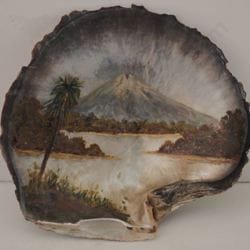
Mount Egmont with Lake
By: John Philemon Backhouse (1845-1908)
Oil on Sea Shell - 13cm x 14cm
Valued $2,000-$3,000
Offers invited over $1,500
Contact: Henry Newrick – (+64 ) 27 471 2242

|
|