
Founded by Max Farndale 1947 - 2018

New Zealand has given further details of a new fleet tanker that it is acquiring from South Korea besides replenishment of naval vessels, the platform can also be deployed on HADR missions
The Royal New Zealand Navy (RNZN) has given further specifications of a new fleet tanker that it is acquiring from South Korean shipbuilder Hyundai Heavy Industries (HHI).
The New Zealand government announced in July 2016 that it has approved the vessel's acquisition for NZD493 million (USD353 million). The platform will replace the RNZN's only replenishment tanker, HMNZS Endeavour (A 11), which has been in service since April 1988.
The new tanker will displace 24,000 tonnes, and has a length of 166 m, an overall beam of 24.5 m, and a design draught of 8.5 m. The ship will feature an 'axe bow' design for fuel efficiency, and has a top speed of 16 kt. It will be equipped with two NATO-compliant replenishment at sea (RAS) masts, one each on the port and starboard sides.
The platform will have liquid cargo capacity for 8,000 tonnes of diesel fuel, 1,550 tonnes of aviation fuel, and 250 tonnes of fresh water. The ship can also carry up to 12 standard 20 ft containers, four of which can contain dangerous goods such as ammunition, and will be equipped with a winterised crane that can lift up to 25 tonnes.
With a hangar and flight deck, the vessel can accommodate and sustain one NH90 helicopter, and features accommodation for 98 including 64 core crew members of the ship. The tanker will carry two rigid hull inflatable boats (RHIBs) for visit, board, and seizure missions.
For self-defence, the vessel has been designed to be armed with two mini-Typhoon remote-controlled weapon stations (one each on the port and starboard sides) and one Phalanx close-in weapon system (CIWS) turret on its bow.
SeaPlatforms

In which the president of the National Press Club seeks to explain the mystery of why he was the recipient, among many others, of an email soliciting donations from the British publishing organisation which owns The Guardian and which has cash reserves of around $1 billion.
At first glance you believed that the begging letter from The Guardian was counterfeit?
It seemed to be a too perfect pastiche of The Guardian style. Also it seemed improbable to imagine that a newspaper that called it so utterly wrong for Brexit would then brazenly send out a letter soliciting donations so soon after. So I hedged by reporting that it was probably phony.
You then realised that it was genuine.
In hindsight the donation solicitation would have been set up prior to the referendum. It was beyond The Guardian to have imagined that the vote would have gone against Europe.
Why was that?
They live in a bubble in which they only talk to each other or people with a similar outlook. In their mind the wish had become the fact. The pervasive nature of this was demonstrated when the staff of their sister paper The Observer in the immediate aftermath of Brexit still touted the Boris Johnson/ Michael Gove leadership axis.
So they sent it out anyway?
You have to credit them for such semi divine self-belief. They are a secular priesthood. A democracy of the select.
A few hours after the referendum vote you came out on the MSC Newswire- National Press Club-EIN Presswire proclaiming that the Brexit result also very much represented a protest vote against what you described as The Guardian-BBC “syndrome?”
I should have added University to this. These are the three pillars that sustained the old pre-Brexit Britain. The BBC chieftains managed to keep a lid on their internal pro Europe sentiment until the actual vote. But then the lid blew off and became Project Fear.
Why are they all so excited by Europe?
When you use the term “Europe” here think France. Think just Paris. From their point of view it is so much more exciting politically than anything we have in the Westminster sphere. You have running around still between government and academia such characters as Che Guevara’s sidekick Regis Debray. You have the lightning rod of the Paris 1968 Maoist riots Daniel Cohn Bendit firmly installed as a Member of the European Parliament. And so on.
In regard to the soliciting letter from The Guardian and your original scepticism what was the element that made you particularly so wary?
The use of the word “interrogating” as a substitute for reporting, covering, or just writing about events. It was so deliciously strangulated in The Guardian manner in order to convey the impression of a higher calling. Of their dwelling on a superior plane to that of ordinary mortals, certainly mere reporters. I also thought it was odd that the imploring email came so temptingly my own way. I flattered myself that I was being fitted.
You subsequently discussed the curious situation in which an organisation with one billion NZD equivalent in reserves could send out a donation canvassing letter. Then do so over the name of a person with an annual income approaching one million NZD. Then send it out to people with a tiny fraction of these savings and this income.
The readership of their weekly edition in New Zealand has a strong public sector following notably among teachers of all varieties and those in the social sphere. In other words public servants. Some public servants in New Zealand do have an annual remuneration approaching the one million NZD mark, and I should have mentioned this.
Still, this is by New Zealand standards a favoured income group. Are there any lessons here for the two merging local newspaper chains?
The Guardian weekly edition has taken over from what remains of Time magazine and the vacuum of the defunct Newsweek. It has become New Zealand’s news magazine of reference. Until some 30 years ago these same chains used the Guardian re-print/ agency service. In recent years the local chains have swerved away from this serious feature approach toward the current celebrity contemporary culture version.
Have you had any personal encounters with The Guardian?
One recalls Patrick Ensor toiling away at the centre of the Wellington-based chain. I have to say that I wondered what he was doing here. Then he reappeared back at The Guardian as editor of the weekly international edition. It occurred to me then that he was in New Zealand to experience a reality check. I have a notion also that but for his untimely death The Guardian might have sidestepped its foppish eternal protestor aura characterised so vividly and so recently by its bizarre post Brexit appeal for funds.
Is there any particular observation of Ensor at work in Wellington that leads you to this conclusion?
He would use a term to describe this or that person or collective of them. It was that they were “self-regarding.” If you look at the begging letter wheeze you would have to describe it as such. One can be assured that all who had anything to do with its authorship and distribution remain quite in the dark of all its irony and unintentional humour
Anyone else?
Going back a bit I spent time with Malcolm and Kitty Muggeridge at Robertsbridge. It was the first time I ever encountered yoghurt, I recall. Malcolm, and I use his own words, described The Guardian for which he had worked pre-war as being “essentially fraudulent.” The Guardian had successfully blocked a book that Muggeridge (pictured) wrote about his experiences while working there, and continued to do so even after Muggeridge turned it onto a novel. So his view was necessarily jaundiced. Curiously, both Muggeridge and Ensor were National Press Club speakers. Muggeridge a foundation one.
Based in Melbourne, the position gives him responsibility for operations in Australia, New Zealand, and Papua New Guinea.
"Frank is a highly experienced business leader who keenly understands the landscape within this region," Agility Asia Pacific CEO Chris Price says.
"As we continue to build on our presence and providing the solutions that our customers in Australasia require, his leadership will help to steer us towards even greater success."
Guerra has more 30 years of experience in the logistics industry. He joined Agility in 2010 as general manager for contract logistics in Australia.
Most recently, he was responsible for both contract logistics and network freight forwarding.
Before joining Agility, he held leadership positions at several major freight forwarding companies.
He ran his own forwarding company for 11 years in Australia before Mainfreight bought it.
"I am excited to lead Agility in its next phase of growth in Australasia," Guerra says.
"I look forward to working closely with Chris to execute our business strategies and expand our customer base."
The Australian Packaging and Processing Machinery Association (APPMA) will exhibit for the first time at FoodTech PackTech 2016, this October in Auckland along with 24 APPMA Member companies will also be exhibiting at FoodTech PackTech 2016.
The APPMA represents Australia’s leading packaging and processing machinery and allied components companies and members include manufacturers, distributors and importers of packaging and processing machinery who are suppliers to industries such as food, beverage, dairy, meat, poultry, seafood, confectionery, bakery & snacks and fresh produce.
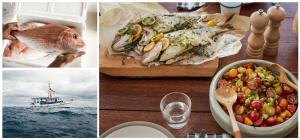
The small town of Leigh, New Zealand may only have a population of 750, but it's showing the world how to do humane, sustainable fishing right.
Starting Wednesday 10 August 2016 the industry-leading supermarket Whole Foods ran a week-long sale of the iconic New Zealand Snapper (aka Tai Snapper) across the U.S.
These NZ Snapper are unique as they represent both responsible and personalized advancements in fishing practices.
Everyone in Leigh has a relative who works in some capacity for the company. From the forty independent fishing boats to the thirty factory employees, everyone takes great pride in sustaining the quality of the fish to ensure it stands up to the "Lee" brand.
These small artisanal fishing boats brave harsh New Zealand winter waters for 12-24 hours at a time to catch these fish using the longline method, where a single line with baited hooks is used to selectively pick the fish. This sustainable fishing method is also a preferred alternative to putting out a net or trawl due to the substantial difference in the quality of the fish.
Then the Japanese Iki-Jime method is applied which humanely kills the fish instantly preserving the freshness and taste. Practiced on a small scale, Ike-Jime is usually only performed to meet the demands of high-end sushi markets in Japan. It's rare for U.S. consumers to be able to buy fish that is truly sashimi-grade and of a quality suitable for the most discriminating chef.
NZ Snapper meets Whole Foods' sustainable standards under both Monterey Bay Aquarium and the Safina Center as an inshore fish which is managed under the world leading New Zealand quota management system.
Shoppers across the U.S. can feel comforted knowing they are supporting this small sustainable fishing community from the other side of the world – while enjoying one of the best tasting fish around.
ABOUT LEE FISH USA
Lee Fish USA is America's leading importer of the finest fresh seafood from around the globe with emphasis on Australia and New Zealand. Adapting a philosophy of respect which encompasses a deep regard for the sea and the environment, Lee Fish USA also imports from Spain, Italy, Tahiti, Japan and Malaysia.
LOS ANGELES, Aug. 10, 2016 /PRNewswire/
Bestech Australia introduces Fluid Power Training Institute’s MF102-H-TSE, the best Hydraulic Training System in the world.
Designed by renowned hydraulics instructor Rory McLaren, it helps students understand the principles of hydraulics and shows them applications of the various principles and theories taught throughout their education. Students will be able to learn about fixed displacement pump circuits, pressure-compensated pump circuits, 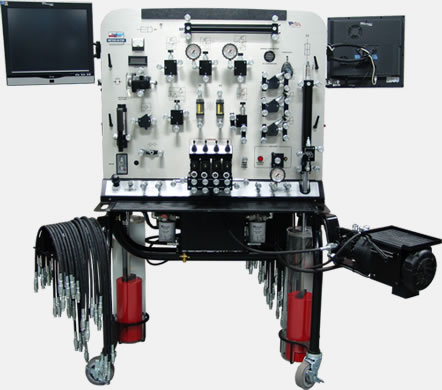 as well as load-sensing circuits all on one training system. It also contains six directional control valves – three parallel industrial type, one series industrial type, one cylindrical spool - centred mobile type and one motor spool centred mobile type.
The system has an efficient and convenient use of space and energy, and is merely 76 cm deep, by 122 cm wide, by 196 cm high. It was designed to fit through a standard doorway. Exclusive to the MF102-H-TSE is its Safe-T-Bleed safety system, which de-energizes and air-bleeds hydraulic systems and components. It is the same lockout system used in industry.
The MF102-H Hydraulic Training System comes with everything that would be required to help students understand the principles and theories of hydraulics.Its key features are:
The Commerce Commission today released its draft report on Fonterra’s base milk price calculation for the 2015/16 dairy season. The base milk price is the price Fonterra pays to farmers for raw milk and it is currently set by Fonterra at $3.90 per kilogram of milk solids for the 2015/16 season just ended. The report does not cover the forecast 2016/17 price of $4.25 that Fonterra recently announced.
The Commission is required to review Fonterra’s calculation each year at the end of the dairy season under the milk price monitoring regime in the Dairy Industry Restructuring Act (DIRA).
Deputy Chair Sue Begg said Fonterra’s calculation of the 2015/16 base milk price is consistent with both the efficiency and contestability purposes of DIRA.
“We have worked closely with Fonterra over the past few years to provide clearer information about how it calculates the milk price. We’re pleased to see further improvements that will assist the broader dairy industry to understand Fonterra’s approach,” Ms Begg said.
“This year Fonterra has provided information that has enabled us to compare the performance of a real world Fonterra production operation with the notional values used in the base milk price calculation. This comparison has helped us to conclude that the calculation is practically feasible as a whole. We have also concluded that the cost of capital component of the calculation is consistent with the purposes of DIRA. This was an area of the calculation that we have previously been unable to reach a conclusion on.”
The Commission welcomes comments on its draft report by 1 September 2015. The final report will be published on 15 September 2015.
Amazon has showcased its first-ever branded cargo aircraft. The Boeing 767-300, operated by Amazon’s air cargo provider Atlas Air, is branded Prime Air as Amazon’s air cargo operation is primarily aimed at serving its Prime members.
“Creating an air transport network is expanding our capacity to ensure great delivery speeds for our Prime members for years to come,” said Dave Clark, Amazon’s senior vice president of worldwide operations.
The aircraft, named Amazon One, is one of 40 that Amazon has agreed to lease through its . . .
The Industry 4.0 concept has slowly been gaining traction over the last four years, and despite aspects of it in use, it still hasn’t properly been realised. In part one of the two-part feature, Michael Freyny, Executive General Manager, Digital Factory, Siemens Australia, tells Brent Balinski about what will be needed to be competitive, and the trend towards batches of one.
The 2017 edition of the Ultimate Aviation Calendar, GHOSTS, A TIME REMEMBERED, is now available from Warbirds & Wheels, Wanaka Airport in-store or for delivery nationwide.
The calendar features magnificent air-to-air colour photographs of combat aircraft in World War II and is the work of US-based master aviation photographer Philip Makanna.
Each month’s image is set in stunning locations around the world and is suitable for framing once each month is finished.
This is the thirty-seventh edition of the world-famous calendar which also includes specifications on each of the aircraft featured and a chronological history of the aviation events of the war for each month.
Each page is 20" x 14" (opens to 20" x 28") and makes an ideal gift for Father’s Day or Christmas present for the aviation enthusiast.
The cost is $24.90 pick up from Warbirds & Wheels or the calendars can be posted to anywhere in New Zealand. Please allow a postage and packaging fee of $10.00 for South Island and $15.00 for North Island.
Warbirds & Wheels general manager Naomi Lindsay said the calendars were “hugely popular” with anyone who loves aviation.
“Phil Makanna is a world-class aviation photographer and the GHOSTS Calendar is known worldwide for its incredible imagery,” said Ms Lindsay.
“We have a limited number of just 80 calendars and it will be first-in, first-served. The 2016 calendars sold out pretty quickly.”
“They make great presents and they’ve arrived in time for Father’s Day on Sunday September 4th.”
To purchase your GHOSTS 2017 Calendar call Warbirds & Wheels on 03 443 7010 or email This email address is being protected from spambots. You need JavaScript enabled to view it.

Palace of the Alhambra, Spain
By: Charles Nathaniel Worsley (1862-1923)
From the collection of Sir Heaton Rhodes
Oil on canvas - 118cm x 162cm
Valued $12,000 - $18,000
Offers invited over $9,000
Contact: Henry Newrick – (+64 ) 27 471 2242
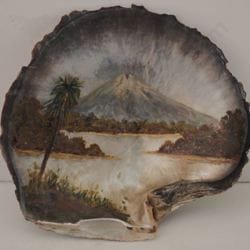
Mount Egmont with Lake
By: John Philemon Backhouse (1845-1908)
Oil on Sea Shell - 13cm x 14cm
Valued $2,000-$3,000
Offers invited over $1,500
Contact: Henry Newrick – (+64 ) 27 471 2242

|
|