
Founded by Max Farndale 1947 - 2018

Wool pulled over eyes of English-speaking realm
MSC Newswire’s European correspondent explains the causes and effects of the emergency in France: -
Terrorism presents the picture of a permanent part of French life?Until Nice and the Thomas-a-Becket style assassination of the catholic priest you could almost say that it was becoming an accepted part of French life.
Explain?It is not yet understood in the English-speaking world that the very structure of France led inevitably to the kind of chaos we see today.
Fill in the gaps?The constant pull from France’s extreme left, the gauche de la gauche, as it is known, all the way to the officially sanctioned communist party means that successive governments have had to stand by helplessly as these immense and unmanageable ghettos get bigger and bigger and sustain the type of insurgency that we witness today.
There must though be some kind of official policy that has permitted this state of affairs to happen?There is and it is known as the rights of man or Les Droites de L’ Homme.
In itself this would not have made one of the West’s most advanced nations so prone to internal insurgency?It coincided with the pull of a number of current ideologies centred on diversity and multi culturalism that pretty much prevented the French establishment from intercepting the internal insurgency. For example until very recently you had this standardised official response in which each atrocity would be officially received as if it were a surprise, along with the well intentioned candle-lit marches and laying of wreathes.
So it is not a surprise?You have had this curious response in which the assailants are described as troubled individuals with marital problems etc when in fact they are components of a murderous collective intent on killing a people who hardly know that this collective, officially presented as being overwhelmingly benign, in fact even exists.
The state has its hands tied?The doctrines of diversity and multiculturalism that allowed the build-up of these huge underpinning ghettos also became infused with the notion of ecumenism which in turn became reinforced with the church’s determination to settle in countries like France and Belgium more and still more people knowing and let us at this late stage seek to be candid, that there would be trouble.
All this seems to be un-spoken?The English-speaking world cannot understand that in a country such as France the left, and the left-of-the-left-of -the -left have a simple objective. To their credit they do not seek to disguise it.
What is it?To capsize the government, in this case, of France. We have a situation, not unknown in the Europe of the last century, in which intentions are firmly stated, yet polite society refuses to acknowledge that these well entrenched people, entirely funded by taxpayers, mean business.
You say that after Nice and the assassination of the priest attitudes are changing?They are but too slowly to cope with an internal insurgency of this kind of internal dimension.
From the MSCNewsWire reporters' desk Thursday 28 July 2016
The campaign to keep Hawke’s Bay GM Free took another step forward today with the Auckland Plan Hearings Panel recommending the adoption of similar GMO Free rules to Hastings.
The panel’s recommendations, released today, would protect the Auckland region’s GM Free status by prohibiting releases of GMOs for the life of the plan.
In May last year, backed by leading Hawke’s Bay food producers, Hastings District Council became the first in New Zealand to secure the territory’s GMO free food producer status under its district plan. Now Auckland is set to follow suit.
Pure Hawke’s Bay, a group representing food producers and exporters says the Auckland decision further confirms the robustness of the policy Hastings District Council has adopted.
Pure Hawke’s Bay chairman, Bruno Chambers says Hawke’s Bay producers and exporters welcomed the decision.
“Pure Hawke’s Bay is focused exclusively on outcomes for our region. Other regions must make their own call, based on the opportunities before them. However, we are pleased that Auckland agrees that the approach is sound and delivers net benefits for their community.”
“It shows that other regions around New Zealand recognise that being GMO Free can help grow regional economies by producing food that consumers in high value markets want.”
“As producers we can tell buyers and customers that produce grown in our fields is officially GMO Free. We need it to keep our competitive global advantage. It adds more value to our exports and creates significant economic benefits for our regions.”
Despite support for the GMO free district plan policy in Hastings, the change is being challenged by Federated Farmers in the Environment Court.
Pure Hawke’s Bay is backing Hastings District Council in court and has started a significant fundraising drive to raise the $150,000 needed to put forward a winning legal and economic case.
“We are confident we can secure Hastings’ valuable GM Free status in law and wider financial support is crucial to building a strong case to win this legal battle.”
A GMFree pure Hawke's Bay press release July 27,2016
A record number of Kiwis are deciding a career in the trades is the best way to build their future, with more New Zealanders in trade apprenticeships than ever before.
For the first time in the organisation’s history, the Building and Construction Industry Training Organisation (BCITO) now has 10,000 apprentices actively working towards qualifications in the building and construction industry.
BCITO Chief Executive Warwick Quinn says this is an extremely important milestone.
“This is the first time we have ever had this many apprentices in training at one time. But we need even more if we want to meet the current and future building boom” he says.
“As per recent Government announcements predicting an additional 50,000 construction jobs by 2021, we are expecting big growth in demand for skilled tradespeople. However, on top of new jobs, our construction industry has an aging population. When we add new jobs to replacement jobs, the total is quite astounding.
“Yes, we have 10,000 apprentices, and BCITO is signing up around 3,000-4,000 new apprentices each year. Unfortunately this doesn’t come close to supplying the number of skilled people industry actually needs by 2021.
“Given the fierce demand for apprentices, the time is certainly ripe for a career in construction” Quinn says.
Scott Fisher is the 10,000th apprentice to sign up with BCITO. Scott works at A J Saville Builders in Queenstown and believes becoming a carpentry apprentice has been a great way to formalise his skills and to cement his job prospects in the future.
“As an apprentice, I get the chance to put my skills to work. There are many opportunities to develop a great career. New Zealand has a very reputable construction industry and it’s fantastic to be a part of it!” he says.
BCITO has organised a range of nation-wide promotions in recent months to attempt to bolster supply of apprentices. These have included the Not Your Average Shed campaign, their annual Big Construction Tour and the Build-Ability challenge which is currently underway at secondary schools across New Zealand.
BCITO is the largest provider of construction trade apprenticeships in New Zealand. It is appointed by the Government to develop and implement industry qualifications for the building and construction sector. BCITO provide a range of apprenticeships across fifteen trades within the building and construction industry.
To find out more visit bcito.org.nz
Qantas will increase capacity from Christchurch to Australia to support growing trans-Tasman demand and to better link New Zealand to the group’s global network.
A new daily Christchurch-Melbourne service will begin from 4 December, timed to connect with onward flights to Dubai, London and a range of European destinations.
Additionally, flights between Christchurch and Brisbane will grow from three per week to daily from 30 October. These have been timed to connect to Qantas’ Asian and US network via Brisbane.
The changes are made possible by reductions in domestic capacity, which have freed up flying time within the airline’s Boeing 737 fleet.
Qantas regional general manager New Zealand, Pacific Islands and South America Wes Nobelius says the changes are about meeting demand in a flexible way.‘We’re delighted to be opening up more options for our customers on this popular Christchurch route,’ Nobelius says.
Christchurch Airport chief executive Malcolm Johns welcomes the new services, and sees the airline as a strong international growth partner for the South Island.
The airline now offers the largest number of international seats it has ever provided into and out of Christchurch, he says. ‘South Islanders will have more connections to Australia, Asia and Europe.’Tickets will go on sale today and are subject to government and regulatory approvals.
A TravelInc press release July 27, 2016
The Human Rights Commission has said a report, launched today by the Responsible Investment Association Australasia (RIAA), serves as a timely reminder of the value of investing in human rights for New Zealand businesses.
The Responsible Investment Benchmark Report 2016 shows increasing consumer demand for investments that deliver strong returns as well as better social and environmental outcomes. It also shows that investments perform better when they are investing in sustainable companies and assets.
Equal Employment Opportunities Commissioner, Dr Jackie Blue says the report demonstrates why human rights should be at the top of the agenda for kiwi businesses.
“Ultimately, by valuing human rights, businesses can add value to their bottom line. The ground swell for making human rights commitments is growing and Kiwi businesses will face increasing demand from their international partners and their consumers to be making those commitments.
“Now is the time for businesses to learn more about how human rights impact them and how they can assess the who, what, where, when and why of their products and ensure they are doing right by every person in their supply chain and organisation.
“To help Kiwi businesses do that, the Commission is bringing Shift, the organisation that helped craft the United Nation’s Guiding Principles on Business and Human Rights, to New Zealand to facilitate the first Business and Human Rights Forum from 9 to 11 August.
“The Forum will give New Zealand businesses unprecedented access to the world-leading experts on business and human rights and will be invaluable for businesses who have a focus on building their corporate social responsibility reputation,” Dr Blue says.
Rachel Davis, Managing Director of Shift says, “No business is immune from the new global expectations of the UN Guiding Principles, but those expectations are reasonable and they are achievable. Shift has worked with companies from all kinds of sectors and all regions of the world on how to meet their human rights responsibilities.
“The Forum is an important opportunity to share those practical tools and approaches to prevent and address human rights risks with New Zealand business, government and civil society stakeholders.”
The Business and Human Rights forum is being held from 9 to 11 August. The launch at Parliament and a Government Roundtable are both being held in Wellington and the CEO Breakfast, the workshop for investors and directors and the workshop for CSR practitioners will be held in Auckland.
For more information and to register for these events, please visit: www.hrc.co.nz/new-zealand-business-and-human-rights-forum
Speech by New Zealand First Leader and Northland MP Rt Hon Winston PetersWood Processors and Manufacturers’ Association Regional MeetingTuesday, 26 July, 2016 6.30pm
‘Show some loyalty to New Zealand industry’
When future historians consider what John Key and his neo-liberal government has done for New Zealand; they will be disappointed and dismayed.
They will be disappointed and will draw the sad conclusion that the Key government failed.
They will find this government was interested in one thing only - short term gain regardless of the consequences.
Forestry mismanagement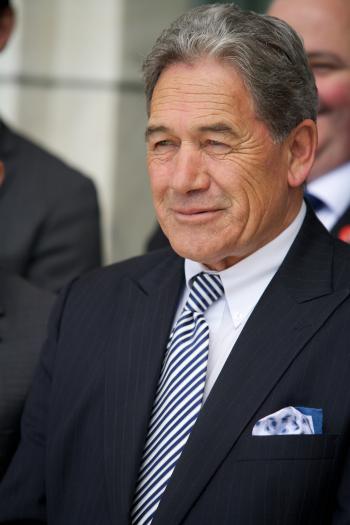
The Key Government will in future be condemned for many things. Their mismanagement of the forestry industry will be one of them.
Forestry is New Zealand’s third largest offshore export earner, behind dairy and meat.
However, what is happening now in this industry will have deep and serious consequences within the next decade.
The growth of unprocessed log exports, mainly to China has long been out of control and destroying any chance of growth to the wood value added sector in New Zealand.
Today we have no control, no laws, and no careful and astute management of one of our greatest resources.
Instead our forests are being plundered.
It’s boom and bust all over again.
The way things are going in coming years, exotic forests planted by people of foresight through the 1980s and early 1990s will be gone.
The National government treats this industry is if they are spud farmers producing an annual crop.
They don’t seem to realize that it takes 27 years to grow a forest.
New Zealand’s forestry crisis has too many raw logs going out, and too little planting going in. The amount of replanting on existing forest land has declined.
In the last 15 years the total area of new forest area planted has plummeted from 33,674 hectares down to 3051 hectares, an approximate 90% decrease.
The collapse in carbon prices from 2008 to 2012 saw very little land being converted to forestry with the reverse occurring as conversions to pasture were made – mainly for dairy production.
New Zealand is now clear felling and harvesting too early. Forest owners, the foreign companies, in the carbon price slump, are resorting to quick profits.
Eight of the top 10 forest companies in New Zealand are overseas controlled.
Other private companies and iwi are also caught up in this short term profit frenzy.
Private owners are selling early to the Chinese when it would be better that their trees are tagged for harvesting in five to 10 years’ time.
It is true log exports are needed for our economy, especially of our lower quality product, but not at the current excessive and unsustainable rates and to the detriment of processors and sawmills.
At all of our major New Zealand ports you can see raw logs stacked high waiting to be exported a rate that is utter economic madness.
When the ships leave – they take billions of dollars of added value and tens of thousands of jobs that should be kept in New Zealand.
In 2000 the amount of raw logs exported was almost 6000 cubic meters – in 2011 it was well over 11,000 and last year it was over 16,000 cubic meters.
The Wood Resource Quarterly reports New Zealand continues to be the world’s leading exporter of softwood logs followed by Russia and the US.
New Zealand, Russia and the US accounted for almost 50 per cent of globally traded logs last year in the main going to the Chinese market.
The Wood Resource Quarterly says we are exporting over 50 per cent of our total harvest in log form.
Northport has been extremely successful with log exports in this crazy climate but it is success that comes at a price and again – if it continues at the present levels, it will only be short term.
There is an old saying. You reap what you sow and that applies to our forestry industry.
But we have not been sowing, or rather planting, and so by 2023 Northport will suffer as will all of Northland.
Sawmills will have to wind back or close; jobs will be lost. Log truck companies will take a big hit as well.
Since 2000 the number of log sawmilling businesses in New Zealand has dropped from 507 with over 7500 employees to 327 businesses with about 4800 employees.
Statistics last year showed Northland had 460 employed in forestry and logging; 210 in forestry support services and 650 in sawmilling and timber dressing.
Many of these jobs will be at risk.
And this massive fall-off in a timber industry in crisis will continue through to 2040 because critical decisions to maintain our planting didn’t happen.
That’s why we must dramatically cut back this crazy sell-off of raw logs.
What Other Countries are Doing
While New Zealand’s forests are being cleaned out other nations are locking up their forests.
In the next five years China, our biggest market for logs, will fully stop the commercial harvest in their government owned forests thereby locking up 70.5 million hectares because they have over-harvested.
They will stop the commercial harvest in their collective ownership and private ownership natural forests on a step-by-step basis.
They will establish just over 33 million hectares of new plantations.
They have set targets for their forest industry development by 2020 which include:
While China plans in this way, they tell their local wood users to continue buying cheap timber from overseas, from places like soft old New Zealand.
And as China does this – we have a government that has no planning and is interested only in the next quick buck that comes through the door.
And China is not alone in looking after its own forestry industry, Canada and Chile are doing the same.
They are acting prudently. They have a total maximum quota of logs that can be exported.
But not in New Zealand – it’s open slather.
New Zealand First says it must end – we must not delay any longer dealing with this crisis – we must act before the log supply from our forests dry up.
Forestry owners must be encouraged to replant.
The vast volumes of wood going across Northport at present must be dragged back to more rationale levels.
Logs should not continue to be taken across our wharves and overseas until policies to protect the local industry, processors, saw millers and workers are first put in place.
The local industry must be assured it can access the grades of logs they require.
New Zealand Domestic Log Price
There must be a set New Zealand domestic log price.
Like Canada quotas must be applied.
Foreign buyers don’t pay GST on logs – which local sawmills must do.
The Overseas Investment office must have much tighter scrutiny of foreign investors coming to New Zealand.
Buyers of our forests must provide real evidence to show selling to them is for the long term benefit of New Zealand.
There has to be investment in added value New Zealand wood products.
To help the industry, New Zealand First will use the ‘Cullen Fund’ to invest in getting ownership back into the hands of New Zealanders.
You know by now not to expect the National government to do anything about this crisis in your industry.
New Zealand First asked the Associate Minister for Primary Industries Jo Goodhew in Parliament earlier this year what the government was going to do.
She said the government was not a market interventionist.
That sums up the National government – boom and bust, and when the worst of the bust comes – they’ll be long gone.
It will be your industry, your businesses that will have to shrink or go under and the Northland economy will take a massive blow.
All because we have a non-interventionist, do nothing, let the market decide government.
Auckland housing
There are opportunities here in New Zealand that are not being pursued.
Northland pine is rated the best in the country for structural purposes.
With the home building crisis in Auckland, the construction industry must be encouraged to use timber.
Again this is looking after our local industry.
But to help this happen the government must play its part as well.
They must impose tariffs on imported building materials not made here.
In the 2014 Budget the government again worked against the best interests of this country and dropped the tariffs.
Instead of working for local industry, employing New Zealanders, the Government opted to subsidise foreign cheap-labour producers of plasterboard, steel, and cement.
New Zealand spends hard-earned foreign exchange on building materials when in many cases we have good domestically produced alternatives.
Plywood, flooring board, laminated beams, framing timber, linear board – the list goes on.
Who is this Government working for – businesses and workers in New Zealand, or foreign factories?
We have the absurd situation of Zealand timber, exported as a log, being processed in some foreign factory, and then shipped back to New Zealand.
Conclusion
It must be said no government is perfect but some are more imperfect than others.
The Key government fits the latter category.
At times you wonder whether we have in New Zealand something of what an American president, Woodrow Wilson, observed when he said the government which was designed for the people has got into the hands of the special interests and “an invisible empire has been set up above the forms of democracy.”
Unfortunately the Key government is not thinking beyond tomorrow.
It is not thinking of the consequences for Northland in 6 years’ time when the log supply begins to dry up and China starts saying “no thanks” to what logs we do have to export.
Government is not allowing prudent management to prevail and it is not showing due consideration for local industries, such as yours.
New Zealand First believes a vibrant forestry industry is crucial to Northland and this country’s economy and we must work to ensure the wealth and jobs are kept here.
Sawmills have invested millions of dollars in plant, equipment and staff in the belief they will receive a reliable, affordable supply of timber.
That belief and investment and support of the industry must be supported by central government.
As we look around Northland we see two opposites in stark contrast.
We see the raw resources that could be converted in to great wealth and employment here. However, what is happening is the consequence of central government neglect, short sightedness and a total pre occupation with one big city, Auckland, at great cost to the economic and social interest and needs of many provinces.
May I humbly suggest that your industry needs to see this contrast with great clarity. Because, on the positive side, your industry is critical to a great economic and social turn around up here - and we collectively have not got a day to waste.
The Electricity Authority’s (EA) proposed pricing regime will have a hugely detrimental effect on businesses and on regional New Zealand, says New Zealand First.
“Under the proposed changes, Employers and Manufacturers Association members (EMA) will be among those who will be particularly hard hit,” says Spokesperson for Energy Fletcher Tabuteau
“In their submission to the authority, the EMA has also highlighted the fact those needing high voltage connections such as schools or hospitals may be paying an additional $22,000 per annum.
“This is just one area; businesses in regions already struggling with the downturn in the global dairy price cannot be expected to take price rises.
"It is also a disgrace that these proposed price changes would also take more out from areas such as Northland than the government provides in economic development initiatives.
“The government needs to step in and demand fair prices across the country.
“There’s money from grid owner Transpower’s profit last year of $194 million to do just that,” Mr Tabuteau says.
A NZFirst press release July 27, 2016
A $25 million package of three road access improvements to Napier port has today been announced by the Government as one of the first actions of Matariki – the Hawke’s Bay Economic Development Strategy.
Improving access to the port has been identified through the development of the strategy and its accompanying regional action plan as a key contributor to Hawke’s Bay’s economic growth.
“This connection is one of the three or four key pieces of infrastructure for Hawke’s Bays future prosperity,” says Economic Development Minister Steven Joyce. “I am pleased we are able to announce this funding as one of the first key initiatives of the Matariki Economic Development Action Plan.”
The road improvement package includes improvements to intersections at Watchman Road and Hyderabad Road/Prebensen Drive as well as the SH50/SH2 Expressway.
It is part of the third tranche of the Government’s Accelerated Regional Roading Programme announced in 2014 to speed up the delivery of transport projects important to regional New Zealand.
“In 2015 Napier Port handled the equivalent of more than 250,000 containers, up more than 16 per cent compared with 2014. Improving the road access will enable more efficient and safe movement of freight to and from the port and support future growth,” says Transport Minister Simon Bridges.
“The Napier Port Access Package is part of the $245 million being invested in land transport in the Hawke’s Bay region over the next three years. This includes more investment in public transport and cycling, which are key parts of the Government’s commitment to providing more transport choices,” says Mr Bridges.
Improvements at the Watchman Road intersection will start this summer and will take up to 12 months to complete.
Design work for the proposed improvements to SH50 and at the Prebensen Drive/Hyderabad Road intersection is expected to begin before the end of this year with construction beginning in the first half of 2018.
“Having strong transport links between the port, the airport, Napier, Hastings, Northern Hawke’s Bay and Central Hawke’s Bay, is one of the key themes in the regional action plan, says Mr Joyce. “The regional ministers look forward to working with the region to deliver the package announced today plus further investments in the years ahead.”
A $25 million package of three road access improvements to Napier port has today been announced by the Government as one of the first actions of Matariki – the Hawke’s Bay Economic Development Strategy.
Improving access to the port has been identified through the development of the strategy and its accompanying regional action plan as a key contributor to Hawke’s Bay’s economic growth.
“This connection is one of the three or four key pieces of infrastructure for Hawke’s Bays future prosperity,” says Economic Development Minister Steven Joyce. “I am pleased we are able to announce this funding as one of the first key initiatives of the Matariki Economic Development Action Plan.”
The road improvement package includes improvements to intersections at Watchman Road and Hyderabad Road/Prebensen Drive as well as the SH50/SH2 Expressway.
It is part of the third tranche of the Government’s Accelerated Regional Roading Programme announced in 2014 to speed up the delivery of transport projects important to regional New Zealand.
“In 2015 Napier Port handled the equivalent of more than 250,000 containers, up more than 16 per cent compared with 2014. Improving the road access will enable more efficient and safe movement of freight to and from the port and support future growth,” says Transport Minister Simon Bridges.
“The Napier Port Access Package is part of the $245 million being invested in land transport in the Hawke’s Bay region over the next three years. This includes more investment in public transport and cycling, which are key parts of the Government’s commitment to providing more transport choices,” says Mr Bridges.
Improvements at the Watchman Road intersection will start this summer and will take up to 12 months to complete.
Design work for the proposed improvements to SH50 and at the Prebensen Drive/Hyderabad Road intersection is expected to begin before the end of this year with construction beginning in the first half of 2018.
“Having strong transport links between the port, the airport, Napier, Hastings, Northern Hawke’s Bay and Central Hawke’s Bay, is one of the key themes in the regional action plan, says Mr Joyce. “The regional ministers look forward to working with the region to deliver the package announced today plus further investments in the years ahead.”
Social Development Minister Anne Tolley and Māori Development Minister Te Ururoa Flavell today announced Project 1000; a scheme to provide 1000 new jobs for currently unemployed Hawke’s Bay workers over the next three years.
Project 1000 is part of Matariki – Hawke’s Bay Regional Economic Development Strategy and Action Plan 2016, which aims to accelerate job growth and raise incomes in the region.
“The Project 1000 initiative brings together businesses, iwi, local authorities, training providers, and central government to support the creation of 1000 new jobs for local people who are not currently participating in the Hawkes Bay economy,” Mrs Tolley says.
“Strong projected growth in several industries, such as manufacturing, infrastructure, horticulture and viticulture, will enable sustainable employment opportunities to be created for local workers.
“Unemployment in Hawke’s Bay is consistently higher than the national average, but there is a huge amount of activity in the region. Demand for exports in horticulture and viticulture are high. The manufacturing, infrastructure and food and beverage processing industries are thriving. This programme will provide skills training and job-matching to get local people into sustainable jobs.”
Mr Flavell says Project 1000 will bring together several employment-related initiatives for Hawke’s Bay.
“The Hawke’s Bay action plan has a strong focus on encouraging whanau to participate in the regional economy. Part of this is focussed on upskilling and providing pathways to permanent employment for rangatahi (young people),” Mr Flavell says.
“Project 1000 aligns well with He kai kei aku ringa, the Crown-Māori Economic Growth Partnership, and its goal to have a skilled and successful workforce contributing to Hawke’s Bay’s economic growth.”
“Over the next three years we will work to move 700 Ministry of Social Development clients into employment in the horticulture, viticulture and infrastructure industries to support projected industry growth. The remaining 300 jobs are expected to be filled by Hawke’s Bay people not currently participating in the labour market..”
Project 1000 is a key contributor to the overall employment goal of Matariki – which is to add 5000 more jobs in Hawkes Bay over the five years of the plan.
Matariki – Hawke’s Bay Regional Economic Development Strategy and Action Plan 2016 has been developed by the region with central government support. It forms part of the Government’s Regional Growth Programme.
For more information, visit the Ministry of Business, Innovation and Employment website
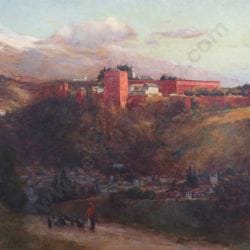
Palace of the Alhambra, Spain
By: Charles Nathaniel Worsley (1862-1923)
From the collection of Sir Heaton Rhodes
Oil on canvas - 118cm x 162cm
Valued $12,000 - $18,000
Offers invited over $9,000
Contact: Henry Newrick – (+64 ) 27 471 2242
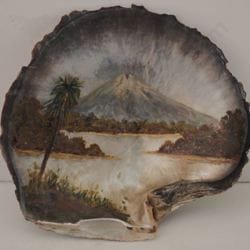
Mount Egmont with Lake
By: John Philemon Backhouse (1845-1908)
Oil on Sea Shell - 13cm x 14cm
Valued $2,000-$3,000
Offers invited over $1,500
Contact: Henry Newrick – (+64 ) 27 471 2242

|
|