
Founded by Max Farndale 1947 - 2018
Social Development Minister Anne Tolley and Māori Development Minister Te Ururoa Flavell today announced Project 1000; a scheme to provide 1000 new jobs for currently unemployed Hawke’s Bay workers over the next three years.
Project 1000 is part of Matariki – Hawke’s Bay Regional Economic Development Strategy and Action Plan 2016, which aims to accelerate job growth and raise incomes in the region.
“The Project 1000 initiative brings together businesses, iwi, local authorities, training providers, and central government to support the creation of 1000 new jobs for local people who are not currently participating in the Hawkes Bay economy,” Mrs Tolley says.
“Strong projected growth in several industries, such as manufacturing, infrastructure, horticulture and viticulture, will enable sustainable employment opportunities to be created for local workers.
“Unemployment in Hawke’s Bay is consistently higher than the national average, but there is a huge amount of activity in the region. Demand for exports in horticulture and viticulture are high. The manufacturing, infrastructure and food and beverage processing industries are thriving. This programme will provide skills training and job-matching to get local people into sustainable jobs.”
Mr Flavell says Project 1000 will bring together several employment-related initiatives for Hawke’s Bay.
“The Hawke’s Bay action plan has a strong focus on encouraging whanau to participate in the regional economy. Part of this is focussed on upskilling and providing pathways to permanent employment for rangatahi (young people),” Mr Flavell says.
“Project 1000 aligns well with He kai kei aku ringa, the Crown-Māori Economic Growth Partnership, and its goal to have a skilled and successful workforce contributing to Hawke’s Bay’s economic growth.”
“Over the next three years we will work to move 700 Ministry of Social Development clients into employment in the horticulture, viticulture and infrastructure industries to support projected industry growth. The remaining 300 jobs are expected to be filled by Hawke’s Bay people not currently participating in the labour market..”
Project 1000 is a key contributor to the overall employment goal of Matariki – which is to add 5000 more jobs in Hawkes Bay over the five years of the plan.
Matariki – Hawke’s Bay Regional Economic Development Strategy and Action Plan 2016 has been developed by the region with central government support. It forms part of the Government’s Regional Growth Programme.
For more information, visit the Ministry of Business, Innovation and Employment website
Economic Development Minister Steven Joyce and Primary Industries Minister Nathan Guy have today launched a comprehensive plan to diversify and grow the Hawke’s Bay economy, increasing jobs, income and investment in the region.
Matariki – Hawke’s Bay Regional Economic Development Strategy and Action Plan 2016 aims to make Hawke’s Bay the most innovative region in New Zealand, the leading exporter of premium primary produce and a hub for business growth.
The plan has been developed by local and regional authorities, iwi and business leaders with support from central government agencies.
“Economic growth in Hawke’s Bay is gathering pace, and the delivery of this action plan will help accelerate that growth and give local workers better access to ongoing employment and higher household incomes,” Mr Joyce says.
“The plan focuses on improving pathways to employment in areas like horticulture and construction, as well as encouraging investment and business growth, lifting innovation and productivity, attracting skilled migrants, developing infrastructure and increasing visitor spending.”
The plan looks to leverage Hawke’s Bay’s considerable natural advantages, Mr Guys says.
“The full potential of the primary sector has yet to be realised in Hawke’s Bay. Actions to address this range from investigating the feasibility of an agricultural training hub to improving water storage, and helping farmers improve their land productivity while meeting new freshwater standards,” Mr Guy says.
“All of the actions in the plan require working in partnership with iwi and hapū, with primary producers and with other government agencies.
“Iwi have been extensively involved in developing the strategy and action plan and have come together to form Te Kahui Ōhanga o Takitimu, which will play a key role in achieving collective economic goals for Māori.”
Implementation of the 45 individual actions in the plan will be led by various stakeholders and government agencies working together.
“As part of the Government’s Regional Growth Programme, the plan represents a coordinated approach to lifting the region’s economic performance – leaders from across the spectrum are pulling together,” Mr Joyce says.
The Hawke’s Bay action plan was informed by the 2014 East Coast Regional Economic Potential Study and complements the wider work of the Government’s Māori economic development strategy, He Kai Kei Aku Ringa and the Business Growth Agenda.
More information on Matariki – Hawke’s Bay Regional Economic Development Strategy and Action Plan 2016 and the Regional Growth Programme can be found here.
Economic Development Minister Steven Joyce and Primary Industries Minister Nathan Guy have today launched a comprehensive plan to diversify and grow the Hawke’s Bay economy, increasing jobs, income and investment in the region.
Matariki – Hawke’s Bay Regional Economic Development Strategy and Action Plan 2016 aims to make Hawke’s Bay the most innovative region in New Zealand, the leading exporter of premium primary produce and a hub for business growth.
The plan has been developed by local and regional authorities, iwi and business leaders with support from central government agencies.
“Economic growth in Hawke’s Bay is gathering pace, and the delivery of this action plan will help accelerate that growth and give local workers better access to ongoing employment and higher household incomes,” Mr Joyce says.
“The plan focuses on improving pathways to employment in areas like horticulture and construction, as well as encouraging investment and business growth, lifting innovation and productivity, attracting skilled migrants, developing infrastructure and increasing visitor spending.”
The plan looks to leverage Hawke’s Bay’s considerable natural advantages, Mr Guys says.
“The full potential of the primary sector has yet to be realised in Hawke’s Bay. Actions to address this range from investigating the feasibility of an agricultural training hub to improving water storage, and helping farmers improve their land productivity while meeting new freshwater standards,” Mr Guy says.
“All of the actions in the plan require working in partnership with iwi and hapū, with primary producers and with other government agencies.
“Iwi have been extensively involved in developing the strategy and action plan and have come together to form Te Kahui Ōhanga o Takitimu, which will play a key role in achieving collective economic goals for Māori.”
Implementation of the 45 individual actions in the plan will be led by various stakeholders and government agencies working together.
“As part of the Government’s Regional Growth Programme, the plan represents a coordinated approach to lifting the region’s economic performance – leaders from across the spectrum are pulling together,” Mr Joyce says.
The Hawke’s Bay action plan was informed by the 2014 East Coast Regional Economic Potential Study and complements the wider work of the Government’s Māori economic development strategy, He Kai Kei Aku Ringa and the Business Growth Agenda.
More information on Matariki – Hawke’s Bay Regional Economic Development Strategy and Action Plan 2016 and the Regional Growth Programme can be found here.
New Zealand’s third largest export earner, forestry, is heading for a major crash unless steps are made to restrain the excessive exporting of raw logs, says New Zealand First.
“The growth of unprocessed log exports, mainly to China, has got out of control and it is destroying any chance of growth to the value added sector here in New Zealand,” says New Zealand First Leader and Northland Member of Parliament Rt Hon Winston Peters.
“Today we have no control, no laws, and no careful and astute management of one of our greatest resources.
“Instead we’re reaching a level where our forests are being plundered.
“In 2000 the amount of raw logs exported was 5806 cubic meters – in 2011 it was up to 11,679 and it has stayed in this excessive range ever since – last year it was 16,099 cubic meters.
“We are now clear felling and harvesting too early. Forest owners, the foreign companies, in the carbon price slump, are more interested in quick profit.
“Eight of the top 10 forest companies in New Zealand are overseas controlled.
“Other private companies and iwi are also caught up in this short term profit frenzy.
“Log exports are needed for our economy, especially of our lower quality product, but not at the current excessive and unsustainable rates and to the detriment of processors and sawmills.
“At all of our major New Zealand ports you can see raw logs stacked high waiting to be exported – every day of the year ships are calling and taking our logs to overseas markets at a rate that is utter madness.
“When those ships leave – they take billions of dollars of added value and thousands of jobs that should be kept here in New Zealand,” Mr Peters says.
Full speech to Wood Processors and Manufacturers’ Association
A NZFirst press release July 27, 2016
For the fifth consecutive year, Whittaker’s has been announced New Zealand’s most trusted brand in an annual survey commissioned by Reader’s Digest.
The results of the Reader’s Digest ‘Most Trusted Brands’ survey, were released today, with the popular chocolate manufacturing company taking the top accolade of most trusted New Zealand brand.
Reader’s Digest Australasian managing editor Louise Waterson says of all the names, products and services that fight for New Zealanders’ attention, Whittaker’s is the one we believe in above all others. Whittaker’s knows well the sweet taste of success – not only is Whittaker’s the number one brand across all categories surveyed, the brand also won the confectionery category and was voted most iconic NZ brand.
Samsung and Dettol sit in second and third place, respectively, on the most trusted list. Dettol was also in the top three last year.
The survey ranks New Zealand’s top 10 trusted brands* and 41 category winners. The other brands to finish in the top 10 are, in order, from fourth place: Panasonic, Toyota, Dilmah, Sony , Huntley & Palmers, Air NZ and Tip Top Ice Cream. * of brands surveyed.
The results come, not from a reader poll, but an independent, commissioned survey. Reader’s Digest used Catalyst Marketing & Research to survey a representative sample of 1214 New Zealand adults on the most trusted brands in 41 categories of products and services across a broad range of industries.
Louise Waterson says brands that feature highly have won the “crucial battle” – sometimes across generations – to build a name and a product people believe in.
“Many purchases are made with the heart and, even in this digital age, it’s the brands which continue to offer quality and substance that hold our trust.”
The New Zealanders surveyed were asked what factors influence them to place their trust in a brand. High reputation, great customer service, reliable and cost effective, quality and innovative, promise keepers, consistent and durable (stood the test of time) were the answers.
Louise says, in many cases, the same trustworthy qualities that were attractive to our grandparents remain the primary motivators today. But, that is increasingly being coupled with the presence of well-established social media communities. Social media plays a big part in the winning of trust, with many people preferring the testimonials of fellow consumers on social media.
As results over the last two years have shown, more than 90 per cent of us will trust the social media reviews of our fellow consumers. What’s more, many online shoppers will actively seek out these reviews as part of the shopping process, Louise says.
“There’s no doubt that a well-managed social media account is a valuable tool in fostering ongoing trust.
“For example, on average, over 2.5 million Kiwis use Facebook every month with 80 per cent reporting they use it to discover products and brands. The winning brands featured in the survey understand the role social media plays in terms of the power of customer reviews, and the decision making of prospective customers,” she says.
The survey reveals New Zealanders like to start their day with Sanitarium and Vogels and end it with a Villa Maria wine purchased from New World. They favour Toyotas and prefer them to have Firestone tyres, and be topped up with fuel from Z. If vacuuming is a chore that can’t be ignored then Dyson is the cleaner to trust, while a Masport will take care of the lawn, and Dettol’s there for any necessary cleaning tasks. A Sleepyhead bed – New Zealanders’ favoured bed - will look even better than ever at the end of such an active day.
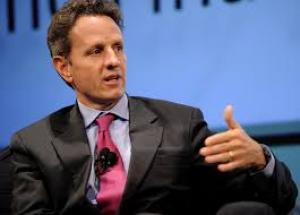
But old Siegmund knew all about private banking.
Former US Treasury Secretary Timothy Geithner visited Singapore last week in his new role as president of global private equity fund Warburg Pincus and his presence hardly raised a ripple of interest. No wonder, writes MSC Newswire's Peter Isaac.
Singapore has taken over from Switzerland as the home of private banking with the added impetus of becoming the centre of Chinese private banking too.
Driven out of Switzerland by a Franco-US led purge on anonymous accounts, the private banking sector and its customers have settled in the orderly city state and have been joined in this surprisingly verdant sanctuary by their Chinese contemporaries uncertain of the continuing sanctity of their perch in Hong Kong.
In fact Geithner (pictured above) was in town to launch there the Singapore branch of Warburg Pincus whose local management declare that Singapore will be their new Asian “hub and spokes.”
Warburg Pincus is descended from the old E.M Warburg & Co famous for an-inter family struggle centred on the right to use the Warburg name. The feud was led by the head of the London branch of the family, Siegmund Warburg. In the end the row became moot when the New York family bank was effectively sold to Pincus.
Siegmund Warburg (pictured below) was famous for his collection of business aphorisms. One of these seemed to have anticipated the current emphasis on private banking. 
According to the late Siegmund Warburg’s maxim there are only three types of men who can keep a secret............“There is the man who tells his wife. There is the man who does not tell his wife. Then there is the man who forgets what the secret was in the first place. “
From the MSCNewsWire reporters' desk Wednesday 27 Ju;y 2016
EMA is calling the Electricity Authority’s (EA) proposed pricing regime changes a regional tax by stealth.Under the proposed changes, EMA’s members are facing significant increases in their electricity pricing with no right of recourse.
Auckland customers will foot a near $80 million dollar increase, Whangarei customers face a 58% increase, and customers based further north in Kaitaia, Kerikeri and Kaikohe face an increase of 121%. Members in Eastern Bay of Plenty also face significant increases.
Other areas isolated from the national grid and needing assistance with regional development, such as Westland, are the big losers while the main beneficiaries appear to be the big South Island generators and the already heavily government subsidised aluminium smelter at Tiwai Point.
“This is a tax by stealth on our members, and for some of them it will severely impact their business,” says Kim Campbell, CEO, EMA.
“There are peverse outcomes where changes to electricity pricing will take more out of areas such as Northland than the Government provides to the region in economic development initiatives.”
Small to medium sized businesses in Auckland face increases of $1500 per annum, and those needing high voltage connections (such as schools or hospitals) may be paying an additional $22,000 per annum.
“Other members who are large scale energy users are looking at multi-million dollar increases,” says Mr Campbell.
“We challenge the thinking behind this proposal, which appears to be more about subsidising Meridian and Tiwai Point who coincidentally benefit by $80 million, rather than sound policy for the national good. We dispute the thinking that Auckland, in particular, is getting a superior service and therefore needs to pay more than other parts of the country. The grid has already been paid for, and we believe the EA should maintain its current pricing regime, which distributes costs across the board.”
More than half a million people will be employed in construction-related occupations by 2021 in support of New Zealand’s building boom, Tertiary Education, Skills and Employment Minister Steven Joyce and Building and Housing Minister Dr Nick Smith say.
The ministers today released the National Construction Occupations Projections report, which shows construction-related occupation numbers are expected to hit 539,500 in the next five years, up 10 per cent from 2015.
“The construction industry was the largest contributor to annual employment growth last year, with 27,500 more people employed,” Mr Joyce says. “232,000 people now work directly in the construction industry, while a much larger group of 490,000 people work in construction-related occupations.
“The occupations expected to experience the largest growth in the next five years are electricians (14 per cent), plumbers (13 per cent) and civil engineering professionals (11 per cent).”
Dr Smith says the forecasts are based on the National Construction Pipeline Report 2016, and draw on information from the 2013 Census.
“The total value of building and construction work forecast by 2021 is expected to top $200 billion. We’re building more than ever before, and the workforce to support this boom continues to grow,” Dr Smith says.
Mr Joyce says the Government is actively supporting the industry to train more skilled workers to meet the demand for new housing and construction. Budget 2016 announced a further $14.4 million over four years for 5,500 more apprentices by 2020, along with $9.5 million for Maori and Pasifika Trades Training. The new funding will help meet projected skill shortages in high-demand industries such as construction and infrastructure.
“In 2015, there were almost 38,000 people training in construction-related fields through apprenticeships and industry training, Maori & Pasifika trades training, polytechs, universities and private providers, and trades academies. This is an increase of 18 per cent over the last four years. In 2011 less than 32,000 people were in training for construction-related occupations,” Mr Joyce says.
The ministers also launched an interactive web tool which forecasts demand for construction workers to 2021.
The web application - http://constructionprojections.mbie.govt.nz - enables people to check forecasts for 62 construction occupations nationwide, enabling better workforce planning by construction firms and encouraging expanded training by education providers.
More than half a million people will be employed in construction-related occupations by 2021 in support of New Zealand’s building boom, Tertiary Education, Skills and Employment Minister Steven Joyce and Building and Housing Minister Dr Nick Smith say.
The ministers today released the National Construction Occupations Projections report, which shows construction-related occupation numbers are expected to hit 539,500 in the next five years, up 10 per cent from 2015.
“The construction industry was the largest contributor to annual employment growth last year, with 27,500 more people employed,” Mr Joyce says. “232,000 people now work directly in the construction industry, while a much larger group of 490,000 people work in construction-related occupations.
“The occupations expected to experience the largest growth in the next five years are electricians (14 per cent), plumbers (13 per cent) and civil engineering professionals (11 per cent).”
Dr Smith says the forecasts are based on the National Construction Pipeline Report 2016, and draw on information from the 2013 Census.
“The total value of building and construction work forecast by 2021 is expected to top $200 billion. We’re building more than ever before, and the workforce to support this boom continues to grow,” Dr Smith says.
Mr Joyce says the Government is actively supporting the industry to train more skilled workers to meet the demand for new housing and construction. Budget 2016 announced a further $14.4 million over four years for 5,500 more apprentices by 2020, along with $9.5 million for Maori and Pasifika Trades Training. The new funding will help meet projected skill shortages in high-demand industries such as construction and infrastructure.
“In 2015, there were almost 38,000 people training in construction-related fields through apprenticeships and industry training, Maori & Pasifika trades training, polytechs, universities and private providers, and trades academies. This is an increase of 18 per cent over the last four years. In 2011 less than 32,000 people were in training for construction-related occupations,” Mr Joyce says.
The ministers also launched an interactive web tool which forecasts demand for construction workers to 2021.
The web application - http://constructionprojections.mbie.govt.nz - enables people to check forecasts for 62 construction occupations nationwide, enabling better workforce planning by construction firms and encouraging expanded training by education providers.
Demand from Korean travellers wanting to tour the South Island has led to a new charter service for the coming summer.
From December 2 to January 28, Asiana Airlines will fly a weekly service between Incheon, Seoul and Christchurch Airport, to bring 2500 visitors to the South Island.
The airport's Chief Commercial Officer - Aeronautical, Justin Watson, says the nine weeks service is a direct response to requests from South Korean travel agents.
"The Korean travel agents consistently get requests for direct flights to the South Island, so eight of them have worked Asiana to put the charters together," he says.
"The flights have just gone on sale and are getting good uptake, with high interest from visitors wanting to travel outside the main centres to see the lakes, mountains, glaciers and open spaces of the South Island.
"Like us, the agents know how much Korean travellers want to visit the South Island. It's not the first Korean airline to fly here, but will be the first time Asiana has flown to New Zealand."
Statistics show that in the 12 months to end of June, 21,000 Korean visitors flew into Christchurch. That's up 29% on the previous year and higher than the national growth rate of 24%.
Asiana Airlines will operate a Boeing 777-200ER aircraft on the charter flights, as part of the airline's global reach to 24 different countries and 74 cities.
A Christchurch Airport press release July 26, 2016
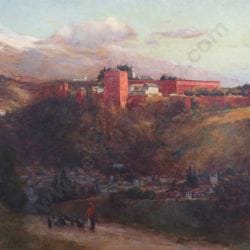
Palace of the Alhambra, Spain
By: Charles Nathaniel Worsley (1862-1923)
From the collection of Sir Heaton Rhodes
Oil on canvas - 118cm x 162cm
Valued $12,000 - $18,000
Offers invited over $9,000
Contact: Henry Newrick – (+64 ) 27 471 2242
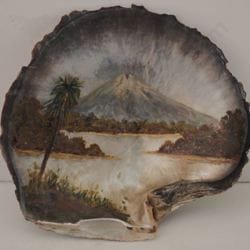
Mount Egmont with Lake
By: John Philemon Backhouse (1845-1908)
Oil on Sea Shell - 13cm x 14cm
Valued $2,000-$3,000
Offers invited over $1,500
Contact: Henry Newrick – (+64 ) 27 471 2242

|
|