
Founded by Max Farndale 1947 - 2018
A new plant based oil is being developed to replace petrochemicals in industrial products ranging from fuels and lubricants to specialty chemicals and plastics, writes Hartley Henderson.
In a joint project between the CSIRO and the Grains Research Development Corporation (GRDC) to establish the Crop Biofactories Initiatives (CBI), Safflower seed oil that contains over 92 percent oleic acid has been produced. This has been dubbed ‘Super High Oleic Safflower Oil’ (SHOSO).
According to the CSIRO’s Dr Craig Wood, plants can produce a wide range of compounds that can be used as raw materials for making industrial chemicals and these crop biofactories have potential to sustainably supply the volume and price required for industrial products.
“SHO Safflower, from which SHOSO is produced, has performed well in field trials. The oil produced in the seed has significantly higher stability than conventional oils and performs as well or better than synthetic oils derived from fossil reserves. These properties will see SHOSO attain a higher market value than normal crop oils, which should be reflected in a higher farm-gate value for growers,” he said.
“The stability of the oleic acid makes it especially suitable for high temperature industrial applications such as lubricants and transformer fluids, and it can also be processed to build a range of complex polymers for use in bioplastics and surface coatings.
Read the full article here on Manufacturers' Monthly
New Zealand is poised for a period of enormous change in the coming 30 years and initiatives to tackle the major shifts will be launched at the Local Government New Zealand 2016 Conference this weekend.
Over the next three decades New Zealand communities will have to adapt to significant economic, social, cultural and environmental changes. Whether it’s coping with increased urbanisation and what this means for cities and regions, responding to climate change or caring for our environment, big challenges lie ahead.
LGNZ’s 2050 Challenge: future proofing Kiwi Communities discussion paper has been developed to generate discussion about how the country prepares for significant changes.
Sparked by LGNZ’s Young Elected Members Committee, the paper outlines the major challenges facing local communities and calls for those communities to work with their councils to help develop strategies for an uncertain future.
LGNZ will also launch Planning Our Future, an eight point action plan for reform of the resource management system with a focus on improving decision-making and placing greater value on natural eco-systems.
The plan was developed following a review of the current system by a “blue skies” reference group chaired by Otago Regional Council Chair Stephen Woodhead, who is also Chair of LGNZ’s Regional Sector and its Environmental Policy Advisory Group. It released its discussion document in December 2015.
You can read more about the reference group and the discussion document online.
Key aims of the action plan are to integrate resource management decision-making across domains and enhance the strategic connection between central and local government; ensure resource management decisions grounded in evidence, transparent and able to be scrutinised; and a system designed to deliver better decisions and create economic incentives to encourage greater environmental stewardship.
LGNZ President Lawrence Yule says the 2050 Challenge and the proposed changes to the resource management system are important pieces of work.
“It is vital that as a society we address these issues now, because significant changes are underway and the way we live today may not be how we live tomorrow,” Mr Yule says.
“Local government has a critical role to play in planning for the long-term prosperity of our communities, so it is right that local government lead these discussions.”
The 2050 Challenge: future proofing Kiwi Communities discussion paper will be released on 25 July, and the Planning Our Future document on 26 July.
A LGNZ press release 21 July 2016
A survey of over 2,000 collective employment agreements from Victoria University of Wellington shows that while gains are being made for unionised workers, the benefits are having a wider effect as collectively agreed terms and conditions are often extended to new employees and non-union workers.
The survey results, providing greater understanding of current employment provisions and issues, will be released next week at the first of five seminars in main centres across the country.
Victoria’s Centre for Labour Employment and Work (CLEW) conducted the survey, which covers the full range of industry sectors.
The survey found that after years of low pay increases, the average annual increment in wages and salaries for public sector employees was at 1.6 percent for 2015/16, the highest it’s been since 2012.
Private sector employees on collective employment agreements also typically experienced wage gains over the past 12 months, of just over 2 percent on average, which was slightly lower than in previous years.
CLEW director Stephen Blumenfeld says the higher increase in wages in the private sector in the last three years was partly influenced by increases to the minimum wage that were above the rate of inflation.
Dr Blumenfeld says the survey highlights gains made in employment provisions as well as other issues that need to be addressed in the labour market, including the low take-up of collective employment agreements.
“With the elimination of zero-hours contracts and new provisions for flexible working hours in New Zealand law, some of the worst excesses of hours-of-work provisions. But there is still room for improvement, particularly around whether issues of work-life balance can be addressed in collective bargaining.
“We’ve had over 15 years of legislation that purports to support negotiation of collective agreements to regulate pay and working conditions, and yet the number of employees covered by them remains at just over 20 percent.”
Further findings of the survey will be released in seminars at major centres around the country, along with an overview of bargaining and case law developments over the last 12 months.
Registrations for the Employment Agreements: Bargaining Trends & Employment Law Update seminars are now open.
About Employment Agreements: Bargaining Trends & Employment Law Update
The annual seminar series has been running since 1994 and has established a reputation as the definitive source of practitioner-focused information on current wages, conditions and employment relations practices in New Zealand. Topics covered in the seminars include wages and penal rates, working time and leave, the legislative changes around hours of work and health and workplace health and safety, and important legal cases from the past year.
A press release from Victoria University Friday 22 July 106
Chorus has today said that, in partnership with its service companies, it is aiming to recruit another 250 technicians and support staff by the end of the year.
This is to help meet the demands it faces across its copper and fibre business, despite nearly 2000 people already being added to the workforce since 2011.
The announcement comes as the company apologises to customers who have been waiting too long for faults on its copper network to be repaired, and it has made improvement in this area its immediate priority.
During winter, when volumes of faults increase due to the weather, Chorus aims to keep average restoration times under 48 hours. A number of factors mean the average time to fix a fault has now increased to more than 60 hours, with some customers waiting considerably longer.
“We have had an unfortunate set of circumstances, including very wet weather and several major cable cuts by third parties, which has meant we’ve been playing catch up for the last couple of weeks,” said Ed Beattie, General Manager Infrastructure.
“Taking more than a day or two to fix faults is clearly unacceptable, both to ourselves and our customers. It’s not good enough and I apologise to customers who are frustrated waiting for a fix.
“When you’re short of people for all the work you need to do, it’s a constant balancing act, and we should have responded to longer fault timeframes sooner. We know we need to find enough technicians to handle these sorts of unusual events, and we are continually looking to add more skilled techs to the workforce.”
Over the last week, Chorus has reprioritised some of its technicians from other work and other locations, to fixing copper faults in Auckland, where the majority of the long lead times are to be found.
Since making a range of interventions to improve performance in this area, Chorus has seen the backlog of faults halve, and will publish regular updates on its fault restoration performance until it is back within business as usual performance levels.
Prior to the spate of wet weather and major cable cuts Chorus’ copper network reliability has been consistently good, with the overall volume of faults declining steadily over the last six years.
The company has also invested in improving its copper infrastructure, and high speed VDSL broadband is now available to around four out of every five lines.Workforce numbers the fundamental challenge
“The most fundamental challenge remains hiring enough people throughout the country to meet the demands of running an existing copper network, building a new fibre network and installing thousands of new fibre connections every month,” said Ed Beattie.
“The wider context is that across Chorus and our service company partners, we had about 1800 technicians working on the network in 2011, and today we have about 3700.
We still need hundreds more to be able to meet all of the demands on Chorus in acceptable timeframes. Not the least of which is doing more than 600 fibre installations every day – a huge level of demand.”
“At the same time, we are competing with the Christchurch rebuild, the Auckland housing demands and the NBN build in Australia for skilled technicians, and like all of those we are finding the potential labour pool to be too small to meet all of our needs.
“We have scoured New Zealand for potential technicians, and also brought in technicians from around the world to help meet the demand, but it’s still not enough. It’s not a matter of budgets or willingness, we simply need more people and the “help wanted” sign is well and truly out.
“We have left no stone unturned, including working with WINZ, running job fairs, hiring technicians from overseas, working with other companies who may no longer need as many technician staff, and working with Government to make hiring overseas workers with relevant skills easier.
“We run extensive training programmes, as do our service company partners, and we are adding around 25 new technicians to our field force every week.
“But the need to add technicians to the workforce must be balanced with ensuring they have the right skills to ensure high quality of workmanship, and the right customer service capabilities so we know they are providing a good experience for our customers when they go into their homes.
“We know this is a challenge across many sectors, and we remained focused on significantly improving performance as we find and train up ever increasing numbers of technicians,” he said.
Fault restoration performance month to date at 19 July 2016
- Total Chorus lines: 1,747,000 (as reported 15 April 2016)- Faults currently logged with Chorus: 22,851- Faults restored month to date: 22,437- Average time to restore: 60.1 hours- Currently open faults: 3,261- Faults open for more than three days: 1,074
A press release from Chorus

When a New Zealand businessman needed to solve a unique transportation problem, he sought out a Bend (OR)company for help.
Tiger Tugs, a subsidiary of Cutting Edge Design Inc. in southeast Bend, recently finished work on a modified version of its standard remote-control helicopter tug. While standard Tiger Tugs can only move a helicopter forward and backward into a hangar, the new version, the Typhoon, can move in any direction. Steve Hill, founder of Tiger Tugs, said this will allow the New Zealand businessman to land a helicopter on his luxury yacht, and turn it sideways to fit it into an onboard hangar.
“It’s the only helicopter tug in the world that can do this,” Hill said Friday.
Cutting Edge Design was founded in 2007 as a metal fabrication company, but Hill said he founded Tiger Tugs in 2009, after the Great Recession took hold.
“We realized just the cutting and forming of metal in Bend wasn’t going to be sufficient,” Hill said.
Hill’s Tiger Tugs adjust more easily to accommodate helicopter skids than other tugs on the market, helping pilots avoid damaging their helicopters. Additionally, Tiger Tugs are controlled via a remote control, which allows one person to guide the vehicle. Hill’s customers include the U.S. Army and several corporations, as well as a handful of celebrities, including Paul Allen and Harrison Ford, who have bought tugs for their personal use.
“We’ve got (tugs) in New Zealand, Australia, Japan, China, Europe,” Hill said. “You name it, we’ve got them everywhere.”
While several customers, including Allen, have used Tiger Tugs on yachts in the past, the new project represents a different challenge. The buyer, who Hill would not identify specifically, has a helicopter hangar on his yacht that can only accommodate the helicopter by turning it to the side. Consequently, Hill said, the buyer has been looking for a product that can maneuver the helicopter to fit the yacht’s dimensions.
“You’ve now given them a way to move this helicopter to somewhere else on this deck,” Hill said.
He added that the buyer reached out about two years ago. Hill consulted with several advisers to come up with a couple of designs. The final product uses specialized rollers rather than traditional wheels, allowing the Typhoon to change direction without re-orienting itself. From design to painting, the process took about nine months to complete and will cost the buyer around $100,000, compared to around $30,000 for a standard Tiger Tug.
According to a report from the yachting industry company Camper & Nicholsons, there are 4,476 super yachts — yachts longer than 30 meters, or about 98 feet — in use today.
The Typhoon will be shipped by the end of this month, Hill said. Meanwhile, the buyer asked him to start work on another identical tug for his second yacht. Hill added that Vulcan Inc., an aviation company founded by Paul Allen, has reached out about building a similar product for his unfinished yacht, but a spokesperson from Vulcan would not confirm it.
Additionally, Hill said he’s seen interest in omnidirectional tugs from manufacturing companies and film offices, both of which require transporting heavy equipment around tight corners.
“We’re about maxed out on designs; we’re ready to just start building for a while,” Hill said.
—Reporter: 541-617-7818, This email address is being protected from spambots. You need JavaScript enabled to view it.
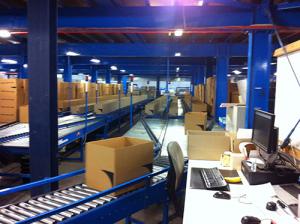
An interesting item from the Booksellers Association Feature by Marcus Greville.
We’ve all got our gripes about distributors, but we save the deep grumbles for UBD. When Random House’s Auckland warehouse closed we lost a significant resource, consequently we became hyper-aware of any stuff-ups from UBD – I was like an angry vampiric meerkat whenever a TOLL courier arrived – but it may be time to cool our jets, note the changes, and start spreading our distribution grumps around in a fairer and more constructive way.
I had a talk to Colin Pinfold, National Operations and Logistics Manager for Penguin Random House NZ, who got some stats from Gavin Schwarz at UBD for this feature. Read on to see what I found out.
Robot warehouses and relativityI was working in London in 2004 when Penguin changed to a robotised warehouse – a truly spectacular failure, a failure that became a story to scare baby logistics managers. I’ve heard tell of Baker & Taylor’s vast Momence warehouse in Illinois – they added a football-field sized wing just for a Harry Potter release. I’ve read about the organising principles behind massive distribution hubs with a fascination and relish that has somehow eclipsed my anger at not getting that damn order I placed 10 days ago. This stuff, in short, is my jam.
Continue to the full article here
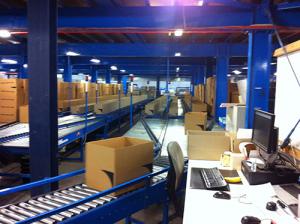
An interesting item from the Booksellers Association Feature by Marcus Greville.
We’ve all got our gripes about distributors, but we save the deep grumbles for UBD. When Random House’s Auckland warehouse closed we lost a significant resource, consequently we became hyper-aware of any stuff-ups from UBD – I was like an angry vampiric meerkat whenever a TOLL courier arrived – but it may be time to cool our jets, note the changes, and start spreading our distribution grumps around in a fairer and more constructive way.
I had a talk to Colin Pinfold, National Operations and Logistics Manager for Penguin Random House NZ, who got some stats from Gavin Schwarz at UBD for this feature. Read on to see what I found out.
Robot warehouses and relativityI was working in London in 2004 when Penguin changed to a robotised warehouse – a truly spectacular failure, a failure that became a story to scare baby logistics managers. I’ve heard tell of Baker & Taylor’s vast Momence warehouse in Illinois – they added a football-field sized wing just for a Harry Potter release. I’ve read about the organising principles behind massive distribution hubs with a fascination and relish that has somehow eclipsed my anger at not getting that damn order I placed 10 days ago. This stuff, in short, is my jam.
Continue to the full article here

As Autodesk continue our transition to a fully subscription-based business, we remain committed to providing you greater value, more flexibility and a simpler way to access the Autodesk software you need.
On 1 August 2016, we will introduce Autodesk industry collections and end the sale of Autodesk Design & Creation Suites.
Industry collections will provide you access to a wide selection of essential Autodesk software for your profession. They will offer immediate access to new technology, cloud services and several licensing options. In short, industry collections will give you the freedom to access the software products you want, when you want them. Learn more about the industry collections here.

To make way for industry collections, we will end the sale of new Design & Creation Suite subscriptions and perpetual licences after 31 July 2016.
If you wish to purchase more Design & Creation Suites before 1 August 2016, we encourage you to subscribe now and rest assured that we will provide you with a simple way to switch to an industry collection in the future, if you so choose. If you prefer, you can purchase perpetual licences of a Design & Creation Suite with a maintenance plan before 1 August.
If you wish to continue receiving updates, support and other benefits for your Design & Creation Suites, you can do so for as long as you continue your existing subscription or maintenance plan.
To learn more about Autodesk industry collections and options for switching your subscription (if you choose to do so), please read our Frequently Asked Questions.
We want to thank you for being an Autodesk and A2K Technologies customer, and hope you share our excitement about these important enhancements to Autodesk’s offerings.
An A2K Technologies release For moe information go to www.a2ktechnologies.co.nz
Frequent flyers may have used the Skybus to get from Auckland airport to the city (or vice versa) since October 2015, and also may have noticed that the bus now has a new name, but is also much more connected.
The airport-city bus service, formerly known as Airbus, was purchased in October 2016 by Melbourne-based company, Skybus. The company increased the frequency to a 24-hour services, and brought Spark Digital on board to provide on-board wi-fi.
Michael Sewards, Skybus director, believes it was Spark's tech and innovation that encouraged his company to invest in the transport service.
More than 200,000 passengers been using on average 16 MB of data, which Spark says is the equivalent of using wi-fi for 30 minutes of Spotify, sending 200 work emails and 50 photo uploads.
In addition, Skybus has also used curbside concierge services equipped with tablets to speed up paperless ticketing and give visitor advice.
Spark's mobile app design unit, Putti, developed a smartphone/mobile device-based ticketing service, which eliminates paper ticketing completely. Skybus was impressed with the design and will also use the technology in Melbourne for its airport services.
Sewards believes that his company's work researching ticketing innovation and how Airbus previously ran was important when choosing Spark Digital as their wi-fi and technology provider.
"It was important to find a local technology partner with the expertise to help us realise our vision. Above everything else we were looking for innovation and an ability to deliver. Not only did we find that partner in Spark Digital, but we found Spark's technology is better than anything we have experienced back in Australia. So much better that we're planning to take some of that technology back to Melbourne and then possibly roll it out elsewhere in the world," says Sewards.
Skybus recognises that they must serve both incoming tourists who expect to use internet services, as it is standard practise in the northern hemisphere, so a quality provider was important.
"We have the depth of capability to deal with the unique requests from the SkyBus team. It brings together our 4G mobile network, onboard WiFi solution, and Putti-designed apps along with the smarts required behind the scenes to make the services ‘sing’ together. We’ve managed to put every part of the puzzle together quickly for a very tech-savvy customer," says Spark Digital business manager Stuart Little.
Skybus aims to expand the service, increase service frequency to every 10 minutes during peak hours, and add another seven buses to its fleet in 2017.
Manufacturers are pleased with today’s announcement by James Shaw and the Green Party to include a Minster for Manufacturing in any future cabinet. This is a vital step for ensuring government understands manufacturing and can effectively help unleash the potential of the sector. This is a solid idea that we hope can be embraced by any and all political parties, say the New Zealand Manufacturers and Exporters Association (NZMEA).
NZMEA Chief Executive Dieter Adam says, “Manufacturing remains one of the biggest providers of quality jobs with wages higher than the average, economic growth and export income into New Zealand. Yet manufacturing has been undervalued and not well understood by governments for a long time – this is a stark contrast to the focus and representation most other sectors find within government.
“When we consider the importance of manufacturing to New Zealand’s future, introducing a Minister for Manufacturing is a common sense decision. This will help government and manufacturing businesses better work together to achieve our goals of sustainable high-value growth, increased export income and more well paid jobs for our people.
“A specific focus on manufacturing and industry in government is an idea that is being increasingly embraced by governments around the world. The new UK Prime Minister has introduced a new industrial strategy, as well as the U.S, Australian and German Governments all putting considerable effort into strategy’s to understand and improve their high-value manufacturing sectors into the future. New Zealand cannot stand idle while our competitors take manufacturing seriously.
“Manufacturing also faces significant changes in the future that will act as threats, as well as huge opportunities for New Zealand if we can get ahead, such as Industry 4.0, automation and other technologies like 3D printing. A more focused view of manufacturing, through a Minister for Manufacturing, will help develop more effective responses to these changes.” says Dieter.
An MZMEA press release

Palace of the Alhambra, Spain
By: Charles Nathaniel Worsley (1862-1923)
From the collection of Sir Heaton Rhodes
Oil on canvas - 118cm x 162cm
Valued $12,000 - $18,000
Offers invited over $9,000
Contact: Henry Newrick – (+64 ) 27 471 2242

Mount Egmont with Lake
By: John Philemon Backhouse (1845-1908)
Oil on Sea Shell - 13cm x 14cm
Valued $2,000-$3,000
Offers invited over $1,500
Contact: Henry Newrick – (+64 ) 27 471 2242

|
|