
Founded by Max Farndale 1947 - 2018
Government Statistician Liz MacPherson is encouraging everyone to go online to fill in their forms in the next census if they can.
“In 2018 you will be able to complete your census forms on a mobile phone as well as on tablets or desktops. We want to make it as easy as possible for everyone to fill in their forms online,” Ms MacPherson said.
“By collecting census data online, Statistics NZ can produce the census counts and other census information faster.”
Paper census forms will still be available for anyone who wants to use them.
“Planning for the 2018 Census is well underway. Next week, we’ll be testing new and changed questions with a sample of households and an online reference group to help us decide if they are ready to be included in the next census.”
“We want the census questions to reflect the important information needs of New Zealand. Throughout our planning for 2018, we’re making sure we can gather robust, independent information that will inform decision-making and contribute real value to the country.”
“We’re committed to ensuring that decision-makers have access to quality information. The census provides a wealth of information for the country to help make decisions about where services are needed and to understand more about the people who live in New Zealand.”
Ends
For media enquiries contact: Nancy Linton, Senior Communications Adviser, 2018 Census, 021 710 430, This email address is being protected from spambots. You need JavaScript enabled to view it.
Authorised by Liz MacPherson, Government Statistician, 1 July 2016More information
What is the census?
The census is an official count of how many people are in New Zealand. It's a snapshot of the people who live here and the places they call home. The data collected is used to inform important decisions, including where to spend taxpayers’ money on services like schools and hospitals.
How much does the census cost?
The funding for the 2018 Census is spread over five years, totaling $119 million. The funding started on 1 July 2014. While additional costs are involved in setting up the new collection model for 2018, we are anticipating a saving over two census cycles, as the tools and systems we are building for 2018 can be used again for the next census.
What questions are you testing next week?
Based on our consultation and engagement with people and organisations who use census data, we are testing new and changed questions on a variety of new topics, including housing quality (whether people have damp or mould in their homes), how people travel to work or education, and their sexual orientation.
Before we can make a final decision on whether to include new and changed questions in the 2018 Census, we want to make sure we have thoroughly tested them. We’re testing if the questions are easy for people to understand and complete, and enable us to gather high-quality information.
Who is involved in the test?
We’re working with Auckland Council to test our new online forms through the People’s Panel, a group of 25,000 residents in Auckland.
We’re also testing our paper forms with about 8,000 households across New Zealand. This sample is randomly generated and does not include households in Auckland, because our online test is focused on people who live in the Auckland region.
Will you still have paper forms available in 2018?
Yes, paper forms will be available for people who would prefer them. For this test, however, we have split the sample groups – one group will test our online forms, the other group will test our paper forms.
A Statistics New Zealand press release
TigerTurf, Synthetic Turf Specialists, are world leaders in the manufacture, build and installation of top performing tennis courts. TigerTurf’s systems can create a surface to exactly meet players’ requirements whether they want a court that matches the different bounce, ball speed and performance qualities of grass, clay or hard courts.
Artificial turf courts perform at the highest level and are perfect for both beginners and professionals. Different types of turf can be used to mimic grass, clay and hard courts, with a high level of accuracy. TigerTurf Artificial turf is designed to meet the requirements of specific sports. This means that, with their tennis surfaces, they are engineered to significantly reduce the risk of slipping in wet weather conditions providing superior all-weather traction as well as a shock-absorbing surface reducing the risk of injury and stress to ankles, knees, hips and the lower back.
TigerTurf’s courts are manufactured in New Zealand from the highest quality synthetic yarns and tested under rigorous conditions to provide many years of trouble-free playing. They are UV stabilised to meet the harsh Australasian conditions so will not fade in sunlight, unlike many imported surfaces.
The drainage capability of synthetic turf allows it to be used all year which means tennis players can continue to practice no matter what the weather conditions. With a TigerTurf all-weather court there’s simply more playing days in the year and we all know that the more you play the better you get!
With a range of colours, from traditional greens and blues to terracotta to choose from, and many different surface options, Tiger Turf can customise the perfect artificial tennis option that suits your game.
Tiger Turf’s medium pile surfaces, including favourites Tournament and Tournament 1000, are long lasting, low maintenance and fit into any home and landscaped setting. Their texturised short pile surfaces, such as Advantage and Trophy are highly durable surfaces suitable for, not only tennis, but a range of other sports. With suitable line markings for hockey, tennis, netball and basketball, your TigerTurf tennis court can be turned into a multi-sport training ground.
TigerTurf also supply and install a full range of acrylic surfacing options, from economical acrylic hard court coatings to high performance cushioned acrylic surfaces.
TigerTurf is part of a worldwide group that has been manufacturing and installing tennis courts for over 35 years and their internationally acclaimed synthetic sports surfaces have been a resounding success in thousands of installations across more than 80 countries.
A TigerTurf/PRWire press release

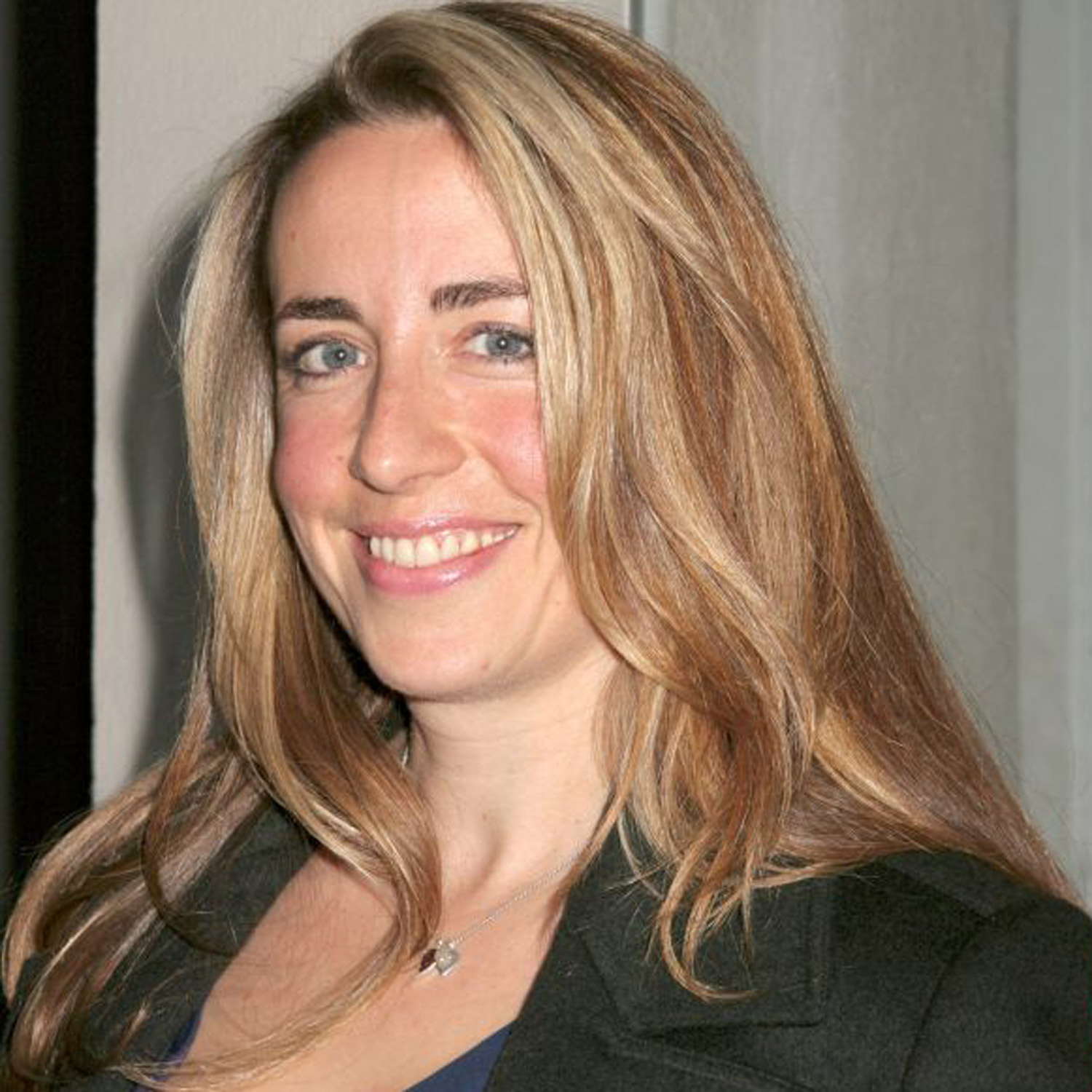
Massey University, Monday 4 July 2016 - A new book being launched in Leadership Week 2016 has questioned our modern obsession with the charismatic, transformational leader. In Thinking differently about leadership, Massey University management lecturer Dr Suze Wilson(pictured below) examines the history of leadership thought from ancient through to modern times. She concludes it is an invented concept that morphs according to changing social norms.
“We need to understand that leadership doesn’t have a timeles, enduring essence,” she says. “If you’re looking for its essence, you’re on the wrong path. Leadership is something we invent.
“That’s what history tells us – we’ve invented it repeatedly in different forms, to meet different needs and to reflect different values.”
The modern concept of the visionary leader only emerged in the late 1970s, Dr Wilson says. At that time the United States’ economy was reeling from the oil crises of the 1970s and the rise of Japanese manufacturing. American firms were no longer world beating and there was a sentiment that America is “no longer great”. All this came after charismatic leaders like Martin Luther King and Gloria Steinem appeared on the scene with exciting visions for change.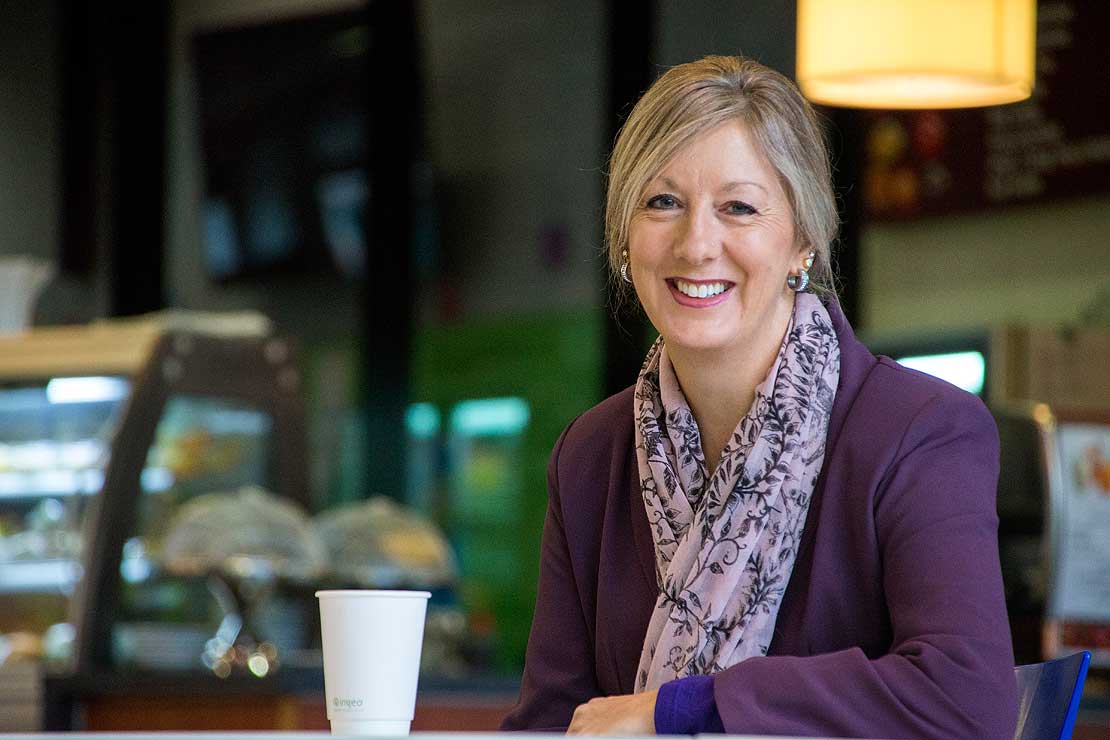
“One of the most influential scholars at the time was a political scientist named James MacGregor Burns, and he wrote a book that argued leadership should be about transformational change. That’s still a really exciting idea, but one of Burns’ key assumptions was that followers could choose their leaders,” Dr Wilson says.
She says Burns grounded his model in a democratic framework and his thinking was shaped by the transformational power of political movements at that time.
“The problem is we have taken that model into a workplace setting where managers aren’t elected, where people don’t get to choose their leaders.
“With these inflated expectations, we have also given managers a task they typically can’t achieve but it’s a big ego booster, which is problematic. It’s not helpful to have big egos running organisations because they don’t listen and don’t care about others’ point of view. The idea that managers should have the power to try and change employees’ values can actually be quite dangerous.”
The notion that leaders know best is “profoundly undemocratic”, she says, and leadership has historically been based on masculine ideals.
“We need to be aware of the fact that we are culturally inclined to conceptualise leadership in a very gendered way – and that’s a problem if we want more women in leadership roles. To achieve that, we need to change the mold of leadership to better fit what women can bring, not make women fit a masculine mold.”
Bold leadereship isn't the answer to every question
Dr Wilson says the world of business is littered with failed leaders who have tried to impose their vision on others. The recent departure of Mediaworks chief executive Mark Weldon is a good example.
“The profit-driven values he ascribed to were unsurprisingly resisted by staff who believed in the public service of journalism as the fourth estate. Installing a personally-abrasive leader with mismatched values was clearly never going to land well.
“What’s astonishing is the amount of damage he was able to do in such a short time, in the name of this vision he had for the organisation.”
Dr Wilson says the the presidential campaign of Donald Trump is another example of the dangers of this type of thinking.
“Trump tries to incite an emotional response, which is at the core of our contemporary idea of a charismatic leader. It’s fascinating to see how ideas move on from how they were first conceptualised. It would never have been Burns’ intention, but Trump trades on the generally-accepted notion that leaders should be bold and transformational, and he exploits that idea to incite hate and fear.”
In the past, Dr Wilson says, scholars weren’t always as keen as they are now to promote bold leadership as the answer to every problem.
“At different times in history, scholars have seen leadership as dangerous, something needing to be constrained by laws. At another time they saw leadership more modestly, as about organising tasks and being considerate to others,” she says.
“This teaches us to think carefully about what particular needs and expectations we have about leadership. We shouldn’t see it as the answer to everything – that’s just wishful, romantic thinking."
Dr Wilson says the solution is to ground leadership in context and shared values. Instead of considering leadership the solution, regardless of the problem, we need to consider what type of leadership is required for each specific situation.
“You need to ask: What are the problems at hand? What useful purpose does leadership have in this situation? And what are the values and norms that should shape the style of leadership?
“Then you can think about the personal attributes needed, the roles and responsibilities required, and what the relationship between leaders and followers should be.”
She says that this type of leadership is “going on all over the place, but generally not making headlines”.
“These are people getting on with it, solving problems, living by their values and not feeling the need to narcissistically promote how good they are.”
But one well-known example she can identify is Te Puea Marae, the Auckland marae offering shelter to homeless families.
“This is a wonderful example of leadership. There isn’t a leader on a pedestal trying to say, ‘I know best’. They are a group of people who have seen a need and organised themselves to do something about it. It’s about the collective achieving meaningful results.”
Book launch details
Dr Suze Wilson’s book ‘Thinking differently about leadership’ will be launched on Thursday July 7, 2016 from 4.00pm-6.00pm in the Russell Room, Wharerata, Massey University Manawatū campus.
A Massey University release Juiy 4, 2016
June 30, 2016 - A2K Technologies report that HP has unveiled what it is calling the world’s first production-ready 3D printing system. The HP Jet Fusion 3D Printing Solution is already being used by the likes of Nike and BMW in their manufacturing process, using the printers to create components rather than old-school moulds.HP3D_banner
But starting from $130,000 a pop, these 3D printers are far from the consumer ones from which you can make a nifty key ring or mini dinosaur figurines. This is 3D printing on an industrial scale and one that’s capable of using different materials.
HP’s South Pacific Managing Director, Robert Mesaros, said 3D printing could do to manufacturing what Netflix did to entertainment.
“HP’s new 3D system is looking to reinvent the $100 billion-plus manufacturing industry in Australia and ignite the next industrial revolution by producing superior quality of physical parts up to 10 times faster and at half the cost of current 3D print systems..”
It’s an ambitious plan and one that could cut costs for producers looking to streamline the manufacturing process.
 Continue here for more information
Engineering can end up in the most bizarre of places.
Often times it is the things that get overlooked the most that host some of the most impressive engineering. Although this innovative box is not part of the most spectacular feats of engineering, it still contains a lot of great innovation in the most peculiar place.
Pizza boxes. Often mono purposed, and of singular use. Only used to hold that steaming, glorious pizza for a few moments until it is tossed to the curb- forgotten, lost. GreenBox decided to give the traditional pizza box a second chance and successfully developed a multi-purpose, remarkably efficient box.
The box was designed with functionality in mind, able to be used as plates when guests arrive- saving the paper plates for another day. The box can also be reconfigured into a compact storage container so you can devour your pizza another day.
The idea of the GreenBox came from William Walsh after he had the brilliant idea to use the top of the pizza box as a plate to save him some dishes in college. At the time, Walsh was studying to become a mechanical engineer.
“I went to a local restaurant, I bought 50 or 100 pizza boxes — the guy thought I was out of my mind — and an Exacto knife, and a straightedge ruler,”
Walsh said back in 2011.
“I spent 3 or 4 days in my apartment creating different options like, different alternatives how I could utilise this base material to do something else... I came up with 4 or 5 different designs, and I took the best function from each design and came up with this current design.”
Unfortunately Walsh passed away later that year.
However, Walsh was able to leave behind the world’s most efficient pizza box. To ensure sustainability, naturally, the box is made from 100% recycled material. Innovation lurks behind every corner. Doing something the same way just because it has always been done like that is a great time to ask, what could make it better? Walsh was able to take something so simple and still useful and turn it into something that can help reduce pollution- one pizza box at a time.
Source: Interesting Engineering - View a Greenbox video here
A trade mission comprising of Fijian exporters is expected to travel to New Zealand come February or March next year.
This will be done in partnership between the Pacific Trade and Invest (PT&I) from Auckland and the Fiji Export Council.
It is in a bid to build more export capability and knowledge for Fijian exporters in New Zealand markets.
Around 40 Fijian business owners and SMEs, who are potential and existing exporters, were part of the second series of workshops of the 2016 Path to Market (P2M) programme at the Tanoa Plaza Hotel in Suva on Thursday.
The workshop participants were accompanied by a delegation of close to 24 people including a three-member team of PT&I NZ and a seasoned trade consultant here as part of a business mission.
The Business Mission was organised by the New Zealand Fiji Business Council.
PT&I Trade Commissioner, Michael Greenslade, said their ultimate goal was to take a trade mission from this group of Fijian companies to New Zealand.
“It’s part of our visit this week. We also met with the companies that went on a trade mission earlier in March with us and we’re just checking with them in terms of their sales and the support they require from us in market,” he said.
“Those companies have all made sales from the previous missions.”
Mr Greenslade said the trade mission would need to consist of export-capable companies with a product and with a potential to take an order.
“Last year was the first time we trialled it. Six came over for the trade mission. And we had four countries come together to New Zealand which included Fiji, Papua New Guinea, Tonga and Samoa,” he said.
“This year we are lucky to have eight countries. So we are going to have a good number of exporters come and to be fair, the real opportunity is within that group of companies.”
Change of perspective
Kava exporter Praveen Narayan, who is the managing director of Green Gold Kava, said the P2M workshop was a once in a lifetime workshop.
“This workshop really changed my perspective as a small exporter now to gaining more exposure overseas,” he said.
Mr Narayan said he was lucky to be part of the team that went to the Pasifika Festival in Auckland in March this year.
“There we did really great. My company managed to get a very good distributor in NZ,” he said.
Meanwhile, Fiji Export Council chief executive officer Jone Cavubati said the P2M workshop was timely and quite relevant.
“The Fiji Export Council continues to receive a lot of enquiries from people aspiring to export but they are not ready,” he said.
“This type of workshop is really how we can assess the business development and that they are aware of how to export.
“We are targeting potential exporters, new exporters and we have the matured exporters and hope that they can learn from each other.”
The PT&I is the economic development agency of the Pacific Islands Forum Secretariat engaged in trade and investment promotion in Pacific Island Forum countries.
Source: Fiji SunOnline
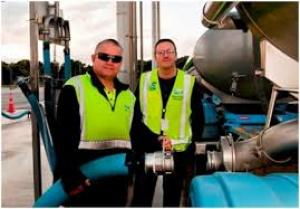
July 2, 2016 - A single-minded focus on effectiveness, efficiency and innovation across all aspects of Fonterra’s winter maintenance programme is delivering savings for the Co-operative as it gets match-fit for spring.
Director of NZ Manufacturing Mark Leslie said this “winter shut” period is an important time of year for manufacturing teams as all assets across Fonterra’s network of sites are fine-tuned to ensure they are ready for the season ahead.
“Each year we process around 18 billion litres of milk, with the bulk of this carried out in the spring months. The work we’re doing now will help us get match-fit for that peak period.”
Mr Leslie says the goal for manufacturing teams in this year’s winter shut has been finding more effective and efficient ways to maintain sites for the coming season.
“Together, Fonterra and industry are focused on ensuring we can produce quality product for our customers and support farmers under a constrained milk price.
“We have always been efficient in our maintenance projects, so the challenge this year was to come up with new and innovative ways to do things better, faster and smarter.”
Hundreds of Fonterra manufacturing site staff are taking part in the annual winter work, with more than 500 projects currently underway around the country, ranging from major capital works to minor overhauls.
Winter Shutdown Manager at Te Rapa Blair Bond puts the improvements down to an ongoing “owner’s mindset” across the manufacturing teams.
“Every person on our team is on the same page. We treat the assets as if we were their owners – putting ourselves in our farmers’ shoes and thinking about how we can do things more effectively and drop our bottom line.”
This work during the winter shut has also led to innovative thinking that will change the way we process milk during the milking season.
Mr Bond gives the example of our D4 evaporator – which evaporates water out of the milk to then be turned into powder. The team came up with an innovative way of splitting the process into stages, which will allow the evaporator to run 6 per cent longer meaning more milk can be processed each day.
Mr Bond adds: “It’s year-round for us. Throughout the entire year we’re talking to other sites about what worked for them and leveraging our collective strength to help our Co-operative deliver.”
He explains the Te Rapa team has adopted a year-round asset care approach for the maintenance and servicing of equipment.
“Constant monitoring of our equipment to ensure it’s always in top nick means we’re saving time and money during our winter shut – something our farmers will appreciate.”
A press release from Fonterra June 2, 2016
 Still no warning that huge British organisation is victim of scam
 The other side of the EU Coin
Kiwi travellers are quite happy to leave their partners at home, but they will seldom part with their mobile phones. That is according to Hotels.com Mobile Travel Tracker, which has uncovered New Zealanders have some quirky travel habits.The app’s survey found 73% of Kiwis admit to preferring to travel with their phones than with a loved one (46%). It also revealed Kiwis are not above showing off – nearly half of those aged 18 to 29 (47%) and 47% of 30 to 39 year olds use social media on holiday to flaunt their snaps.The global study, which followed the habits of 9200 tourists across 31 countries, showed today’s Kiwi traveller makes three trips a year and stays in a hotel 10 nights ofthe year. For 4% of Kiwi travellers, the hotel becomes their home for a month. While travelling, 58% of Kiwis use their phones to search for restaurants andfood markets and 55% use them for directions apps.Lust is driving Kiwi lovers to hotels, with 26% of those surveyed admitting to having made a same day hotel booking due to a successful date.
Source: TravelInc
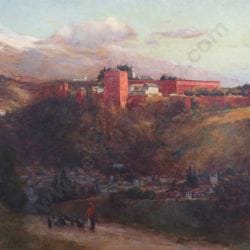
Palace of the Alhambra, Spain
By: Charles Nathaniel Worsley (1862-1923)
From the collection of Sir Heaton Rhodes
Oil on canvas - 118cm x 162cm
Valued $12,000 - $18,000
Offers invited over $9,000
Contact: Henry Newrick – (+64 ) 27 471 2242
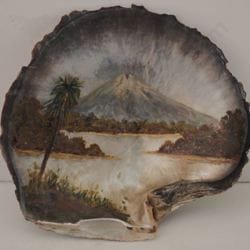
Mount Egmont with Lake
By: John Philemon Backhouse (1845-1908)
Oil on Sea Shell - 13cm x 14cm
Valued $2,000-$3,000
Offers invited over $1,500
Contact: Henry Newrick – (+64 ) 27 471 2242

|
|