
Founded by Max Farndale 1947 - 2018
 Turkey’s mooted membership of EU central to the Brexit Quit result
 Provincial voters slap in the face to the political classes
 Privilege and pc lobby hobbles premium export potential
London, June23, 2016 -Technavio has announced the top 10 leading vendors for the global packaging market in their latest research report. This report also lists 10 other prominent vendors who are expected to contribute to this market’s growth over the forecast period.
Technavio announces top 10 leading vendors for the global packaging market from 2016-2020.Tweet this
To identify the top vendors, Technavio’s market research analysts have considered the top contributors to the overall revenue of this market. To calculate the market size, the report considers the revenue generated through the sales of different types of packaging materials.
Request sample report: http://bit.ly/1UdpaHc
“Customer convenience has become a priority for most of the vendors in the global packaging market. While many consumer goods packaging companies are planning to launch innovative products, about 30% of these companies are focusing on new packaging designs or redesigning the existing packaging. The millennial population, especially working professionals with busy schedules, look for convenience in everyday products, especially food, beverages, and toiletries,” said Sharan Raj, one of Technavio’s lead analysts for packaging research.
Additional Insights: Which packaging company had the most revenue in 2015? (Graph)
Top 10 leading vendors in the global packaging market:
Amcor
Amcor was incorporated in 1926 and is headquartered in Hawthorn, Victoria, Australia. The company supplies a wide range of rigid and flexible packaging products, specifically for the beverage, food, personal and home care, and healthcare, along with tobacco industries. The company operates over 190 sites in 43 countries and employs over 29,000 people. For FY2015, the company generated revenue of USD 9.61 billion.
Ball
Ball was founded in 1880, with its headquarters is located in Broomfield, Colorado, US. The company, along with its subsidiaries, manufactures metal packaging products for the food, beverage, and household industries. It also designs, develops, and manufactures innovative aerospace systems through its aerospace and technologies segment. Ball announced the acquisition of Rexam, and it is subject to approval by regulatory authorities. For FY2015, the company generated revenue of USD 7.99 billion.
International Paper
International Paper was incorporated in 1941 and is headquartered in Memphis, Tennessee, US. The company is a paper and packaging company with the main market and manufacturing operations located in North America, Latin America, Russia, Europe, Asia, Africa, and the Middle East. The company manages 24 pulp, paper, along with packaging mills; 16 recycling plants; 169 converting and packaging plants; and three bag facilities in the US. It also operates 16 pulp, paper, and packaging mills; 67 converting and packaging plants; and two recycling plants across Europe, Asia, Africa, India, Latin America, and South America.
Crown Holdings
Crown Holdings was founded in 1892 and is headquartered in Philadelphia, Pennsylvania, US. It manufactures and sells packaging products for consumer goods. Its principal products include aluminum and steel cans for beverage, food, household and other consumer products; metal vacuum closures and caps; and glass bottles for beverage products. At the end of December 2015, the company had 147 plants along with the sales and service facilities throughout 37 countries. For FY2015, the company generated revenue of USD 8.8 billion.
Owens-Illinois
Founded in 1986, Qognify (formerly NICE Systems) is headquartered in Ra'anana, Israel. The company provides integrated digital recording and management solutions to its customers. Qognify's solutions help organizations capture and analyze big data to anticipate and mitigate security and safety risks, maintain business continuity, and streamline operations. The company operates its business through three segments: customer interaction solutions, security solutions, and financial crime and compliance solutions.
Reynolds Group Holdings
Reynolds Group Holdings is headquartered in Auckland, New Zealand. It is one of the leading global manufacturers and suppliers of consumer beverage and food service packaging products and storage products. The company's key product portfolio includes foodservice packaging, aseptic carton packaging, food and beverage plastic containers, waste and storage products, caps and closures, cooking products, carton packaging, tablewares, liquid packaging board, paper products, automotive lubricant containers, and personal care containers. In FY2015, the company generated revenue of USD 11.18 billion.
Sealed Air
Sealed Air was founded in 1960 and is headquartered in Charlotte, North Carolina, US. The company offers products and solutions for food safety and security, facility hygiene, and product protection. Its offerings are used for food and beverage processing, retail, foodservice, healthcare and industrial, and commercial and consumer applications. As of December 31, 2015, the company employed about 23,000 people and is present in 62 countries with a distribution and sales network reaching about 169 countries. For FY2015, the company generated revenue of USD 7.03 billion.
Smurfit Kappa
Smurfit Kappa was founded in 2005 (following the merger of the Jefferson Smurfit Group and Kappa Packaging) and is headquartered in Dublin, Ireland. The company manufactures and markets paper-based packaging products. It offers containerboard, corrugated containers, and other paper-based packaging products, such as solid board, graphic board, and bag-in-box.
The company owns 34 mills (including 27 produce containerboard), 50 recovered fiber facilities, 229 packaging converting plants, 31 other production facilities, and 103,000 hectares of Latin American forest plantations. For FY2015, the company reported revenue of USD 8.99 billion.
Stora Enso
Stora Enso was founded in 1998 and is headquartered in Helsinki, Finland. The company offers renewable solutions for the biomaterials, packaging, wood, and paper industries worldwide. The company employs around 26,000 people in over 35 countries worldwide. The company was formed through the merger of Enso and Stora Kopparbergs Bergslags Aktiebolag. The company's annual production capacity is 6.4 million metric tons of paper, 5.7 million metric tons of chemical pulp, 1.3 billion square meters of corrugated packaging, and 5.2 million cubic meters of sawn wood products. For FY2015, the company generated revenue of USD 11.14 billion.
WestRock
WestRock was incorporated in 2015 and is headquartered in Norcross, Georgia, US. The company is a global packaging company focused on operational excellence and customer innovation. It is a merger between two leading packaging companies, namely Rock-Tenn and MeadWestvaco. It has over 275 operating and business locations worldwide.

The Institute of Directors has released a new guide, 'Getting on board with diversity', offering practical steps for boards and promoting diversity at board tables.
The launch coincides with the fifth anniversary of the IOD's Mentoring for Diversity programme, which matches directors with mentors to help them develop the skills and knowledge needed for a listed or large company board.
You can download the guide here.
An Institute of Directors release, June 24, 2016
Tertiary Education Skills and Employment Minister Steven Joyce has today announced that the Workplace Literacy and Numeracy fund will be extended to include industry trainees.
“Literacy and numeracy skills are critical to helping people succeed in the workplace and while they’re training. This change will mean that industry trainees starting out at Levels 1 and 2 on the NZ Qualifications Framework who need to improve their literacy and numeracy skills will be able to get help from specialist providers while they train.”
“The Workplace Literacy and Numeracy Fund is doing a great job of providing training and support for businesses and workers who see the need to lift literacy and numeracy in their workplaces. With this change and our previous decision to extend the time period businesses can access the Fund, it is now well placed to improve the skills of many more people,” Mr Joyce says.
As part of Budget 2016, the Government boosted the Workplace Literacy and Numeracy Fund by:
providing an additional $2 million to support around 600 more places in 2016 andproviding an additional $3 million for Workplace Literacy and Numeracy from 2017, enough for approximately 900 places.
This money comes from a combination of new money and by reducing the funding rates in the tertiary education organisation-led strand of the Workplace Literacy and Numeracy Fund.
The Government is also increasing the amount of training available to each worker through both the Workplace Literacy and Numeracy Fund and the Intensive Literacy and Numeracy Fund. Industry trainees can already access the Intensive Literacy and Numeracy fund.
“Both employers and trainees will benefit from this increased flexibility so they can further lift individuals' skill levels in the workplace. It demonstrates our commitment to improving workplace productivity and supporting personal success.”
A press release from the Beehive, June 23, 2016
An alternative to government funding agencies handing out cash grants to small-to-medium-sized enterprises would be paying local organisations such as District Health Boards to trial their products so they can get New Zealand customers and data at an early stage, says start-up chief executive Siobhan Bulfin.
Bulfin is founder of Melon Health, a patient engagement and behaviour change platform for the prevention and management of chronic disease. The company based in Wellington and San Francisco originally aimed to effect change in addictive behaviours such as excessive drinking but now targets patients with chronic diseases such as type 2 diabetes which can be controlled but not cured.
Start-ups have two major problems – lack of money and customers, Bulfin told attendees at a Healthtech Innovation & Investment workshop in Auckland today.
One of the difficulties for health IT companies in New Zealand was there’s really only one funder – the Ministry of Health - which is a big impediment to getting local customers, she said.
Her four-year-old company, which last year won the workshop’s Start-up company award, struggled initially to get New Zealand customers. It has only just completed its first government-funded project – a pilot with the Midland region of the Waikato District Health Board for pre-diabetes patients.
Bulfin said it would be a good idea for at least some taxpayer-funded research and development and growth grants to go towards funding local organisations to trial new Kiwi technology in order to give SMEs a customer base and set of data that would then make it easier for them to sell offshore.
That would take a lot of the risk out of testing these products for organisations like DHBs or Primary Health Organisations (PHOs) who may like the technology but don’t want to initially fund it until they’re sure it works, she said.
“It’s also a way of New Zealand taxpayers getting more value for their money,” she said.
Bulfin said Chai Chuah, the director-general of health, said at the start of HealthTech Week that the ministry wanted to embrace disruptive technologies but in her experience, “there hasn’t been a lot of evidence of that.”
Simon Brown, Callaghan Innovation’s group manager accelerator services, said he wasn’t sure whether the alternative funding suggestion was “the right idea”.
But he says the agency is in the midst of identifying sector game plans and wants input and fresh ideas like Bulfin’s to help shape what then fed back to those setting grant funding and other policy.
The successful Midland pilot is now being rolled out to other parts of the DHB and has had a ripple effect attracting interest from New Zealand PHOs, in particular, in introducing one in their area, Bulfin said.
In the past year, Melon Health has secured two pilot projects with major US health insurer UnitedHealthcare. The first involves 500 patients in Kansas and Missouri in a 28-week trial for patients with type 2 diabetes and the second is a 12-month pilot to help pregnant patients stay healthy and stop smoking to prevent pre-term babies.
Melon Health received investment last year from the Punakaiki Fund which is now its second largest shareholder after Bulfin, and it’s about to launch a new fundraising round seeking around $3 million.
Bulfin said the start-up, which is now selling into the US, Canada, New Zealand, and Australia, hopes to break even before the end of the year.
It had an R&D grant from Callaghan Innovation’s predecessor but was turned down when making another application 18 months ago.
New Zealand’s health IT and medical device companies turned over $1,3 billion last year, according to the NZ Health Technology Review released yesterday. The sector spent $129 million on R&D with government committed to providing a further $97 million in funding more health research.
Callaghan Innovation handed out $138 million in total grants last year.
Thursday 23rd June 2016 - A Business release (BusinessDesk receives some assistance from Callaghan Innovation to cover the commercialisation of innovation).
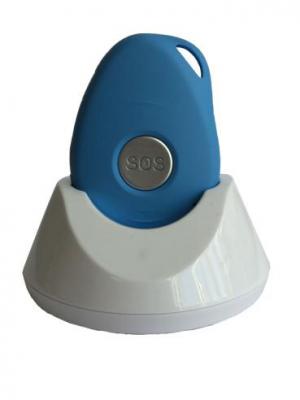
Smart Caller, one of the fastest growing Nurse Call Communications companies in the New Zealand, have announced the launch of their ‘next generation’ Personal Safety Alarms.
Auckland, Thursday 23 June 2016 - The Safe-life Pendant uses cellular network technology to allow users make that vital call should an emergency occur with the press just one button. Working anywhere in New Zealand where there is 3G cellular coverage, it not only alerts up to three different personal contacts or monitoring station by SMS that there is an emergency, but also allows location finding of the user's whereabouts using Google Maps along with voice to voice communication. Smart Caller .
Managing Director, Jamie Reid explains “The technology used in the Safe-Life Pendant can be used to remotely monitor a person's welfare, enabling the correct type of assistance to be delivered in a duress situation, in a timely manner to a known location, at a low cost”.
The Smart Caller Safe Life Pendant is not limited geographically as it does not require a landline or base station to communicate an emergency. Working off a SIM card on Spark or Vodafone 3G Cellular network, it can operate in an office, in a warehouse, at the shopping mall or even in a farmers field. This provides significant advantage over existing lone worker, man down or duress alarms in the workplace as existing technology is typically static mounted call points or radio pendants that must be within range of a base station to work. The Safe Life pendant, when activated in an emergency sends an automated “Help me” SOS SMS to all emergency contacts with time and location details within the message. Additionally if required, the pendant has a selectable feature to automatically initiate voice to voice communications to the primary contact via an inbuilt high powered speaker and microphone as part of the ‘Help me” emergency response protocol. At approximately half the price of a basic radio call system or modern cell phone, the Safe Life pendant is extremely economical, completely mobile, weather proof, lightweight, easily worn or carried with the included lanyard allowing the users total freedom of range.
Utilizing GPS/GPRS/GSM technology, the Safe-Life pendant has location finding features which can be invaluable for keeping track of employees. At any time, the Safe-Life pendant can be located by the emergency contacts, so if an employee has absconded or not reported in, their exact location can be found within seconds. Similarly, it also uses the GPS/GPRS/GSM functionality for Geo Fencing. When the Geo Fencing feature is activated, the pendant creates an invisible fence around the predetermined area, say a warehouse for instance. Should the Safe-Life pendant detect it has moved into or out of a Geo Fenced area, it will alert the emergency contacts. An invaluable technology for people that want to contain or exclude employees or contractors from certain areas.The Safe-Life pendant technology also integrates altimeters & accelerometers that can detect a user having a fall. Fall detection plays a crucial role in saving the lives of those working at heights. The fact is that falls often lead to the loss of consciousness and users may not be able to manually press the SOS button. The Safe-Life pendant has been designed to react automatically alerting emergency contacts it the device senses a fall. “We see contractors working at heights in high risk situations, often isolated or working alone. Should something go wrong, the reality is, people are only alerted if they hear the calls for help or they accidentally find the unconscious person. With the Safe-Life pendant, employers or emergency contacts immediately know something has happened and can dispatch help” say Reid.
Maximising the full use of the technology, the Safe Life pendant has other built in standard features including over speed alerts and movement detection. When the pendant detects moving at speeds faster than what has been programed, the pendant silently responds to the emergency contacts by SMS the pendants time, location and speed. The same technology can be used for movement detection, with either a no movement alarm, or a movement alarm. The Movement feature has been applied to vehicles when owners have wanted to monitor their use silently, detecting unauthorised use triggering a movement alarm, or alternatively if a vehicle has not moved for a period of time.Irrespective of the application being a farmer working in the field, a lone worker in a warehouse, a contractor on a worksite or security personnel in high risk duress situations, this low cost, palm sized personal alarm & location finding device is set to revolutionise the Health & Safety industry. “We have already sold multiple units to emergency services. They immediately saw the advantages of being able to track the wearers in high risk situations, and also have the wearers able to contact their commanders if they are in trouble” says Reid.Smart Caller sees this product transcending across industries Reid explains, “We have a new and assistive technology that can reach out to almost any part of the main populations centres of New Zealand at a cost of less than $400+gst per unit with no ongoing costs other than topping up the SIM card. The added Health & Safety value to employers to improve independence, provide security and save lives is immeasurable ”About Smart Caller:
Established in NZ in 1998, Smart Caller NZ ltd is proud to offer the Smart Caller range of premium nurse call and healthcare communication solutions. Learn more at www.smartcaller.co.nz or contact us at This email address is being protected from spambots. You need JavaScript enabled to view it.
A textile and furnishings designer with an eye for high-tech is joining an expert in Māori textiles and an environmental scientist as keynote speakers at a conference co-hosted by Massey University that acknowledges the impact of the natural world on textiles and clothing.
This year’s symposium, Nature Now, which will be co-hosted by Te Papa and Massey at the College of Creative Arts’ Wellington campus, focuses on the rich relationship between nature and the world of textiles and costume.
The annual symposium to be held from July 7-8 is run by The Costume and Textile Association of New Zealand (CTANZ), a national organisation that provides a forum for the study, research and conservation of dress and textiles
A public exhibition will run alongside the symposium and will explore the themes of nature and time with a range of works by leading textile artists.
Hong Kong-based Elaine Yan Ling Ng, a British Chinese multi-media artist and TED fellow headlines the symposium. The textile and furnishings designer is internationally known for weaving together textiles and technology to create magical designs and has been described by Elle Décor magazine as a designer who “creates materials that move and grow like trees-but faster”.
The second keynote address will be a joint presentation by Rangi Te Kanawa, a Te Papa conservator and weaver who specialises in preserving Māori cloaks and Dr Karyne Rogers, an environmental scientist from GNS Science. They will present the initial findings of ‘Track the Black’, a research project which aims to forensically reconnect Maori textiles with their origins through analysis of the black dyes/paru used.
“Modern forensic techniques will help to restore the human linkages and whakapapa in these textile treasures held in museums and private collections,” Dr Rogers says.
The conference will feature 20 diverse papers by presenters from New Zealand, USA, Germany and China with topics including the nature-inspired couture of Alexander McQueen, tivaevae, New Zealand rag rugs and mission samplers and the demise of Persian weaving.
Massey lecturer and co- author of the book Zero Waste Fashion Design, Holly McQuillan, will run a workshop on zero waste concepts. There will also be tours of Massey’s digital fabrication laboratory (Fab Lab, Wgtn) and Te Papa’s textile conservation laboratory (the ‘textile hospital’).
School of Design senior lecturer Sue Prescott, who is one of the symposium organisers, says the event draws together a dynamic group of textile and fashion academics and practitioners. “The wonderful diversity in the work to be presented reflects the industries of the future, where craft based work alongside technology provides key roles in our world.”
Nature Now, a symposium run by the Costume and Textile Association of New Zealand, is being held on Thursday and Friday July 7-8 at Te Ara Hihiko, College of Creative Arts building, Entrance C, Massey University, 63 Wallace, St Wellington.
Click on the word symposium for registration and event information.
A press rease by Massey University, June 22, 2016
Chemicals Contaminate Deep-Ocean Creatures
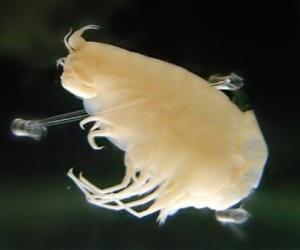
June 22, 2016 - A new research has revealed the degree of destruction caused by man-made pollutants, which have now entered the deep oceans as well. The research reveals that chemical contamination has polluted the creatures dwelling at a depth of up to 10,000 meters in the ocean have been. The revelation was made at a deep-ocean exploration conference organized at Shanghai on June 8, 2016.
The disclosure was made by a deep-ocean researcher Alan Jamieson of the University of Aberdeen. He stated that startling levels of man-made organic pollutants have been discovered by his team in amphipods, crustaceans similar to shrimps. The team had captivated the deep-sea creatures during their two international expeditions in 2014 from two deep-ocean trenches.
The creatures were captured from the Kermadec Trench offshore New Zealand and the Mariana Trench that is situated in the western Pacific Ocean and is known to be the deepest trench in the world. Deep-ocean trenches play a significant role as carbon sink and are essential for the regulation of climate and global temperature. However, these trenches, like the Mariana and Kermadec, are exposed to high amounts of pollutants that are washed from large factory waste.
This is because these pollutants have no other disposal system and eventually seep deep inside and accumulate there. During the expeditions, both the trenches were found to have high accumulation levels of the carbon-based compound persistent organic pollutants, which are utilized during the production of plastics and flame retardants. Polychlorinated biphenyl was among the chemicals detected in the crustaceans.
"Toxic chemicals are accumulating in marine creatures in Earth's deepest oceanic trenches, the first measurements of organic pollutants in these regions have revealed," according to a news report published by Scientific American.
"We often think deep-sea trenches are remote and pristine, untouched by humans," says Alan Jamieson, a deep-ocean researcher at the University of Aberdeen, UK. But Jamieson and his colleagues have found man-made organic pollutants at high levels in shrimp-like crustaceans called amphipods that they collected from two deep-ocean trenches, he told a conference on deep-ocean exploration in Shanghai on 8 June.
Before this work-which has not yet been published-the study of pollutants in deep-sea organisms had been limited to those that live at depths of 2,000 metres or less. The latest research tested for levels of organic chemicals in amphipods collected at 7,000-10,000 metres depth, from the Mariana Trench in the western Pacific Ocean-the world's deepest trench-and from the Kermadec Trench near New Zealand.
According to a report in Nature World News by Julla Gonzalez, "In a deep-ocean exploration conference in Shanghai on the 8th of June, deep-ocean researcher Alan Jamieson of the University of Aberdeen revealed that his team had found alarming levels of man-made organic pollutants in amphipods (shrimp-like crustaceans). These deep-sea creatures were captured from two deep-ocean trenches, the Mariana Trench located in the western Pacific Ocean (also known as the world's deepest trench) and the Kermadec Trench off the coast of New Zealand in two international expeditions in 2014."
Identified as an important carbon sink and vital in regulating climate and global temperature, deep-ocean trenches such as the Mariana and Kermadec are also prone to higher levels of pollutants washed from large factory waste as they have nowhere else to go but deep down and will eventually build up. High chemical concentrations of the carbon-based compound POPs (persistent organic pollutants) used to make plastics and flame retardants were found in both trenches, although one had particularly higher concentrations than the other for both compounds.
This "fascinating" discovery, says deep-sea microbiologist Douglas Barlett of the San Diego Scripps Institution of Oceanography, shows that the "trenches are not that remote" as first though of, and that "the world is connected."
Originally published in the NewHampshire Voice June 22, 2016

Palace of the Alhambra, Spain
By: Charles Nathaniel Worsley (1862-1923)
From the collection of Sir Heaton Rhodes
Oil on canvas - 118cm x 162cm
Valued $12,000 - $18,000
Offers invited over $9,000
Contact: Henry Newrick – (+64 ) 27 471 2242
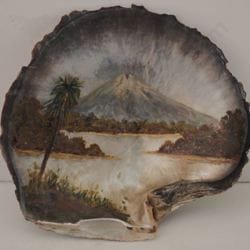
Mount Egmont with Lake
By: John Philemon Backhouse (1845-1908)
Oil on Sea Shell - 13cm x 14cm
Valued $2,000-$3,000
Offers invited over $1,500
Contact: Henry Newrick – (+64 ) 27 471 2242

|
|