
Founded by Max Farndale 1947 - 2018
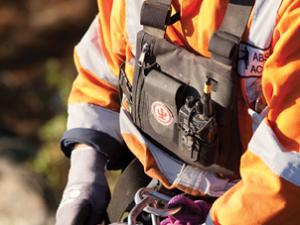
Network World | Jun 20, 2016 - I have a particular interest in the manufacturing of physical goods. For close to 25 years, I have been involved with a boutique, New Zealand-based manufacturer of backpacks and workwear. Cactus Equipment has been designing and making its own products for years.
As opposed to the regular model of spec'ing a product from Far Eastern design and manufacturing houses, Cactus designs in house and then manufacturers in its own New Zealand factory, as well as a number of outsourced but still New Zealand-based facilities. So, the realities of trying to get a product designed and prototyped is something I'm well aware of. The design and sourcing combined with the difficulty in accessing resources makes product engineering a difficult task.
That is why I've been interested to watch companies that try and make this process more efficient. One company, Ponoko, got its start in New Zealand around 10 years ago with a vision of connecting designers, customers and manufacturers. The idea was that any one of those stakeholder groups could use the Ponoko platform to connect with the other groups. Have a smart design for some new widget? You could find a manufacturer and a customer base on Ponoko. Ponoko leveraged a global listing of production facilities using different processes (CNC machining, laser cutting, different material specialties etc) to achieve good economics.
Whether they were too early or their execution wasn't optimal, Ponoko never really seemed to hit escape velocity. It still exists, but the world of design and manufacturing is pretty much the same as it was a decade or two ago.
Continue to the full article published in NetworkWorld here

Auckland, 21 June 2016 - The number of New Zealanders working past 65 is on the rise but a new survey has found most businesses are not geared up for them.
The study was carried out as part of the Retirement Commissioner’s review of retirement income policies and questioned 500 companies, ranging from those with fewer than five employees to those with more than 200.
It found 83% have no policies or strategies in place for workers aged over 50. And it doesn’t matter what sort of work they do: the results for those engaged in manual work, such as farming and forestry, were no different to those in manufacturing or the service sector.
Nor does the size of the organisation make any substantial difference: large workplaces are doing no better than small businesses.
David Boyle, the Commission for Financial Capability’s group manager investor education, said: “Older workers bring skills, experience and, often, loyalty to an organisation. Their input can be invaluable, but they can need support, such as training or flexibility around their role, in order for them to keep working.
“It’s a question of attitude as well. I’ve heard from people in their 60s and even their 50s who say they feel invisible or overlooked in favour of younger workers.
“As we live longer and the age of our workforce increases it’s clear that employers need to consider how they manage – and benefit from – their older employees.”
Of those who have introduced strategies or policies, they include flexible working hours, job design, an organisational culture that is supportive of older workers and planned phased retirement such as moving to part-time work.
The survey found more than two thirds (69%) of the 500 businesses agree that there’s a shortage of highly experienced workers in their industry. And a similar proportion (70%) are concerned about losing skills and experience when older workers retire.
Boyle said: “The logical next step is for them to draw up policies and strategies to ensure they retain people with those skills and experience who want to continue working.”
The survey found 77% of companies do not carry out any active retirement planning to help their employees transition from full-time work.
“I know of some companies that make work more flexible for their older staff, for example with part-time mentoring roles to tap into that experience. It’s often a win-win for everyone.
“But I also speak to people who feel like they’ve been put on the scrap heap, and would like to work but can’t, when they still have a lot to offer. Continuing to work can give them purpose and greater self-esteem, as well as helping their financial wellbeing,” Boyle said.
More than one in five people over the age of 65 is still working, some because they need the money, but others because they enjoy what they are doing or like the social contact. That number is set to rise to one in three over the next 15 years.
The Commission for Financial Capability is holding a forum today to address the issues that workers, employers and the country is facing.
It will investigate what other countries are doing to make the most of their ageing workforces; identify the challenges and opportunities that New Zealand is facing; and address the social and economic implications of working past 65.
The Commission is also running an online survey, asking New Zealanders what age they think they will retire and why.
Results to date from 2,200 people show 88% plan to keep working past 65 and their reasons are varied including the ability to use their skills and talents, the chance to do a job that is worthwhile, for social contact and for financial reasons.
 Wives can stop working
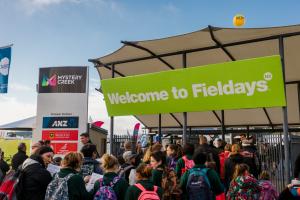
Friday 17 June 2016 - Peter Nation, NZ National Fieldays Society CEO said the level of ingenuity in the room was second to none.
“It’s great to see the number of Innovations entrants growing every year,” said Nation.
“You’re looking at innovations today that could very well revolutionise agribusiness tomorrow.
“I’d like to congratulate all of the inventors here today. What you’re doing means you’re tuned in to the foundation of the industry, which is innovation. We don’t grow, we don’t advance without stopping and asking the pertinent questions about where we are, how we got here and what it will take to move forward.
“Looking around the Innovations Centre today, the right questions are being addressed.”
With 70 entrants in the Fieldays Innovation Awards this year, the trend has been towards mobile apps and data collection software as the industry keeps up with technological advancements.
Award winners:
• Fieldays Young Innovator of the Year – St Paul’s Collegiate School, Crankholder• Vodafone Innovation and Technology – Agricultural Software Limited, FarmWalker Pasture Meter• Locus Research Innovation Award – Kevin Bain, Pest Trap Reset Mechanism• Origin Innovation IP Award – Progressive Equipment Limited, Pipe Grabber• Crowe Horwath Agri Innovation Award – Styx Solutions, Styx Batten and Outrigger System• Tompkins Wake IP and Commercialisation Award – Antahi Innovations Limited, TrutiTuber and FlexiTuber• Tru-Test Prototype Grassroots Award – Kevin Bain, Pest Trap Reset Mechanism• Tru-Test Prototype Established Award – Styx Solutions, Styx Batten and Outrigger System• Fieldays Launch NZ Award – The Wrangler Limited, Pollen Smart
A Field Days press release
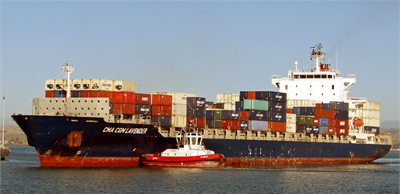 French-owned vessel serviced during brief visit to port of Napier
 Was one of visiting global heavy hitters during heyday of NZ IT era in the 1970s
Glazing film coating confers cost –effective temperature control plus safety-at-work benefits
SUNNYVALE and SAN FRANCISCO, CA, June 14, 2016 – Trimble and Autodesk, Inc. have entered into an interoperability agreement aimed at saving customers time and reducing project costs typically associated with workflow inefficiency across different suppliers’ technologies. This will benefit architects, engineers and contractors, and importantly, project owners by enabling more freedom to optimize technology workflows needed to meet the complex requirements of today’s construction projects.
Continue reading the article here at A2K Technologies
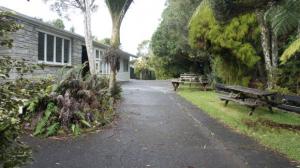
Back in the 1960’s Te Kauri Lodge was built located between Pirongia and Kawhia in the Waikato. It’s purpose, to encourage young people to become ecologically aware. And in this, like the other aspects of what the lodge has to offer, it has been very successful in achieving what it set out to do, along with being been instrumental in steering young folk into meaningful and productive careers.
For some time now there has been talk in the media about how important it is for young folk to become career orientated and place themselves in a position of learning thus resulting in an enumerable number of organisations and learning bodies being set up through-out the country to provide “upskilling” facilities.
But does this upskilling procedure have to start by one enrolling in a formal classroom type situation? Of course not.
Its what kindles the desire to learn more in the first place that probably has the greatest influence. This can come from the most unexpected or completely obvious, the environment. Step-up Te Kauri Lodge; they have in place an educational programme that anyone can participate in.
One of those who has acknowledged the positive results for him personally by being part of one of these programs is Simon Ganley. During one of his visits to Te Kauri he heard a talk on laser technology which had just been invented. It hit a nerve for him, inspiring him to look more closely at leading edge technology resulting in Simon building, through the ensuring decades, a successful business in food manufacturing technology, Ganley Engineering.
Now its pay back time for Simon who is now an enthusiastic helper at the lodge along with a group of dedicated parents who accompany the school groups.
Recently, in addition to running the educational programmes, Te Kauri Lodge has been opened up for other groups, organisations, businesses and clubs wanting a meeting place to enjoy. It is located within a 2 hours drive of Auckland, Taupo and the Bay of Plenty BOP, sleeps 100 and is fully self contained. There are tracks, trails, streams, cliffs and spectacular bush reserves. To get a picture of what Te Kauri has to offer visit www.junats.org.nz and www.tekauri.org.nz
What kindled the desire in learning more about cutting edge technology for Simon could very well be the case for someone you know. You can reach Simon on This email address is being protected from spambots. You need JavaScript enabled to view it.
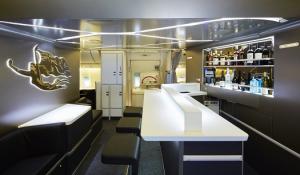
The stunning new Business Class Bar and Lounge for Virgin Australia’s newly refitted Boeing 777-300ER aircraft.
Cambridge Network, UK, 15 June 2016 - AIM Altitude has stretched the geographical and engineering boundaries to produce the stunning new Business Class Bar and Lounge for Virgin Australia’s newly refitted Boeing 777-300ER aircraft.
First programme to launch under the new AIM Altitude brand and AVIC ownership
With the design and manufacture programme beginning in 2014, the final Door 2 monument design is the result of a successful collaboration between Virgin Australia, AIM Altitude and design house, tangerine.
The design was developed and engineered by AIM Altitude specialists in New Zealand, before AIM Altitude in the UK took up the mantle with manufacturing at its Cabin Interiors facility in Bournemouth. The first of five refurbished Boeing 777-300ER re-entered service between Australia and the United States in May 2016.
The engineering limits were also expanded. Michael Pervan, Managing Director of Altitude, explained: “When Virgin Australia and AIM Altitude first began collaborating on the project, we wanted to stretch the boundaries of what is currently experienced by passengers in the Door 2 zone of a wide-body aircraft. We faced a number of challenges, including finding methods to engineer and manufacture products that used unique lighting and custom trim and finish materials. Like most aircraft interior projects, we were also faced with the challenges of limited real estate in which to create a relaxing and luxurious environment in the Door 2 zone.”
Altitude achieved an outstanding end result, with an impressive Corian backlit bar countertop light box, lighting embedded within Virgin Australia’s Flying Maiden logo and contemporary leaf pattern ceiling as well as bar-edge lighting designs. Ultimately this has created a zone that feels more spacious with a much improved passenger and crew experience.
As part of the design and development programme AIM Altitude follows with all large programmes of this nature, a specialised product development process was implemented at the commencement of the project. Before any detailed design was undertaken, AIM Altitude liaised with many stakeholders of the aircraft Door 2 zone, such as cabin crew and passengers. This consultation ensured a comprehensive understanding of all user requirements.
As the programme developed, full-sized mock ups were created to give stakeholders the opportunity to experience the Door 2 zone in a realistic environment. This process saw several design changes occur which, without mock-up experience, potentially would not have been identified until much further in the programme where additional cost or delays may have been incurred.
In total, AIM Altitude designed five distinct pieces of furniture for the Door 2 area:
“We are extremely proud of what we have worked with Virgin Australia and tangerine to create,” says Pervan. “There is no doubt that it is a statement on the ‘Art of the Possible’, and we hope that Virgin Australia’s guests enjoy this space as much as we have enjoyed bringing it to life”.
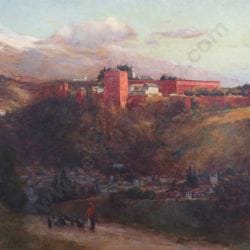
Palace of the Alhambra, Spain
By: Charles Nathaniel Worsley (1862-1923)
From the collection of Sir Heaton Rhodes
Oil on canvas - 118cm x 162cm
Valued $12,000 - $18,000
Offers invited over $9,000
Contact: Henry Newrick – (+64 ) 27 471 2242
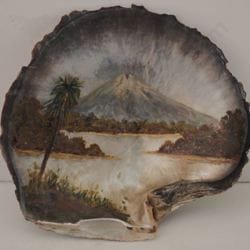
Mount Egmont with Lake
By: John Philemon Backhouse (1845-1908)
Oil on Sea Shell - 13cm x 14cm
Valued $2,000-$3,000
Offers invited over $1,500
Contact: Henry Newrick – (+64 ) 27 471 2242

|
|