
Founded by Max Farndale 1947 - 2018

The Reserve Bank today published a Bulletin article that explains how the Bank manages liquidity in the banking system.
Effective management of liquidity plays a crucial role in New Zealand’s banking system. It allows the Reserve Bank to implement monetary policy, ensures the smooth operation of New Zealand’s payments and settlements systems and allows the Bank to ensure that the public has confidence in New Zealand’s banking system.
The Bulletin article provides an overview of the tools and facilities the Bank has in place to manage the level of liquidity in the banking system, the rationales for utilising these tools, and how their use helps to ensure short-term interest rates trade close to the Official Cash Rate (OCR).
The article also describes what the Bank does to maintain a stable and sufficient supply of system liquidity and how the Bank ensures that individual banks have access to liquidity to meet daily transactional obligations through the payments and settlement system.
This article may be read in conjunction with a Bulletin article published last month which explored the impacts of diminishing liquidity in markets.
More information: Reserve Bank Bulletin
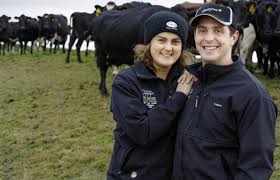
It's all about an improved future

San Farancisco, May 24 2016 - Most bots solve relatively small problems, like increasing the convenience of getting lunch. “We’re not building bots to order pizzas,” Leydon told me, alluding to the bot fad that has swept over Silicon Valley since Facebook launched a bot platform last month to help businesses interact with its 900 million users. “We’re building bots to run countries.”
Leydon is chief executive of MZ, a fast-growing company that has used its technology, built over the past nine years, to make Game of War one of the highest revenue-generating games in the app stores. The company’s tech keeps millions of gamers engaged by translating in-game messages across 32 languages in real time.
It’s that cloud technology, which allows billions of interconnections to take place instantly, that MZ says gives it an advantage over competitors. Six months ago, Leydon decided to take his technology beyond games. On a trip to New Zealand, he noticed that the country had an open API for its public transportation system. Intrigued, he promised the New Zealand authorities he could build a command center to make its transport system much more efficient. He would start by building a pilot for the country’s largest city, Auckland. It would track the city’s entire fleet of 3,000 buses and the usage patterns of the up to 2 million people — residents and tourists — who ride those buses over the year.
Continue reading this article which was first published on VentureBeat
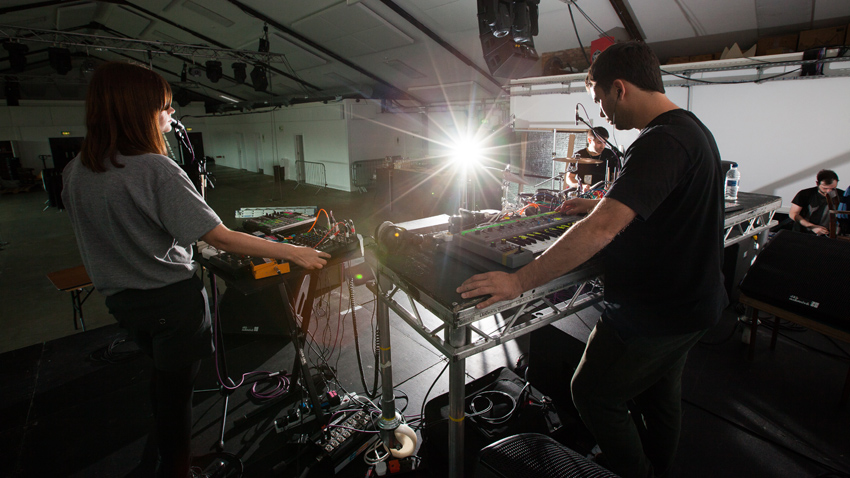 A surfeit of lawyers disrupts the factory floor
Wellington, 24 May 2016 - Small Business Minister Craig Foss today released the latest Small Businesses in New Zealand factsheet, giving a detailed snapshot of how small businesses in New Zealand are making an impact across all industries.
“Small and medium-sized firms make a huge contribution to New Zealand’s economy and this factsheet really illustrates that,” Mr Foss says.
“It reinforces other reports which show that smaller businesses dominate our industries and play a vital role in generating jobs, innovation and overseas income.”
The factsheet is a summary of results from Statistics New Zealand data relating to small and medium-sized enterprises.
Small Businesses in New Zealand is available at: http://www.mbie.govt.nz/info-services/business/business-growth-agenda/sectors-reports-series/the-small-business-sector-report-and-factsheet/
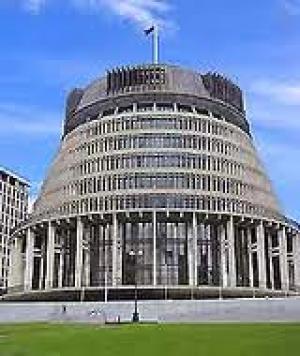
Wellington, Beehive, May 19, 2016 - Budget 2016 will provide $14.4 million over four years for more apprenticeship training, Tertiary Education, Skills and Employment Minister Steven Joyce announced today.
“A strengthening labour market, a rebuilt industry training system and improvements in school achievement are resulting in greater demand for apprenticeships, as young people rightly see them as a great way to get into, and stay in, a rewarding career,” Mr Joyce says.
“Last year the number of new starts for apprenticeships like carpentry, plumbing and electrical engineering were at the highest levels in nearly a decade. There were more than 42,000 people enrolled in apprenticeships and apprenticeship training in 2015. This funding will help support another 5,500 apprentices by 2020.
“In 2013/14 the Government carried out major industry training reforms. Since then, both apprenticeship numbers and, more importantly, completion rates have increased.”
In 2014 the number of those in apprenticeship training was up by 11.5 per cent on the previous year and completion rates for apprentices were 88 per cent, compared with 72 per cent in 2009.
“We’re keen to stay on this roll and help people not just into employment, but into a lifelong career,” he says.
The new funding will also help meet projected skill shortages in high-demand industries like construction and infrastructure.
“The construction sector is growing strongly throughout the country. Increased apprenticeship numbers will help fill skill gaps and provide the new people needed to maintain that growth,” Mr Joyce says.
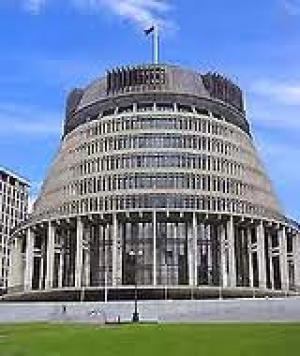
Wellington, Beehive, May 19, 2016 - An additional $9.6 million over four years will provide for more Māori and Pasifika Trades Training (MPTT) as demand for the programme continues to grow, Tertiary Education, Skills and Employment Minister Steven Joyce and Maori Development Minister Te Ururoa Flavell say.
“This funding will provide places for 2,500 young Māori and Pasifika learners in MPTT programmes this year, and 3,400 next year, up from just 1,200 in 2014,” Mr Joyce says.
“We are targeting 5,000 learners annually by 2019 as we encourage young Māori and Pasifika to take up a trade and help meet some of the emerging shortages in construction and infrastructure trades particularly.”
Mr Flavell says the Government wants to boost the number of young Māori and Pasifika in employment, education or training, and with the qualifications needed for entry into sustainable employment.
“MPTT gets tertiary providers, employers, and Māori and Pasifika communities working together in consortia to recruit and support learners in pre-trades training and to broker them into employment. There are now consortia in most regions, including a new consortium in Manawatu-Whanganui,” he says.
Mr Joyce says MPTT participants are more likely to complete their programmes than similar learners studying for the same qualifications, and are more likely to progress to an apprenticeship.
“MPTT can help reduce skills shortages and welfare dependency at the same time, and provide these young people with a rewarding career,” he says.
The Tertiary Education Commission has encouraged MPTT consortia to expand the range of trades offered, to recruit young people who are not in employment, education and training and, with support from the Ministry for Women, to recruit more female, especially in fields of strong employer demand in which women are underrepresented.
“In 2015, 23 per cent of learners in MPTT were women. Women had higher completion rates than their male counterparts. We need more women trainees to help meet the growing need for skilled people in areas like construction and the primary industries,” Mr Joyce says.
The additional $9.6 million, funded from a contingency established in Budget 2015, means young people can progress directly to MPTT from school or other training at 16 or 17 years of age, rather than waiting until they turn 18. The maximum age for entry was also raised, from 34 to 40 years of age. Brokerage funding increased from $733 to $1,000 per student, with 30 per cent of this paid only when learners progress to workplace-based training such as a New Zealand Apprenticeship.

Wellington, Beehive, Thursday 19 May 2016 - ACC Minister Nikki Kaye today confirmed the new ACC annual licence levies that owners of light vehicles (cars, vans, utes and SUVs) will pay from 1 July 2016, as well as refinements to the vehicle risk rating system used to calculate these levies.
The ACC annual licence levy is part of the vehicle licensing (‘rego’) fee paid when you register or relicense a vehicle.
“From 1 July, the average motor vehicle levy, which includes the annual licence levy and petrol levy, will reduce from around $195 to around $130 per vehicle,” says Ms Kaye.
“This is a huge reduction of 33 per cent to the average levy. It will save New Zealanders $218 million, and follows $438 million of cuts to motor vehicle levies last year.
“This means the average motor vehicle levy has fallen from $330 to $130 since 2014.
“ACC now applies vehicle risk ratings when setting annual licence levies for light passenger vehicles, which means the specific levy paid by vehicle owners reflects how well their vehicle protects occupants and other road users in a crash.
“Annual licence levies for petrol cars from 1 July will range from around $25 to around $84.
“The exact amount you will pay will depend on the risk band your vehicle is assigned to, but the vast majority of owners of light vehicles will pay a reduced levy. For some owners of petrol vehicles, the annual reduction will be as much as $132.
“Vehicle risk rating was introduced by ACC last year. It was clear the new approach needed improved data for some cars and refinements to policy to ensure greater integrity of the system for some models.
“As part of last year’s public levy consultation, ACC consulted on my behalf on a number of proposed improvements to the system.
“As a result, various changes have been made to the way vehicles will be risk rated from 1 July 2016.
“For example, the system now better identifies when improvements have been made to particular models of car, and it better recognises cars that have different names but which are essentially identical vehicles.
“Enhancements have also been made to ensure greater robustness of the crash data that’s used to help generate risk ratings.
“This is a new system that involves thousands of models of cars, so it’s possible there will be further refinements in years to come.
“I’d like to thank everybody who provided feedback as part of the consultation, in particular stakeholders such as the Automobile Association, Motor Trade Association, Motor Industry Association, Imported Motor Vehicle Industry Association, NZTA and MBIE.
“The average lifetime cost of a person seriously injured on the road is around $2 million. The severity and cost of injuries are reduced if people are in safer cars. A large proportion of cars in the risk bands with the lowest levies are older vehicles, so this is not just about the age of the vehicle.
“Vehicle risk rating is a fairer allocation of levies and helps people have a greater understanding of vehicle safety.”
Enter your number plate to view your ACC licence levy from 1 July 2016 here
View “Enhancements to vehicle risk rating for the 2016/17 levy year” here
Find out more about motor vehicles and ACC levies here
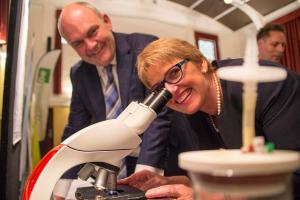
Palmerston North, Massey University, Wednesday 18 May 2016 - A scientific collaboration aimed at protecting and enhancing New Zealand's $50 billion-plus food sector was officially launched today.
The New Zealand Food Safety Science and Research Centre joins seven science research partners to form a virtual research centre, which will be jointly funded by the Government and industry over the next five years.
Science and Innovation Minister Steven Joyce and Food Safety Minister Jo Goodhew launched the centre at the Manawatū campus of Massey University, alongside the funding partners, the Dairy Companies Association of New Zealand, the Meat Industry Association and Zespri.
The centre’s role is to promote, co-ordinate, and deliver food safety science and research for all of New Zealand, where, according to the Investors Guide to the New Zealand Food and Beverage Industry report issued in November, the top 100 food and beverage firms collectively generate annual revenue of $51 billion.
The science research collaborators are crown research institutes AgResearch, Environmental Science and Research, Plant and Food Research, as well as the private scientific research organisation the Cawthron Institute, and three universities – the University of Auckland, the University of Otago and Massey, the host institution.
The centre's board will be independently chaired by biotechnologist and chemical engineer Dr Kevin Marshall, who also chairs the Riddet Institute, a national centre of research excellence based around food science.
"The centre is an important collaboration between Government, industry and researchers right across the value chain," Dr Marshall says. "It will help to protect and enhance the reputation of food produced by New Zealand, maintain and enhance its exports, increase collective market access and protect public health.”
Funding for the centre will total $4.1 million per annum, with the Government committing $2.05 million per annum and industry matching that.
Dairy Companies Association chairman Malcolm Bailey says the investment shows a clear commitment to maintaining New Zealand’s global reputation for the best food safety outcomes. “Our investment is aimed at future-proofing New Zealand’s reputation for safe food through greater co-ordination, and a stronger linkage to the world’s leading science and research.”
Meat Industry Association chief executive Tim Ritchie says, “New Zealand’s global reputation for strong food safety outcomes is critically important to the success of the red meat sector. The meat industry already invests in science and research to support and protect this reputation and this collaboration is another example of the industry’s absolute commitment to food safety.”
Zespri general manager for innovation Carol Ward says, “this is an important and vital research partnership that will support businesses like Zespri where the focus is on providing the highest quality kiwifruit to consumers around the world. Our success is underpinned by trust in the safety of our produce and high quality research will help New Zealand food producers to continue to lead the way in food safety.”
Ministry of Business, Innovation and Employment chief executive David Smol says the partnership will bring the best minds and institutions together. “New Zealand’s food exports are dependent on an internationally credible food safety system, which must be underpinned by the best available science," Mr Smol says. "The work to be done at the centre will be a huge help in meeting our export growth targets."
Ministry for Primary Industries director-general Martyn Dunne says the research centre will contribute to ensuring the food safety of consumers in New Zealand and around the world. “The research from the centre will focus on minimising risks of foodborne illnesses by looking at short-term issues as well as pre-empting future food safety risks across all sectors to ensure that consumers can continue to have confidence that their food is safe.”
Centre establishment director Professor Nigel French, from Massey, says the centre will help to continue to build New Zealand's reputation as a global leader in the supply of safe food "by delivering world-class strategic scientific research driven by the needs of government, consumers and industry”.

Palace of the Alhambra, Spain
By: Charles Nathaniel Worsley (1862-1923)
From the collection of Sir Heaton Rhodes
Oil on canvas - 118cm x 162cm
Valued $12,000 - $18,000
Offers invited over $9,000
Contact: Henry Newrick – (+64 ) 27 471 2242

Mount Egmont with Lake
By: John Philemon Backhouse (1845-1908)
Oil on Sea Shell - 13cm x 14cm
Valued $2,000-$3,000
Offers invited over $1,500
Contact: Henry Newrick – (+64 ) 27 471 2242

|
|