Founded by Max Farndale 1947 - 2018

Droids or Drones? Which Will Be the Future of Delivery?
Princess Leia bet on droids, not drones, to get her priority package delivered. And that turned out OK, except for her planet getting blown up. A Skype founder's new hope is that droids can work just as well on Earth.Bloomberg News, 19 April 2016 - In the shadow of Greenwich’s 02 Arena - the futuristic dome originally built as London’s showpiece for the Millennium - what looks like a picnic cooler on wheels zips among groups of gawking children. This little delivery robot, designed to autonomously navigate sidewalks, not roads, later this year will begin making deliveries from local businesses direct to customers.
In doing so, it may just conquer e-commerce’s final frontier: the Last Mile, the least efficient and most problematic step in the delivery process.Starship's robotic delivery droid is designed to detect and give way to pedestrians.“Thirty to forty percent of the cost of delivery comes in the last mile,” says Allan Martinson, the chief operating officer of Starship Technologies, the company building this robot. The venture is the brainchild of Ahti Heinla, one of Skype’s original developers, and is backed by billionaire Skype co-founder and tech investor Janus Friis.
The little delivery robots designed by Starship and a competing U.S. startup called Dispatch are the BB-8s and Wall-E's of e-commerce. These scrappy droids are up against tech's strongest forces. Amazon is testing airborne drones, as are Wal-Mart and Google. Google has also sought patents for a driverless truck that would carry an array of storage lockers that unlock with a text message. And Uber is deploying drivers for food delivery, a concept that could be expanded to other products. And don't forget incumbents from Federal Express and UPS to government postal services.
While Starship's robot may be first to market, victory isn't assured. The droids have limitations, with economic viability confined urban areas. Drones have a higher sticker price and bigger regulatory hurdles to surmount, but may prove less expensive on a per-mile basis. And for the foreseeable future, some logistics experts say, humans still have the edge over any sci-fi inspired contenders.
Heinla, a tall, gaunt Estonian with shaggy blond hair and the disheveled look of an engineer for whom form matters more than fashion, says delivery droids have their advantages. Smaller robots are easier and cheaper to build. Because Starship’s droid weighs less than 35 pounds and travels slowly, it's less likely to cause damage. As a wheeled vehicle, there are no spinning rotorblades that could cause injury - unlike drones. Continue to full article . . .
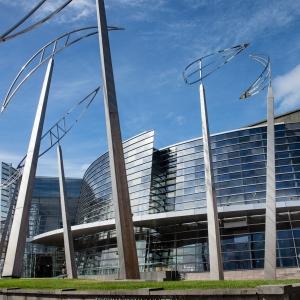
Mainmark’s Christchurch Art Gallery project has been shortlisted for the International Project of the Year Award category at the 2016 Ground Engineering Awards in the United Kingdom.
Mainmark release, 22 April 2016 - The International Project of the Year Award recognises projects that have delivered geotechnical innovation that stands out on the international stage for credentials in sustainability, health and safety, and value engineering. Judges consider client satisfaction, innovation, value for money, performance against prediction, the quality of design and construction, safety, and application of quality management.
The Ground Engineering Awards celebrate engineering excellence of the finest firms in Britain and beyond, with 14 award categories spanning innovation, project and stakeholder management, sustainability, health and safety, and technical excellence.
We are thrilled to have the Christchurch Art Gallery project recognised on a global scale and in company with an outstanding cohort of engineering firms. We commend the organisers of the Ground Engineering Awards for recognising and showcasing the achievements of our active and growing industry, and we look forward to the interesting discussions that will emerge during the live judging stage in May.
I would also like to extend my congratulations to the Mainmark team, whose technical expertise and application of Mainmark technologies ensured the re-support and re-levelling of the Christchurch Art Gallery in just 52 days and under tight project management. The Gallery’s 6,500 square metre foundations suffered significant damage during the Christchurch earthquakes of 2010 and 2011, causing the 33,000 tonne building to sink. For more information on this project, click here.
We wish our team luck as they travel to London to attend the face-to-face judging by members of the 43-strong jury, made up of clients, contractors, consultants and academics; and we look forward to attending the Awards ceremony when the winners are announced on the 30th June.
Author: Philip Mack, Founder and Chairman of Mainmark
Philip Mack is the founder and chairman of the Mainmark group of companies. Following involvement in the Newcastle earthquake restorations in the early in 1990s, Philip added to the company’s grouting expertise by obtaining the exclusive distribution rights for the innovative Uretek resin injection technologies in 1994. Since then, Mainmark has established fifteen offices across the Asia Pacific region and now offers suite of ground engineering and asset preservation solutions, supported by state of the art equipment and expert technicians.
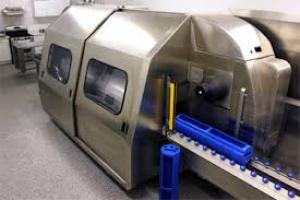
High Pressure Processing (HPP) equipment manufacturers for the food industry are experiencing a growing demand for their equipment and technology as we move through 2016. A prominent HPP equipment manufacturer who is represented here in New Zealand is Hiperbaric.
Auckland, 21 April 2016 - HPP is a preservative technology which does not involves heat and is applied to already-packed products, any possible recontamination that may occur during packing will be controlled. With the growing popularity and demand of raw, natural and additive free products, the global food industry is facing fundamental changes to conquer a customer that is becoming more and more informed and exigent by the day.
In a recent edition of the New Zealand Food Technology magazine an excellent article appeared tracing the development of nonthermal processing technologies. It is repeated here or you can read it in the New Zealand Food Technology Magazine:
It was 1898 when B H Hite, a chemist from West Virginia, introduced milk in a manual press he had made for achieving high hydrostatic pressures; he realised that milk lasted longer after doing so. Pressure has killed the spoilage bugs, he thought and he was right.
Almost at the same time and following Becquerel’s discovery of radioactivity in 1895, first research on the use of ionising energy to destroy microbes in food was published in a German medical journal. In the late 1940s, B L Flaumenbaum observed in his lab in Germany that fruit subjected to quick pulsed electricity saw their permeability increased, and microbes were inactivated.
Over a century after these initial discoveries and thanks to the evolution of designs and materials, we are seeing that these old solutions have, finally, become available to the food industry in a profitable way. The first method is now known as High Pressure Processing (HPP); the third, as Pulsed Electric Fields (PEF); the second, food irradiation, had an earlier adoption (it was firstly approved in the United States in 1986 and irradiated foods started to be commercialised in the 1990s).
In the last few years other technological advances have appeared in the food manufacturing space. 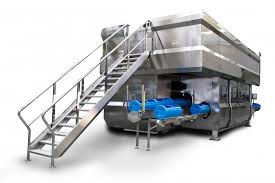 With ultrasound, food manufacturers can take advantage of the cavitation generated by sound waves passing through the food and breaking the cell membranes of bacteria. Cold plasma, the most recent development in the sector, is still in the experimental phase. Plasma, aka the ‘fourth state’ of matter, is obtained applying extremely high energies to a gas, creating a gliding arc of ionised, nonthermal plasma that is able to sterilise the surface of foods.
These new techniques fit well in schemes pursued by food manufacturers, such as the hurdle concept and the minimal processing scheme which, respectively, promise food safety through putting barriers to the presence and growth of bugs along the food processing chain, and nutrition, functionality and retention of freshness in case of the latter minimal, gentle processing. Something else is shared by irradiation, high pressure processing, pulsed electric fields, or plasma treatment: they are all nonthermal technologies, meaning they don’t involve heating. These processes are applied to the food usually in chilled or ambient temperature condition so the components can stay fresh.
Heating the food is the traditional way of preserving foodstuffs and getting rid of undesirable spoilage microorganisms and pathogens. It is a great and effective way for obtaining safe products that last longer in our fridge or on the shelves. But it tends to flatten flavours and colours, and to harm the functionality and nutrition of the fresh, destroying for example vitamins or antioxidants. Additives and preservatives are the second common tool for making foods stable and safer, but consumers don’t want to see them on the labels. Overall, consumer demand is generating the need for new processing solutions and meals that are fresher, more natural, minimally processed, and with no artificial ingredients. These are precisely the most complicated to handle in the factory from the perspective of food safety and preservation, and this is why new hurdles and solutions are being implemented.
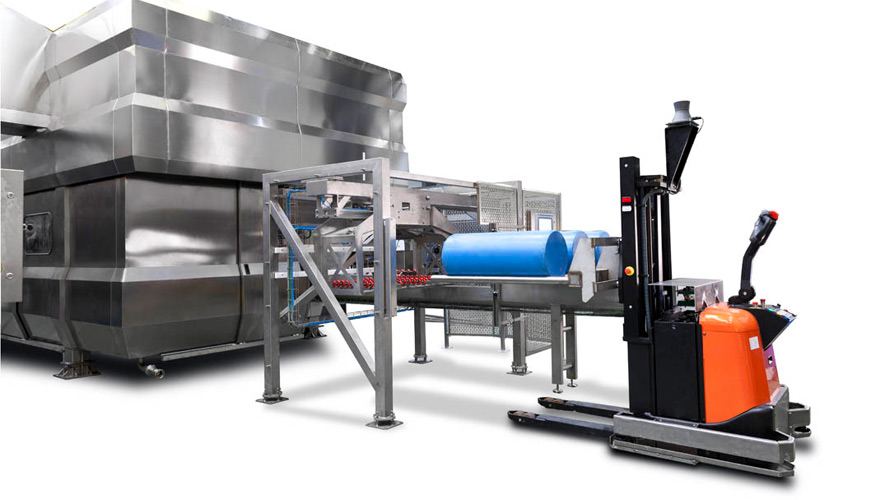 HPP systems are probably the highest growth category, with foods worth more than 750,000 Tons of product being processed annually, according to Hiperbaric, S.A., Burgos, Spain, a leading manufacturer of these industrial installations. The technique basically consists in applying pressures around 6,000 bar (6,000 atmospheres or 87,000 psi) to food during three to five minutes. Imagine submerging your bottle of fresh juice or your luncheon meat in the bottom of an ocean that was 60Km deep – 6 times more than the depth of the Mariana Trench, and that’s what high pressure processing is about. The microbes are destroyed but the food stays intact because pressure is isostatic, transmitted by water, and then equal from all sides.
HPP has seen spectacular growth over the past decade, and is projected to become one of the key factors of the new food industry and the most promising emerging technique, according to a Campden BRI (UK) study published in the journal Innovative Food Science and Emerging Technologies this year.
According to Hiperbaric, Cold Pressure Tecnology or HPP (High Pressure Processing) is becoming more mainstream in certain food spaces outside the traditional ones (mainly guacamole, continental meats, lobsters, to name a few), and two particular segments are now driving its growth: cold pressed juices, and HPP Tolling.
In the past three years, the cold pressed juice category has experienced explosive growth with well known names such as Suja, Evolution Fresh, Blueprint, Coldpress, Harmless Harvest etc. All of them are Hiperbaric customers. The Spanish company is growing this year to a turnover of more than 70m and has an order backlog for 2016 that indicates it might surpass 100m in 2016.
The second segment in which HPP technology is becoming more widely implemented is the Tolling/Copacking business model, in which contract service companies, refrigerated service suppliers and logistic platforms are adding Hiperbaric lines as a way to add value to their services. Using the network of toll HPP services, any food maker with a need for a pathogen lethality intervention, a extension of the product shelf life, or access to export markets, can access high pressure technology and pay on a per Kg, per pack or per batch basis, without the need of investing in its own Hiperbaric system.
In Australia and New Zealand, currently a total of 14 HPP systems are operating in most of the different segments including meat, shellfish, juices, nut milk, guacamole, RTE meals etc.
From laboratory to final industrial practice, gentle physical processes are helping the food industry in the making of hopefully safer, better eats and displacing chemicals from our diets. If evolution continues as expected and the price of these systems is progressively brought down, we will increasingly see pressurised meals and cold plasma hygienised dinners on our table.
For more information contact:
 Scanz Technologies Ltd.This email address is being protected from spambots. You need JavaScript enabled to view it.Phone: 09 520 2544

Speciality packaging manufacturer, Parkside, has developed in conjunction with a technology partner, a revolutionary protective packaging solution for the transport of high value, delicate items in a compact format.
United Kingdom, 21 April 2016 - Rockpocket™ is a flexible laminated bag that contains polystyrene beads between its outer layers. A vacuum extraction pump is applied to the pack to evacuate the air between layers, which creates a solid pack that protects goods from damage during transit.
Developed over several months by the Advanced Packaging Expert (APEX) innovation team at Parkside, Rockpocket is available in multiple sizes and offers a lightweight and compact solution for the transportation of items.
Steve McCormick, new product development director at Parkside, said: “More people than ever before are shopping online and Rockpocket offers the ideal solution for online retailers who want to ensure their customers receive items in perfect condition.
“The design is totally versatile, creating a protective packaging around any shape of item and we can print bespoke high definition graphics and branding on pack to meet customer requirements.”
Many secondary and security packaging solutions that offer full product protection are a combination of several packaging materials such as boxes, void fill and bubble wrap. Rockpocket, however, is a ‘one pack fits all’ solution, requiring no additional packaging and eliminating the need to over-pack products in order to achieve a high level of protection. Packaging waste is reduced significantly as a result.
The outer film is manufactured from recyclable LDPE or PET and the pack itself is made from up to 90 per cent air, reducing transportation weight and the associated carbon footprint and costs.
As no assembly is required, the design speeds up the packing process and its flat edges enhance ease of packing and stacking.
Tamper proof sealing tabs and document windows can be incorporated into the pack design, as well as track and trace features such as an RFID tag or embedded image.
To enhance its environmental credentials even further, Parkside is developing a valve less Rockpocket pack that will be made from 100 per cent compostable materials, enabling the pack to compost at the end of its service life.
Paula Birch, Parkside’s Head of Sales commented: “Brands understand the importance of their packaging in the online retail world and the “moment of truth” is often disappointing today, which consumers are happy to share on social media. Goods are often over-packed in dull secondary packaging materials, wasting valuable communication opportunities and consumer engagement. The branding and packing efficiency opportunities that Rockpocket offer are significant and a number of online retailers are exploring it for their next generation packaging solution as a result.

The recent release of the Safeguard state of the nation health and Safety survey raises some interesting questions on just how far we have come or in some case not progressed.
Napier, 20 April 2016 - Business owners and senior managers must be more confident due to the fact that the responsibilities are more prescriptive and defined, they now have guidance instead of the subjective and non-prescriptive legislation they had to work with previously. This can only be a positive step in the right direction of H&S improvement
Someone once said that you should educate before you legislate.
As an independent health and safety advisor who has worked in the industry for 24 years, I too am a little bit sceptic as there has been twenty four years of resistance by 95% of NZ businesses to H&S. It’s a shame that it has taken the lives of 29 men to bring about the changes but dramatic events sometimes requires drastic action.
H&S in NZ has been in place as a compliance issue since 1992 and millions of dollars have been spent on the education process and information abounds on the WSNZ and the ACC web sites. There is no longer to make excuses that information is not available. I believe that this is one of the reasons why 78% are more optimistic about health and safety now starting to work.
It’s interesting to note from a number of postings on the Goggle Earth H&S Alerts of the comments stating that business in certain provinces are not prepared or aware of the changes to H&S, hello, where have they been?Is H&S improving, here in the province of Hawkes Bay I believe it is if all the calls for assistance are anything to go by?
Many businesses are now considering affirmative H&S management systems as an opportunity to improve their business rather than just to comply with the law. In fact many are now capitalising on this to gain contracts and a greater share of the market place.
H&S is now a key part of the selection criteria for all local body and larger businesses to do business with, so are the changes making a difference, they certainly are with my clients. The government set a goal to reduce the fatality rate and the number of work place serious ham incidents by 25% by 2020. Is 2020 vision not hindsight?
Will the Government reach this goal considering 2020 is only 4 years away? I believe this is ambitious considering the H&S culture that still exists in NZ. The proof or success of the H&S pudding will be the measurement taken by business like Safeguard.
Change takes time but with the different attitude and approach now being taken by Worksafe NZ and the many hundreds of independent professional H&S advisors in the market place it can only improve for the betterment and safety of the NZ workers and for the NZ economy.
Gordon Anderson is the managing director of Hasmate Ltd of Napier. Since 1993 he has worked extensively in the area of health and safety as an adviser, systems development, auditing and management training. He works with a wide range of industries in Hawke's Bay and in other centres.
A new online system will streamline property transactions and make it easier to link property information held across central and local government, says Land Information Minister Louise Upston.
“Every day, kiwis buy and sell homes, subdivide land and build new houses. Land Information New Zealand (LINZ) processes more than 3.5 million transactions and property information searches a year,” says Ms Upston.
“But the current system for this is aging and in need of replacement. It uses technology that was cutting edge in the 90s but which no longer reflects the way LINZ’s customers work. The new system – Advanced Survey and Title Services (ASaTS) – will ensure that the cost and time for these transactions remains low, and will make the most of changes in technology.
“Improvements will include an online search so property buyers can get title information without specialist help. It’ll be a more interactive system for surveyors and conveyancers. They’ll be able to plug their own software into the system to reduce rework, use it on tablets and mobiles, and represent property boundaries in 3D.
“It will also give us the ability to link property information held across central and local government, like ratings valuations and titles. This function is essential to the Government’s work towards Integrated Property Services, which will make it easier and quicker for property owners, builders and developers to get what they need.”
LINZ is taking an ‘as a service’ approach to developing ASaTS. Instead of paying a vendor to build a system that LINZ would then own, LINZ will select a vendor that can deliver a suitable system that LINZ will pay to use – similar to renting. LINZ will still own property data.
“The as a service approach will deliver the same benefits to customers while LINZ continues to do what it does best. LINZ staff will continue to use the system to process and quality assure New Zealand’s property transactions.”
More information about ASaTS is available on the LINZ website.
Published Wellington, 20 April 2016 -

The recent release of the Safeguard state of the nation health and Safety survey raises some interesting questions on just how far we have come or in some case not progressed.
Napier, 20 April 2016 - Business owners and senior managers must be more confident due to the fact that the responsibilities are more prescriptive and defined, they now have guidance instead of the subjective and non-prescriptive legislation they had to work with previously. This can only be a positive step in the right direction of H&S improvement
Someone once said that you should educate before you legislate.
As an independent health and safety advisor who has worked in the industry for 24 years, I too am a little bit sceptic as there has been twenty four years of resistance by 95% of NZ businesses to H&S. It’s a shame that it has taken the lives of 29 men to bring about the changes but dramatic events sometimes requires drastic action.
H&S in NZ has been in place as a compliance issue since 1992 and millions of dollars have been spent on the education process and information abounds on the WSNZ and the ACC web sites. There is no longer to make excuses that information is not available. I believe that this is one of the reasons why 78% are more optimistic about health and safety now starting to work.
It’s interesting to note from a number of postings on the Goggle Earth H&S Alerts of the comments stating that business in certain provinces are not prepared or aware of the changes to H&S, hello, where have they been?Is H&S improving, here in the province of Hawkes Bay I believe it is if all the calls for assistance are anything to go by?
Many businesses are now considering affirmative H&S management systems as an opportunity to improve their business rather than just to comply with the law. In fact many are now capitalising on this to gain contracts and a greater share of the market place.
H&S is now a key part of the selection criteria for all local body and larger businesses to do business with, so are the changes making a difference, they certainly are with my clients. The government set a goal to reduce the fatality rate and the number of work place serious ham incidents by 25% by 2020. Is 2020 vision not hindsight?
Will the Government reach this goal considering 2020 is only 4 years away? I believe this is ambitious considering the H&S culture that still exists in NZ. The proof or success of the H&S pudding will be the measurement taken by business like Safeguard.
Change takes time but with the different attitude and approach now being taken by Worksafe NZ and the many hundreds of independent professional H&S advisors in the market place it can only improve for the betterment and safety of the NZ workers and for the NZ economy.
Gordon Anderson is the managing director of Hasmate Ltd of Napier. Since 1993 he has worked extensively in the area of health and safety as an adviser, systems development, auditing and management training. He works with a wide range of industries in Hawke's Bay and in other centres.
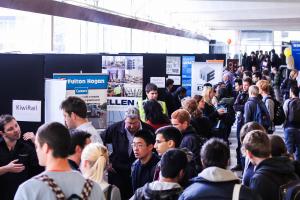
The Expo is one of the highlights in the University’s year with value for both members of the College, ENSOC student members and industry members.
Christchurch, 20 April 2016 - Students are given the opportunity to gather ideas and insights to make informed decisions about their engineering careers. Undergraduate engineers gain assistance with choosing their career and study paths, while final year students are provided with a range of recruitment possibilities.
You are invited to set up a stand to promote your company to current students of all levels. The Expo day can also be used to attract and recruit next year’s graduates to your company. Stalls are positioned in the Undercroft located in the ground floor of James Hight Library. This gives you a unique opportunity to communicate with students in a relaxed environment. Likely topics include information on your company’s products and services, the kind of people your company employs and recruitment opportunities. We welcome employers from a range of disciplines to come along meet our students
The date for the Expo is set for Tuesday the 19th July, with the event running between 10am and 4pm. Due to the event being a student initiative, a payment of $500 (incl gst) towards expenses is required to secure your position. Food and refreshments will follow the day’s activities and car parking is available.
Confirmation of attendance is required by Monday 20th June
If you are interested in attending or have any questions please feel free to contactENSOC Industry Representative, Cameron Brewster on 027 711 7418 or email This email address is being protected from spambots. You need JavaScript enabled to view it.
Click here for stand registration form
ENSOC is the largest student society in New Zealand with over 2000 members. Fonterra is sponsoring the event in 2016. The popularity and value of the event is constantly increasing, and student turnout and appreciation is always very high.

The purchase price of US$435 million represents 8.5 times PBITDA. Alusa – which includes Alusa (Chile), Peruplast (Peru), Aluflex (Argentina) and Flexa (Colombia) – is owned by Techpack S.A. and Nexus Private Equity.
Amcor, 18th April 2016 - The business has four plants and a broad range of capabilities including film extrusion, flexographic and gravure printing and lamination. It is the largest flexible packaging manufacturer and supplier in Chile and Peru, and a leading participant in Colombia and Argentina, with one plant in each of these four countries.
Alusa has strong, long standing relationships with large multinational and regional customers and generates sales of approximately US$375 million from the supply of flexible packaging for food, personal care and pet food applications.
Inclusive of synergy benefits of approximately US$25 million and growth in the underlying markets, PBIT is expected to be approximately US$65 million at the end of year three. The return on cash invested is expected to have reached approximately 15% at that time, taking into account costs to be incurred to realise synergies and working capital benefits. Given the unique and scalable position this provides in the South American region, further growth opportunities underpinned by a strong customer value proposition provide a pathway for returns to reach 20% by the end of year five.
Amcor CEO and Managing Director, Ron Delia said: “With the creation of a new Flexibles Americas Business Group in July 2015, there was an expectation this business could accelerate growth in both North and South America. It is pleasing that over a relatively short period of time, our flexible packaging sales in the region will almost double to nearly US$1 billion with the acquisition of Alusa, and the recently completed acquisition of Deluxe Packages in the USA."
“Alusa comes with a strong management team and provides a unique platform in an important growth region. A large number of Amcor’s multinational customers operate in South America, and this acquisition significantly improves our ability to support their needs and to grow with them in these markets.
“Along with our leadership positions in Europe and Asia, Amcor’s customer value proposition will substantially improve with a strong presence in South America. A truly global product offering differentiates Amcor in the flexible packaging marketplace, positioning us as a partner of choice for customers.”
Techpack S.A. is listed on the Santiago Stock exchange. The acquisition is subject to approval by Techpack shareholders as well as approval by the relevant regulatory authorities. Completion is expected in the coming months.

Palace of the Alhambra, Spain
By: Charles Nathaniel Worsley (1862-1923)
From the collection of Sir Heaton Rhodes
Oil on canvas - 118cm x 162cm
Valued $12,000 - $18,000
Offers invited over $9,000
Contact: Henry Newrick – (+64 ) 27 471 2242
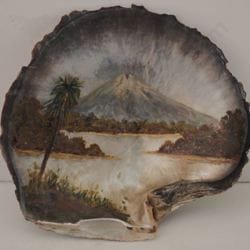
Mount Egmont with Lake
By: John Philemon Backhouse (1845-1908)
Oil on Sea Shell - 13cm x 14cm
Valued $2,000-$3,000
Offers invited over $1,500
Contact: Henry Newrick – (+64 ) 27 471 2242

|
|