
Founded by Max Farndale 1947 - 2018



Direct relationship cited between United States total external debt and tax haven activity

The Commerce Commission is alerting businesses that they are under no obligation to pay an invoice being sent in the post by TM Publisher to New Zealand trade mark holders.
WELLINGTON, 14 April 2016 -The invoice for $1,638 relates to an overseas trade mark registration service, which is not necessarily a service that the recipient has agreed to buy. Anyone who does not want the service has no obligation to pay the invoice.
The Commission is investigating TM Publisher; a company based overseas which purports to offer a web-based trademark registration service. TM Publisher’s bank account has been frozen while decisions are made about how to deal with the $200,000 in payments that have already been made into the account by New Zealand businesses.
If your business has paid this invoice, you may be able to get a refund. Please contact the Commission on 0800 943 600 or through our online form.
Commerce Commission General Counsel, Mary-Anne Borrowdale, says that unfortunately, this type of pro-forma invoicing model hits New Zealand businesses on a fairly regular basis.
“The trader here uses a similar method to the Corporate Portal and Global Map Index letters we’ve warned about before, as businesses are misled into thinking that they are obliged to pay for a service that they have not agreed to.”
“These schemes aim to exploit businesses by sending seemingly legitimate invoices in the hope that companies will pay them without reading all the fine print. In this case, some businesses have paid the fee, not realising that it was for an on-line listing on a private trade mark directory,” Mrs Borrowdale said.
It appears that TM Publisher has used details of the businesses and their trademarks which are available from the Intellectual Property Office of New Zealand (IPONZ) website as the same details have been used in the letter. TM Publisher is not connected to IPONZ.
Mrs Borrowdale said that unlike similar pro-forma trade mark registration schemes this trader has a registered New Zealand address and bank account, in this instance with ANZ Bank NZ, although the trader is based overseas.
“This example is another important reminder for businesses to always be vigilant in checking any unsolicited mail thoroughly, no matter how believable it may seem,” Mrs Borrowdale said.
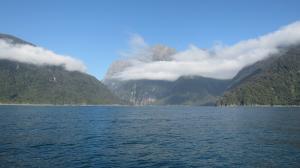
Unlike the rest of the world New Zealand has a plentiful supply of water so the pressing issues are allocation, quality, distribution, storage and future planning for water which is critical to the nation’s future, New Zealand Planning Institute (NZPI) chief executive Susan Houston says.
Dunedin – April 13, 2016 -Whether it’s a water treatment facility or a system to irrigate the country’s dairy farms, water is a major issue being discussed at the NZPI annual conference in Dunedin this week. More than 500 planners, resource managers, urban designers and environmental practitioners from all over the country are attending.
Global demand for water is expected to increase by 2050 as the world’s population is forecast to grow by one-third to more than 9 billion, according to the United Nations. This in turn will lead to a 70 percent increase in demand for food, putting more pressure on water through farming, which is already the biggest consumer of water.
As climate change contributes to rising sea levels and extreme weather, at least one in four people will live in a country with chronic or recurring shortages of fresh water by 2050, the United Nations estimates, making it more important to focus on expanding rainwater harvesting and recycling wastewater.
Houston says consent agencies around the country are facing disputes and challenges to water consent applications from dairy and environmentalists, agriculture and energy generation and horticulture and recreational users.
“The annual conference is debating how small dairying communities respond to increasing water supply and allocation pressures on their local groundwater resource. We want to see collaboration as a solution to allocation issues. We need to improve knowledge of groundwater resources over time and resource management decision making.
“Many Maori are concerned at the modification of rivers and what they perceive to be inappropriate flow regimes. Maori want to see instream flows that are not limited solely to a consideration of ecological and economic values,” Houston says.
“Water resource management is a key issue for resource planning in New Zealand. Managing water effectively to meet competing expectations and values can be complex, confrontational and costly. We are discussing the Resource Management Act framework over-arching our management of water resources and are looking at potential solutions.
“Urban expansion onto new greenfield sites inevitably changes our water environment. Threats to water quality from urban growth were identified around two decades ago. Maintaining existing water quality in areas where urban growth is occurring, requires new urban development to employ active stormwater management techniques that reduce the volume of stormwater and improve its quality, as close to the source as possible.
“Major cities such as London, Philadelphia and New York are facing estimated costs of over $US1 billion to address water pollution stemming from an overreliance on costly to maintain or upgrade traditional hard-engineering drainage solutions. In the push to increase urban areas and housing supply, there is an opportunity to build in future safeguards on water quality.
As New Zealanders, we do not want to repeat the mistakes of other overseas cities. Growing cities do not need to conflict with water quality goals, but if not well managed, it will,” Houston says.
Press release from Make Lemonade
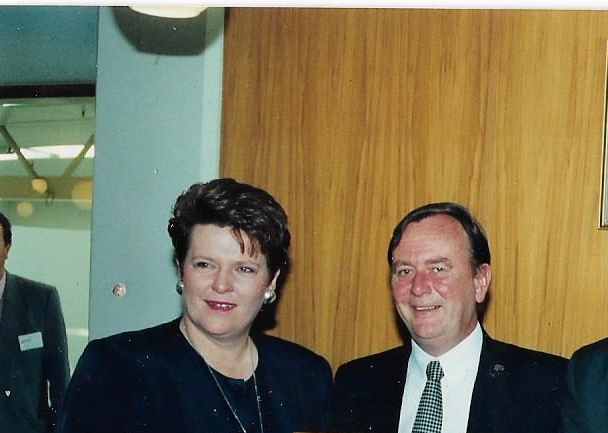 Local politician goaded dog lobby – and lost his seat
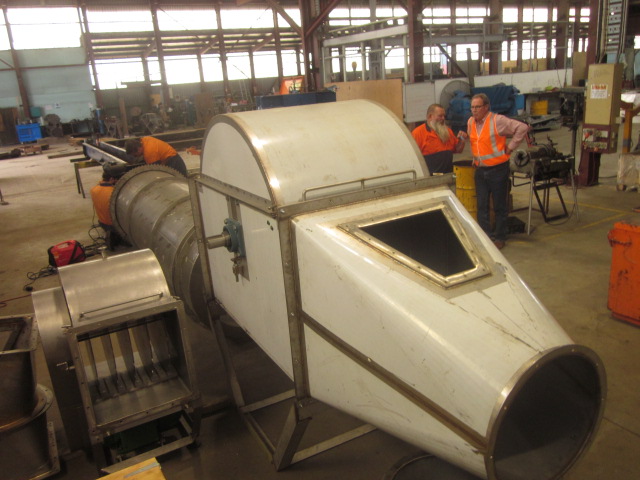
Ensures maximum value for farmers

Delegation’s Marlborough Visit Seen as Re-Igniting Production Engineering Trade Forecasts
Local politician goaded dog lobby – and lost his seat


Palace of the Alhambra, Spain
By: Charles Nathaniel Worsley (1862-1923)
From the collection of Sir Heaton Rhodes
Oil on canvas - 118cm x 162cm
Valued $12,000 - $18,000
Offers invited over $9,000
Contact: Henry Newrick – (+64 ) 27 471 2242
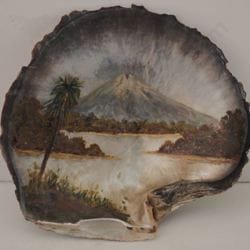
Mount Egmont with Lake
By: John Philemon Backhouse (1845-1908)
Oil on Sea Shell - 13cm x 14cm
Valued $2,000-$3,000
Offers invited over $1,500
Contact: Henry Newrick – (+64 ) 27 471 2242

|
|