Chemicals Contaminate Deep-Ocean Creatures
June 22, 2016 - A new research has revealed the degree of destruction caused by man-made pollutants, which have now entered the deep oceans as well. The research reveals that chemical contamination has polluted the creatures dwelling at a depth of up to 10,000 meters in the ocean have been. The revelation was made at a deep-ocean exploration conference organized at Shanghai on June 8, 2016.
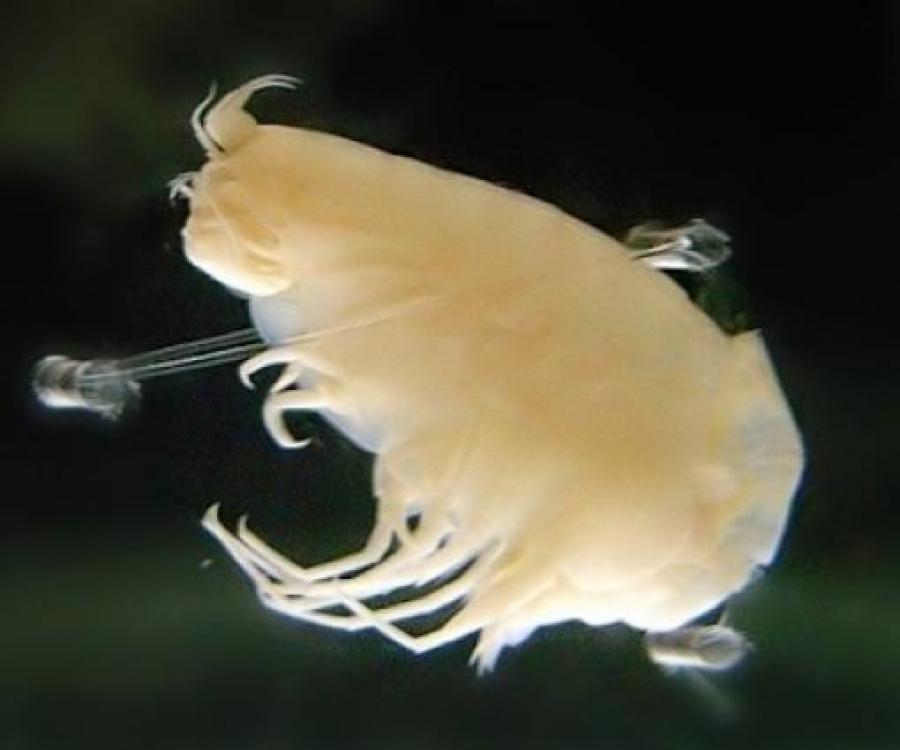
The disclosure was made by a deep-ocean researcher Alan Jamieson of the University of Aberdeen. He stated that startling levels of man-made organic pollutants have been discovered by his team in amphipods, crustaceans similar to shrimps. The team had captivated the deep-sea creatures during their two international expeditions in 2014 from two deep-ocean trenches.
The creatures were captured from the Kermadec Trench offshore New Zealand and the Mariana Trench that is situated in the western Pacific Ocean and is known to be the deepest trench in the world. Deep-ocean trenches play a significant role as carbon sink and are essential for the regulation of climate and global temperature. However, these trenches, like the Mariana and Kermadec, are exposed to high amounts of pollutants that are washed from large factory waste.
This is because these pollutants have no other disposal system and eventually seep deep inside and accumulate there. During the expeditions, both the trenches were found to have high accumulation levels of the carbon-based compound persistent organic pollutants, which are utilized during the production of plastics and flame retardants. Polychlorinated biphenyl was among the chemicals detected in the crustaceans.
"Toxic chemicals are accumulating in marine creatures in Earth's deepest oceanic trenches, the first measurements of organic pollutants in these regions have revealed," according to a news report published by Scientific American.
"We often think deep-sea trenches are remote and pristine, untouched by humans," says Alan Jamieson, a deep-ocean researcher at the University of Aberdeen, UK. But Jamieson and his colleagues have found man-made organic pollutants at high levels in shrimp-like crustaceans called amphipods that they collected from two deep-ocean trenches, he told a conference on deep-ocean exploration in Shanghai on 8 June.
Before this work-which has not yet been published-the study of pollutants in deep-sea organisms had been limited to those that live at depths of 2,000 metres or less. The latest research tested for levels of organic chemicals in amphipods collected at 7,000-10,000 metres depth, from the Mariana Trench in the western Pacific Ocean-the world's deepest trench-and from the Kermadec Trench near New Zealand.
According to a report in Nature World News by Julla Gonzalez, "In a deep-ocean exploration conference in Shanghai on the 8th of June, deep-ocean researcher Alan Jamieson of the University of Aberdeen revealed that his team had found alarming levels of man-made organic pollutants in amphipods (shrimp-like crustaceans). These deep-sea creatures were captured from two deep-ocean trenches, the Mariana Trench located in the western Pacific Ocean (also known as the world's deepest trench) and the Kermadec Trench off the coast of New Zealand in two international expeditions in 2014."
Identified as an important carbon sink and vital in regulating climate and global temperature, deep-ocean trenches such as the Mariana and Kermadec are also prone to higher levels of pollutants washed from large factory waste as they have nowhere else to go but deep down and will eventually build up. High chemical concentrations of the carbon-based compound POPs (persistent organic pollutants) used to make plastics and flame retardants were found in both trenches, although one had particularly higher concentrations than the other for both compounds.
This "fascinating" discovery, says deep-sea microbiologist Douglas Barlett of the San Diego Scripps Institution of Oceanography, shows that the "trenches are not that remote" as first though of, and that "the world is connected."
Originally published in the NewHampshire Voice June 22, 2016